Where a Birman Prefers to Perch
It’s a common scenario, isn’t it? You lovingly pick out the most elaborate, multi-level cat tree you can find, envisioning your beautiful Birman majestically surveying their kingdom from the highest perch. Then, you watch as they completely ignore it, preferring instead to nap on the back of the sofa or a sunny spot on the rug. If this sounds all too familiar, don't worry – you're not alone. Birmans have a distinct personality and physical build that shapes their perching preferences, and understanding these quirks is key to creating a home they truly adore. This comprehensive guide will help you decipher where your Birman truly loves to perch and how to make those spots as comfortable and enriching as possible.
Understanding the Birman's Unique Physicality and Temperament
To truly understand why your Birman might turn up their nose at that towering cat condo, we need to delve into what makes this breed so special. They aren't your average high-flying feline; Birmans have a particular set of characteristics that dictate their preferences for elevated spots.
Why a Birman Isn't a Ceiling Climber
When you look at a Birman, you see a cat of elegant proportions, but they are surprisingly sturdy and rather rectangular in their build. They aren't built for daring acrobatics or scaling dizzying heights like some of their more athletic cousins, such as the lean and energetic Siamese. While they certainly enjoy a good stretch and a gentle play session, their energy levels are decidedly moderate. You won't typically find a Birman attempting gravity-defying leaps or clinging to the curtains for sport.
Their placid and gentle nature also plays a huge role. A Birman isn't generally a thrill-seeker; they find contentment in quiet companionship and comfortable surroundings rather than conquering the highest point in the room. They don't have the same innate drive to be "above it all" that some more dominant or territorial breeds might exhibit. For them, a moderate height provides enough of a vantage point without requiring strenuous effort or feeling precarious. Think of it this way: they're more about comfortable observation than competitive climbing. You might even notice that a Birman will often stop halfway up a multi-tiered structure, content with a middle platform rather than pushing for the top. How much height a Birman bothers to jump for is often less than you'd expect from a typical cat.
The Birman's Desire for Proximity, Not Isolation
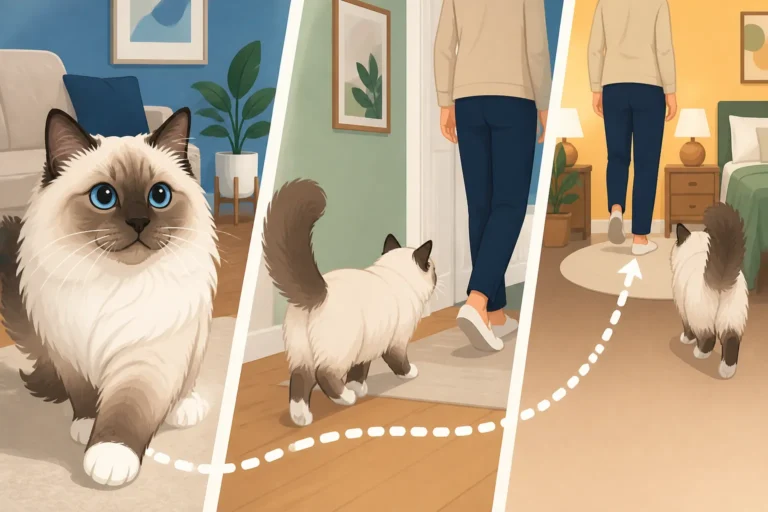
One of the most defining characteristics of the Birman is their deep desire for human companionship. They are known for being incredibly affectionate and people-oriented, often following their favorite humans from room to room. However, this doesn't always translate into being a "lap cat" in the traditional sense. Many Birmans prefer to be near you, perhaps leaning against your leg or stretched out close by, rather than directly on top of you. A Birman Would Rather Be Near You Than On You is a common observation among Birman owners.
This preference for proximity extends to their chosen perching spots. A Birman wants to be part of the action, even if they're simply observing from a comfortable distance. A cat tree tucked away in a quiet, unused corner of a room, no matter how tall, might feel too isolated for them. They thrive on the gentle hum of human activity, the sound of your voice, and the reassuring presence of their family. Therefore, their ideal perch is usually one that allows them to be involved in the household goings-on without necessarily being the absolute center of attention. Why a Birman Follows You Without Demanding Anything perfectly encapsulates this subtle yet constant desire to be close. They want to observe you, perhaps from the back of your favorite armchair, feeling connected to you and the rhythm of your home.
Preferred Perching Spots Within the Home
So, if elaborate cat trees aren't always their first choice, where do Birmans prefer to hang out? Their choices often reflect their blend of gentle curiosity, a need for comfort, and that ever-present desire for proximity to their human companions.
The Allure of Mid-Height Comfort
For many Birmans, the sweet spot for perching is at mid-height. These are the locations that offer a decent vantage point without demanding Olympic-level agility to reach. Think about the spots in your home where your Birman naturally gravitates – often, it's the back of your sofa, a sturdy armchair, or a wide, stable windowsill. These places provide a perfect balance: they’re elevated enough to give a good view of the room and whatever fascinating human activity is unfolding, but they’re also easily accessible and inherently comfortable.
A Birman draped elegantly over the back of the sofa, perhaps with their paws dangling, watching you read or watch TV, is a classic image. Why a Birman Prefers a Sofa Back to a Wall Shelf comes down to a combination of factors: the softness of the upholstery, the sense of security from being partially enclosed, and, crucially, being right in the thick of family life. Windowsills are another prime candidate, especially if they’re wide enough to comfortably stretch out on. Here, a Birman can indulge their natural curiosity by watching the world outside – birds, squirrels, passing cars – all while remaining safe and warm indoors. Whether a Birman Sits on the Windowsill is usually a resounding yes, provided it's comfy! To make these spots even more inviting, consider adding a soft blanket or a custom-made cushion to a windowsill; it can transform a good perch into an irresistible one.
Ground Level Favorites and Cozy Nooks
While we're talking about perching, it's important not to overlook ground-level options entirely. Birmans are, first and foremost, comfort-seekers. They adore warmth and softness, and sometimes the most appealing spot is simply a plush rug, a carefully placed blanket, or an open-sided cat bed on the floor. It's not uncommon to find a Birman napping exactly where you last sat, soaking up your warmth and scent. Why a Birman Sleeps Wherever You Last Sat speaks volumes about their connection to their people.
In cooler weather, you might observe your Birman gravitating towards sunbeams on the floor or settling near a radiator. They appreciate warmth, and a cozy, low-lying bed positioned strategically can become a favored retreat. While some cats enjoy enclosed "cave" beds, many Birmans prefer something more open that still allows them to keep an eye on their surroundings. A soft donut bed or a bolster bed that provides a sense of security without completely cutting them off from the room's activity is often a hit. The key is comfort and warmth, whether it’s at mid-height or right on the floor.
Making Cat Furniture Birman-Friendly
You've got your heart set on providing some dedicated cat furniture, and that's wonderful! The trick is to choose or adapt it in a way that genuinely appeals to your Birman's unique preferences, rather than a generic cat's.
Choosing the Right Cat Tree or Perch
When selecting a cat tree for a Birman, shift your focus from sheer height to stability, spaciousness, and accessibility. Forget the wobbly, minimalist structures that might appeal to a more agile, climbing breed. Your Birman will appreciate something that feels solid and secure underfoot. Look for cat trees with wider, more expansive platforms rather than small, precarious shelves. They need enough room to comfortably stretch out, not just balance precariously.
Multi-level trees can still be a good choice, but ensure the "steps" or transitions between levels are easy for your Birman to navigate. Carpeted ramps or wide, staggered platforms are preferable to big, intimidating jumps. Aim for a mid-height tree, perhaps three to four feet tall, instead of one that scrapes the ceiling. A great option might be a tree that incorporates a built-in cubby or a hammock-style bed at a moderate height, offering a cozy retreat without being too enclosed or too high. When browsing online, perhaps on Amazon, prioritize reviews that mention stability and larger platforms, and look for pictures with cats similar in size and build to a Birman. How Tall a Birman's Cat Tree Should Be isn't about reaching the ceiling; it's about providing comfortable, accessible elevation.
Enhancing Existing Perches for Birman Appeal
Sometimes, the best solution isn't to buy new furniture, but to enhance what you already have. Simple modifications can transform an overlooked spot into a Birman paradise. For windowsills, invest in a thick, comfortable cushion or a soft blanket that covers the entire surface. This instantly makes a hard ledge inviting. You can find a wide array of options on Amazon, from memory foam pads to plush faux-fur blankets, perfect for creating a luxurious viewing platform.
Stability is paramount. If a perch feels wobbly, your Birman will likely avoid it. Secure any window perches firmly, and ensure bookshelves or side tables are stable if you're encouraging them to use those. Placing perches in rooms where you spend a lot of time is also key. A perfectly comfortable perch in a seldom-used guest room won't hold the same appeal as a slightly less plush one in the living room where the family gathers. Where to Put a Birman's Window Perch should ideally be in a high-traffic family area, facing an interesting view. Finally, don't underestimate the power of a little encouragement: a sprinkle of catnip or a quick spray of a feline pheromone diffuser near a new or enhanced perch can make it seem much more appealing and familiar to your gentle Birman, helping them feel safe and relaxed in their new elevated spot.
Outdoor and Semi-Outdoor Perching Considerations
While Birmans are generally indoor cats, their desire to observe the world doesn't stop at the windowpane. Providing safe ways for them to experience a touch of the outdoors can be a wonderful enrichment, and it naturally comes with its own set of perching preferences.
Safe Outdoor Vantage Points (Catios)
For many Birman owners, the idea of letting their beautiful, distinctly marked cat roam freely outside is a non-starter. Their striking white gloves make them easily identifiable, and their trusting nature can put them at risk. This is why catios – secure outdoor enclosures – have become so popular. A catio provides a safe, stimulating environment where your Birman can breathe fresh air, feel the sun, and listen to the sounds of nature without any of the inherent dangers of free-roaming.
Within a catio, your Birman will still gravitate towards familiar perching preferences. They'll appreciate mid-height platforms where they can comfortably recline and observe their surroundings, whether it's watching birds flit by or simply enjoying the rustle of leaves. Ensure that any perches within the catio are sturdy, wide, and protected from the elements. Providing shaded areas and sheltered spots is crucial, as is making sure the surfaces are comfortable – a simple wooden shelf can be transformed with a weather-resistant cushion. What a Birman Actually Does in a Catio is often exactly what they do inside: relaxing, watching, and just being. They'll enjoy the sensory stimulation without the need for high-flying antics.
Windowsills as the Primary "Outdoor" Perch
For the vast majority of indoor Birmans who don't have access to a catio, the windowsill becomes their primary "outdoor" perch. It’s their personal cinema, showcasing the drama of the garden or the gentle rhythm of neighborhood life. Birmans absolutely adore watching birds, squirrels, and anything else that moves outside. Whether a Birman Watches Birds is almost universally true for the breed!
To maximize this experience, ensure the windowsill is not only comfortable (as discussed earlier) but also safe. Double-check that windows are securely latched and cannot be accidentally opened by a curious paw or a draft. If your windowsills aren't deep enough, a sturdy window perch that attaches to the frame can be an excellent alternative. Many options are available on Amazon, ranging from simple padded ledges that hook onto the sill to more elaborate structures with suction cups. Always prioritize designs that are robust and secure enough to support your Birman’s weight without any wobbling or risk of detaching. A well-chosen and comfortable windowsill perch allows your Birman to safely satisfy their outdoor curiosity, providing hours of passive entertainment and mental enrichment.
Birman-Friendly Perch Comparison
Here's a quick look at common cat perches and how well they might suit your Birman's specific needs:
| Perch Type | Birman Friendliness | Notes for Birmans |
|---|---|---|
| Floor-to-Ceiling Cat Tree | Low | Often too tall and wobbly for their moderate energy and sturdy build. |
| Mid-Height Cat Tree (3-4 ft) | High | Excellent, especially with wide, stable platforms and easy transitions between levels. |
| Sofa Back | Very High | A top favorite for proximity, comfort, and a good vantage point. |
| Sturdy Bookshelf/Table | Medium | Can be good, but ensure stability and add soft padding for comfort. |
| Dedicated Windowsill Perch | High | Ideal for outdoor observation; ensure it's wide, stable, and cushioned. |
| Enclosed Cat Cave/Pod | Medium-Low | Some may use for naps, but generally prefer more open views and proximity to family. |
| Wall-Mounted Shelves | Low | Usually too high or narrow; requires jumping skills not typical for Birmans. |
By understanding your Birman's natural inclination for comfort, stability, and being near their human family, you can create a home environment that genuinely caters to their perching preferences. Forget the fancy, towering structures if they don't seem to click; sometimes, the best perch is simply a plush blanket on the back of the sofa, or a sunny, cushioned windowsill where they can observe the world with gentle contentment.
Disclaimer
This article is for general informational purposes only and does not constitute professional advice. Laws, prices and regulations vary by location and change over time. Consult a qualified professional for guidance on your specific situation.