How a Pair of Birmans Left Burma in 1919
The historical journey of a pair of Birman cats leaving Burma in 1919 explores the facts behind the sacred legend.

The historical journey of a pair of Birman cats leaving Burma in 1919 explores the facts behind the sacred legend.

The legend of the Temple of Lao-Tsun and priest Mun-Ha explains the distinct white gloves and markings of the Birman cat.

The Birman cat single coat and silky texture prevent severe matting, explaining why the long fur requires less daily grooming.
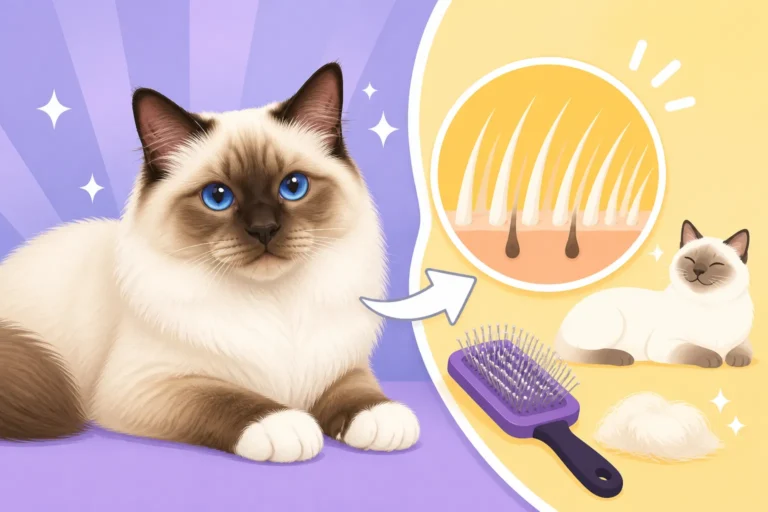
The Birman cat coat lacks a dense woolly undercoat, preventing stubborn mats and reducing daily brushing needs compared to Persian breeds.
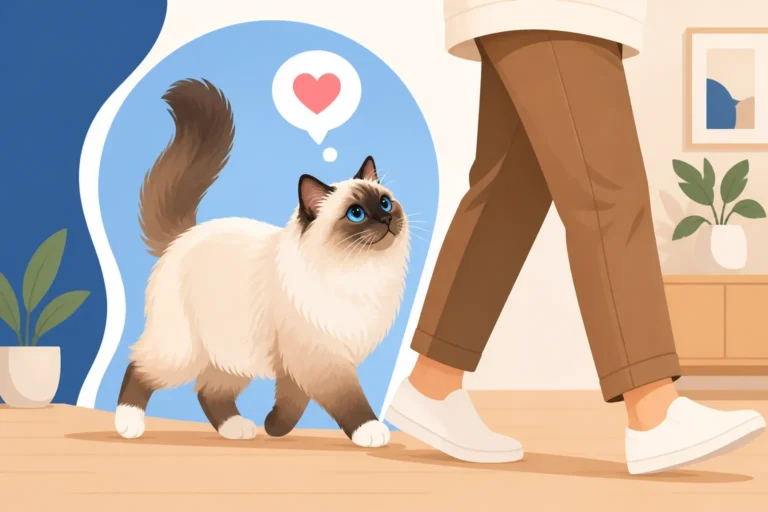
Birman cat behavior explains why this gentle breed follows owners from room to room without making loud demands for attention.

The Birman cat temperament bridges Siamese energy and Persian calm, creating a balanced companion for various households.

Birman kitten pricing factors include health screenings, breeder reputation, regional variations, and precise white paw markings.

Birman kitten pricing depends on whether symmetrical white front paw gloves and hind leg laces meet exact breed standards.

FOXN1 gene deletion in Birman cats causes autosomal recessive immune deficiency by destroying thymus gland development and T cells.

World War II decimated the Birman cat population, leaving only two surviving individuals to rebuild the entire lineage in France.

Birman appearance changes without white gloves, showing point color on paws while keeping blue eyes and silky coats.

The Birman cat gene pool and its historical foundation determine how breeders measure health risks and manage genetic diversity.

Birman temperament and breed standards explain what gentle behavior means daily and why individual cats have boundaries.

The Birman temple legend creates the breed narrative identity, but practical checks reveal kitten health, ancestry, and physical facts.
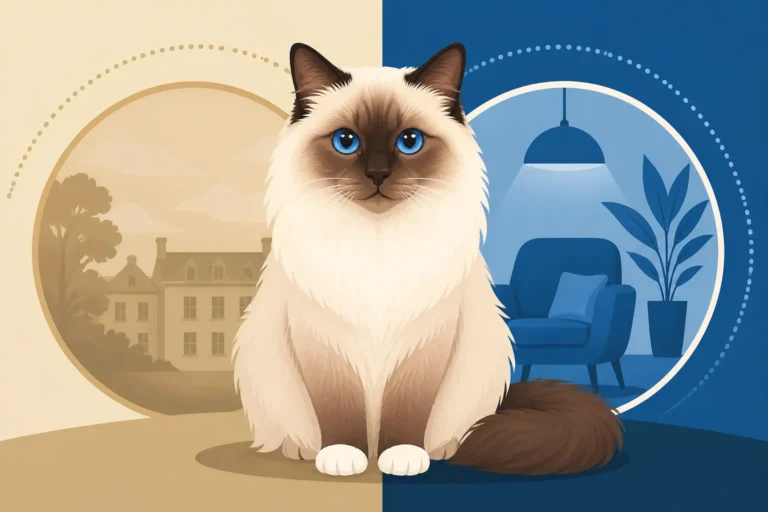
Birman cats maintain classic white paws, pointed coats, and blue eyes across generations while coat details change.
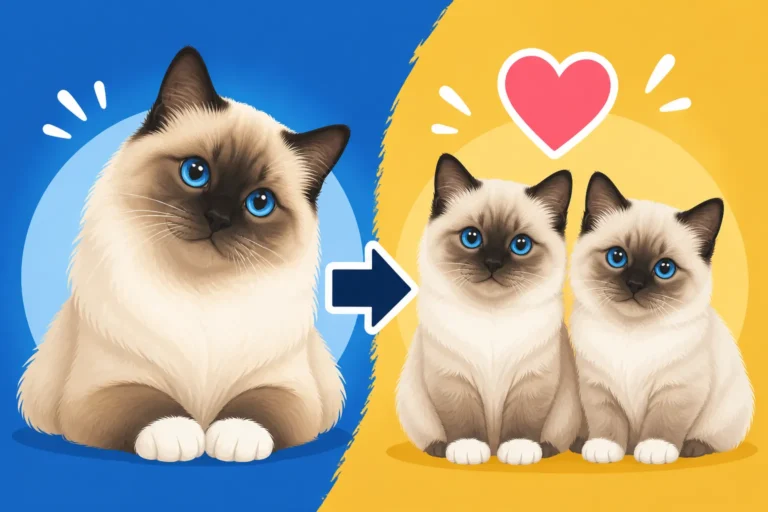
Birman cat owners working long days can evaluate when a second feline companion helps social needs, household routines, and quiet hours.
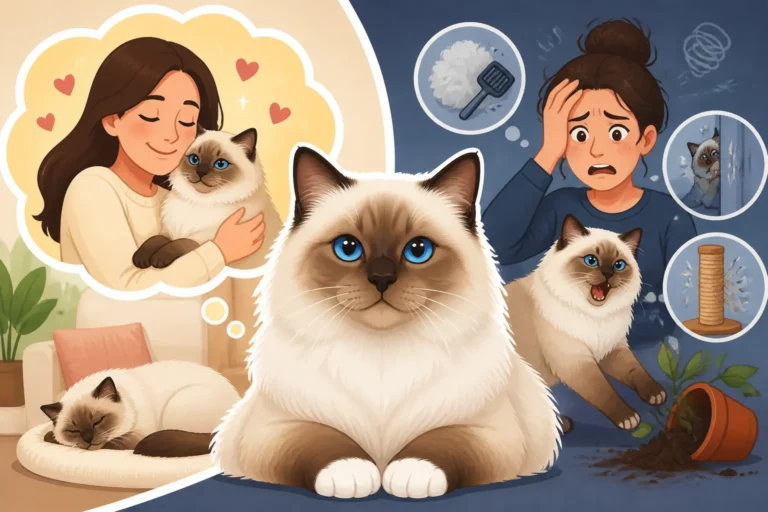
Prospective Birman owners learn about loneliness risks, grooming needs, play requirements, and safe home preparation before buying.

Birman and Siamese cat breeds compared by appearance, coat grooming, daily energy levels, and communication styles.

Birman and Persian cat differences include coat care, grooming routines, face shapes, and daily energy levels for indoor companions.

Birman and Ragdoll cats compared by size, build, coat grooming, and social style to help choose the right pet.