How a Pair of Birmans Left Burma in 1919
For many of us who adore the Birman cat, there's a certain mystique around their origins. We hear tales of ancient temples and sacred cats, but the truth of how these stunning felines actually made their way from the rumored land of Burma to the drawing rooms of Europe can often feel murky and lost in time. It’s a journey shrouded in legend, yet it’s the very foundation of the breed we cherish today. This guide aims to clear away some of that fog, delving into the fascinating, sometimes heartbreaking, story of how a pair of Birmans is said to have made their momentous journey from Burma in 1919, setting the stage for the breed's eventual establishment and survival.
The Enigma of Birman Origins: Separating Legend from History
When you first encounter a Birman, with those striking blue eyes and pristine white 'gloves,' it's easy to believe they sprang from some ancient, mystical source. And indeed, the breed's most popular origin story is deeply rooted in legend. This tale has been passed down through generations of Birman enthusiasts, adding an almost sacred aura to these gentle cats.
The Sacred Cat of Burma Legend
The most widely circulated and beloved origin story of the Birman cat centers around the Temple of Lao-Tsun in ancient Burma (modern-day Myanmar). The legend tells of a golden goddess, Tsim-Kyan-Kse, with sapphire eyes, who watched over the temple and its revered head priest, Mun-Ha. Mun-Ha was devoted to the goddess and lived with his beloved white cat, Sinh, who shared his master's golden eyes. The temple was protected by 100 white cats, all companions to the Kittahs, the priests of the temple.
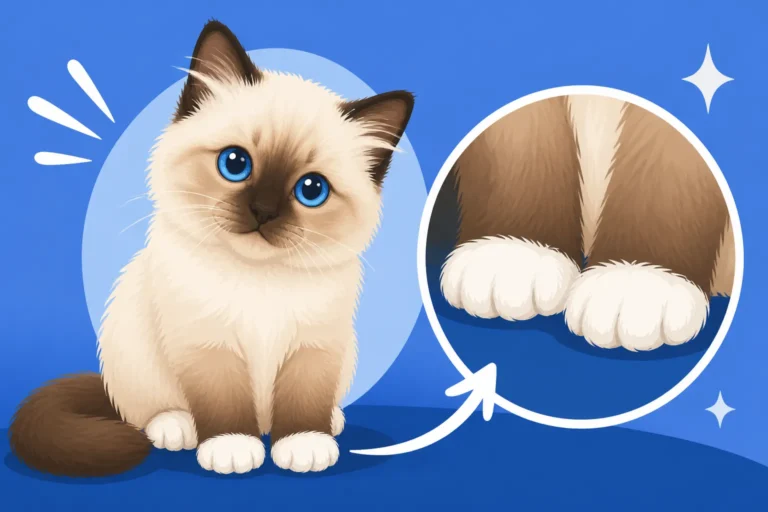
One fateful night, the temple was attacked by invaders. As Mun-Ha lay dying, Sinh leapt onto his master's body, facing the golden statue of the goddess. In a moment of divine transformation, Sinh’s eyes turned sapphire blue, reflecting the goddess's own. His white fur took on a golden sheen, while his legs, face, and tail darkened to the color of the earth, but his paws, touching his master, remained pure white, symbolizing purity and loyalty. The other 99 temple cats also transformed, taking on the same beautiful markings. This legend explains the Birman's distinct appearance – the point coloration, deep blue eyes, and especially the immaculate white "gloves" on all four paws. It’s a beautiful, compelling story that truly captures the essence of the breed's appearance and calm demeanor. The Birman Is the Sacred Cat of Burma, and the Story Is a Legend
Historical Gaps and Speculation
While the legend of the Temple of Lao-Tsun is enchanting, it's crucial to understand that it is, indeed, a legend. There is very little historical or archeological evidence to support the existence of such a temple or that cats resembling modern Birmans were kept there. Many cat breeds, especially those with exotic appearances, have romanticized origin stories created in Europe to enhance their allure and mystique. The allure of an "ancient" and "sacred" lineage made the breed more fascinating and desirable to early enthusiasts.
The reality of tracing cat lineages back to ancient times is often quite difficult, as detailed written records or definitive genetic markers from centuries ago are rare. Unlike some dog breeds with more documented working histories, the domestic cat's journey alongside humans often leaves fewer historical breadcrumbs. What we do know is that cats with colorpoint genetics and some degree of long hair likely existed in various parts of Asia for a very long time, but their specific development into the Birman breed we recognize today is a much more recent phenomenon, firmly rooted in early 20th-century Europe. The lack of concrete evidence for the Burmese legend doesn't diminish the breed's charm, but it does highlight the gap between myth and verifiable history. Whether the Birman Legend Has Any Evidence Behind It
The French Connection: Early Accounts of Birmans in Europe
The journey of the Birman cat from potential origins in Asia to becoming a recognized breed truly begins in Europe, specifically France, in the early 20th century. This era was a time of great fascination with exotic animals and breeds, and the mystique of distant lands like Burma held a particular appeal.
First Sightings and Early Imports
During the late 19th and early 20th centuries, there was a growing trend among European enthusiasts to import various "Oriental" cats. These typically included Siamese, Persians, and other long-haired, color-pointed varieties from different parts of Asia. The exact origins of these early imports were often vague, relying on anecdotal accounts from travelers, diplomats, or even opportunistic traders. It's plausible that cats with characteristics similar to Birmans might have arrived in Europe earlier than 1919, perhaps mixed in with other long-haired imports.
However, these early arrivals often didn't constitute a stable breeding population or a clearly defined breed. They were more like novelties, admired for their unique beauty. The process of establishing a breed involves careful selection, documentation, and the creation of a consistent standard, which takes concerted effort from dedicated breeders. So, while cats resembling Birmans may have been "sighted" earlier, their formal introduction and development into a distinct breed is attributed to specific events and individuals.
The Baron von Guilder Narrative
A key figure often mentioned in the early, somewhat nebulous, history of the Birman's arrival in Europe is an unnamed wealthy German named Major Gordon Russell, or sometimes a Baron von Guilder. The story goes that this individual, while serving in Tibet or Burma, acquired a pair of sacred temple cats. This narrative often intersects with the legend of the Temple of Lao-Tsun, suggesting that these were direct descendants of the transformed temple cats.
The precise details of how this individual acquired the cats are fuzzy, often involving intrigue and high-stakes deals. Some versions suggest they were a gift for helping defend a temple, while others hint at them being "acquired" through less scrupulous means. Regardless, the tale consistently emphasizes the immense value and rarity placed on these cats. They weren't just pets; they were living treasures, believed to carry ancient blessings and unique beauty. This narrative, while still bordering on legend, serves as a bridge between the mystical origins and the more concrete historical accounts that begin with the cats' arrival in France. The idea that such a specific, rare cat came into European hands fuels the romantic image that has always surrounded the Birman.
The Fateful Journey: The Alleged 1919 Departure from Burma
The year 1919 marks a pivotal, though still somewhat disputed, point in the Birman's history: the alleged journey of a pair of these cats from Burma to France. This is the story that most closely ties the breed to its supposed homeland and provides a tangible starting point for its European development.
The Original Pair: Sita and a Male Companion
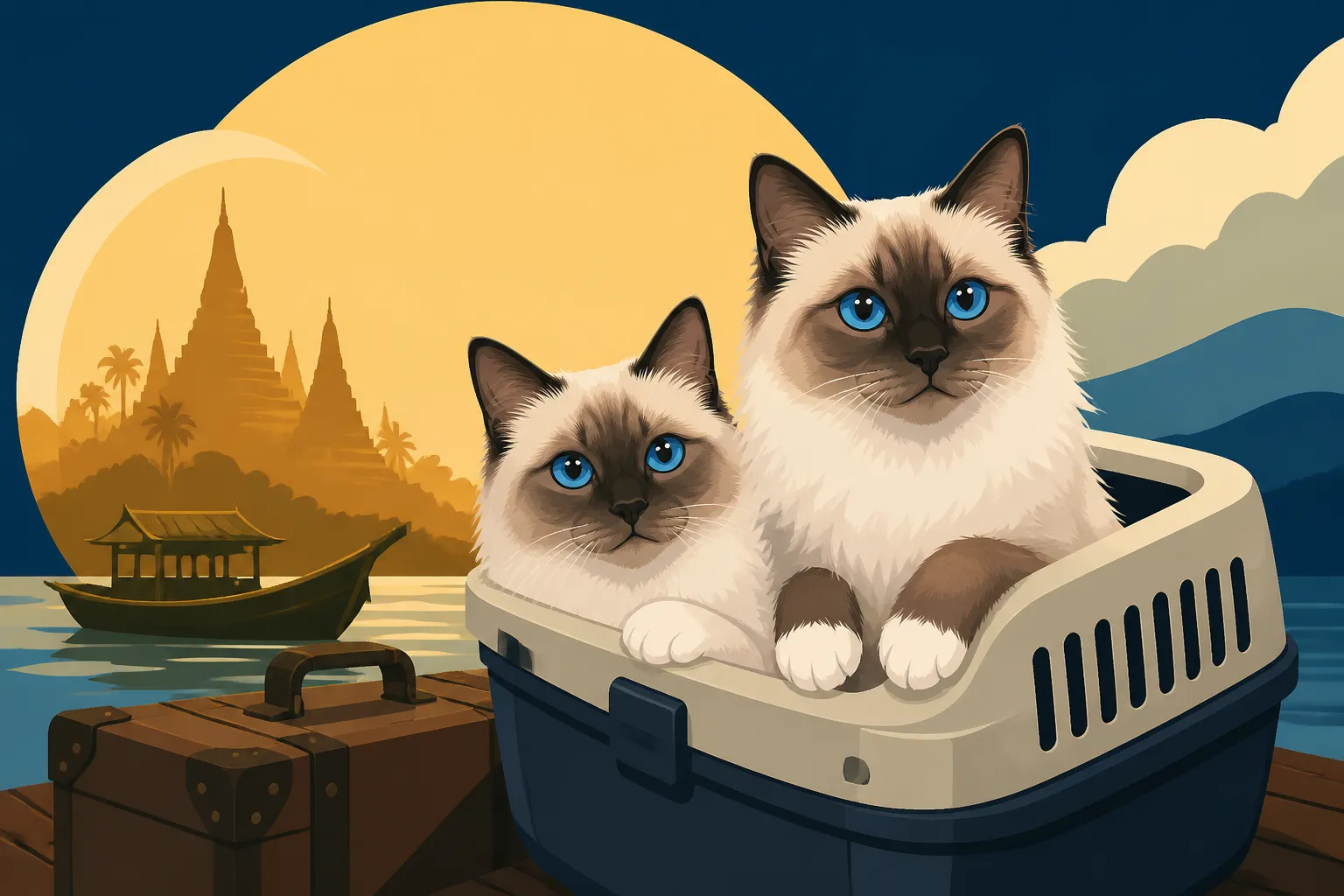
The most commonly accepted account details that a French industrialist named Auguste Pavie, or sometimes an American named Major Gordon Russell, was responsible for acquiring the first pair of Birmans that left Burma. The male cat was named Maldapour, and the female was named Sita. These cats were reportedly sent from Burma to France in 1919. The journey was long and arduous, a significant undertaking in those days. Shipping live animals, especially delicate felines, across continents by sea was fraught with peril, a far cry from arranging pet travel today or simply ordering supplies from Chewy for your modern-day companion.
Tragically, the male cat, Maldapour, did not survive the voyage. Accounts suggest he perished during the journey, possibly due to the stress of travel, illness, or simply the harsh conditions. This loss was a significant blow, as it meant the initial breeding stock was halved before it even reached its destination. The survival of both cats would have provided a much stronger and more diverse foundation for the breed, something early breeders must have lamented deeply. Who Shipped the First Birmans to France The circumstances surrounding Maldapour's death underscore the fragility of such ventures and the challenges faced by those attempting to bring exotic animals across the globe in an era before modern veterinary care and transport logistics. Why the Male Birman Died at Sea
Poupee de Madalpour: The Surviving Foundation Queen
Despite the tragic loss of Maldapour, the female cat, Sita, remarkably survived the journey and arrived safely in France, specifically in Nice. She was heavily pregnant when she arrived, a detail that turned out to be incredibly significant for the future of the breed. Soon after her arrival, Sita gave birth to a litter of kittens. Among these kittens was a female named Poupee de Madalpour, who would become one of the most crucial foundation cats for the entire Birman breed.
Poupee de Madalpour, being the daughter of the sole surviving Birman from the fateful 1919 journey, carried the genetic legacy of those original "sacred cats." Her existence, and the existence of her littermates, meant that the Birman bloodline had not been extinguished with the death of the male cat. These kittens, born in France, represented the first generation of Birmans on European soil, carrying the distinctive traits that breeders would meticulously work to preserve and standardize. It was a moment of immense relief and hope for the few dedicated individuals who championed this new, exotic breed. Her birth in France, rather than Burma, truly marked the transition from legendary origins to documented breeding efforts. Where Sita Gave Birth in 1920
Beyond the Legend: The Reality of Early Birman Breeding in France
Once Sita and her offspring, notably Poupee de Madalpour, were safely in France, the real work of establishing the Birman as a recognized breed began. This wasn't just about admiring beautiful cats; it was a dedicated effort by pioneering breeders to create a consistent, healthy lineage from a very small genetic pool.
Establishing the "Sacre de Birmanie"
The dedicated French breeders, recognizing the unique beauty and gentle temperament of these cats, began the meticulous process of developing a breed standard and working towards official recognition. They named the breed "Sacre de Birmanie," which translates to "Sacred Cat of Burma," further cementing its legendary origins in its very name. This naming was a clever way to blend the romantic myth with the tangible reality of a new breed being established.
The first formal recognition came in France in 1925, when the Birman was officially accepted by the Feline Federation of France. This was a monumental step, signifying that the breed had achieved a consistent appearance and was distinct enough from other long-haired, color-pointed cats like the Siamese or Persian. This early recognition helped to solidify the Birman's place in the cat fancy world and encouraged more structured breeding programs. Without this early acceptance and the efforts to define what a Birman should look like, the breed might have simply faded into obscurity or been absorbed into other more established long-haired lines. When France Registered the Sacre de Birmanie
The Role of Outcrossing in Early Development
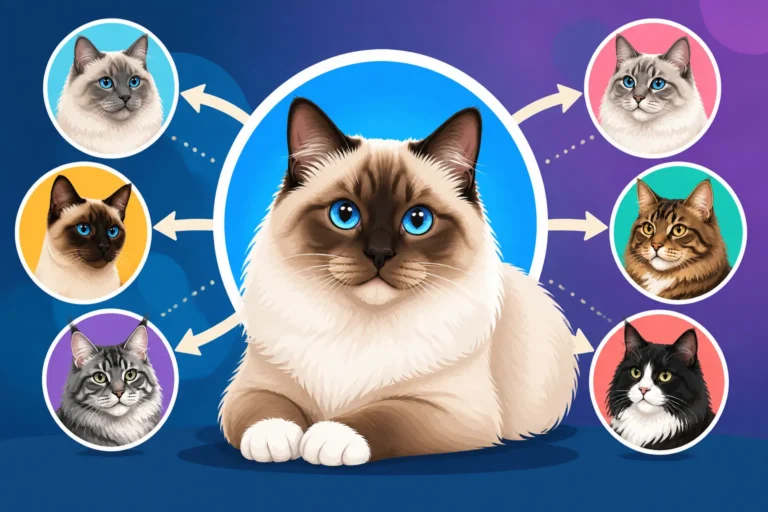
Given that the entire breed descended from a single female (Sita) and her immediate offspring, the genetic pool was incredibly narrow right from the start. To ensure genetic diversity, strengthen the breed's characteristics, and increase numbers, early French breeders had to make a tough but necessary decision: judicious outcrossing. This involved carefully introducing other breeds, primarily long-haired cats like the Persian and, to a lesser extent, color-pointed breeds like the Siamese.
This early outcrossing was crucial for the breed's survival. It helped to introduce new genetic material, preventing the severe inbreeding that could arise from such a small foundation stock. The goal was to preserve the distinctive Birman traits – the unique "gloves," the blue eyes, the silky single coat, and the gentle temperament – while adding vigor and genetic health. However, this also meant a careful balance, as breeders had to work to 'breed out' any undesirable traits from the outcrosses, such as the Persian's flat face or the Siamese's more angular body and vocal nature, to ensure the Birman type remained consistent. It was a long, painstaking process of selection and refinement that spanned several generations. Which Cats the First French Birmans Were Crossed With
The Post-War Bottleneck and Reconstruction
Just as the Birman breed was starting to gain a foothold in Europe, a devastating global event nearly wiped it out entirely. World War II brought immense hardship, not just to people, but also to the animals under their care, including many cherished cat breeds.
The Devastation of World War II
The years of World War II (1939-1945) were catastrophic for much of Europe, and the nascent Birman breeding programs were not spared. With resources scarce, food rationed, and constant upheaval, maintaining catteries and purebred lines became an immense challenge, if not an impossibility. Many breeders were forced to abandon their cats, or their catteries were destroyed. The focus shifted from breeding and showing to mere survival.
The Birman, being a relatively new and still small breed in Europe, was particularly vulnerable. Its numbers dwindled dramatically during the war years. By the end of the conflict, the situation was dire. It's widely believed that only two Birman cats survived the war in Europe, a truly frightening bottleneck for any breed. This near-extinction event meant that the entire future of the Birman breed rested on these two individuals, making their lineage incredibly precious and their survival a testament to their resilience and the dedication of a few tenacious breeders. How Many Birmans Survived the Second World War
The Critical Role of Orloff and Xenia de Kaabaa
The survival and subsequent rebuilding of the Birman breed after World War II is largely credited to a single, surviving pair: a male named Orloff and a female named Xenia de Kaabaa. These two cats, miraculously, had made it through the war and represented the last remaining pure Birman stock. Their names are etched into the breed's history as saviors, the genetic foundation from which all modern Birmans ultimately descend.
Imagine the immense pressure on these two cats and their owners. Every kitten they produced was vital for the continuation of the breed. Their offspring became the cornerstone of renewed breeding efforts, carrying the torch passed down from Sita and Poupee de Madalpour. Without Orloff and Xenia, the Birman breed as we know it today would almost certainly not exist. Their existence after the war highlights the dedication of the few individuals who managed to protect these precious animals amidst unimaginable chaos. Which Two Cats Rebuilt the Birman
Necessary Outcrossings for Survival
With only two cats remaining, the genetic diversity of the Birman breed had reached an absolute minimum. To prevent catastrophic inbreeding depression and to build up the numbers necessary for a viable breeding program, extensive outcrossing was not just an option, but an unavoidable necessity. Breeders had to introduce other breeds back into the Birman lines to expand the gene pool.
The primary breeds used for these post-war outcrossings were, once again, the Persian and the Siamese. The Persian provided the long hair and the overall gentle temperament, while the Siamese contributed to the colorpoint gene. This rebuilding phase was challenging because while the outcrosses added genetic vigor, they also introduced traits that breeders then had to painstakingly select against to maintain the distinctive Birman look. It took many generations of careful breeding to re-establish the consistent Birman type, ensuring the characteristic white gloves, blue eyes, and silky coat were preserved. This history of deliberate outcrossing explains why, even today, geneticists can find traces of other breeds in the Birman's DNA, a living testament to the breed's fight for survival. Why Birman Breeders Had To Outcross This period also underscores what a narrow founder base left in the Birman, creating a genetic legacy that breeders still manage today through health testing and careful pairings. What a Narrow Founder Base Left in the Birman
Establishing the Birman Standard: What Made Them Unique
After the harrowing experiences of war and the subsequent rebuilding efforts, the focus shifted back to solidifying the Birman's identity and establishing a clear, internationally recognized breed standard. This was crucial for ensuring the breed's future and differentiating it from other long-haired, pointed cats.
Defining the Distinct Birman Features
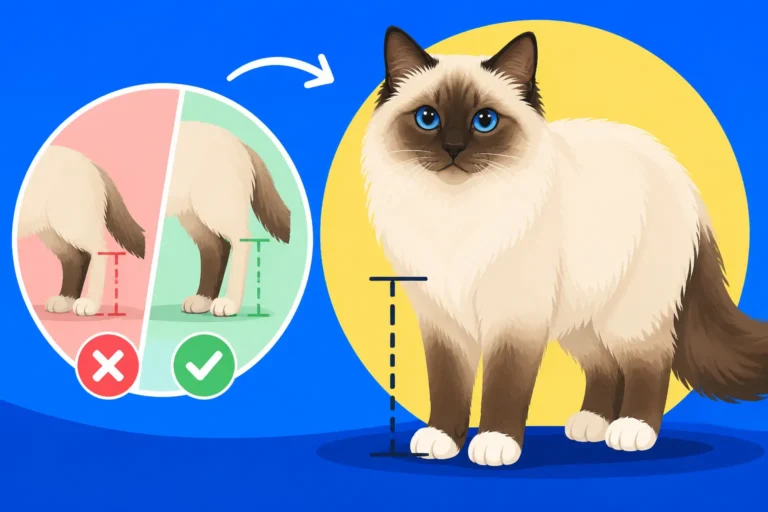
The breed standard is essentially the blueprint for what a perfect Birman should look like and how it should behave. Breeders, working within various cat fancy organizations, meticulously defined every aspect of the Birman's appearance. The most iconic feature, of course, is the white "gloves" on all four paws, ideally perfectly symmetrical and ending at the paw pads on the front feet, and extending into "laces" or "gauntlets" on the back.
Beyond the gloves, other features were carefully described: the deep sapphire blue eyes, the medium-long, silky single coat (meaning no dense undercoat, which makes grooming easier than with a Persian), the sturdy, moderately cobby body, and the rounded, moderately wedge-shaped head with a distinct "Roman" nose. The point coloration, where the ears, face mask, legs, and tail are darker than the body, was also a defining characteristic, inherited from their colorpoint ancestry. Every detail, from ear set to tail length, was considered to create a unique and unmistakable Birman profile. These standards allowed judges to evaluate cats consistently and guided breeders in their selection of breeding stock. What Judges Look For on a Birman's Paws First
The Unpredictable Nature of Gloving Genetics
While the Birman breed carries a specific gene responsible for its distinctive white gloves, the exact manifestation of these gloves can be surprisingly variable and, at times, frustratingly unpredictable for breeders. This is why achieving "perfect" show-quality gloves is such a challenge and why kittens within the same litter can have vastly different markings.
The gloving gene itself is "fixed" in the Birman breed, meaning every Birman cat carries two copies of it. However, modifier genes play a significant role in how these gloves actually appear. These modifiers can influence the height, symmetry, and evenness of the white markings. A kitten might have beautiful, even front gloves but uneven "laces" on the back, or vice versa. Sometimes, a kitten might even have what are called "gauntlets," where the white extends too high up the back leg, making it a "mismark" for show purposes. This unpredictability means that even from parents with excellent markings, a breeder cannot guarantee a litter of perfectly gloved kittens. It adds a layer of complexity and excitement to Birman breeding, where each kitten is a surprise, and the ideal glove remains an aspirational goal. Why Perfect Birman Gloves Are Almost Impossible to Breed Indeed, the genetics behind these particular markings are notoriously complex, leading to the adage that Why Glove Genetics Are Unpredictable in a Birman.
The Enduring Legacy: Why the 1919 Narrative Matters
The alleged 1919 journey from Burma, and the subsequent efforts to establish and rebuild the Birman breed, have created a rich legacy that continues to shape our appreciation for these magnificent cats today. It’s more than just historical trivia; it’s part of their identity.
The Romantic Allure of an Exotic Origin
Even if the details are somewhat legendary, the narrative of the Birman's exotic origins from ancient Burmese temples adds an undeniable romantic allure to the breed. This story contributes to their mystique and makes them more than just a beautiful cat; they become a piece of living history, a connection to a distant, spiritual land. For many potential owners, this romantic backstory is a significant draw, making the Birman feel even more special and unique.
This fascination with their origins often translates into a deeper appreciation for their serene temperament and striking appearance. Owners feel they are welcoming a piece of something ancient and sacred into their homes, fostering a profound bond. This sense of connection to a grand narrative helps sustain the breed's popularity and ensures that people remain interested in its unique story. It's a reminder that sometimes, the legends we tell about our beloved pets are just as important as the verifiable facts in shaping our experience with them.
From Near Extinction to Beloved Companion
The journey of the Birman from a handful of cats surviving a devastating war to becoming one of the most beloved and recognized breeds worldwide is a testament to the dedication of breeders and the inherent charm of the cats themselves. It’s a story of survival against the odds, a dramatic recovery from the brink of extinction. Today, the Birman is cherished for its gentle, affectionate nature, its stunning looks, and its ability to seamlessly integrate into family life.
Modern Birman owners benefit from decades of careful breeding and health screening, but the lessons from their ancestors' struggles remain relevant. Responsible ownership now involves ensuring the cats receive proper nutrition (something you might source easily from a retailer like Chewy, offering a variety of high-quality foods), regular veterinary care, and enrichment. Breeders continue to work diligently to maintain the health and integrity of the lines, building on the foundation laid by those who saved the breed in the darkest of times. Every Birman living today carries the genetic echoes of Sita, Poupee de Madalpour, Orloff, and Xenia de Kaabaa, a beautiful and enduring legacy of a long and storied journey. The fact that the Birman is a sturdy, well-loved companion speaks volumes about the persistent efforts made to preserve its bloodlines.
Key Milestones in Birman History
To help summarize the long and winding road of the Birman's origins and establishment, here's a table of key events and their significance:
| Year/Period | Event | Significance |
|---|---|---|
| Ancient Times | Legend of the Temple of Lao-Tsun | Provides romantic, mythical origin for distinct Birman features. |
| Early 1900s | Early cats arrive in France | Initial exposure of European breeders to long-haired, colorpoint cats. |
| 1919 | Alleged journey from Burma | The pivotal event for the breed's introduction to Europe (Sita & Maldapour). |
| ~1920 | Birth of Poupee de Madalpour | The first known foundation cat for the breed on European soil. |
| 1925 | French Recognition ("Sacre de Birmanie") | Official establishment and naming of the breed in France. |
| 1930s | Early Outcrossing | Introduction of other breeds to strengthen and diversify the gene pool. |
| 1939-1945 | World War II | Near extinction of the breed, leaving only a handful of survivors. |
| Post-1945 | Reconstruction with Orloff & Xenia | Critical period of rebuilding the breed from just two cats. |
| 1950s-1960s | Continued Outcrossing & Re-establishment | Further efforts to rebuild numbers and solidify the breed standard. |
| 1966 | British Recognition | Official recognition by major cat registries outside France. |
| 1967 | American Recognition (CFA) | Introduction and acceptance in North America, leading to global popularity. |
Looking After the Legacy: Modern Birman Care
The fascinating history of the Birman cat, from its legendary origins to its near-extinction and subsequent revival, underscores the responsibility we have as owners today. These cats are not just beautiful companions; they are living testaments to dedicated preservation efforts. Caring for a Birman means understanding their unique needs, many of which are a direct result of their breed development.
For instance, their beautiful, silky single coat, a feature refined through generations of breeding, requires regular grooming, but thankfully No Undercoat Is What Makes a Birman Easy to Groom. You'll need specific tools, often found at pet retailers like Chewy, that won't damage their delicate fur. Diet is another crucial aspect; choosing the right food to support their coat health and overall well-being is important, and for a cat that will rarely beg for food, consistency is key, as Feeding a Birman That Will Never Beg for It. Moreover, the early outcrossings and subsequent genetic bottlenecks mean that modern Birmans, like many purebreds, can have certain health predispositions that informed owners should be aware of. This is why regular vet check-ups and open communication with your breeder about your cat's lineage and health history are so important. The journey of the Birman from 1919 onwards isn't just a tale of the past; it’s a living story that continues with every Birman we welcome into our homes today.
Disclaimer
This article is for general informational purposes only and does not constitute professional advice. Laws, prices and regulations vary by location and change over time. Consult a qualified professional for guidance on your specific situation.