Where Sita Gave Birth in 1920
For many Birman enthusiasts, the breed’s origin story is as captivating as the cats themselves, often blending legend with historical fact. There's a particular fascination around the earliest days of their establishment in the Western world, especially the pivotal moment when the first Birman kittens, descendants of the fabled temple cats, were born in a new land. This guide will meticulously unravel the narratives, separating the romance of the legend from the documented truth, and pinpoint exactly where the crucial first litter of a Birman queen named Sita truly arrived in 1920.
The Legendary Journey from Burma to France
The story of the Birman cat often begins with whispers of ancient temples and sacred guardians, a mystical narrative that gives the breed its enchanting allure. Understanding this legend is key to appreciating the reverence many feel for these cats, and it forms the backdrop against which their real-world journey unfolded.
The Mythical Origins and the Sacred Cat of Burma
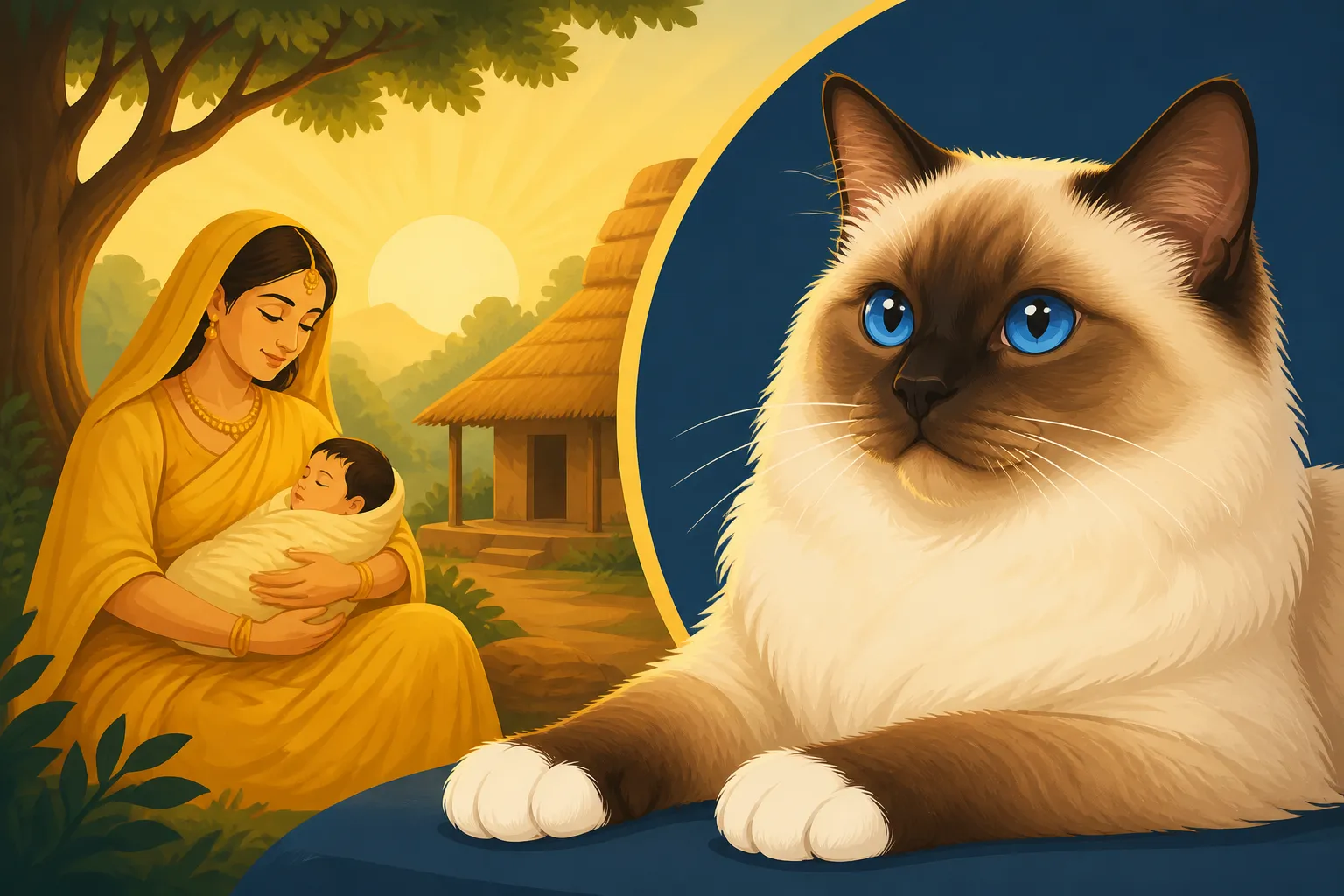
The Birman cat is famously known as the "Sacred Cat of Burma," a title rooted in a beautiful legend. This tale speaks of the Temple of Lao-Tsun, nestled high in the mountains of ancient Burma, where golden-eyed priests worshipped a goddess with sapphire-blue eyes, Tsun-Kyan-Kse. The priests were attended by 100 white cats, revered as living extensions of the gods. The most devoted of these cats was a beautiful, pure white male named Sinh. One day, raiders attacked the temple, killing the chief priest, Mun-Ha. As Mun-Ha lay dying, Sinh leapt onto his master's body. In an instant, a miracle occurred: Sinh's white fur transformed to a golden hue, reflecting the golden statue of the goddess, his eyes turned sapphire blue like Tsun-Kyan-Kse, and his paws, touching his master's pure soul, remained pure white, gaining the iconic "gloves" that define the breed. The other temple cats experienced similar transformations. This legend, while enchanting, provides the romantic "why" behind the Birman's distinct appearance, particularly those pristine white feet. It's a powerful narrative that captures the imagination and makes the breed's origins feel almost divine. The Birman Is the Sacred Cat of Burma, and the Story Is a Legend
Auguste Pavie and the Shipment of the First Birmans
While the legend weaves a beautiful tapestry, the actual journey of Birmans to the West is often attributed to a rather dramatic series of events in the early 20th century. The most widely accepted account suggests that a pair of Birmans was smuggled out of Burma around 1919. One popular version credits an English major named Gordon Russell or a Frenchman, Auguste Pavie, with facilitating their journey. The initial pair consisted of a male, possibly named Mardapour, and a pregnant female, Sita. Tragically, the male did not survive the perilous sea voyage to France, leaving Sita as the sole torchbearer of the breed. This loss undoubtedly heightened the anxiety and responsibility placed upon those receiving her. Imagine the fear of losing such a precious cargo, knowing the hopes of establishing an entirely new breed rested on this one surviving feline. How a Pair of Birmans Left Burma in 1919 and Who Shipped the First Birmans to France are foundational to understanding this critical moment.
Sita's Arrival on French Soil
Upon her arrival in France, the pregnant Sita was entrusted to Mme. Leotardi, a French breeder who became instrumental in the Birman's early development. This was a crucial period, as the future of the breed, at least in the Western world, literally depended on Sita and her impending litter. The journey itself must have been incredibly stressful for the queen, traveling across continents, and then suddenly finding herself in a completely new environment. Her resilience is a testament to the strong spirit of the Birman. Mme. Leotardi's care would have been paramount, ensuring Sita felt safe and comfortable enough to bring her kittens into the world. This moment, from legendary cat in a temple to an actual queen in a European cattery, marks the transition from myth to historical effort.
Sita's First Litter: The True Beginning in France (1920)
This is where the legend firmly intersects with documented history, answering the question of where Sita’s momentous litter actually occurred. It was a birth that laid the true foundation for the Birman cat breed as we know it today.
The Madalpour Cattery and Its Role
In 1920, the historic event of Sita giving birth took place at the cattery owned by Mme. Leotardi, which was often referred to as "de Madalpour." This cattery, located in France, became the crucible for the Birman breed's re-establishment. Imagine the excitement and trepidation surrounding this birth. Here was the sole survivor of the original pair, carrying within her the hopes of a new breed. When Sita delivered her litter, it wasn't just a handful of kittens entering the world; it was the re-ignition of a lineage, a vital step in preserving and propagating the unique characteristics of the Sacred Cat of Burma. The diligent care provided by Mme. Leotardi at her cattery was absolutely indispensable, creating a safe haven for these precious new lives. This was the moment the Birman truly began its Western chapter, far from the ancient temples of its origin. Sita, Poupee and the Founding of the Birman in France clearly points to this period.
Poupee de Madalpour: A Pivotal Offspring
From Sita’s very first litter in 1920, a female kitten named Poupee de Madalpour emerged as a particularly significant individual. Poupee wasn't just another kitten; she became a foundational queen, her genetics crucial to every Birman that followed. Her existence, alongside Sita, ensured that the nascent breed had a genetic anchor. Breeders at the time carefully nurtured these early offspring, understanding that their survival and successful breeding were paramount. Poupee, growing up in Mme. Leotardi's cattery, would eventually contribute significantly to the breed's gene pool, becoming a maternal ancestor to countless Birmans. Her importance cannot be overstated; without Poupee and her subsequent litters, the thread of the Birman lineage might have frayed entirely. It's a powerful reminder of how individual animals can shape the destiny of an entire breed. You can find essential supplies like specialized kitten food for these crucial early stages, or even comfy beds for a queen like Sita from reputable pet supply retailers like Chewy. Who Poupee de Madalpour Was emphasizes her significance.
Challenges of Early Breed Establishment
The excitement of Sita's litter quickly gave way to the daunting reality of establishing a breed from such a narrow genetic base. With essentially only Sita and her offspring as the starting point, early breeders faced immense challenges. The gene pool was incredibly limited, making it difficult to maintain genetic diversity and consistently produce kittens that met the emerging breed standard. Inbreeding was an unavoidable necessity to fix traits, but it also carried risks. Breeders had to meticulously select pairings, observing each kitten's development, especially for key characteristics like the unique white gloves, point coloration, and overall temperament. It was a painstaking process, requiring keen observation, careful record-keeping, and an unwavering commitment to the breed's future. Every single birth was precious, every kitten’s health and markings scrutinized. It wasn't about mass production, but about careful, thoughtful propagation, making those early French catteries incredibly vital.
Shaping the Birman's Future: Early Registries and Recognition
As the first Birman kittens grew and matured, the efforts of dedicated breeders like Mme. Leotardi began to gain traction, leading to the formal recognition of the breed and setting the stage for its wider acceptance.
France's Early Recognition of the "Sacre de Birmanie"
The dedication of early French breeders bore fruit when the breed was officially recognized in France. The breed was initially registered under the name "Sacre de Birmanie," a direct nod to its legendary origins as the "Sacred Cat of Burma." This formal recognition by French feline registries was a monumental step. It meant that the Birman was no longer just an intriguing curiosity but an established, distinct breed with its own standards and a place in the pedigreed cat world. This official status provided a framework for consistent breeding practices, ensuring that breeders aimed for specific traits and health parameters. This recognition was not just a symbolic gesture; it validated years of careful breeding and solidified the Birman's presence in the world of pedigree cats. When France Registered the Sacre de Birmanie details this important moment.
The Limited Gene Pool and Early Breeding Practices
Despite the initial triumph of recognition, the challenge of the limited gene pool remained a persistent concern. The fact that all modern Birmans trace their lineage back to those two cats – the original male who died at sea and Sita, and then her offspring like Poupee – meant that genetic diversity was a major hurdle. This created a significant inbreeding coefficient, an inescapable reality for early breeders. To overcome this, selective outcrossing to other breeds, particularly long-haired cats like Persians and potentially Siamese, became necessary later on. However, in the immediate aftermath of Sita's first litter, the focus was on carefully breeding within the immediate family to amplify the desired Birman traits. This required an acute understanding of feline genetics, even in its early stages, and a willingness to make difficult breeding decisions to safeguard the breed's future. Understanding how a restricted genetic background impacts a breed's health is crucial for breeders even today, when choosing products like specialized diets or supplements from stores like Chewy that cater to breed-specific needs. What Two Founder Cats Did to the Birman's Inbreeding Figure provides insight into this challenge.
How Sita's Descendants Spread Across Europe
From their French birthplace, Sita's descendants, particularly through Poupee, slowly but surely began to spread their unique charm beyond France's borders. As catteries were established and the breed gained a foothold, other European fanciers became interested in these stunning, gentle cats with their distinctive white gloves. The limited number of Birmans meant that these initial exports were incredibly valuable, often traveling to Belgium, Germany, and eventually, the United Kingdom. Each new cattery that acquired a Birman became a new outpost for the breed, contributing to its slow expansion. This gradual dissemination was vital for building a broader base for the Birman, although it still kept the breed relatively rare for many years. It was a slow and deliberate process, far removed from the rapid spread of more common breeds, underscoring the preciousness of each Birman kitten born from those early lines.
| Year | Event | Location | Significance |
|---|---|---|---|
| ~1919 | Pair of Birmans (male and pregnant Sita) leave Burma | Burma -> France | Initiates the Birman's journey to the West. |
| ~1919 | Male Birman dies during voyage | At sea | Sita becomes the sole genetic link to the original pair. |
| 1920 | Sita gives birth to her first litter, including Poupee | Mme. Leotardi's Cattery, France | Foundational birth of the Birman breed in the Western world. |
| 1920s | Poupee de Madalpour begins breeding | France | Key ancestress, ensuring continuation of Sita's line. |
| 1925 | The breed is officially recognized as "Sacre de Birmanie" | France | Establishes the Birman as a distinct breed with standards. |
| Post-WWII | Breed numbers drastically reduced | Europe | Highlights the fragility and importance of its limited origins. |
The Enduring Legacy of Sita's Line
The story of Sita and her 1920 litter isn't just a historical footnote; it’s the very bedrock upon which the entire Birman breed stands today. Her legacy permeates every aspect of the modern Birman, from their genetics to their gentle temperament.
The Birman's Post-War Survival
The journey of the Birman wasn't without its near-catastrophes. The breed faced an almost total wipeout during World War II, a period of immense hardship across Europe. Food shortages, lack of resources, and the general chaos of wartime meant that many catteries struggled to survive, and some breeds vanished entirely. It is a sobering thought that, after all the painstaking work to establish the Birman from Sita’s lineage, the breed was reduced to possibly just two surviving individuals after the war. This meant another massive effort was required, involving careful outcrossing to other breeds to rebuild the numbers and re-establish genetic viability. This post-war bottleneck underscores just how fragile the breed’s existence has been and how every single ancestor, starting with Sita, played an irreplaceable role. The Birman Came Out of the War With Two Cats Left and Which Two Cats Rebuilt the Birman are essential reading for this chapter of their history.
Genetic Contribution to the Modern Birman
It's truly remarkable to consider that every single Birman cat you see today carries the genetic imprint of Sita and her offspring, particularly Poupee de Madalpour. Their genes are the very foundation, passed down through generations, ensuring the distinctive characteristics that make a Birman a Birman: the striking point coloration, the deep blue eyes, the silky coat, and, of course, those iconic white gloves. Even after the necessary outcrossings to rebuild the breed post-war, the core Birman traits derived from Sita's line were carefully selected for and preserved. This genetic continuity is a powerful link to the past, reminding us of the dedicated individuals who nurtured this precious lineage from its very beginnings in that French cattery. The history of the Birman is literally written in their DNA. What a Century Has Not Changed About the Birman perfectly captures this enduring legacy.
Understanding the Birman's History for Future Care
For us, as Birman enthusiasts and owners, understanding this rich and sometimes precarious history isn't just a fascinating anecdote; it informs how we care for our cats today. The limited gene pool in the breed's early days means that responsible breeding and health screening are absolutely paramount. Awareness of potential genetic predispositions, though thankfully rare in Birmans thanks to careful breeding, is still important. Choosing a reputable breeder who prioritizes genetic health testing, and who understands the breed's lineage, is more important than ever. When you bring a Birman into your home, you're not just getting a pet; you're becoming a custodian of a living piece of history. Providing them with the best possible care, from high-quality nutrition (easily sourced from retailers like Chewy) to regular vet check-ups, is a way of honoring the incredible journey these cats have made from ancient legends to cherished family members. It connects us directly to the efforts of those early pioneers in France who guarded Sita's precious litter.
Disclaimer
This article is for general informational purposes only and does not constitute professional advice. Laws, prices and regulations vary by location and change over time. Consult a qualified professional for guidance on your specific situation.