Who Owned Poupee de Madalpour
Many Birman enthusiasts are captivated by the breed's striking appearance and gentle nature, but few delve into the fascinating, sometimes murky, history behind their beloved companions. It's a journey filled with legends, war, and the dedication of early breeders who, against all odds, saved the breed. This guide dives deep into one pivotal figure from that past: Poupee de Madalpour, exploring her role and the mystery surrounding her early ownership.
The Birman's Legendary Origins and Early European Arrival
When you look into the deep blue eyes of your Birman, or stroke their silky coat, it's easy to get lost in their calm, almost mystical presence. Many tales surround their origins, painting a picture of sacred cats guarding temples in ancient Burma. The most famous, of course, is the legend of Sinh, the temple cat whose transformation after his master's death is said to have gifted the Birman its striking sapphire eyes, golden coat, and pure white paws. This beautiful story suggests that the Birman's distinctive 'gloves' and 'laces' are divine markings, a lasting symbol of purity and devotion. It’s a lovely thought, isn't it? A cat with such an ethereal beauty must surely have a magical past.
However, while the legends provide a romantic backdrop, the documented history of the Birman's arrival in Europe is a bit more grounded, yet equally fascinating. The journey across continents was perilous, and the breed’s survival hung by a thread more than once. The true narrative begins to emerge in the early 20th century, specifically around 1919, when the first pair of Birmans is believed to have been shipped from Burma to France. Imagine the courage it must have taken to transport these precious animals across such vast distances, knowing the risks involved. Sadly, history tells us that the male of this pioneering pair did not survive the voyage, leaving the fate of the nascent breed in Europe resting entirely on the pregnant female, Sita. This makes her story, and that of her offspring, all the more crucial to every Birman we see today. You can learn more about this initial journey in How a Pair of Birmans Left Burma in 1919.
The Role of French Cat Fanciers
It was in France that the Birman found its first dedicated advocates and breeders, people who were utterly captivated by these enigmatic cats. After Sita's arrival and the subsequent birth of her kittens, these early fanciers took on the monumental task of establishing and popularizing the breed. They meticulously documented the cats, working to create a consistent breed standard that would eventually be recognized by official registries. This was no small feat, especially in an era before widespread genetic testing and easy communication. They had to rely on careful observation, selective breeding, and a deep understanding of feline genetics – or at least, what was understood at the time. Their passion laid the groundwork for the Birman we know and love today, ensuring that its unique traits were preserved and celebrated. Without these individuals, it's quite possible the Birman might never have found its footing outside of its legendary homeland, challenging the notion of Whether the Birman Was Bred in Europe From the Start.
Unraveling the Mystery: Who Was Poupee de Madalpour?
Within the intricate tapestry of early Birman history, one name stands out as particularly significant, yet often shrouded in a touch of mystery: Poupee de Madalpour. Many Birman enthusiasts have heard her name, recognizing it as one of the fundamental pillars of the breed, but the exact details of her ownership and her personal story can be a little hazy. It's a common frustration for those of us who love delving into our cats' ancestry – sometimes the historical records just don't offer all the neat answers we'd like!
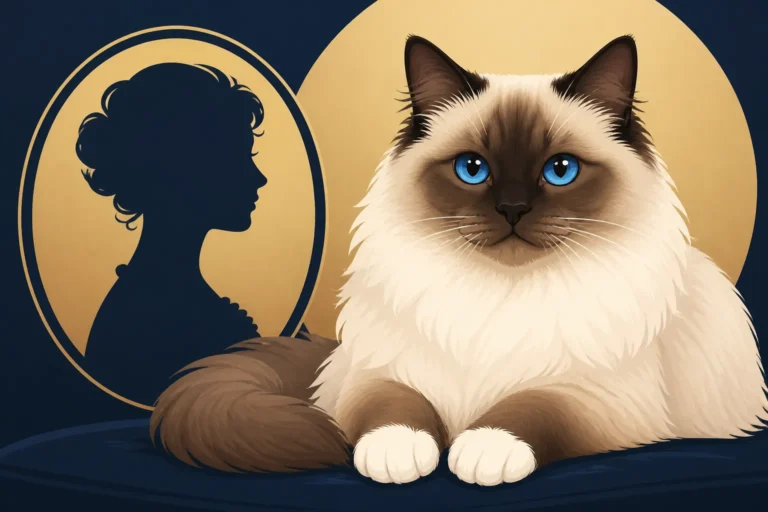
So, let's pull back the curtain a little. Poupee de Madalpour was indeed one of Sita's kittens, born shortly after her arrival in France. This makes her a direct descendant of that very first, crucial shipment from Burma. Her mother, Sita, was owned by a wealthy American living in France, a gentleman by the name of Major Gordon Russell, or sometimes referred to as Mr. Russell. It was in his care that Sita gave birth, and thus, Poupee herself began her life within this household. However, the narrative around Poupee quickly intertwines with another key figure: Madame Marcelle Boddy de Galé. It is widely understood that Madame Boddy de Galé acquired Poupee de Madalpour from the Russell household. She became one of the most ardent and influential early Birman breeders in France, playing an absolutely critical role in the breed's establishment and promotion. Her cattery, named "de Madalpour" itself, became synonymous with the Birman. This is why Poupee carries "de Madalpour" as part of her name, signifying her origin and connection to Madame Boddy de Galé's pioneering efforts. Her involvement was instrumental in bringing these cats into the wider French cat fancy. You can trace this foundational moment further by reading Sita, Poupee and the Founding of the Birman in France.
The Importance of Poupee's Lineage
The fact that Poupee de Madalpour was a direct offspring of Sita made her incredibly valuable. She represented a pure, direct link to the mythical origins and the first cats to ever leave Burma. In those early days, with very few Birmans in Europe, every individual cat's genetic contribution was vital. Poupee became a foundation queen, meaning her offspring were crucial for expanding the gene pool and solidifying the breed's distinctive traits. Imagine the immense responsibility Madame Boddy de Galé must have felt, knowing she held the future of this beautiful new breed in her hands! Without cats like Poupee, the effort to establish the breed would have been nearly impossible, especially considering Why Only One of the First Two Birmans Survived, potentially leading to its extinction before it ever truly began. Even today, responsible breeders meticulously track their pedigrees back through these early lines, understanding that every Birman carries a piece of this extraordinary history.
The Enduring Legacy of Poupee de Madalpour
Poupee de Madalpour's significance extends far beyond simply being one of the first Birmans born in Europe. She, alongside other early foundation cats, literally shaped the genetic makeup of every Birman cat that has come after her. When you consider the genetic bottlenecks the breed faced, particularly after the devastation of World War II where the Birman population dwindled to just two known individuals, The Birman Came Out of the War With Two Cats Left, the contributions of cats like Poupee become even more profound. The small gene pool meant that nearly all modern Birmans trace their ancestry back to a very limited number of founding individuals, and Poupee is undoubtedly one of them. This means that What Poupee de Madalpour Passed to Every Birman is something tangible and lasting.
The dedicated work of breeders like Madame Boddy de Galé, who championed Poupee's line, allowed the breed to gain official recognition. It was through their tireless efforts that the Birman, initially known as the "Sacre de Birmanie," was officially registered in France. When France Registered the Sacre de Birmanie marked a massive step, moving the Birman from a rarity to a recognized and protected breed. It's truly incredible how much effort goes into ensuring a breed's survival and recognition, especially when starting with such limited numbers. The early standards, which would define the Birman's appearance and temperament for generations to come, were based on these initial cats, including Poupee.
A Founding Pillar of the Breed
Poupee de Madalpour is considered one of the two main female founders from which the vast majority of today's Birmans descend, post-outcrossing. While the post-war efforts saw necessary outcrossing with other longhaired breeds like Persians to rebuild numbers, and we reflect on Which Two Cats Rebuilt the Birman, the underlying Birman traits, the stunning gloving, and the gentle temperament, were solidified by these early foundation cats. Think about it – every Birman kitten born today, with its beautiful white paws and captivating blue eyes, owes a piece of its genetic heritage to Poupee. The genetic traits she carried, including the specific markers for the unique Birman gloving pattern, were passed down through her offspring. Even the very distinct personality traits that make Birmans such cherished companions – their quiet nature, their affectionate but not overly demanding presence – can be seen as echoes of the careful selection and breeding practiced by those who valued cats like Poupee. This initial foundation was so critical, especially considering What a Narrow Founder Base Left in the Birman and the challenges that followed.
Here’s a snapshot of the early Birman lineage:
| Cat Name | Role in Birman History | Owner (Earliest Documented) | Significance |
|---|---|---|---|
| Sinh (Legendary) | Mythical Founder | Temple Priests | Origin of white gloves & sapphire eyes |
| Male Birman (Unnamed) | First male shipped to France | Major Gordon Russell | Died en route to France |
| Sita | First pregnant female in Europe | Major Gordon Russell | Mother of Poupee, foundational queen |
| Poupee de Madalpour | Key foundation queen | Madame Marcelle Boddy de Galé | Genetic pillar, established early French lines |
| Orloff & Xenia de Kaabaa | Post-war rebuilding pair | Various breeders (later) | Saved the breed from near extinction post-WWII |
This table clearly illustrates the pivotal role Poupee played, connecting the earliest arrivals to the subsequent efforts to establish and rebuild the breed. It reminds us that behind every beautiful breed there are dedicated individuals and, indeed, specific cats whose contributions were monumental. This foundation also helps us understand What Genetics Say About the Birman's Origin.
Understanding the Birman's Founding History: Beyond the Myths
While the legends of sacred temple cats are enchanting, understanding the actual, often challenging, history of the Birman breed's establishment offers a deeper appreciation for these magnificent animals. It highlights the immense dedication of early cat fanciers who, against incredible odds, worked to preserve and promote the Birman. Knowing that your Birman descends from a line saved from near extinction, and painstakingly nurtured by passionate individuals, adds another layer of connection to your pet. It’s not just about a beautiful cat; it's about a living piece of history.
This meticulous tracking of lineage and understanding of genetics continues today, underpinning responsible breeding practices. Breeders share information, trace pedigrees, and utilize modern tools to ensure the health and genetic diversity of the Birman. They understand What Two Founder Cats Did to the Birman's Inbreeding Figure and actively work to maintain health and vitality. When you look for a kitten, reputable breeders will openly discuss their lines, their health testing, and the history of their cattery, often referring back to these very early foundation cats. Resources like extensive online breed databases and even pet supply sites like Chewy that offer educational articles, provide a wealth of information for those keen to dive deeper into breed specifics and historical context. Understanding the roots of the Birman helps us recognize the ongoing responsibility that comes with being an owner and a steward of this wonderful breed. It’s a testament to the perseverance of a few dedicated people that we have Birmans today.
Looking at the breed's journey also helps us understand why certain traits are so fixed, like The Gloving Gene Every Birman Carries Two Copies Of. The focused breeding from a limited number of founders meant that these specific genetic markers became universal within the breed. It wasn’t an accident; it was a consequence of the breed’s very specific and challenging origin story. So, the next time your Birman gracefully pads across the room, remember Poupee de Madalpour and the incredible journey her ancestors took to bring this sacred cat from legend into our homes. It’s a truly remarkable legacy, one that continues to captivate hearts and inspire dedicated care, much like finding the perfect high-quality food or toy for your Birman on sites like Chewy, ensuring their well-being mirrors the dedication of those early founders.
Disclaimer
This article is for general informational purposes only and does not constitute professional advice. Laws, prices and regulations vary by location and change over time. Consult a qualified professional for guidance on your specific situation.