How the Birman Reached Germany and Britain From France
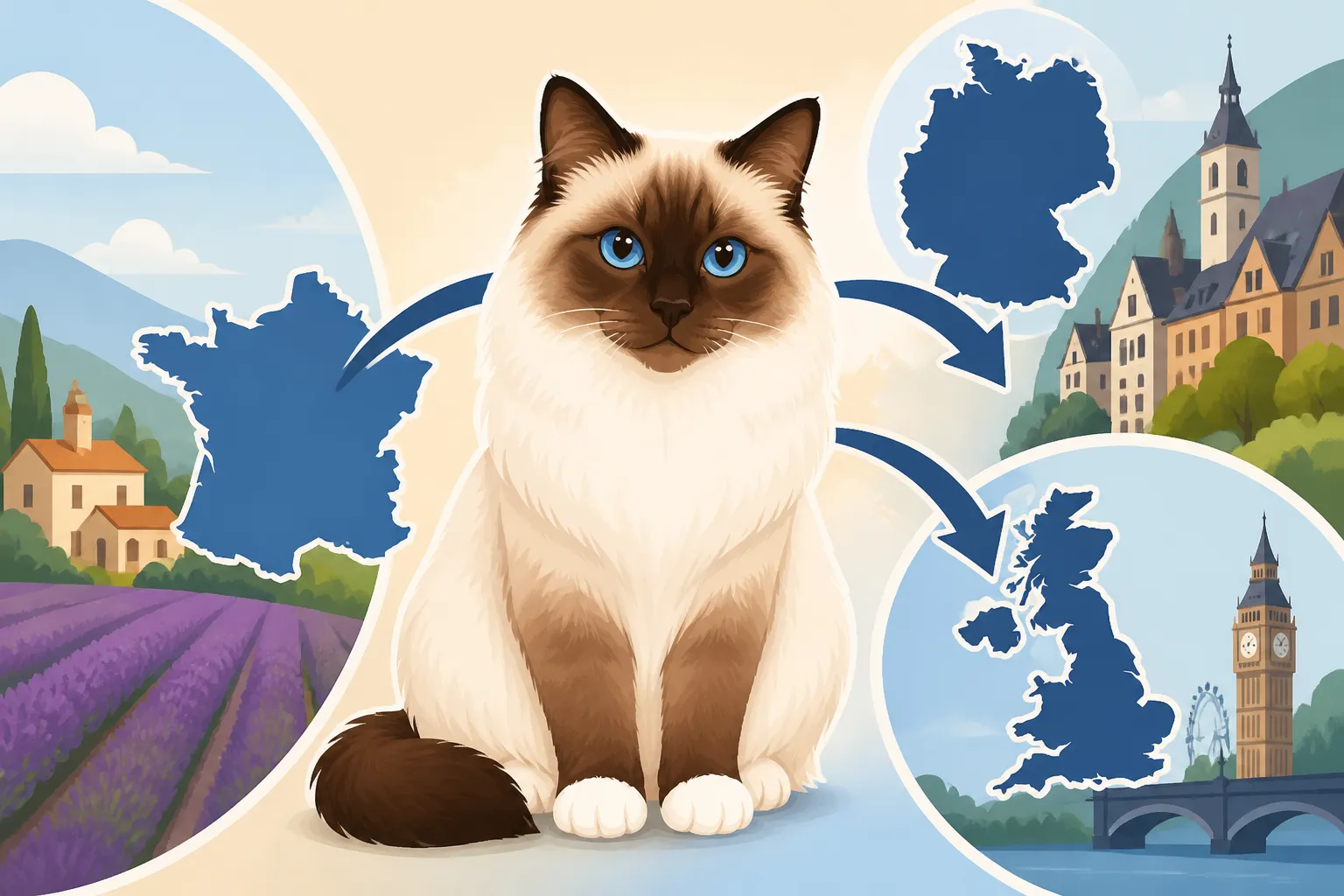
It's quite something to think about, isn't it? Our beautiful Birmans, with their striking blue eyes and pristine white 'gloves,' have a history that's as captivating as their appearance. Many of us know they came from somewhere mysterious and exotic, often associated with temples and legends, but the real story of how they traveled across Europe, especially after enduring a period of near extinction, is often overlooked. This guide will walk you through the incredible journey of the Birman, detailing its post-war survival and how it found loving homes and dedicated breeders in Germany and Britain after its fragile re-establishment in France.
The Birman's Fragile Beginnings in France
Before the upheaval of global conflicts, the Birman cat was already a precious and somewhat mysterious presence in Europe, particularly in France. Its early history is entwined with romantic tales of ancient Burma and temple cats, stories that captured the imagination of early fanciers and set the stage for its unique appeal. However, even with this initial allure, the breed's numbers were always quite small, making its existence inherently vulnerable from the start.
Early French Establishment
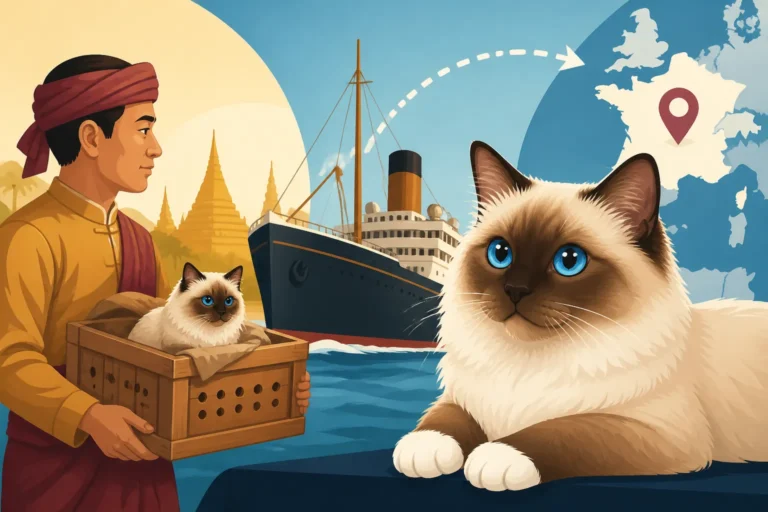
The legend speaks of the Birman originating in Burma, specifically from the Temple of Lao-Tsun, and tells a magical tale of transformation that explains their distinctive markings. While the exact historical accuracy of this legend is debated, it certainly added to the breed's mystique. What we do know is that the first documented Birmans arrived in France in the early 20th century. One famous account involves a pair, a male named Maldapour and a pregnant female named Sita, shipped from Southeast Asia, though sadly Maldapour did not survive the journey. Sita, however, birthed a litter in Nice, France, and it was from these kittens that the breed, then known as the "Sacre de Birmanie," began to take root in the European cat fancy scene. The Birman Is the Sacred Cat of Burma, and the Story Is a Legend
Breeders in France, enchanted by these point-colored cats with their unique white paws and soulful blue eyes, set about establishing the breed standard. They worked diligently to cultivate the Birman's gentle temperament and stunning physical traits. The breed was officially recognized in France in 1925, a significant milestone that legitimized its presence and allowed for its structured development. Despite this recognition, the Birman remained relatively rare, known only to a dedicated circle of enthusiasts and a handful of catteries. Its allure was exclusive, a treasured secret among those who appreciated its quiet beauty.
The War's Devastating Impact
Just as the Birman was beginning to find its footing, the world was plunged into the chaos of World War II. This period was nothing short of catastrophic for many purebred animal populations across Europe, and the Birman was no exception. Breeding programs came to an abrupt halt, catteries struggled to find food and resources, and the simple act of keeping animals safe became an immense challenge. Many cats were lost due to bombing raids, starvation, or simply the inability to maintain their care amidst widespread conflict.
The Birman, already a rare breed with a limited gene pool, suffered immensely. Communication between breeders was cut off, transportation was impossible, and the focus shifted entirely to human survival. By the end of the war, the breed was on the brink of complete extinction. It's a stark reminder of how fragile even the most beautiful and carefully cultivated lives can be in the face of such widespread devastation. How Many Birmans Survived the Second World War The number of surviving Birmans was incredibly low, so low that the future of the entire breed hung by a thread, depending on the survival of just a handful of individuals scattered across a war-torn continent.
The Rebuilding Effort: A Necessity, Not a Choice
The aftermath of World War II presented a monumental task for Birman enthusiasts: bringing the breed back from the very edge of oblivion. It wasn't just about finding any surviving cats; it was about meticulously piecing together a future for the breed from a genetic pool so shallow it threatened its very existence. This wasn't a casual decision to expand a breed; it was a desperate, collective act of preservation.
The Critical Role of Two Cats
In the bleak landscape following the war, the survival of the Birman breed hinged almost entirely on two individuals: a male named Orloff de Kaabaa and a female named Xenia de Kaabaa. These two cats became the literal foundation for every modern Birman alive today. Imagine the weight of that responsibility, knowing that the entire future of a beautiful breed rested on these two cats and their offspring. Their survival was a miracle in itself, a testament to the dedication of the few breeders who managed to keep them safe through the darkest years. Which Two Cats Rebuilt the Birman
These two cats, and a few others who may have contributed in the immediate post-war period, represented the last genetic vestiges of the original French Birman lines. Every subsequent breeding decision was made with extreme care, focusing on preserving the distinctive Birman traits while desperately trying to increase their numbers. It was a race against time and genetic limitations, a true labor of love that required immense commitment and understanding of feline genetics, even if that understanding was still developing at the time.
The Inevitable Outcrossings
Given the severely limited number of surviving Birmans, pure-to-pure breeding simply wasn't a sustainable option. Without introducing new genetic material, the breed would have faced severe inbreeding depression, leading to rampant health problems and a complete loss of vitality. Therefore, outcrossing became not just an option, but an absolute necessity. Breeders had to make the difficult choice to introduce other breeds to widen the gene pool and ensure the Birman's long-term survival. Which Breeds Were Crossed In to Save the Birman
The most common choices for outcrossing were the Persian and the Siamese. The Persian contributed to the Birman's long, silky coat and sturdy body type, while the Siamese brought in the classic point coloration and elegant lines. This careful infusion of new blood allowed for the necessary genetic diversity but also presented a significant challenge: breeding back to the distinct Birman type. It required several generations of selective breeding to eliminate unwanted traits from the outcrosses and reinforce the specific characteristics that define a Birman, such as its unique white 'gloves' and 'laces.' This process was painstakingly slow but ultimately successful in securing the breed's future. What the Outcrossing Brought Into the Birman
Journey to Germany: Early Adopters and Dedicated Breeders
As the Birman breed slowly but surely recovered its numbers in France, its unique charm inevitably began to draw interest from cat fanciers in neighboring European countries. Germany, recovering from its own wartime devastation, proved to be an eager new frontier for the Sacred Cat of Burma, with dedicated individuals playing a crucial role in establishing the breed within its borders.
Post-War Connections and New Homes
The rebuilding of the Birman breed wasn't an isolated event within France. As catteries slowly re-established themselves and managed to produce viable litters, the network of cat enthusiasts across Europe began to reconnect. German breeders, aware of the Birman's beauty and rarity, started looking to France to acquire these precious cats. The motivations were often a mix of fascination with the breed's striking appearance and a desire to contribute to the preservation of a lineage that had almost vanished.
Importing cats in the mid-20th century, even within Europe, was no small feat. It involved navigating post-war travel restrictions, health certifications, and often long, arduous journeys for the animals. These early German adopters weren't just buying pets; they were making a serious commitment to the future of the breed, understanding the fragile genetic background of these initial imports. They were pioneers, laying the groundwork for what would become a strong Birman presence in Germany.
Shaping the German Birman Lines
Once Birmans arrived in Germany, breeders there embarked on their own journey of carefully developing the lines. They focused on maintaining the established French standard, ensuring the characteristic coat texture, point coloration, and, crucially, the distinctive white paws were consistently produced. This meant meticulous record-keeping, selective breeding, and often a close collaboration with their French counterparts to exchange knowledge and sometimes, new breeding stock.
The German Birman community grew steadily, with catteries dedicating themselves to both the quantity and quality of their cats. They contributed significantly to the breed's genetic health by continuing the careful breeding practices initiated in France. The dedicated efforts of these German breeders ensured that the Birman not only survived but thrived, expanding its footprint beyond its initial French sanctuary and becoming a beloved companion in German households. How Many Birman Catteries Existed Before the War The commitment to health and type meant that German-bred Birmans quickly gained a reputation for their excellence.
Arrival in Britain: A New Frontier for the Sacred Cat
Across the English Channel, British cat fanciers were also beginning to hear whispers of the enchanting Birman cat emerging from its post-war recovery. The idea of a cat with such a distinguished look and gentle nature, yet so rare, quickly sparked considerable interest. The journey to establish the Birman in Britain, much like in Germany, required dedication, patience, and a deep appreciation for the breed's unique heritage.
Crossing the Channel
The introduction of Birmans to Britain generally occurred a little later than to Germany, as the French breeding programs needed more time to produce a stable number of healthy kittens for export. When the first Birmans eventually made their way across the Channel, they were greeted with immense enthusiasm. British breeders recognized the immense potential of the breed, not just for its beauty but for its wonderfully placid temperament, which would make it an ideal companion cat.
Establishing a new breed in Britain's long-standing and highly organized cat fancy scene wasn't without its hurdles. There were specific registration requirements, established showing categories, and the challenge of convincing existing breeders and judges of the Birman's distinct qualities. However, the unique appearance and charming personality of the Birmans quickly won over hearts, paving the way for their formal acceptance into the British cat world.
Kennel Club Recognition and Growth
A crucial step for any breed seeking to establish itself in the UK is recognition by the governing bodies, primarily the Governing Council of the Cat Fancy (GCCF). This process involves presenting enough cats that consistently meet the breed standard, demonstrating a stable gene pool, and establishing a dedicated breed club to oversee its development. The Birman's journey to full recognition by the GCCF was a significant milestone, solidifying its place among the recognized pedigree breeds in Britain. When Britain Recognized the Birman
Once recognized, the breed's popularity in Britain steadily grew. Birman cat clubs were formed, dedicated to promoting responsible breeding, organizing shows, and educating the public about these wonderful cats. Breeders worked tirelessly to ensure the health and welfare of their lines, always mindful of the breed's small founding population and the need for careful genetic management. The breed became a cherished presence in British homes, admired for its striking beauty and adored for its affectionate, undemanding nature. The Year Britain Accepted the Rebuilt Birman
| Stage of Development | France (Sacre de Birmanie) | Germany | Britain |
|---|---|---|---|
| Initial Breed Formation | Early 20th Century | Post-WWII Introduction | Post-WWII Introduction |
| First Official Reg. | 1925 (as Sacre de Birmanie) | Mid-1950s (estimated) | 1966 (GCCF Recognition) |
| Post-War Rebuilding | Essential, from 1945 (2 cats) | Importing from rebuilt French lines | Importing from rebuilt French lines |
| Widespread Popularity | Mid-20th Century onwards | Late 20th Century onwards | Late 20th Century onwards |
The Lingering Legacy of a Small Gene Pool
While the story of the Birman's journey from near extinction to widespread appreciation in Germany and Britain is a triumph of dedicated breeding, it's also a story with lasting implications. The challenges faced by the breed in the mid-20th century left an indelible mark, shaping its genetic profile and influencing how responsible breeders approach its care and development even today.
Genetic Bottlenecks and Health Considerations
The reality of saving a breed from just two cats, even with careful outcrossing, is that it creates what geneticists call a 'bottleneck.' This significantly reduces the overall genetic diversity within the breed. While the outcrosses helped, the foundation remained incredibly narrow. This reduced genetic pool means that certain genetic traits, both desirable and undesirable, can become more prevalent, and the breed may have a higher predisposition to specific health conditions that might have been less common in a larger, more diverse population. What a Narrow Founder Base Left in the Birman
Responsible Birman breeders are acutely aware of this historical genetic bottleneck. They prioritize genetic health testing, such as screening for hypertrophic cardiomyopathy (HCM) and polycystic kidney disease (PKD), and strive to make informed breeding decisions to maintain genetic diversity within their lines. It's an ongoing effort to balance the preservation of the Birman's unique appearance and temperament with the imperative of breeding healthy, robust cats. Understanding this history helps us appreciate why thorough health clearances and transparent breeder practices are so vital for the Birman. Which Diseases Survived the Birman's Post War Bottleneck
The Shared European Heritage
Despite being established in different countries with their own breed clubs and registries, the Birmans found in France, Germany, Britain, and eventually beyond, all trace their lineage back to that handful of post-war survivors. This means that a Birman in Berlin shares a deep genetic connection with a Birman in Birmingham, which in turn connects to a Birman in Bordeaux. This shared, narrow genetic heritage underscores the importance of international collaboration among breeders.
The collective efforts of breeders across these nations have contributed to the Birman we know and love today. It's a testament to their dedication that a breed facing such dire circumstances not only survived but flourished. The understanding of this common ancestry fosters a sense of unity and shared responsibility among Birman enthusiasts worldwide, ensuring that the legacy of Orloff and Xenia de Kaabaa continues to be one of careful preservation and enduring affection. What a Century Has Not Changed About the Birman Their history is a beautiful tapestry woven by countless passionate hands. Whether the Birman's Gene Pool Is Safe Now
Disclaimer
This article is for general informational purposes only and does not constitute professional advice. Laws, prices and regulations vary by location and change over time. Consult a qualified professional for guidance on your specific situation.