The Year Britain Accepted the Rebuilt Birman
Britain’s acceptance of the Birman was a milestone for a breed rebuilt after the Second World War had left it perilously close to disappearing. The key year was 1966, when the Birman gained recognition in Britain. Understanding what that recognition meant—and why it came decades after the breed’s beginnings in France—makes the date much more than a line in a cat-breed timeline.
Britain accepted the Birman in 1966
What recognition meant
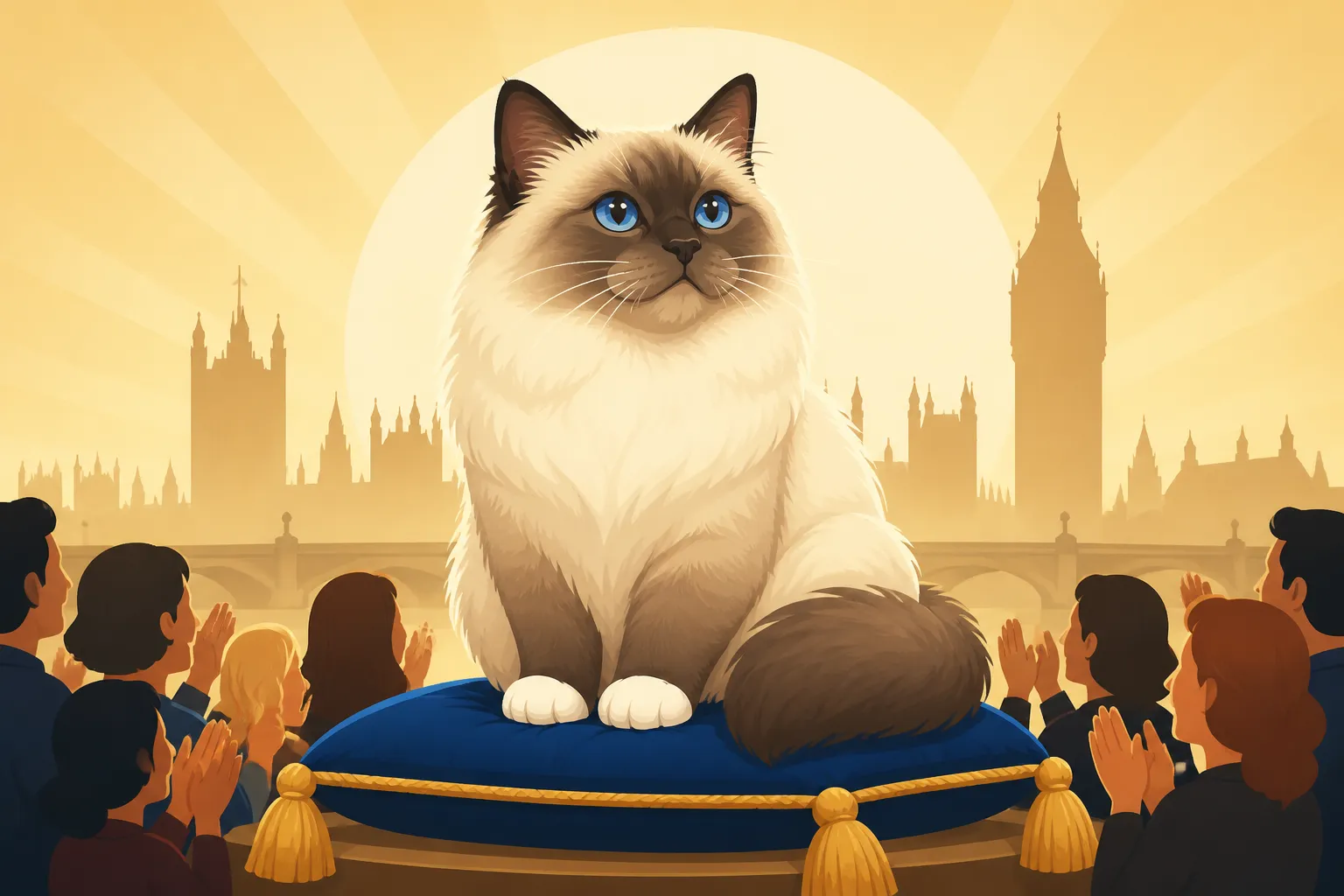
The Birman was recognized in Britain in 1966 by the Governing Council of the Cat Fancy, commonly known as the GCCF. Recognition gave the breed an official place in the British fancy: it could be registered under its own name and judged according to a defined breed standard, rather than being treated simply as an imported or developing longhaired cat.
That distinction matters. Cats can be present in a country before its main registry formally accepts them. Breeders may be importing cats, keeping pedigrees, and working toward consistent traits while the registry is still considering whether the breed meets its requirements. The 1966 milestone marked formal acceptance, not the beginning of the Birman’s British history.
Recognition also did not mean that every Birman in Britain suddenly had identical features or that every registry in Europe made its decision at the same moment. Cat fancy organizations make their own rules and decisions. The date is specifically important as the point when the GCCF accepted the breed in Britain.
For more on the longer journey from France, see How the Birman Reached Germany and Britain From France. That movement helps explain why Britain’s recognition came after the breed had already established a history elsewhere in Europe.
Why the year is easy to confuse
Breed histories often compress several separate events into one sentence: a cat is imported, a breeding program starts, a registry recognizes the breed, and the cats become familiar to the public. Those events can happen years apart, so a reader may encounter different dates without realizing that each one refers to a different stage.
For the Birman, the French history began well before British recognition. The breed was registered in France in the 1920s, then nearly disappeared during the Second World War. Postwar breeders had to rebuild its population before it could again be bred consistently and spread more widely. Britain’s 1966 recognition came after that difficult recovery.
It is therefore useful to distinguish between “the Birman arrived in Britain” and “Britain recognized the Birman.” An imported cat could be living with a breeder before the breed had formal GCCF status. The year 1966 answers the recognition question; it should not be used as a shortcut for every step of the breed’s arrival and establishment.
| Milestone | What it refers to |
|---|---|
| French registration in the 1920s | Formal recognition of the breed in its early European home |
| Second World War losses | A severe reduction in the Birman population |
| Postwar rebuilding | Breeders restored the population through carefully managed breeding |
| British recognition in 1966 | The GCCF formally accepted the Birman in Britain |
Why the Birman needed rebuilding before it could spread
The wartime population crisis
The Birman’s story is not a simple tale of a steadily growing breed moving from one country to another. The Second World War disrupted breeding across Europe, and the Birman was among the breeds left with a dangerously small population. Cats were lost, breeding plans were interrupted, and the careful work of maintaining pedigreed lines became extremely difficult.
When a breed loses most of its breeding population, the challenge is not merely to produce more kittens. Breeders need enough healthy cats, with suitable temperaments and recognizable features, to rebuild a population without narrowing it further. A small number of survivors cannot provide much choice when planning matings, and repeated use of closely related cats can increase the risks associated with a limited gene pool.
The scale of the loss is central to understanding why the Birman’s postwar history receives so much attention. How Many Birmans Survived the Second World War looks at the survival crisis itself, while The Birman Came Out of the War With Two Cats Left focuses on how close the breed came to vanishing. Those titles describe a crisis that shaped the breed’s next generation of breeders and breeding decisions.
The outcrosses and the return to consistency
To restore the population, breeders used outcrosses: cats from outside the existing Birman population were bred into the lines. Accounts of the rebuilding commonly discuss longhaired breeds such as Persians and Siamese-related cats as part of the postwar effort. The purpose was to produce a viable population from which breeders could continue selecting for the Birman’s recognizable type.
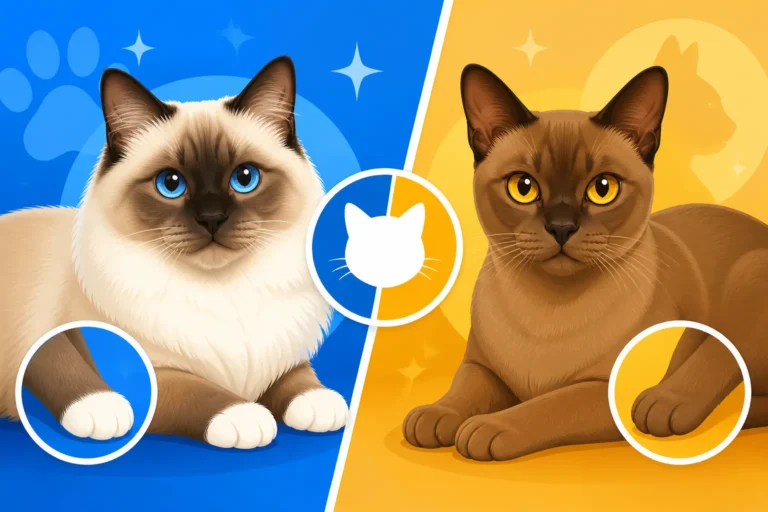
Outcrossing was not an instant fix. A kitten from a cross does not automatically become a Birman simply because one parent was a Birman. Breeders had to select successive generations for the traits they wanted to preserve, including the pointed coat pattern, blue eyes, longhair coat, and characteristic white feet. They also had to keep records and make careful choices about which cats should be bred onward.
The white gloves are especially distinctive, but the rebuilding story was broader than preserving a single marking. A consistent breed also depends on a recognizable overall appearance and a population that can be maintained over time. For a closer look at the cats involved, see Which Two Cats Rebuilt the Birman and Which Longhairs Rebuilt the Birman After 1945.
How breeders made the Birman recognizable again
Rebuilding a breed is more than reproducing its look
A breed standard gives judges and breeders a shared description of the features that define the breed. It helps guide selection, but a standard cannot create a healthy population on its own. After a severe population collapse, breeders need to balance recognizable appearance with the practical realities of having few cats available for breeding.
In the Birman’s case, breeders had to work toward consistent traits while moving away from the uncertainty of the immediate postwar years. Successive generations helped restore a more predictable type. That process takes patience: an individual cat may resemble the desired breed in some ways but differ in others, and a line does not become stable simply because one litter looks promising.
The white gloves illustrate why a breed’s appearance can take careful selection. A Birman’s markings are not just a decorative detail; they are part of what makes the breed identifiable. Yet the presence of a specific feature in one kitten does not mean every kitten in a litter will have markings that look alike. Breeders have to consider the whole family and the consistency of the traits over generations.
Pure Birman litters and the path toward recognition
After outcrossing, breeders needed to produce cats that could be regarded as Birmans rather than as experimental crosses. This required generations of planned breeding and careful record keeping. The return of pure Birman litters was an important step because it showed that the breed’s defining characteristics could be reproduced without continuing to rely on outcrosses.
That milestone did not erase the breed’s mixed postwar history. Instead, it reflected the work breeders had done to re-establish a recognizable population. The rebuilding period is one reason a date such as 1966 makes more sense when viewed within a longer timeline. Britain’s acceptance came after the Birman had survived the population crisis and regained greater consistency.
The timing of that recovery is explored further in When Pure Birman Litters Resumed and How Long the Birman Took to Breed True Again. Those stages help explain why the Birman’s recognition abroad depended on groundwork already done by breeders elsewhere.
What Britain’s recognition changed for the breed
A formal place in the British cat fancy
Recognition gave British breeders, exhibitors, and judges an official framework for working with the Birman. Instead of relying only on informal descriptions, they could use the GCCF’s breed classification and standard to guide registration and judging. That made it easier for the Birman to be presented as a distinct breed within Britain’s organized cat fancy.
For breeders, formal recognition brings practical clarity. It defines the name under which cats are registered, the traits that judges assess, and the expectations for breeding and exhibition. It also gives people interested in the breed a more reliable way to distinguish a pedigreed Birman from a cat that merely shares some of its appearance.
For prospective owners, registry recognition can provide useful context, but it is not a complete guarantee of a cat’s health, temperament, or breeding quality. A registry’s acceptance of a breed is different from an assessment of an individual breeder or kitten. Anyone considering a Birman should still ask about pedigree records, veterinary care, socialization, and the health information available for the parents.
Recognition was a beginning, not an ending
The 1966 decision marked an important British milestone, but it did not freeze the breed in place. Breeding populations continue to be shaped by choices about which cats are paired, which traits are prioritized, and how breeders manage inherited health risks. Official recognition sets a framework; responsible breeding and good care remain ongoing responsibilities.
It is also worth remembering that recognition does not mean every Birman must look exactly alike. Breed standards describe a desired type, while real cats vary in coat shade, size, personality, and the precise appearance of their markings. A cat can be a Birman without matching an idealized show photograph in every detail.
For anyone reading the date as a piece of breed history, the key point is the distinction between survival, rebuilding, and acceptance. The Birman had to recover from wartime losses and become consistent enough to establish itself again before the GCCF’s 1966 recognition could make sense. The year is memorable because it represents British acceptance of a breed whose continued existence had once been uncertain.
Disclaimer
This article is for general informational purposes only and does not constitute professional advice. Laws, prices and regulations vary by location and change over time. Consult a qualified professional for guidance on your specific situation.