When Pure Birman Litters Resumed
The period after World War II presented a dire challenge for many beloved cat breeds, and the Birman was certainly no exception. With breed populations decimated by the ravages of war, enthusiasts faced the heartbreaking task of rebuilding their lines from a critically small gene pool. This guide delves into the arduous journey of the Birman's revival, exploring the necessary outcrossing, the dedication of breeders, and the eventual resumption of truly pure Birman litters that define the breed we cherish today.
The Brink of Extinction: The Birman's Post-War Crisis
The mid-20th century was a brutal time for much of Europe, and the cat fancy, like so many other aspects of daily life, suffered immensely. Imagine a world where the infrastructure for breeding, showing, and even simply caring for pedigree cats was severely disrupted. Food shortages, lack of safe housing, and the general chaos of war meant that many beautiful lines were simply lost forever. The Birman, a breed that had only just begun to establish itself in Europe before the conflict, was particularly vulnerable.
The Devastation of World War II
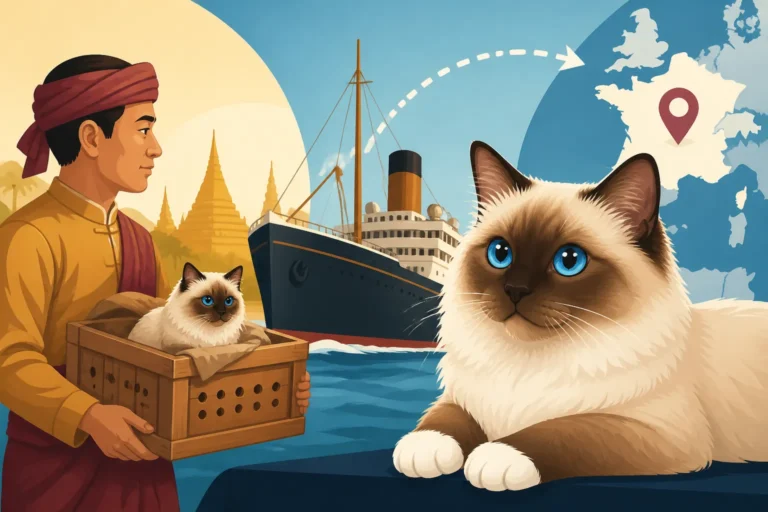
Before the war, the Birman, known in France as the "Sacre de Birmanie," was a growing presence, capturing hearts with its striking blue eyes, silky coat, and unique white "gloves." However, the widespread destruction and disruption of World War II nearly wiped out these fledgling populations. Communication between breeders was often impossible, travel became incredibly dangerous, and simply keeping animals fed and safe became an overwhelming challenge. Many catteries that had once boasted thriving Birman lines were no more, their cats lost to starvation, disease, or the indiscriminate destruction of war. It wasn't just individual cats that were lost; entire bloodlines vanished, taking with them genetic diversity and years of careful breeding. The future of the Birman was hanging by a thread, a stark reminder of how fragile even well-established breeds can be in times of global crisis.
The Few Survivors: Orloff and Xenia de Kaabaa
Amidst this devastation, hope emerged from incredibly scarce resources. In France, it is widely acknowledged that the entire post-war Birman population could be traced back to just two individuals: a male named Orloff de Kaabaa and a female named Xenia de Kaabaa. Which Two Cats Rebuilt the Birman These two cats became the literal lifeline for the breed, carrying the responsibility of an entire lineage on their slender shoulders. Their survival was nothing short of miraculous, a testament to the dedication of the few breeders who managed to protect them through unimaginable hardship. Think about the pressure on these few remaining breeders; every mating, every litter, was critical. There was no room for error, no luxury of a vast gene pool to draw upon. The future of the breed rested squarely on their shoulders, and it's humbling to consider the immense responsibility they bore. The Birman Came Out of the War With Two Cats Left
Why Outcrossing Became a Necessity
With only two cats from which to rebuild, the genetic bottleneck was immense. Breeding Orloff and Xenia together, or relying solely on their direct offspring, would have led to an extremely high level of inbreeding. While some initial inbreeding was unavoidable, continuing down this path exclusively would have severely compromised the health and vitality of the breed, leading to genetic deformities, weakened immune systems, and a rapid decline in overall vigor. To expand the gene pool, introduce fresh blood, and secure the Birman's future, outcrossing was not just an option, but an absolute necessity. Why Post War Outcrossing Was Unavoidable for the Birman Breeders had to make difficult choices, accepting that for a time, "pure" Birman litters in the strictest sense would be impossible, all in the service of ensuring the breed's long-term survival. This strategic decision, while challenging, paved the way for the vibrant Birman population we know today.
The Rebuilding Effort: Outcrossing to Save the Breed
The decision to outcross was met with careful planning and an understanding that the integrity of the Birman's unique traits needed to be preserved as much as possible. This wasn't a casual mixing of breeds; it was a highly strategic effort to inject genetic diversity while diligently working to breed back to the established Birman type.
The Choice of Crosses: Persian and Siamese Influences
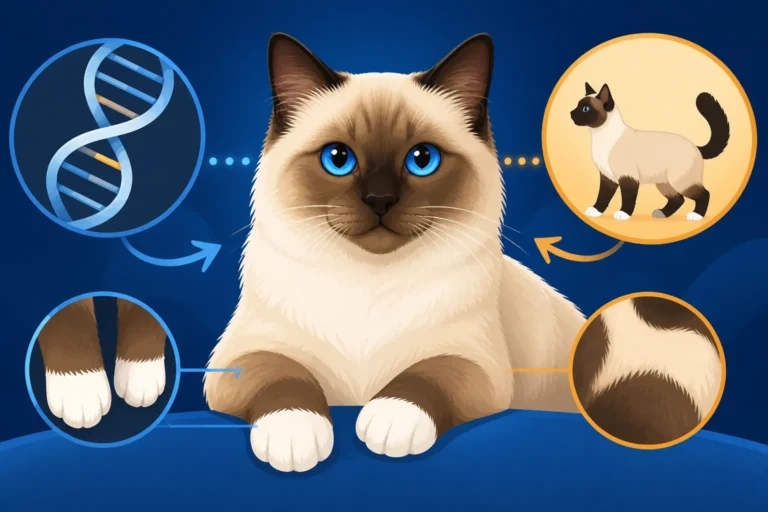
To introduce new genetic material without losing the Birman's distinctive appearance and gentle temperament, breeders carefully selected companion breeds for outcrossing. The two primary choices were the Persian and the Siamese. The Persian was chosen for its long, luxurious coat, stocky build, and placid demeanor, characteristics that resonated with parts of the Birman standard, particularly the coat length and structure. What Persian Blood Brought Into the Birman Meanwhile, the Siamese contributed its striking blue point coloring, elegant body, and, importantly, its well-defined pointed pattern, which is a hallmark of the Birman. What Siamese Blood Brought Into the Birman The idea was to borrow the best qualities from these related breeds, hoping that careful subsequent breeding would dilute any undesirable traits while reinforcing the Birman's essence. This wasn't a simple process; it required immense knowledge of feline genetics and a clear vision of the breed's future. Which Breeds Were Crossed In to Save the Birman
Integrating New Genetics: The First Mixed Litters
The initial litters from these outcrossings would not have looked exactly like the Birmans we recognize today. Imagine seeing a kitten with a slightly different head shape, a less refined coat texture, or even a different eye shape. These variations were inevitable and a part of the rebuilding process. The first-generation crosses would exhibit a blend of characteristics from both parent breeds. For example, a Birman-Persian cross might have a denser undercoat than a pure Birman, while a Birman-Siamese cross might have a more angular face. Breeders then had the meticulous task of selecting the offspring that most closely approximated the Birman ideal for subsequent matings. This was a long game, requiring patience and a keen eye for breed type, focusing on the desired point coloration, the distinctive white gloves, and the overall conformational balance. It was a step-by-step approach, gradually moving further away from the outcross appearance and closer to the original Birman.
Managing Unwanted Traits and Maintaining Type
One of the biggest challenges was managing the "unwanted" traits that inevitably crept in with the outcrosses. For instance, the Persian's dense undercoat was not ideal for the Birman's single, silky coat, which is known for its easy care and less propensity to mat. Similarly, while the Siamese contributed to the point pattern, its more vocal nature and often high-energy temperament were distinct from the Birman's quiet, placid disposition. Breeders spent generations selectively breeding away from these deviations, focusing intensely on refining the coat texture, head shape, eye color, and especially the unique "gloves" and "laces" on the paws. This required precise record-keeping and a deep understanding of genetic inheritance. Every mating decision was crucial, as they worked tirelessly to re-establish uniformity and bring the breed back to its pre-war glory, ensuring that the essence of the Birman remained intact, despite the necessary genetic detour.
The Role of Key Ancestors in Reestablishing the Birman Line
The two surviving cats, Orloff and Xenia, were the absolute cornerstones of the breed's revival. Their genetic contributions, combined with the strategic outcrosses, laid the groundwork for every Birman alive today.
Orloff and Xenia's Offspring: The Foundation Stock
Orloff and Xenia de Kaabaa became the progenitors of an entirely new generation of Birmans. While they were few, their lineage was precious, and their offspring formed the immediate foundation for the post-war breed. These first few litters, though still suffering from the narrow gene pool, were carefully nurtured and evaluated. The kittens produced by Orloff and Xenia, and later by their progeny, were the invaluable "building blocks" upon which the entire reconstruction effort was based. Breeders had to make incredibly difficult decisions about which kittens to keep for breeding, prioritizing those that best embodied the Birman standard as it was remembered before the war. Every individual was a vital piece of the puzzle, and their genetic contributions would echo through generations. This was the point where the Birman truly started its comeback, albeit in a very small way.
The Impact of the Outcross Sires and Dams
The introduction of Persian and Siamese blood wasn't just about expanding the gene pool; it was about strategically leveraging specific traits. The chosen outcross sires and dams were selected not just for their breed, but for their individual qualities that might complement or enhance the Birman. For example, a Persian with particularly deep blue eye color might have been chosen, or a Siamese known for its robust health. The impact of these outcross individuals was profound and immediate in the first few generations. They brought in new alleles, fresh combinations of genes that ultimately strengthened the overall genetic health of the emerging Birman population. Without these carefully chosen infusions, the breed might have remained too fragile to thrive, perpetuating genetic weaknesses inherent in a severely bottlenecked population. Breeders studied each outcross carefully, documenting the traits passed down to ensure they were moving in the right direction. This deliberate cross-breeding was a calculated risk, but a necessary one.
Tracking the Pedigrees Back to the Founders
For any breed, a robust pedigree is vital for tracking lineage and understanding genetic heritage. For the post-war Birman, this became an obsessive and critical task. Breeders meticulously documented every mating, every birth, and every trait, creating detailed records that traced each kitten's ancestry back through the outcrosses to Orloff and Xenia, and then to the pre-war Birmans. This allowed them to monitor the re-establishment of pure Birman traits and to ensure that the outcross genetics were being successfully "bred out" or integrated in a desirable way. These pedigrees were not just paperwork; they were the historical blueprint of the breed's survival and evolution. Knowing exactly Which Two Cats Every Birman Descends From became paramount for breeders striving to produce consistently "Birman-like" litters, and eventually, truly purebred Birmans once again. This careful tracking helped ensure transparency and accountability within the breeding community.
The Path to Purity: Generations of Careful Breeding
Achieving "purity" after such extensive outcrossing was not an overnight accomplishment. It was a painstaking, multi-generational endeavor that required unwavering commitment to the breed standard.
Defining "Pure": When Outcrossed Lines Are Considered Birman
In the context of breed reconstruction, "purity" takes on a specific meaning. It doesn't mean a complete absence of any historical outcross, as that would be impossible given the foundation. Instead, it refers to a point where, through successive generations of selective breeding, the cats consistently and reliably produce offspring that conform entirely to the Birman breed standard, with no discernible influence of the outcross breeds in their appearance or temperament. Typically, this process involves several generations of breeding back to known Birman characteristics. After a certain number of generations (often four or five, depending on the registry's rules), if the lines are consistently reproducing Birman type, they are then officially recognized as "pure" Birman. This is a crucial distinction, as it allows for the continuation of a vibrant gene pool while upholding the integrity of the breed. It was a slow, methodical return to type.
The Rigor of Selective Breeding Programs
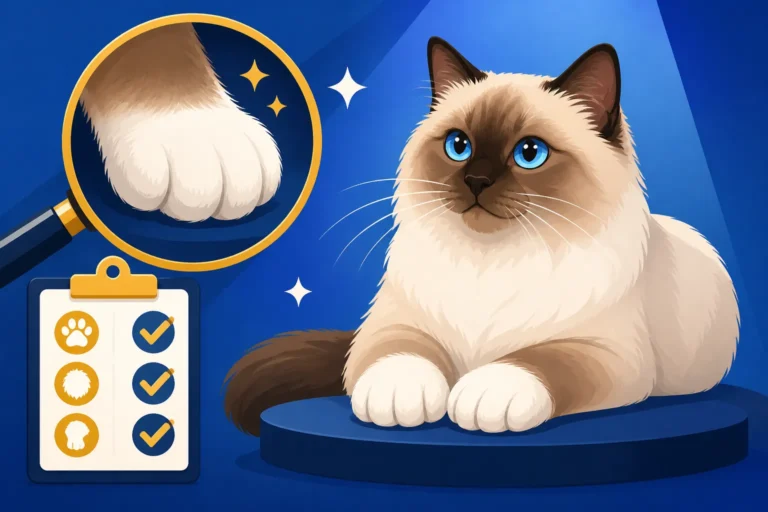
The breeders involved in this reconstruction were more than just cat fanciers; they were geneticists in practice. Their breeding programs were rigorous, focusing on phenotype (observable traits) and documented ancestry. They meticulously evaluated each kitten for the characteristic Birman features: the distinctive head shape, deep blue eyes, medium-long silky single coat, and, most importantly, the perfectly symmetrical white gloves on all four paws, with the "laces" running up the back legs. Any kitten showing strong characteristics of the outcross breeds, such as a different coat texture or a non-Birman head shape, would be carefully considered for removal from the breeding program, or bred very selectively back towards Birman type. This level of scrutiny was vital to ensure that each successive generation moved closer to the desired standard. It was a commitment that often meant smaller litters and fewer breeding cats, but it guaranteed the quality and consistency of the breed's return.
The Timeframe for Stabilizing the Breed
The journey from near extinction to producing consistently pure Birman litters was a lengthy one. It wasn't until the late 1950s and early 1960s that the breed was considered sufficiently stable and numerous to resume full registration as a distinct, purebred entity. This means it took roughly 15-20 years of intensive, post-war breeding efforts. For context, World War II ended in 1945. So, the earliest "pure" litters, by strict registry standards, would have been appearing around the early to mid-1960s. This timeframe highlights the dedication and perseverance of those breeders who worked tirelessly for decades. It wasn't just about breeding cats; it was about rebuilding an entire genetic legacy, ensuring that the efforts of the pre-war founders were not in vain. The stability meant that breeders could confidently predict the traits of their kittens, a sign that the outcross genes had been sufficiently diluted and integrated. How Long the Birman Took to Breed True Again
International Recognition and the Return to Pure Status
The stabilization of the Birman breed through dedicated breeding efforts paved the way for its re-acceptance and recognition by major international cat registries. This formal acknowledgment marked a triumphant return from the brink of oblivion.
French Registry's Role in Re-establishing the Breed
Given that France was the primary hub for Birmans before the war and home to the surviving founders, the French cat registries played a pivotal role in the breed's re-establishment. The French initially recognized the breed as the "Sacre de Birmanie" in the 1920s, and it was their dedicated breeders who undertook the monumental task of reconstruction. Their registries were the first to re-evaluate and eventually re-certify the Birman lines as purebred once the multi-generational breeding back efforts had yielded consistent results. This French recognition was crucial, as it provided a foundational standard and official status for the rebuilt lines, influencing how other countries would later accept the breed. It was a formal stamp of approval that validated the decades of hard work and careful selective breeding.
British and American Recognition Post-Rebuilding
Following the French lead, Birmans gradually made their way back to other countries, and with robust pedigrees and consistent type, gained recognition. In the United Kingdom, the Birman was recognized by the Governing Council of the Cat Fancy (GCCF) in 1966. When Britain Recognized the Birman Across the Atlantic, American cat fanciers also welcomed the breed, with the Cat Fanciers' Association (CFA) accepting the Birman for championship status in 1967. The Year CFA Accepted the Birman for Championship This staggered international recognition underscores the careful vetting process required by major registries. They needed to see consistent, verifiable proof that the breed had indeed been successfully re-established, producing animals that met stringent standards without significant outcross characteristics. This widespread acceptance cemented the Birman's place as a beloved and distinct purebred cat once more.
The Significance of "Pure" Litters for Breed Standards
The official resumption of "pure" Birman litters had immense significance for the breed's standards and its future. It meant that breeders could once again focus on refining specific traits and improving the breed within its own established genetic pool, rather than constantly battling outcross influences. It allowed for the detailed scoring of traits like glove symmetry, eye color depth, and coat texture, with the confidence that these were truly Birman characteristics being evaluated. This renewed focus on breed standards also helped secure the Birman's unique identity, distinguishing it clearly from the breeds used in its reconstruction. Furthermore, it provided confidence to prospective owners and breeders that they were acquiring a cat with a predictable appearance and temperament, upholding the integrity and distinctiveness of the Sacred Cat of Burma for generations to come.
The Lasting Legacy: Health and Type in the Modern Birman
The dramatic story of the Birman's post-war rebuilding leaves a lasting impact on the breed today, influencing everything from its genetic diversity to the ongoing efforts to preserve its iconic appearance and health.
Genetic Diversity: A Double-Edged Sword
The very act of outcrossing, while vital for the Birman's survival, also means that the breed's genetic heritage is a fascinating tapestry. On one hand, the infusion of new genes from Persians and Siamese undoubtedly broadened the gene pool, potentially reducing the impact of conditions that might have become prevalent due to extreme inbreeding. This deliberate widening of the founder base was a success story for genetic health. However, it also means that some traits or predispositions from those outcross breeds could theoretically still exist at low frequencies within the Birman gene pool, requiring ongoing vigilance. For example, some breed-specific issues that might have entered through the Persian or Siamese lines continue to be monitored by responsible breeders. What a Narrow Founder Base Left in the Birman Modern genetic testing allows breeders to delve deeper into their lines, but the historical outcrossing remains a fundamental part of the Birman's genetic story. It's a testament to the fact that even necessary interventions have long-term echoes.
Maintaining the Birman's Signature Look and Temperament
Despite the extensive outcrossing, Birman breeders have done an exceptional job of preserving and refining the breed's signature look and gentle temperament. The goal was always to return to the original Birman type, and this commitment has paid off. The modern Birman still possesses the stunning deep blue eyes, the Roman nose, the semi-long silky coat that's surprisingly easy to groom, and of course, those iconic white gloves. Their placid, affectionate, yet undemanding nature also remains a hallmark. This consistency is a direct result of the rigorous selective breeding practices implemented during the reconstruction period and continued by dedicated breeders today. Every kitten, even those available through reputable online retailers like Chewy, is expected to embody these core traits, a direct link back to the careful choices made decades ago. Breeders are always striving for that perfect balance of health and adherence to the standard.
Ongoing Vigilance for Breed Health
The history of the Birman's survival through genetic bottleneck and outcrossing underscores the importance of ongoing vigilance regarding breed health. While the gene pool was widened, ensuring genetic diversity is a continuous process. Responsible breeders today prioritize health testing for known conditions that can affect pedigree cats, such as hypertrophic cardiomyopathy (HCM) and polycystic kidney disease (PKD), even if these may have entered the lines through outcrosses or were present in the original population. Regular veterinary check-ups and open communication with a vet about breed-specific health concerns are essential for any Birman owner. This proactive approach ensures that the breed continues to thrive long after its dramatic post-war recovery. You'll find many breeders emphasizing health in their advertising, often listing the extensive testing their breeding cats undergo. This dedication to health, alongside careful attention to type, ensures that the Birman remains a robust and cherished companion for years to come.
| Period | Key Event | Impact on Birman Litters | Resulting Status |
|---|---|---|---|
| Pre-WWII (1920s-1930s) | Initial Establishment & Recognition in France | Pure litters being produced from original imported stock. | Established, but numerically small. |
| WWII (1939-1945) | Near Extinction (Only 2 known survivors) | No true pure litters could be reliably produced; breeding halted. | Critically endangered, future uncertain. |
| Post-WWII (1945-Early 1950s) | Outcrossing with Persians and Siamese | Litters are mixed-breed, not "pure" Birman by strict registry standards. Genetic diversity infused. | Rebuilding phase, focusing on survival and genetic health. |
| Mid-Late 1950s | Multi-generational selective breeding from outcrosses | Litters increasingly resemble Birman type; outcross traits diluted. | Approaching purity, type stabilization. |
| Early-Mid 1960s | Consistent production of Birman type; formal re-recognition by registries. | Pure Birman litters resume, consistently meeting breed standards. | Re-established, gaining international recognition. |
| Modern Era (1970s-Present) | Continued selective breeding, health testing | Pure litters with focus on health, temperament, and refinement of type. | Thriving, popular breed with robust health protocols. |
This table illustrates the journey back to consistently pure litters. It highlights the critical period where outcrossing was necessary to ensure the breed's survival, and the subsequent generations required to bring the Birman back to its recognized form. The efforts to achieve this purity have ultimately made the Birman the resilient and beautiful cat we know and love today, a fact appreciated by owners who find their favorite grooming tools or food for their Birmans through Chewy and other trusted pet suppliers. Whether the Birman Gene Pool Has Widened Since The careful management of this genetic heritage continues to be a priority for all who care for this wonderful breed. What a Century Has Not Changed About the Birman
Disclaimer
This article is for general informational purposes only and does not constitute professional advice. Laws, prices and regulations vary by location and change over time. Consult a qualified professional for guidance on your specific situation.