The Birman Came Out of the War With Two Cats Left
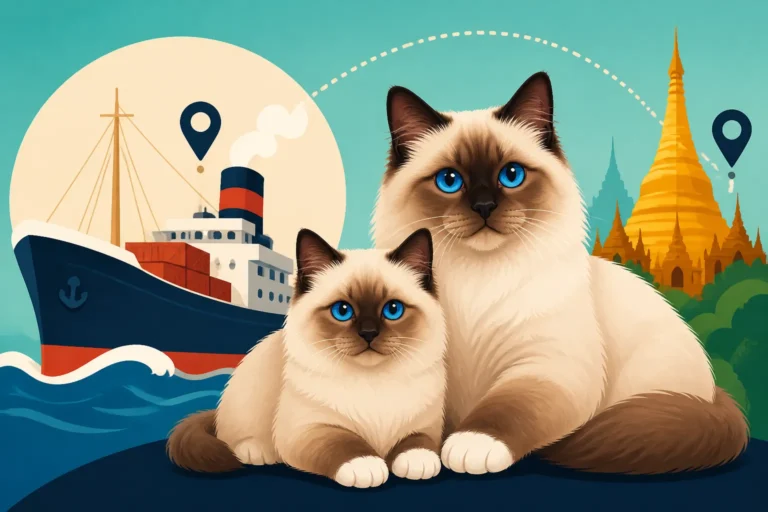
Imagine pouring your heart into a passion, a beloved cat breed, only to see its numbers dwindle to a terrifying few during a global crisis. That's the heart-wrenching reality Birman breeders faced after World War II, leaving them with the monumental task of rebuilding an entire lineage from what felt like the very edge of extinction. This guide will walk you through the incredible journey of how the Birman cat, a breed cherished for its stunning beauty and gentle nature, was painstakingly brought back from near oblivion, focusing on the crucial role two cats played in its survival and the enduring legacy of that desperate time.
The Devastating Impact of World War II on Cat Breeds
World War II wasn't just a human tragedy; it was a devastating period for many animal populations, and purebred cats, with their often intricate breeding programs and specific care requirements, were particularly vulnerable. The chaos of war, rationing, and widespread displacement meant that maintaining a cattery became an immense, if not impossible, challenge. For many breeds, it meant a genetic bottleneck that would shape their future for decades to come.
The Scarcity of Pedigree Cats During Wartime
During the war years, resources became incredibly scarce. Food, even for humans, was rationed, let alone specialized diets for delicate purebred cats. Travel was restricted, making it difficult for breeders to maintain connections, exchange breeding stock, or even evacuate their animals to safety. Many breeders were forced to make impossible choices, sometimes letting go of their beloved animals or facing the heartbreaking reality that they couldn't sustain their lines. Pedigree cat populations, which often rely on careful, planned pairings across different catteries, simply couldn't thrive in such an environment. The focus shifted from preserving specific breed characteristics to sheer survival.
Beyond the practicalities, the emotional toll was immense. People were worried about their families, their homes, and their own survival. The luxury of maintaining a show-quality breeding program fell by the wayside. Many valuable breeding cats were lost to starvation, disease, or simply went unaccounted for in the upheaval. The meticulous records that are the backbone of any purebred lineage were often destroyed or became impossible to maintain, further complicating efforts to track and preserve what little remained.
Birman Breeders Facing the Brink
For the Birman breed, which had only begun to establish itself in Europe in the decades leading up to the war, the impact was catastrophic. Originating from legends and first recognized in France in the 1920s, the Birman was still relatively rare even before the conflict began. It hadn't yet achieved the widespread popularity and established numbers of some older, more common breeds. This meant its gene pool was already somewhat limited, and when the war hit, it had a much smaller buffer against extinction. The specific, intricate markings of the Birman, particularly its pure white "gloves" on all four paws and "laces" up the back legs, made breeding a challenge even in peacetime. During the war, such fine details were impossible to maintain.
Anecdotal evidence from the time suggests that many catteries were completely wiped out. The focus was on keeping any cat alive, let alone maintaining the specific aesthetic traits of a Birman. Some Birmans might have survived as pets, their purebred status perhaps forgotten or ignored in the desperation of the times, meaning their valuable genetics were lost to the official breeding programs. The very existence of the "Sacred Cat of Burma" hung by the thinnest thread, as the carefully cultivated lines struggled to endure. It was a truly terrifying prospect for those who loved these cats, knowing that all their work and dedication could be undone in a matter of years.
The Birman's Post-War Bottleneck: Orloff and Xenia de Kaabaa
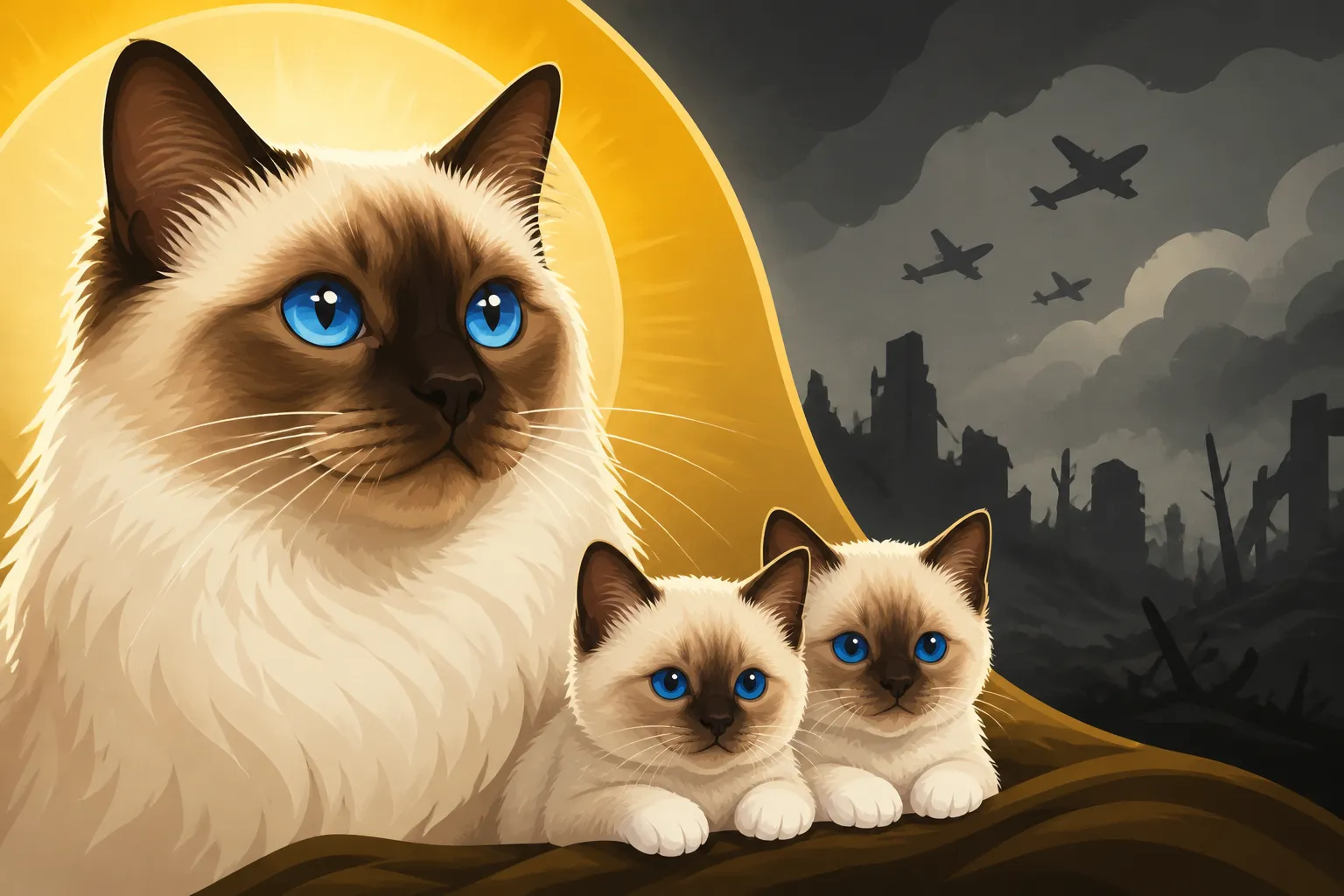
As the smoke cleared after World War II, the full extent of the devastation became painfully clear for many European cat breeds. For the Birman, the situation was particularly dire. It's often recounted that only two true Birmans, Orloff and Xenia de Kaabaa, were left to carry on the entire breed. This moment marks a critical genetic bottleneck that every modern Birman can trace back to. This period dramatically shaped How Two Cats in 1945 Shaped the Birman's Health and future development.
The Last Hope: Identifying the Surviving Pair
The story of Orloff and Xenia de Kaabaa is one of incredible resilience and the dedication of a few determined breeders. With countless catteries destroyed and breeding records lost, finding any purebred Birmans was like searching for needles in a haystack. It wasn't just about finding cats that looked like Birmans; it was about tracing their lineage, as much as possible, back to the pre-war stock. This was made incredibly difficult by the fragmented nature of post-war society and the widespread loss of documentation. It speaks volumes to the commitment of those who cherished the breed that they managed to identify and bring together this foundational pair.
Orloff and Xenia weren't just any Birmans; they represented the last known link to the breed's origins and its unique genetic makeup. Their survival, perhaps through sheer luck or the diligent care of a breeder who prioritized their safety above all else, was nothing short of miraculous. Without these two, the Birman breed as we know it today simply would not exist. Every Birman cat alive today, with its sapphire eyes and pure white gloves, carries the genetic blueprint that survived through these two courageous felines. It's a humbling thought to consider just how close the breed came to vanishing forever, a stark reminder of What a Narrow Founder Base Left in the Birman.
Their Crucial Role in the Birman's Survival
Orloff and Xenia de Kaabaa became the literal genetic bedrock for all subsequent Birmans. Breeders knew that to save the breed, these two cats had to be mated, and their offspring carefully selected to carry on the torch. This wasn't a matter of choosing for perfection in markings or conformation initially, but purely for viability and health. Every single kitten born from this pair, and their descendants, was precious. The genetic diversity, which had already been somewhat limited before the war, was now severely constrained, relying solely on the genes present within these two individuals.
The challenge was immense. Mating closely related cats carries inherent risks, often leading to a higher incidence of genetic health issues. Breeders at the time didn't have the advanced genetic testing we have today, making their task even more fraught with uncertainty. Their success was a testament to careful observation, meticulous record-keeping (once again established), and a deep understanding of feline genetics gleaned from years of breeding experience. They carefully nurtured each litter, striving to produce healthy kittens that could further expand the population. It was a slow, deliberate process, requiring patience and unwavering dedication, knowing that the entire future of the Birman breed rested on their shoulders. This period firmly cemented Which Two Cats Every Birman Descends From as an unshakeable truth for the Birman.
The Necessity of Outcrossing: Expanding the Gene Pool
After identifying the critical bottleneck and the limited genetic resources of Orloff and Xenia, it became clear that simply breeding their direct descendants amongst themselves wouldn't be enough for long-term health and vitality. The numbers needed to grow, but so did the genetic diversity. This led to the controversial but ultimately necessary decision to introduce other breeds into the Birman lines, a process known as outcrossing.
Why Outcrossing Was Unavoidable for the Birman
The concept of breeding from just two individuals, even if they are genetically robust, creates an incredibly narrow gene pool. If Orloff and Xenia carried any hidden recessive genetic health conditions, future generations would be at a very high risk of expressing those conditions. Over time, continuous inbreeding leads to a phenomenon called inbreeding depression, where fertility declines, immune systems weaken, and kittens are born smaller and less vigorous. It's a biological dead end. For the Birman, already starting from a small pre-war population and further reduced by the war, this risk was immediate and severe. Why Post War Outcrossing Was Unavoidable for the Birman became a critical point of discussion and action among the few remaining dedicated breeders.
The alternative to outcrossing was effectively allowing the breed to slowly die out, weakened by its own genetic limitations. This wasn't an option for those who had worked so hard to save the Birman. While outcrossing meant temporarily introducing traits not seen in the traditional Birman standard, it was a sacrifice deemed necessary for the breed's long-term survival. The goal was to infuse fresh genetic material, reduce the coefficient of inbreeding, and bring back a level of health and vigor that would allow the Birman to flourish once more. It was a delicate balance, trying to widen the gene pool without losing the distinctive characteristics that defined the Birman in the first place.
Which Breeds Were Crossed In to Save the Birman
To achieve this crucial genetic broadening, breeders carefully selected specific cat breeds that shared some characteristics with the Birman or were known for their robust health and good temperaments. The two primary breeds chosen for outcrossing were the Persian and the Siamese. These choices were not arbitrary; they were strategic. The Persian, with its long, luxurious coat and generally placid demeanor, offered the necessary longhair genetics and a calm temperament that would blend well with the Birman's known personality. Which Breeds Were Crossed In to Save the Birman were selected after much thought and careful planning.
The Siamese, on the other hand, brought a different set of advantages. It contributed to the "pointed" gene, which gives the Birman its distinctive darker extremities (face, ears, paws, tail) against a lighter body. While the Siamese has a much shorter coat, its genetic contribution was valuable for solidifying the colorpoint pattern. The decision to use these breeds was a pragmatic one, aimed at rapidly increasing the population while simultaneously injecting new genetic lines. It was a challenging task to then selectively breed back towards the Birman's unique appearance while retaining the benefits of the outcross.
The Legacy of Outcrossing: New Traits and Challenges
The outcrossing strategy, though essential, wasn't without its complexities. Introducing new genetic material inevitably brought in traits that were not traditionally part of the Birman standard, both physically and genetically. Breeders then faced the painstaking task of selectively breeding subsequent generations to re-establish the Birman's unique look and temperament while retaining the much-needed genetic diversity.
What Persian Blood Brought Into the Birman
The introduction of Persian cats into the Birman gene pool had a significant impact, both positive and potentially challenging. On the positive side, Persians are known for their incredibly dense, long coats and round, cobby body type. This helped to restore the lushness of the Birman's fur, contributing to its iconic full ruff and plume-like tail. The placid and gentle temperament of the Persian also complemented the Birman's already serene nature, reinforcing its reputation as a calm and affectionate companion. What Persian Blood Brought Into the Birman included a broadening of the facial structure, contributing to the Birman's somewhat heavier boning compared to its point-patterned cousins.
However, Persian outcrossing also introduced some less desirable traits that breeders then had to work hard to eliminate. Persians are prone to matting due to their extremely thick undercoats, something the Birman traditionally did not have. While the modern Birman has a silky single coat that is easier to manage, early outcross generations might have exhibited a thicker, more mat-prone texture. More significantly, the Persian breed is historically associated with Polycystic Kidney Disease (PKD). Although the Birman breed has been largely cleared of this through diligent testing, the initial outcrossing meant that PKD genes entered the Birman gene pool, a challenge breeders have since worked tirelessly to overcome. This highlights why Why a Birman Breeder Still Tests for PKD remains important for some lines.
What Siamese Blood Brought Into the Birman
The Siamese contribution to the Birman's post-war recovery was equally vital, albeit for different reasons. Siamese cats are the quintessential example of a "pointed" breed, and their genes were instrumental in ensuring that the Birman retained its distinct colorpoint pattern. This meant solidifying the gene responsible for the darker coloration on the extremities (face, ears, paws, tail) and lighter body, which is temperature-sensitive. The Siamese's svelte, athletic build and more vocal, inquisitive personality provided a sharp contrast to the Persian's contributions. What Siamese Blood Brought Into the Birman also included their striking blue eye color, which is a hallmark of the Birman breed.
While the Siamese helped secure the Birman's colorpoint genetics, breeders faced the challenge of mitigating other Siamese traits. The Siamese is known for its short coat and a much more 'foreign' body type – slender, long, and elegant – compared to the Birman's semi-longhaired, more substantial build. The famously loud and demanding Siamese voice was another trait breeders sought to breed out, aiming to return to the Birman's characteristic soft trill and quiet nature. It took careful selective breeding over many generations to maintain the desired physical and temperamental balance, keeping the beautiful blue eyes and the pointed pattern without adopting the extreme body type or vocalizations of the Siamese.
How Long the Birman Took to Breed True Again
Bringing the Birman back to a consistent and recognizable breed standard after such extensive outcrossing was not an overnight process; it was a multi-generational commitment. The initial outcrosses produced kittens that, while carrying Birman genetics, also displayed a mix of Persian and Siamese characteristics, from coat texture and body shape to head structure and even temperament. These "outcross" kittens were essentially bridges, designed to introduce new blood, not to be Birmans themselves. The real work began with their offspring.
Breeders had to implement rigorous selection criteria, choosing only those kittens from each generation that most closely resembled the desired Birman standard: the luxurious, silky single coat, the stocky yet elegant body, the distinctive Roman nose, and, of course, the pure white gloves and laces. It meant carefully tracking pedigrees and ensuring that undesirable traits were not propagated. This process often involved "backcrossing" to purer Birman lines (if any could still be identified or developed) to dilute the outcross traits. It took many years, certainly stretching into the 1950s and even 1960s, before a consistent population of cats that truly "bred true" as Birmans emerged once more. This diligent effort led to the eventual establishment of "pure Birman" litters, and it's important to remember When Pure Birman Litters Resumed.
For example, a breeder might have kept detailed notes on coat texture, marking clarity, and even subtle behavioral cues. They would compare siblings, observe how traits passed down, and make tough decisions about which cats were suitable for future breeding. This wasn't just about aesthetics; it was about health, temperament, and genetic viability. This dedicated work laid the foundation for the healthy and beautiful Birmans we know today, a process that required immense patience and a keen eye for breed type.
| Era | Key Event / Challenge | Impact on Birman Breed | Genetic Implications |
|---|---|---|---|
| Pre-WWII | Establishment in France, early recognition | Small but growing population | Limited initial gene pool |
| World War II | War devastation, resource scarcity, loss of catteries | Near extinction, numbers reduced to a critical few | Severe genetic bottleneck |
| Post-WWII (1945) | Identification of Orloff and Xenia de Kaabaa | Last known pure Birmans, sole genetic foundation | Extreme inbreeding risk |
| 1940s-1950s | Necessity of Outcrossing (Persian, Siamese) | Infusion of new genetic material, increased numbers | Introduction of new traits and potential health risks (e.g., PKD) |
| 1950s-1960s | Selective Breeding and Backcrossing | Re-establishment of consistent Birman type, dilution of outcross traits | Gradual increase in genetic diversity, reduction of undesirable traits |
| Post-1960s | Wider Recognition & Growth | Stabilized breed, expanding catteries, formal registries | Continued focus on health testing and ethical breeding |
The Re-Establishment of the Birman Standard
Once the immediate threat of extinction had passed, and breeders had successfully introduced new genetic material, the focus shifted back to solidifying the breed's identity. This meant meticulously defining and adhering to a formal breed standard, ensuring that the Birmans being produced were consistent in appearance, temperament, and health. It was about rebuilding the image and integrity of the "Sacred Cat of Burma."
Defining the 'Sacred Cat of Burma' Post-War
The process of defining the 'Sacred Cat of Burma' post-war involved a collaborative effort among the surviving breeders and newly interested enthusiasts. They had to decide which traits were paramount to the breed's identity and which could be allowed to vary slightly, given the recent outcrossing. The foundational characteristics — the deep blue eyes, the pointed coloration, the semi-long silky coat, and most importantly, the distinctive white gloves and laces — were non-negotiable. However, they also had to consider the contributions from the outcrosses. For instance, the original Birman might have had a slightly more delicate build, but the Persian influence brought a more substantial, broader frame, which became accepted as part of the post-war Birman look.
These discussions were vital for the long-term health and recognition of the breed. They involved careful compromises and a deep understanding of what made the Birman unique. The challenge was to create a standard that was true to the breed's historical essence while acknowledging the genetic realities of its survival. This comprehensive standard wasn't just a set of rules for show judges; it was a blueprint for breeders, guiding their selections and ensuring that future generations consistently embodied the ideal Birman. It was a formal declaration that the Birman was back, stronger and more defined than ever.
Registering the Rebuilt Birman
With a re-established breed standard in place, the next crucial step was to secure official recognition from national and international cat registries. This was vital for the breed's credibility, ensuring that Birmans could be shown, their pedigrees officially recorded, and their populations tracked. Without formal registration, the Birman would remain a collection of beautiful cats rather than a recognized, thriving breed. This process involved presenting sufficient numbers of "true-to-type" Birmans to the various associations, demonstrating their consistency and adherence to the newly defined standard.
The re-registration process was often bureaucratic and required extensive documentation of pedigrees, even if those pedigrees included outcrosses in earlier generations. The French registries, where the Birman first gained recognition, were among the first to acknowledge the breed's comeback. From there, Birmans began to spread to other countries. The UK recognized the breed in the late 1960s, and the Cat Fanciers' Association (CFA) in the United States followed suit in the early 1970s. This international recognition was a monumental achievement, signaling that the Birman had not only survived its near-extinction but had successfully been rebuilt and was ready to take its place among the world's most cherished cat breeds. It marked the formal end of the rebuilding phase and the beginning of a new era of growth and popularity.
Preserving the Birman's Future: Ongoing Efforts
While the Birman breed successfully navigated the treacherous post-war years, the legacy of that genetic bottleneck continues to inform responsible breeding practices today. The history serves as a constant reminder of the fragility of purebred lines and the importance of proactive measures to ensure the breed's long-term health and vitality. Modern Birman breeders are acutely aware of their role in safeguarding this precious lineage.
Genetic Diversity Today
Even with successful outcrossing, the initial genetic bottleneck means that the Birman's gene pool is still relatively limited compared to some other breeds with broader foundations. Modern breeders are keenly focused on maintaining and, where possible, gently expanding the genetic diversity within the breed. This isn't about repeating the extensive outcrossing of the post-war era, but rather about making informed breeding decisions to avoid inadvertently narrowing the gene pool again. This often involves careful selection of breeding pairs to ensure genetic compatibility and diversity, rather than simply breeding for desirable physical traits alone. The conversation around Whether the Birman Gene Pool Has Widened Since is an ongoing and crucial one within the breeding community.
Tools like genetic databases and DNA testing have become invaluable in this effort. Breeders can access information about their cats' genetic markers, helping them make choices that maximize diversity and reduce the risk of inheriting or passing on genetic conditions. Collaborations between catteries, even across international borders, are also vital to ensure that new bloodlines are occasionally introduced responsibly. Organizations like The Birman Cat Club actively promote genetic health and diversity within their guidelines, encouraging breeders to share information and work together for the betterment of the breed. This ensures that the Birman remains a robust and healthy companion for generations to come.
The Importance of Responsible Breeding Practices
The story of the Birman's comeback underscores the critical importance of responsible breeding practices. Today, this means far more than just producing beautiful kittens; it encompasses a holistic approach to health, temperament, and genetic integrity. Every reputable Birman breeder understands the historical challenges and operates with a deep commitment to the breed's welfare. This includes extensive health screening for potential breeding cats. For instance, while PKD was a concern due to Persian outcrossing, genetic tests are now widely available to clear breeding Birmans of this disease, helping to eradicate it from the breed. Heart health, particularly concerning Hypertrophic Cardiomyopathy (HCM), is another major focus, with regular cardiac ultrasounds (echocardiograms) being a standard practice for breeding Birmans.
Responsible breeders also prioritize temperament, ensuring that only cats with the gentle, affectionate Birman personality are used for breeding. They provide a nurturing environment for their kittens, socializing them from an early age to ensure they grow into well-adjusted pets. Furthermore, they are transparent with potential buyers, providing full health records, pedigree information, and genetic test results. They often work with potential owners to ensure a Birman is the right fit for their lifestyle. Resources like Chewy, which offers a wide array of high-quality cat food, supplements, and grooming tools, can help new owners maintain the health and well-being of their Birman kitten, ensuring that the legacy of Orloff and Xenia is carried forward with the best possible care. This commitment to ethical breeding and informed ownership is what truly secures the Birman's future, honoring the incredible effort that went into saving it from the brink.
Disclaimer
This article is for general informational purposes only and does not constitute professional advice. Laws, prices and regulations vary by location and change over time. Consult a qualified professional for guidance on your specific situation.