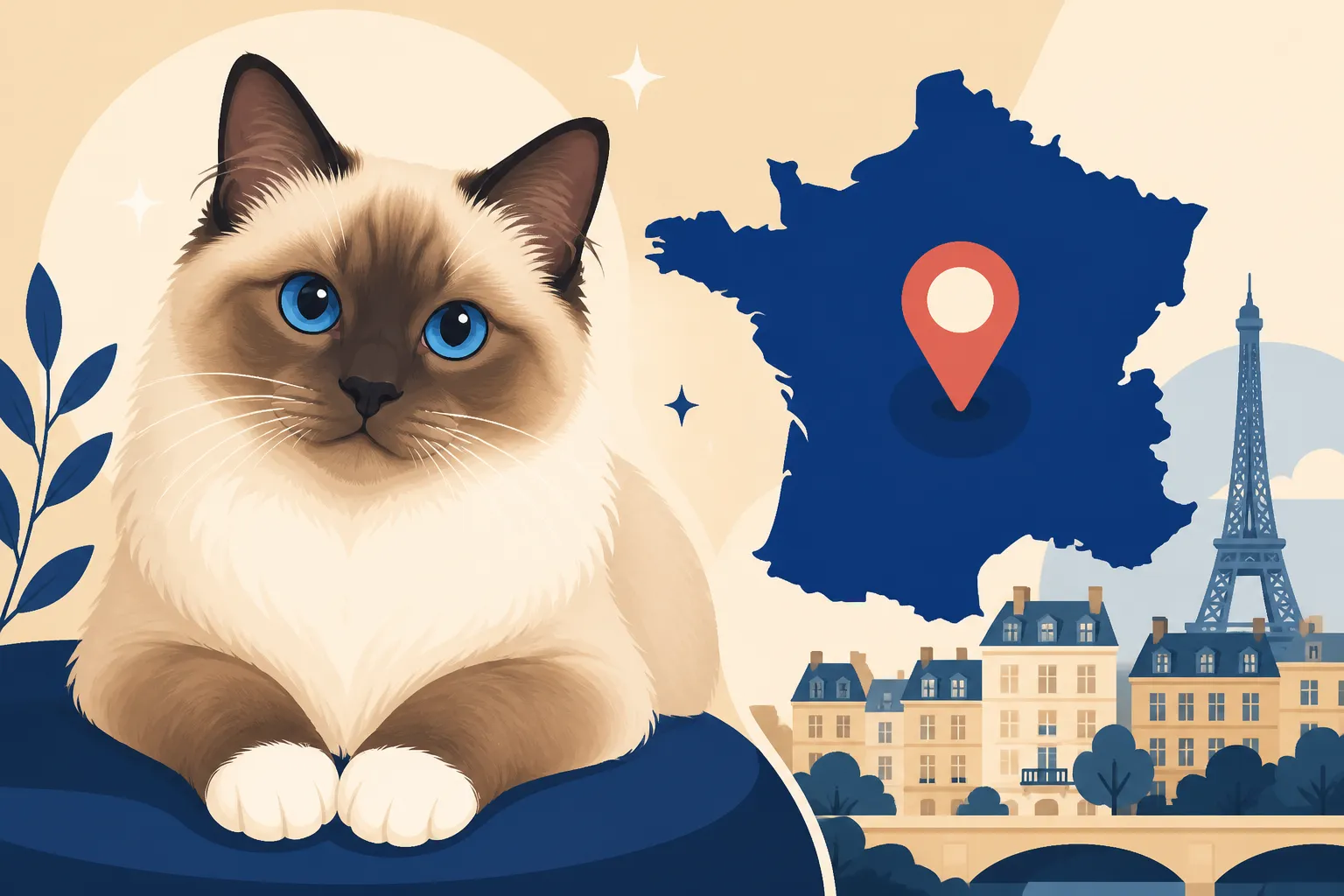
Why the Birman Is More Common in France
A breed can feel everywhere in one country and surprisingly hard to find in another. The Birman’s strong French presence is not simply a matter of fashion: France is closely tied to the breed’s documented history, name, early development, and organized breeding. This guide explains why that connection matters—and what “more common” does and does not mean for prospective owners.
France’s special connection to the Birman
The breed’s European story begins in France
The Birman is often called the Sacred Cat of Burma, but the familiar temple story is a legend rather than a well-documented account of the breed’s origins. Its modern history is more closely connected to Europe, and especially France, than the name alone might suggest. The title The Birman Is the Sacred Cat of Burma, and the Story Is a Legend explores the difference between the romantic story and the historical record.
Accounts of the breed’s early history describe a pair of cats arriving in France from Burma in the early twentieth century. The story is commonly associated with 1919, although details have been retold in different ways. The arrival of those cats helped create the foundation for a distinct French breed, rather than establishing an uninterrupted population of temple cats in Europe. For more on that journey, see How a Pair of Birmans Left Burma in 1919.
This history gives France a particular place in Birman culture. When a breed is developed, named, and established in a country, local breeders, registries, and cat fanciers often build a lasting community around it. That does not automatically make the breed common in every French household, but it can help explain why it has a deeper foothold there than in countries where it arrived later.
The French name reflects that history
In France, the Birman is known as the Sacré de Birmanie. That name links the breed’s public identity to the legend of Burma while also reflecting its recognition and development in France. The wording can make the breed sound as if its origins are completely settled, but the name is not proof that the modern breed developed in Burma in the form seen today.
The early history is associated with breeders and cats in France, including the story of Sita and Poupee de Madalpour. Those names are part of the breed’s foundation narrative and help explain why French histories of the Birman receive particular attention. The article Sita, Poupee and the Founding of the Birman in France looks more closely at that chapter.
France’s connection is therefore both historical and cultural. The breed’s French name, its early breeding history, and the country’s role in organizing its identity all give French cat enthusiasts reasons to recognize the Birman as part of their own feline heritage. That connection can encourage long-term interest, even as the breed becomes familiar to people elsewhere.
How history helped establish a French breeding community
A difficult history made organized breeding important
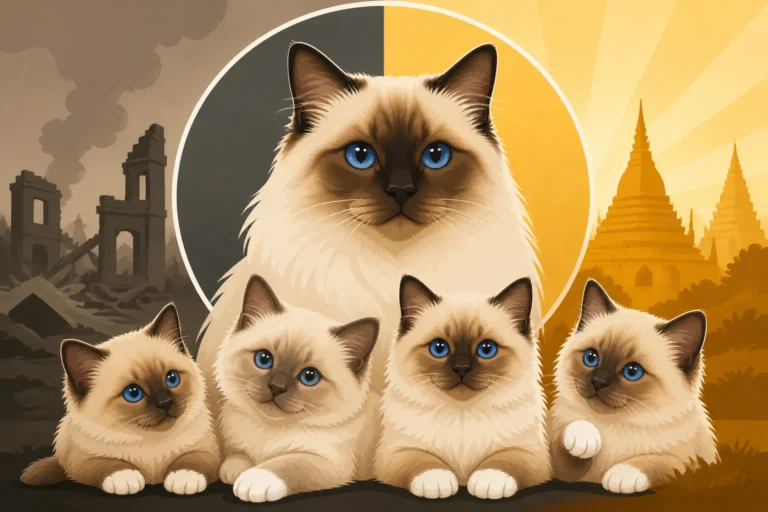
The Birman’s early development was disrupted by war. As the breed’s population became very small, breeders faced the challenge of preserving recognizable characteristics while rebuilding a viable population. This was not a simple matter of producing more kittens: a small founder group can limit genetic diversity, and careful breeding decisions become especially important.
The postwar story is one reason the breed’s history is so closely associated with its European breeding community. France was not just a place where the Birman happened to become popular; it was central to the breed’s reconstruction and continued development. The Birman Came Out of the War With Two Cats Left offers more context about that severe population bottleneck.
Rebuilding also involved outcrossing with other longhaired cats before breeders could resume producing litters considered pure Birman. That process helped preserve the breed, but it also made recordkeeping and controlled breeding significant parts of its later history. The topic is explained further in Which Longhairs Rebuilt the Birman After 1945.
Recognition helped turn a rare breed into an established one
A breed becomes easier to sustain when breeders can work within a shared standard and register cats through recognized organizations. Registration creates a common framework for describing the breed, tracking pedigrees, and distinguishing Birmans from cats with a similar appearance. It also helps potential owners identify breeders who participate in organized breeding programs.
France’s role in registering and defining the breed strengthened its local identity. The historical milestone covered in When France Registered the Sacre de Birmanie helps explain why French breed histories tend to begin earlier than accounts from countries where the Birman was introduced later.
This institutional background matters because popularity is not only about how many people like a cat. It also depends on whether a country has breeders, clubs, shows, and registries that keep interest active over generations. A strong local network can make a breed more visible and easier to find, which in turn helps the network continue.
What “more common in France” really means
Popularity can refer to several different things
When people say the Birman is more common in France, they may be referring to breeder numbers, registrations, show visibility, or how frequently the breed appears in conversations about companion cats. Those measures are related, but they are not interchangeable. A country may have a long-established breeder community without having the largest number of individual Birmans overall.
Registration totals also depend on which organizations are counted and how they record cats. Some pedigreed cats may be registered with one body, while others may be recorded elsewhere or not registered at all. Comparing countries without using the same measurement can create a misleading picture.
| What is being compared | What it can tell you | Why it can be misleading |
|---|---|---|
| Registered cats | How many cats were recorded by a particular organization | Not every cat is registered with that organization |
| Active breeders | Whether prospective owners may find local litters | A small number of breeders can still produce a visible community |
| Cat-show presence | How visible and established the breed is among enthusiasts | Show participation does not represent every pet household |
| Search interest or online mentions | How often people look for or discuss the breed | Online attention does not equal the number of cats living there |
| Availability to buyers | How easy it may be to find a kitten or adult cat | Waitlists and breeder practices vary, even within one country |
For a broader view of the breed across the region, How Popular the Birman Is in Europe considers its place beyond France. It is also worth reading Why France and Germany Hold the Most Birman Catteries, since breeder distribution can help explain why the breed remains visible in those countries.
France’s lead does not mean the Birman is rare elsewhere
The Birman spread beyond France, reaching other European countries and eventually becoming established in Britain and elsewhere. Its movement between countries shows how breeder connections, imported cats, and registry recognition can help a breed grow outside its original center. The route is discussed in How the Birman Reached Germany and Britain From France.
Today, someone looking for a Birman may find breeders in several countries, but the ease of finding a well-matched kitten can differ greatly by location. A prospective owner in a rural area may face a longer journey or wait than someone near a cluster of established breeders. That is a local availability issue, not proof that the breed has no presence in that country.
Registry recognition also differs across organizations. If you are researching a kitten or adult Birman, check which registry issued the pedigree and whether the breeder can explain the cat’s lineage. Which Registries Recognize the Birman Today provides useful context for understanding why registration details can vary.
What the French connection means for prospective owners
Look for responsible breeding, not just local popularity
A breed’s historical popularity does not guarantee that every breeder is equally responsible. Whether you are searching in France, the United States, or elsewhere, ask about health screening, pedigree records, the kitten’s early care, and the breeder’s plans for matching kittens with homes. A credible breeder should be willing to discuss the strengths and needs of the breed without relying only on its reputation or appearance.
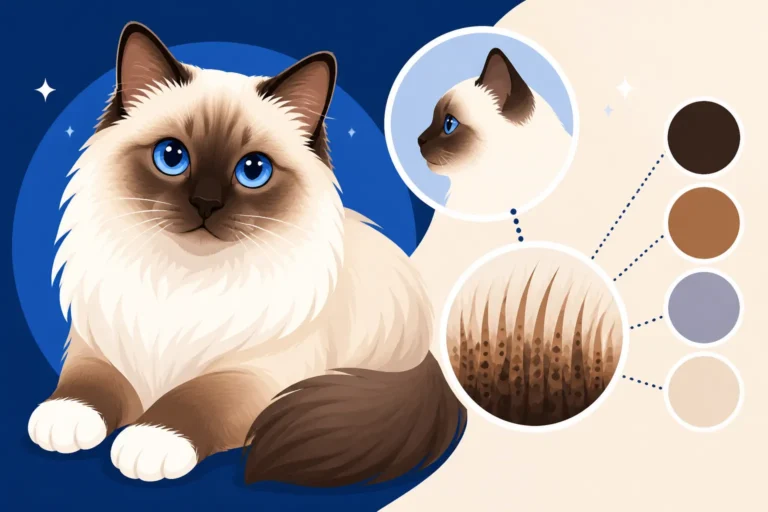
It also helps to understand what makes a Birman distinct. The white feet, colorpoint coat, blue eyes, and gentle reputation are part of the breed’s appeal, but appearance alone cannot confirm pedigree or health. Look for clear documentation and take time to learn how the Birman differs from similar-looking cats before making a decision.
If a breeder’s location or country is part of your search, treat it as one practical factor among many. Travel distance, the kitten’s age, transport arrangements, and the breeder’s willingness to stay in touch all matter. A nearby kitten is not automatically the right choice, and a reputable breeder farther away may be a better fit if the arrangement is safe and transparent.
Plan for everyday care after the history lesson
The Birman’s French heritage may explain its popularity, but day-to-day life with one depends on ordinary care: regular grooming, suitable food, fresh water, preventive veterinary visits, and a home where the cat receives attention. If you are preparing for a new cat, make a list of essentials before bringing one home. For routine supplies such as litter, food, and grooming tools, a retailer such as Chewy may be one place to compare options; check product details and suitability rather than assuming a particular item fits every cat.
Chewy can also be a practical place to browse everyday supplies once you know what your cat uses, but food choices should account for the individual cat’s age, health, and veterinary guidance. If a Birman is already settled into a routine, avoid abrupt food changes simply because another product is easier to order. Compare ingredients and feeding instructions, and ask your veterinarian about any medical diet.
The French connection is a meaningful part of the Birman’s story, not a guarantee of availability or a shortcut to choosing a cat. If you are preparing for ownership, Chewy may help you look through basic supplies, but the breeder’s records, the cat’s health, and a realistic plan for long-term care matter far more than where a breed first became established.
Disclaimer
This article is for general informational purposes only and does not constitute professional advice. Laws, prices and regulations vary by location and change over time. Consult a qualified professional for guidance on your specific situation.