How Many Birmans Are Registered Worldwide Each Year
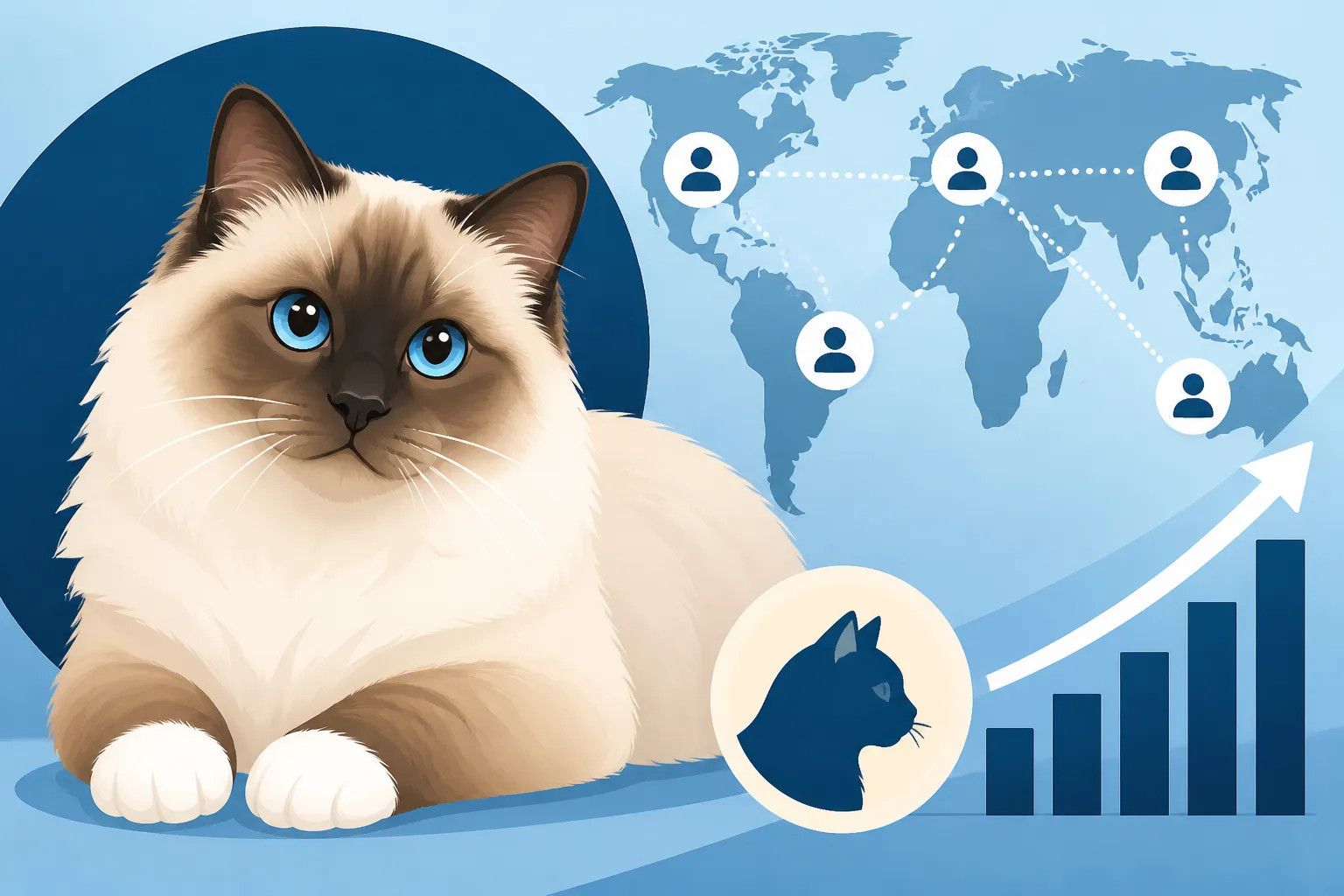
A reliable worldwide count of Birmans registered each year is hard to give because there is no single global registry collecting every country’s records. Breed organizations count cats within their own systems, and their figures may not cover the same places or types of registration. This guide explains what those numbers can—and cannot—tell you, and how to check a claim.
Why there is no single worldwide annual total
Registrations are recorded by separate organizations
Cat registrations are maintained by independent organizations, not by a central international authority. In North America, for example, the Cat Fanciers’ Association and The International Cat Association keep their own records. In Europe, FIFe brings together national member organizations, while the Governing Council of the Cat Fancy operates in the United Kingdom. Other countries have their own registries and breed associations.
Each organization defines and publishes its records according to its own practices. One may report registrations by breed and year; another may publish broader statistics, summarize activity differently, or make only some figures readily available. A cat registered with one organization does not automatically appear in another organization’s totals.
That means adding numbers from several sources can be misleading. The same cat might be registered in more than one system, while cats registered only with a smaller national body may be absent from the figures being added. A total assembled without checking for overlap can count some cats twice and miss others entirely.
For background on which organizations recognize the breed, see Which Registries Recognize the Birman Today. Recognition and registration are related, but they are not identical: a registry may recognize Birmans without publishing a complete annual total that can be compared directly with another registry’s records.
A registration count is not a count of all Birmans
A registry’s annual figure describes cats entered into that registry during a particular period. It does not tell you how many Birmans live in homes around the world. Many pet cats are never registered with a pedigree organization, and some cats may be registered in a different country or system from the one used for a published statistic.
There is also a timing issue. A kitten born in one year might not be registered until the following year, depending on the breeder’s paperwork and the organization’s process. If a report counts registrations by the date the records were entered, it may not line up with the year of birth. Comparing a registry’s annual registrations with another organization’s kitten births could therefore produce a false impression of growth or decline.
Even within one registry, the number of registrations does not directly reveal the number of active breeders, litters, or homes. A single litter can produce several registered kittens, while a breeder may choose to register only some of them. The statistic is useful, but it answers a narrower question than “How many Birmans are there?”
How to interpret Birman registration figures
Check what the number actually measures
Before relying on a number, look for the definition beside it. Is it the number of individual cats registered, the number of litters recorded, the number of new catteries, or a count of all registrations across breeds? Those measures are not interchangeable. A headline that says “registrations” may not explain whether it refers to one breed or the registry’s total activity.
The reporting period matters too. A calendar-year total, a financial-year total, and a multi-year average can all describe the same registry differently. If one organization’s report covers a calendar year and another’s covers a different reporting period, putting their figures side by side does not create a clean worldwide comparison.
When a breeder gives you a registration claim, ask which organization issued the papers and what the figure refers to. A pedigree document can help confirm an individual cat’s recorded ancestry, but it does not prove how many Birmans were registered globally. A retailer such as Chewy is not a pedigree registry; a product listing or customer account cannot verify a cat’s registration status.
Compare regions carefully
Regional popularity can help explain why annual totals differ, but it cannot fill gaps in a global dataset. The number of Birmans recorded by a national organization reflects its membership, its registration practices, and the local availability of breeders. A region with a well-established registry and detailed annual reporting may look more prominent than a region where cats are registered through several smaller organizations.
For a broader view of the breed’s geography, How Popular the Birman Is in Europe and Why France and Germany Hold the Most Birman Catteries offer useful context. Neither regional concentration nor the number of catteries alone gives a worldwide annual registration total. Catteries may vary in size and activity, and a breeder may register cats through an organization outside the country where the kittens are born.
Historical context also matters. The modern Birman breed was rebuilt after the Second World War from a very limited number of cats, and its later spread depended on breeding and recognition across countries. How Many Birmans Survived the Second World War and How the Birman Crossed the Atlantic help explain why the breed’s history is international, but historical survival and spread are different questions from present-day annual registration.
| Figure you find | What it may tell you | What it does not establish |
|---|---|---|
| Birman registrations from one registry | Recorded activity within that organization | A complete worldwide count |
| Registered litters | Litter activity under that registry’s rules | The number of individual kittens registered |
| Number of listed catteries | Breeder presence or membership in a region | How many kittens were born or registered |
| Breed popularity ranking | Relative standing under a specific survey or registry | The breed’s total global population |
| A breeder’s estimate | The breeder’s view of the market or breed | An independently verified registry total |
How to check a claim about worldwide registrations
Follow the figure back to its original record
If you see a claim such as “a certain number of Birmans are registered worldwide each year,” look for the original organization and report behind it. A reliable explanation should identify which registries contributed data, which years were included, whether the count covers individual cats or litters, and how duplicate records were handled.
If those details are missing, treat the figure as an estimate rather than a confirmed global total. This does not necessarily mean the estimate is deliberately misleading. It may have been assembled from partial national statistics, repeated in later articles without its original qualifications, or confused with a population estimate. But without a clear method, it cannot be compared confidently with another number.
For a more useful comparison, seek figures from the same organization across multiple years and check that the organization has not changed how it reports registrations. A rise in recorded entries could reflect greater breed popularity, a change in reporting, or more breeders using that registry. It does not automatically mean that the worldwide Birman population has grown at the same rate.
Separate pedigree paperwork from sales and ownership records
Registration records are not the same as breeder advertisements, pet-store listings, or household ownership records. A kitten may be marketed as a Birman without being registered with a recognized pedigree organization. Conversely, a registered cat may never appear in a public sales listing. These sources answer different questions and should not be combined as if they were one database.
If you are considering a kitten, ask the breeder which registry issued its papers and how you can verify them. Check that the paperwork identifies the cat and its pedigree, and contact the relevant organization if anything is unclear. Chewy may be a familiar place to look for cat supplies after bringing a pet home, but shopping records do not establish pedigree or contribute to an annual registry count.
The same distinction applies to online discussions about breed popularity. A busy breeder forum, a large number of search results, or frequent listings in a marketplace can make a breed seem more common than official registration figures suggest. Listings may be duplicated, old, or unregistered; registration records, meanwhile, may not include cats outside the reporting organization. For ownership context, Why the Birman Sits Mid Table in American Registrations looks at how a breed’s position in a particular region should be understood, rather than treated as a universal ranking.
What can responsibly be said about the annual total
Use a registry-specific answer when precision matters
If you need a number for a report, article, or breeding discussion, the most defensible answer is usually a clearly labeled figure from a named registry and a named period. For example, describe it as that organization’s reported Birman registrations—not as the worldwide total. If several organizations publish comparable data, present each figure separately and explain the limits instead of summing them automatically.
A careful answer should include four details: the registry or registries involved, the reporting period, the unit being counted, and any known gaps or overlap. That may sound less tidy than a single global number, but it prevents readers from mistaking an incomplete count for a definitive one.
If a registry does not publish a breed-level annual figure, contact the organization or consult its official statistics and annual reports. Avoid treating a breeder’s estimate as an official count unless its method and data are made clear. A claim that cannot be traced to a defined dataset should be described as an estimate, not a verified worldwide total.
Keep popularity, history, and population in their proper lanes
It is tempting to infer annual registrations from the breed’s visibility, historical importance, or presence in several countries. Those details help explain the Birman’s place in the cat fancy, but they do not supply a global annual count. The breed’s post-war rebuilding is a historical story; today’s registry records are administrative data; and the number of Birmans living in homes is a population question. Each requires different evidence.
When reading or sharing a figure, check whether it measures registrations, births, litters, breeders, or estimated ownership. If the source does not say, ask before repeating it. The distinction is especially useful when comparing the Birman with another longhair breed or when evaluating claims about a sudden change in popularity.
For the Birman specifically, there is no single worldwide annual total that can be stated confidently from a unified registry database. The clearest approach is to use separate, attributed figures from the registries that publish them, explain what each one counts, and avoid presenting a partial tally as a complete global answer. Chewy can be relevant to the practical side of welcoming a cat, but it is not a source for confirming breed registration statistics.
Disclaimer
This article is for general informational purposes only and does not constitute professional advice. Laws, prices and regulations vary by location and change over time. Consult a qualified professional for guidance on your specific situation.