Why the Birman Sits Mid Table in American Registrations
A Birman can look like a breed everyone should know: blue eyes, white gloves, a silky coat and a famously easygoing reputation. Yet it sits around the middle of American registration lists rather than at the very top. This guide explains what that position means, why registrations are not the same as popularity, and what may keep the breed from becoming more common.
What a mid-table registration position actually tells you
Registrations count paperwork, not every cat in the country
When a cat breed appears in a registration ranking, the number usually reflects cats recorded by a particular organization during a defined period. It is not a count of every Birman living in the United States. A Birman without registry papers, for example, may be absent from that organization’s totals, even if the cat is clearly part of the breed.
That distinction matters because plenty of families choose cats through shelters, rescues, friends, or informal rehoming. Those cats may be much-loved Birmans, but their lives do not necessarily show up in a pedigree registry’s annual figures. Registration rankings also do not measure how often people search for the breed, how many kittens breeders have available, or how many Birmans are already settled in homes.
So “mid-table” is best understood as a relative position within a particular registry’s records, not a verdict on the breed’s quality or a complete measure of its presence in American homes. A breed can have a devoted following and still register fewer cats than more widely bred or heavily promoted breeds.
The ranking depends on which registry you are looking at
There is no single master list that tracks every pedigreed cat in the United States. Different organizations maintain their own registration systems and may differ in their rules, membership, recognition of breeds, and reporting periods. That means a ranking can shift depending on the registry and the years being compared.
This is why it is wise to read the heading and methodology before interpreting a list. Does it report registrations, new litter records, or another measure? Does it cover one organization or several? A Birman’s place on one list may not match its position on another, and small changes in registrations can move breeds around without signaling a dramatic change in public interest.
Registrations also reflect breeder activity. If fewer litters are registered in a particular period, the breed may move down a list even when interest from prospective owners remains steady. Conversely, a short-lived rise in registered litters can lift a breed’s position without meaning that it has suddenly become a household name everywhere.
Popularity has several meanings
People often use “popular” to mean familiar, frequently seen, easy to find, or highly sought after. Those meanings overlap, but they are not interchangeable. A Birman might be well liked by the people who know the breed, while remaining less familiar to the average person than a Persian, Siamese, or Ragdoll.
The breed’s position also does not tell you whether it is a good fit for a particular household. A registration rank cannot reveal whether a cat’s temperament suits a busy family, whether a prospective owner can meet its social needs, or whether a particular breeder takes health and welfare seriously. For that, it helps to learn about the kind of home the breed tends to suit, including in Who the Birman Actually Suits.
If you are comparing breeds, treat rankings as background information rather than a shopping list. The more useful question is not “Which breed is highest?” but “Which cat’s needs and personality make sense for the life I can offer?”
Why the Birman may not reach the top of the list
Its appeal can be quieter than its appearance
The Birman’s striking looks make an immediate impression, but its everyday appeal is often more understated. Many people are drawn to cats they recognize from advertising, films, popular social media accounts, or long-established cultural references. A breed can be beautiful and affectionate without receiving the same broad visibility.
Birmans are often described as sociable and gentle, but they are not necessarily the loudest or most demanding cats in a room. Their quieter style may suit owners who want a companion nearby rather than a cat constantly calling for attention. That kind of appeal builds loyalty among people who know the breed, but it may not generate the same instant recognition as a breed with a more prominent public profile.
This difference between visibility and suitability can be easy to miss. Someone browsing breed rankings may assume a middle position means a cat is obscure or less desirable. In practice, it may simply mean the breed has a more modest footprint in the registry figures being counted. The Birman’s reputation as a companion is explored further in Why the Birman Is Recommended to First Time Owners.
A specific look and breed standard narrow the audience
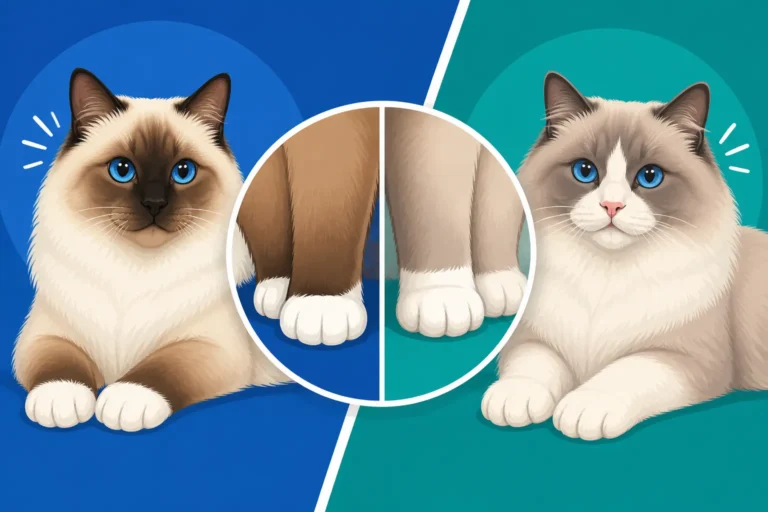
Birmans have a distinctive combination of features: a pointed coat pattern, blue eyes, and white feet known as gloves. Those markings are part of the breed’s identity, but they can also make the breed harder to mistake for a general-purpose longhaired cat. People who are specifically looking for that combination may seek out a Birman, while others may not know what to call the breed when they see one.
The white gloves also have a role in breed standards and show evaluation. They are not simply decorative white paws; their shape and placement matter to breeders and judges. That level of detail is fascinating to enthusiasts, but it can make the breed seem specialized to people who have not previously followed pedigreed cats. The standard and the details judges look for are covered in What Judges Look For on a Birman's Paws First.
A show-quality ideal should not be confused with the needs of a pet household. A family choosing a companion should give much more attention to health, temperament, socialization, and the breeder’s practices than to whether every marking is show-perfect. For a closer look at accepted colors and pattern variation, see Which Point Colors the Birman Standard Allows.
Care needs can shape who chooses the breed
The Birman’s coat is often less demanding than its plush appearance suggests, but it still needs regular attention. Prospective owners may see a longhaired cat and assume grooming will be difficult, or they may rule out the breed before finding out how its coat behaves. That initial impression can influence whether someone even considers a Birman.
The breed also benefits from companionship and interaction. A prospective owner who works long hours, travels frequently, or wants a very independent cat may decide that another breed or a different pet arrangement is a better match. That is not a flaw in the Birman. It simply means the breed is not the right answer for every household, and responsible breed information should make that clear rather than presenting popularity as the goal.
A potential owner who understands these needs is more likely to make a thoughtful choice. Learning about daily life with a Birman—including its social habits and home environment—can be more useful than comparing registration positions alone. Why a Birman Should Not Be Left in an Empty House explains one important part of that decision.
What registration rankings miss about finding a Birman
Availability varies by breeder and location
A breed’s national position does not tell you whether a well-matched kitten is available nearby. Breeder numbers, litter timing, waitlists, and regional demand can all affect how easy it is to find a Birman. A breed with a modest registration count may still have established breeders in some areas, while prospective owners elsewhere may need patience or travel.
That is one reason the experience of searching can feel inconsistent. One person might find several breeders within driving distance; another might contact multiple catteries and hear that no kittens are available for some time. Neither experience necessarily contradicts a national ranking. Registrations describe a broad pattern, not the number of kittens currently waiting for homes in a particular state or city.
When contacting breeders, focus on clear communication and the welfare of the cats rather than speed. Ask how kittens are raised, what veterinary care and screening the parents have received, and what information comes with the kitten. A breeder who explains the process and welcomes careful questions is more useful than one who promises immediate availability without answering basic concerns.
Registration papers are only one part of the picture
Pedigree papers can document a cat’s recorded ancestry, but they are not a substitute for health information or good breeding practices. Prospective owners should ask what screening is relevant to the line, what results are available, and how the breeder uses that information when planning pairings. The details will depend on the cats and the breeder’s program.
It is also helpful to understand what a registration certificate does and does not say. It can establish that a cat has been recorded within a particular system, but it does not guarantee that the cat will never develop a health problem, or that every aspect of care and socialization has been handled well. A sensible conversation should cover the kitten’s history, veterinary records, contract, and what support the breeder provides after the kitten goes home.
If you are assessing paperwork, take time to learn what documents should be supplied and what questions to ask. The guide Which Registries Recognize the Birman Today can help explain why registry names and recognition matter, while Why a Birman Is Still Filling Out at Three offers context for the breed’s gradual physical development.
A popular retailer is not a registration database
It is tempting to use signs of consumer activity as a shortcut for judging breed popularity. Searches for food, toys, litter, or grooming supplies may show that people are caring for cats, but they do not tell you how many registered Birmans exist. A retailer’s product listings and customer interest are not the same thing as a registry’s breeding records.
For example, someone might browse Chewy for food or litter after bringing home a Birman, but that purchase does not establish whether the cat is registered or how common the breed is. Chewy shopping activity can be useful for thinking about everyday ownership needs, not for interpreting a breed ranking. The same distinction applies to social media posts, online searches, and breeder inquiries: they reflect interest in different ways, but none is a complete census.
If you are planning for a Birman, practical shopping research can still help you prepare. Chewy is one place owners may compare routine pet supplies, while a veterinarian and breeder can give advice tailored to the individual cat. But when the question is how a breed sits in American registrations, return to the registry’s own figures and definitions rather than using retail activity as a proxy.
How to interpret the Birman’s place without overreading it
Read trends rather than treating one position as permanent
A ranking is a snapshot, not a fixed identity for a breed. The relative position can move because registrations for one breed rise or fall, because the reporting group changes, or because a registry’s dataset covers a particular period. A single table cannot explain all of those changes by itself.
If you want to compare the Birman over time, look for the same registry and the same type of measure across multiple reporting periods. That makes the comparison more meaningful than setting one organization’s list beside another organization’s figures. Even then, treat shifts as a clue to investigate, not proof that public affection for the breed has changed.
It is also worth separating short-term fluctuations from broader patterns. A small numerical change may move several breeds up or down in a tightly grouped middle of the table. That can look dramatic when reduced to rank positions, even if the underlying difference is modest. Without consistent definitions and comparable records, a list can create more certainty than the data supports.
Choose a cat for fit, not rank
If you are considering a Birman, the most practical questions are about the individual cat and your household. Can you provide daily company and interaction? Are you prepared for routine grooming, veterinary care, and the long-term commitment of living with a cat? Can you choose a responsible breeder or adoption route and give the cat time to settle?
A mid-table position neither argues for nor against choosing the breed. It does not mean Birmans are unusually difficult to find everywhere, and it does not mean they are a hidden bargain or an automatic match for every home. It simply places the breed in context within a particular registration landscape.
The Birman has a recognizable look and a companionable reputation, but those qualities matter most when they align with the home being offered. If a quiet, social cat with a long coat suits your daily life, the ranking is secondary. If your schedule or expectations do not fit the breed’s needs, a higher or lower position on a list will not make the match better.
| What you are trying to understand | What registration rankings can show | What they cannot show |
|---|---|---|
| Breed position | Relative standing in a particular registry’s records | A complete count of every Birman in American homes |
| Availability | Broad evidence of recorded breeding activity | Whether a kitten is available near you right now |
| Public interest | A limited indication of registered breed activity | Search interest, rescue numbers, or retail demand |
| Breed suitability | Nothing about the needs of an individual household | Whether a Birman is the right companion for you |
| Breeder quality | Nothing by rank alone | Health practices, kitten socialization, or ethics |
For anyone researching the breed, registration rankings are a useful starting point—but only a starting point. They explain where the Birman sits within a specific set of records, while the more personal questions of health, companionship, and household fit require closer attention.
Disclaimer
This article is for general informational purposes only and does not constitute professional advice. Laws, prices and regulations vary by location and change over time. Consult a qualified professional for guidance on your specific situation.