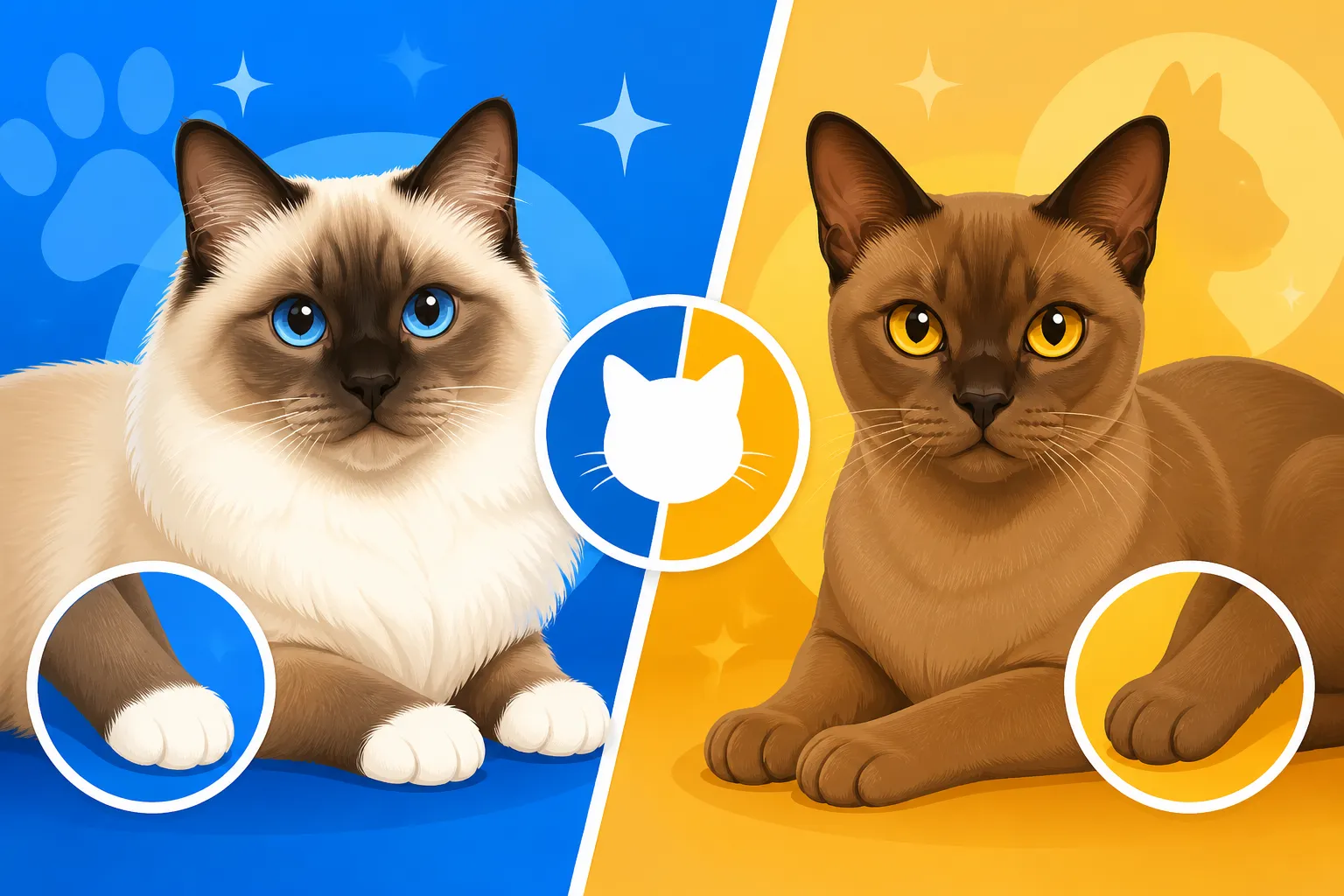
How a Birman Differs From a Burmese
It’s a common mix-up, isn't it? You hear "Birman" and "Burmese," and given that both names hint at a connection to Myanmar (formerly Burma), it's easy to assume they're either the same breed or very closely related. But let me tell you, while both are utterly charming feline companions, they are distinct breeds with vastly different histories, appearances, and even personalities. This guide will walk you through the key differences, helping you understand what makes each of these beautiful cats unique and whether one might be a better fit for your home than the other.
Unraveling the Namesake: Birman vs. Burmese Origins
The names themselves are often the first point of confusion, leading many prospective cat parents to believe these breeds share a deep, intertwined history. However, the truth is far more complex and interesting, with each breed tracing its roots back to very different parts of the world and under entirely different circumstances. It’s not just a matter of semantics; it’s a foundational difference that has shaped who these cats are today.
The Mythical Roots of the Birman
The Birman, often called the "Sacred Cat of Burma," is shrouded in a captivating legend that tells of its origins in the temples of ancient Burma. The most famous story speaks of Sinh, a temple cat whose golden eyes turned sapphire blue and white paws became pristine white gloves after his master, a revered priest, passed away. This tale beautifully explains the Birman's distinctive appearance – its striking blue eyes and white "gloves" on all four paws, contrasting with its pointed body color. It's a powerful narrative that gives the breed a mystic aura, suggesting a divine connection rather than a simple breeding program.
While the legend is indeed enchanting, the historical record suggests a more practical, albeit still intriguing, path to its establishment. Many believe the breed as we know it today was actually developed in France in the early 20th century. A widely accepted theory suggests that a pair of Birmans were brought from Burma to France around 1919, though only the female, Sita, survived the journey. She was purportedly pregnant and gave birth to a litter, laying the foundation for the breed in Europe. The breed was then carefully developed and refined by French breeders, aiming to standardize the specific traits seen in the mythical temple cats. This blend of legend and dedicated breeding efforts has given the Birman its unique story and a strong sense of identity, one that harks back to spiritual origins even if its modern development is rooted in European catteries. You can dive deeper into its captivating history by reading The Birman Is the Sacred Cat of Burma, and the Story Is a Legend and Who Shipped the First Birmans to France.
The Californian Genesis of the Burmese
In stark contrast to the Birman's ancient, mythical origins, the Burmese cat's story is much more recent and precisely documented, beginning in the sunny climes of California in the 1930s. The breed owes its existence to a single cat named Wong Mau, a small, dark brown female cat with a distinctive short, sleek coat and captivating golden eyes. She was brought to the United States from Burma (now Myanmar) by a U.S. Navy doctor, Dr. Joseph C. Thompson, in 1930. Dr. Thompson, intrigued by her unique appearance, embarked on a breeding program to understand and establish her traits.
Wong Mau was initially bred with a Siamese cat to explore her genetic makeup. The resulting kittens revealed that she carried a gene for a solid brown coat, distinct from the pointed pattern of the Siamese. Through careful selective breeding, Dr. Thompson and his colleagues worked to develop and stabilize the solid, warm brown coat and the robust, compact body type that characterizes the Burmese today. This meticulous scientific approach to breeding, rather than a mystical legend, underpins the Burmese's lineage. It's a testament to dedicated genetic exploration and a clear, traceable history from a single foundational cat, making its story entirely different from the Birman's romanticized past.
The Geographic Misconception
Given that both "Birman" and "Burmese" explicitly reference Burma (Myanmar), it's completely understandable why people conflate their origins. You might think they’re two branches off the same family tree, perhaps diverging centuries ago in a remote Burmese temple or village. However, as we’ve seen, this geographic connection is tenuous at best for the Birman, which likely saw its true development and standardization in Europe. The Burmese, while originating from a cat from Burma, was essentially created as a distinct breed in the United States.
This common misconception can lead to all sorts of confusion, especially if you're trying to research or even acquire one of these breeds. You might assume similar care needs, temperaments, or health predispositions based purely on the name. This highlights the importance of looking beyond a breed's name to understand its true background. The shared "Burma" in their titles is more of a historical nod or a geographical source point for an ancestral cat, rather than an indicator of shared genetic heritage or concurrent development within the same region. It’s a good lesson that a name, however evocative, doesn't always tell the whole story of a cat's journey through history.
A Tale of Two Coats: Appearance Differences
One of the most immediate and striking ways to differentiate a Birman from a Burmese is by their appearance. They are like night and day when it comes to their physical presentation, from the length and texture of their fur to their color patterns and facial features. If you were to see them side-by-side, you'd instantly notice that these are two distinct masterpieces of feline genetics, each with its own unique aesthetic appeal.
Coat Length and Texture: Long vs. Short
The most obvious distinguishing feature is undeniably the coat. The Birman is a glorious semi-longhaired cat, draped in a luxurious, silky single coat. When you run your hand over a Birman's fur, it feels incredibly soft and smooth, almost like spun silk. This lack of a dense undercoat is actually a blessing, as it means the Birman's long fur is less prone to matting compared to other longhaired breeds like the Persian. You might expect a cat with such flowing locks to be a grooming nightmare, but they are surprisingly manageable. The fur is longer around the neck, forming a beautiful ruff, and often on the tail, creating a magnificent plume. It truly gives them an aristocratic and ethereal appearance.
In contrast, the Burmese sports a short, incredibly fine, and satin-like coat that lies exceptionally close to their body. It's incredibly soft to the touch, feeling like velvet or polished silk. There's no fluff, no long guard hairs, just a sleek, compact covering that accentuates their muscular build. This coat requires minimal grooming, often just a quick brush a couple of times a week to remove loose hairs and maintain its lustrous sheen. If you've ever felt a mink stole, you'll have a good idea of the luxurious feel of a Burmese coat. This difference in coat length isn't just aesthetic; it profoundly influences their grooming needs and how they cope with different temperatures. Why a Birman's Single Coat Never Developed a Woolly Layer delves into the specifics of the Birman's unique coat.
Pointed Perfection vs. Solid Sepia: Color Patterns
Another hallmark difference lies in their color patterns. Birmans are classic "pointed" cats, much like their Siamese ancestors. This means their body is a lighter color, while their "points" – the ears, mask, paws, and tail – are much darker. These darker areas are where the pigment develops due to cooler body temperatures. Birman kittens are born pure white, and their points gradually develop and darken as they grow, a fascinating process to witness. The breed standard allows for a variety of point colors, including seal, blue, chocolate, lilac, red, and cream, as well as various tabby and tortie patterns. However, the most distinctive feature within this pointed pattern is the Birman's immaculate white "gloves" on all four paws, which end in an even line on the front paws and ideally extend into "laces" or "gauntlets" up the back of the hind legs.
The Burmese, on the other hand, is known for its rich, solid, and uniform body color, often described as sepia-toned. While they are a form of colorpoint cat, their coloring is much less contrasted than the Birman's. The difference between their body and point color is subtle, with the points only slightly darker than the main body. The original and most famous Burmese color is a deep, warm sable brown, almost like a rich dark chocolate. However, over time, other colors have been developed and accepted, including blue, champagne (a warm beige), and platinum (a pale, grayish fawn). Their solid, uniform coloring, without any white markings, gives them a distinctly different look from the high-contrast Birman. This solid coloring, combined with their short, lustrous coat, makes them appear incredibly sleek and sophisticated.
Eye Color and Face Shape Distinctions
Beyond coat and color, their eyes and facial structures also set them apart. Birmans are universally recognized by their stunning, deep sapphire blue eyes. These eyes are typically large, rounded, and expressive, often described as having an intense, unwavering gaze. The contrast of these brilliant blue eyes against their often paler bodies and darker points is absolutely breathtaking. Their face shape is generally broad and rounded, with full cheeks and a moderately Roman nose, giving them a sweet, gentle, and somewhat ethereal expression.
Burmese cats, conversely, typically possess large, luminous gold or yellow eyes, which can range from amber to a rich, deep gold. These eyes are usually set wide apart, with a slightly rounded aperture that can appear almond-shaped. The warmth of their golden eyes against their sleek, solid coats creates a captivating and often mischievous expression. Their head shape is distinctly rounded, with full cheeks and a short muzzle, but without the extreme brachycephalic (flat-faced) features seen in some Persian lines. This gives them a sweet, intelligent, and sometimes impish look. A quick glance at the eye color alone is often enough to tell these two beautiful breeds apart.
| Feature | Birman | Burmese |
|---|---|---|
| Coat Length | Semi-longhair | Shorthair |
| Coat Texture | Silky, single coat, less prone to matting | Fine, satin-like, lies close to body |
| Color Pattern | Pointed (darker extremities), lighter body | Solid, uniform color, subtle pointing |
| Distinctive Markings | White "gloves" on all four paws, "laces" on hind legs | No white markings |
| Common Colors | Seal, Blue, Chocolate, Lilac, Red, Cream (points) | Sable (brown), Blue, Champagne, Platinum (solid body) |
| Eye Color | Deep sapphire blue | Gold to yellow, amber |
| Face Shape | Broad, rounded, full cheeks, moderately Roman nose | Rounded head, full cheeks, short muzzle |
| Body Type | Long, substantial, medium-boned | Compact, muscular, moderate bone |
Personality Parallels and Divergences
When it comes to temperament, both the Birman and the Burmese are celebrated for their affectionate natures and their desire to be involved in family life. This is where some of the deepest commonalities lie, making both breeds excellent choices for companionship. However, beneath this shared surface of sociability, you’ll find distinct differences in their energy levels, vocal habits, and overall approach to engaging with their human companions. Understanding these nuances is crucial for choosing the cat whose personality truly meshes with your lifestyle.
The Birman's Gentle, Affectionate Nature
The Birman is famously known for its sweet, gentle, and placid temperament. They are incredibly loving cats who thrive on companionship but are rarely demanding about it. A Birman will often follow you from room to room, preferring to be in the same space as you, perhaps curling up on a nearby chair or at the foot of your bed rather than constantly on your lap. They are observant and quiet companions, content to simply be with their people. This makes them ideal for households where a constant shadow is desired, but not an insistent one. They tend to be very tolerant and patient, making them wonderful pets for families with well-behaved children or other animals, including dogs.
These cats are not typically high-energy daredevils. While they enjoy a good play session with a feather wand or a gentle toss of a toy mouse, they’re not usually found scaling curtains or performing acrobatic feats from the top of the tallest cat tree. Their play tends to be more understated, reflecting their calm demeanor. If you're looking for a peaceful, affectionate presence that will bring a serene energy to your home, the Birman is a fantastic choice. They are known to absorb the rhythm of their household, adapting to both quiet evenings and busier days with grace. However, don't let their placid nature fool you; they can still hide illness well, so always pay close attention to any subtle changes in their routine or appetite. Why a Birman Hides Illness Behind a Placid Temperament explores this characteristic further.
The Burmese's Energetic and Engaging Spirit
The Burmese, while equally affectionate, brings a much higher level of energy and engagement to the table. They are often described as "dog-like" in their devotion and playful antics. A Burmese will not just follow you; they will likely be underfoot, demanding attention, initiating games, and often engaging in lively conversations. They are incredibly curious, intelligent, and always up for an adventure, whether it's exploring the highest shelves in your home or trying to "help" with whatever task you're doing. This breed thrives on interaction and can become bored or even destructive if left alone for extended periods without adequate mental and physical stimulation.
Burmese cats love to play and will often retrieve toys, chase laser pointers with unbridled enthusiasm, and invent their own games. They are agile and acrobatic, often found in high places, observing their kingdom. They form strong bonds with their families and tend to be very "people-oriented," often choosing one person as their primary confidante but showing affection to everyone. If you’re looking for a cat that is deeply interactive, playful, and always seems to be in motion, the Burmese might be your perfect match. They are companions who demand your attention, not because they are needy, but because they genuinely want to be a part of everything you do, turning everyday life into a series of shared adventures.
Vocalization Variations
Another significant difference between these two breeds lies in their vocal tendencies. The Birman is known for being a relatively quiet cat. They do have a voice, of course, but it's typically soft, melodic, and often described as a gentle trill or a soft coo. They rarely "yowl" or make loud, insistent demands. When a Birman wants something, they might give a little chirp, a soft meow, or simply look at you with their big blue eyes until you understand their unspoken request. This makes them a wonderful choice for those who appreciate a peaceful home environment and aren't keen on a cat that frequently expresses itself vocally.
The Burmese, on the other hand, is a much more vocal breed. They have a distinctive, often loud and expressive voice, inherited from their Siamese ancestry, though perhaps not quite as piercing. They love to "talk" to their humans and will engage in lengthy conversations, often using a wide range of meows, chirps, and purrs to communicate their feelings, desires, and observations. They are not shy about letting you know when they're hungry, want to play, or simply want your undivided attention. If you enjoy a chatty companion who will respond to your words with enthusiastic meows, the Burmese will certainly deliver. However, if you prefer a quieter home, their vocal nature could be a significant factor to consider. If you’re curious about the subtle sounds of a Birman, read What a Birman Is Saying With That Short Trill.
Grooming and Care Requirements
When considering either a Birman or a Burmese, the practical aspects of their daily care, especially grooming, play a huge role in their suitability for different households. Their distinct coat types lead to vastly different maintenance routines. Beyond just the fur, their activity levels and potential health predispositions also shape their overall care needs, making it important to understand what each breed will realistically demand of your time and resources.
Birman's Low-Maintenance Longhair Coat
Despite having a semi-longhair coat, the Birman is surprisingly low-maintenance in the grooming department. This is primarily due to its unique single coat lacking a dense undercoat, which means it doesn't mat as easily as some other longhaired breeds. You'll still need to commit to regular grooming, but it's more about maintenance than crisis management. Aim for about two to three thorough combings per week. This routine helps remove loose hairs, prevents any minor tangles from forming, and keeps their beautiful coat silky and lustrous. A good quality metal comb with both wide and fine teeth is usually all you need to glide through their fur without snagging.
Special attention should be given to their ruff, the longer fur around their neck, and their "britches" (the fur on their hind legs), as these areas might be slightly more prone to tangles. You'll also want to keep an eye on their pristine white "gloves" on their paws. These can sometimes get discolored, especially if they're particularly adventurous with their litter box, so occasional spot cleaning with a damp cloth or a gentle pet-safe wipe might be necessary. Because their coat doesn't usually accumulate oils or dirt quickly, baths are rarely needed, perhaps only a few times a year or if they manage to get themselves into a particularly sticky situation. Regular grooming sessions aren't just for their coat, they're also a great opportunity for bonding and a gentle health check, ensuring you catch any minor issues early. Combing a Birman Three Times a Week and Why a Birman's Gloves Go Yellow offer practical advice on these specific grooming aspects.
Burmese's Sleek, Easy-Care Short Coat
The Burmese cat, with its short, fine, and close-lying coat, is truly a breeze to groom. If you're looking for a low-shedding, minimal-fuss feline friend, the Burmese is an excellent contender. Their coat rarely mats or tangles, and its sleek texture means dirt and dander don't cling to it easily. A quick brush with a soft-bristled brush or a grooming mitt once or twice a week is usually sufficient to keep their coat looking shiny and to remove any loose hairs. Many Burmese cats absolutely adore these grooming sessions, purring contentedly as you pamper them, which makes the task even easier.
Because their coat is so short and doesn't trap much, bathing is almost never required unless they've gotten into something particularly messy. Their natural oils keep their coat healthy and shiny, and over-bathing could strip these essential oils. The Burmese’s grooming routine is about convenience and maintaining that beautiful, satin-like sheen. For households with busy schedules or those who simply prefer a cat that requires less hands-on coat care, the Burmese is often the preferred choice. You might want to consider adding omega fatty acid supplements to their diet, which you can find at pet supply retailers like Chewy, to further enhance their coat's natural luster.
Dietary Considerations for Each Breed
While both breeds require a high-quality, nutritionally balanced diet appropriate for their life stage, there can be subtle differences in their caloric needs and considerations related to their breed-specific health tendencies. Birmans are generally medium-sized cats and can be less active than Burmese. This means it's important to monitor their food intake to prevent them from becoming overweight, especially as they age. Their long frames can make weight gain less obvious initially, but an overweight Birman can face increased health risks. They benefit from consistent meal times and measured portions.
Burmese cats, despite being smaller in stature, are often quite muscular and have a higher energy level. They can burn more calories through their active play, so their diet might need to reflect this with slightly higher calorie density, especially for younger, more active individuals. However, like any breed, obesity can still be a concern if not properly managed. Both breeds benefit greatly from a diet rich in high-quality animal protein and healthy fats to support their overall health and coat condition. Given the Birman's propensity for kidney issues (more on that later), ensuring good hydration through wet food or a water fountain is often recommended. When it comes to finding the right food, many owners rely on established pet food brands found on sites like Chewy for their quality and variety. What Feeding a Coat Like the Birman's Costs Each Month provides insights into the expenses associated with feeding a Birman to maintain its magnificent coat.
Health Predispositions and Longevity
Understanding the health predispositions of any breed is paramount before bringing a new feline family member home. Both Birmans and Burmese are generally healthy cats, but like all purebreds, they each have certain genetic conditions that diligent breeders screen for. Knowing these potential issues can help you work proactively with your veterinarian to ensure your cat lives the longest, healthiest, and happiest life possible.
Birman's Specific Genetic Concerns
Birmans, despite their generally robust nature, have a few genetic considerations that responsible breeders actively test for. One of the most significant concerns in the Birman breed is Hypertrophic Cardiomyopathy (HCM), a common heart disease in cats where the heart muscle thickens. While no DNA test currently exists for HCM in Birmans, reputable breeders regularly screen their breeding cats with echocardiograms (heart ultrasounds) performed by a veterinary cardiologist. This is a crucial step to minimize the risk of passing on this condition. If you're considering a Birman kitten, always ask about the heart scan history of both parents. HCM in a Birman Has No DNA Test, Only an Echo explains this in detail.
Another condition to be aware of is Polycystic Kidney Disease (PKD), which causes cysts to form in the kidneys. This inherited disease is more commonly associated with Persians, but due to historical outcrossing during the Birman's rebuilding phase after World War II, some Birman lines can carry the gene. Fortunately, a DNA test (PKD1) is available, allowing breeders to easily identify and avoid breeding affected cats, significantly reducing its prevalence in the breed. Therefore, it's essential that Birman breeders test their cats for PKD1. Why PKD Reached the Birman Through the Persian provides context on how this condition entered the Birman gene pool. Less common but still important issues can include Feline Hypotrichosis with Thymic Aplasia (also known as FOXN1 or "Birman Hypotrichosis"), a severe immunodeficiency leading to hairlessness and a very short lifespan, for which a DNA test is also available. Responsible breeders will happily provide documentation of these tests for their breeding cats.
Burmese Health Challenges
The Burmese breed also has its own set of health predispositions that potential owners should be aware of. One of the most notable is a craniofacial defect, sometimes called "Burmese head defect," which can result in severe deformities in kittens and is often lethal. Reputable breeders are extremely vigilant about avoiding this through careful lineage tracking and breeding practices. Another concern is hypokalemia, a genetic condition causing low potassium levels, which can manifest as muscle weakness and tremors. A DNA test is available for hypokalemia, allowing breeders to screen their cats and prevent affected kittens from being born.
Diabetes Mellitus is also observed in Burmese cats with a higher prevalence than in the general cat population, suggesting a genetic component. Owners should monitor their Burmese for signs of increased thirst or urination, especially as they age, and maintain a healthy weight to mitigate risk. Additionally, certain neurological conditions, such as Feline Orofacial Pain Syndrome (FOPS), have been identified in the breed, though they are less common. Like with Birmans, finding a breeder who is open about health testing and provides clear documentation is vital for ensuring you bring home a healthy kitten with the best possible start in life.
Lifespan Expectations
Both breeds generally enjoy a long and healthy lifespan when properly cared for, though there can be slight differences. Birmans typically live for around 12 to 16 years, with many individuals exceeding this range with excellent veterinary care and a healthy lifestyle. Their generally placid nature and indoor lifestyle contribute to their longevity, as they face fewer risks from outdoor hazards. Regular vet check-ups, especially as they enter their senior years, are crucial for managing any age-related conditions. The Twelve to Sixteen Years a Birman Usually Gets offers more insights into their expected lifespan.
Burmese cats also boast a respectable lifespan, often living between 10 to 17 years. Their robust and muscular build, coupled with their active nature, can contribute to their vitality. However, as mentioned, their predisposition to certain conditions like diabetes means that early detection and management are key to extending their healthy years. With attentive care, a balanced diet, and regular veterinary visits, both Birmans and Burmese can be cherished companions for a significant portion of your life. Pet insurance can also be a valuable consideration for either breed to help manage unexpected health costs throughout their long lives.
Physical Stature and Build
Beyond the obvious differences in coat and facial features, the Birman and Burmese present themselves with distinct physical builds that speak volumes about their breed standards and historical development. They occupy different niches in the feline spectrum of body types, offering diverse options for those who appreciate specific forms and sizes in their companions.
Birman's Long, Substantial Frame
The Birman is considered a medium to large-sized cat with a long, substantial, and sturdy body. They possess a rectangular build that gives them a majestic and elegant silhouette. While they might appear delicate due to their silky coat, they are surprisingly solid and well-muscled underneath. Birmans typically have medium boning, neither too fine nor overly heavy, contributing to their balanced appearance. When you pick up a Birman, you often notice they have a pleasing weight for their size, feeling more substantial than they might look at first glance.
Their legs are of medium length, proportionate to their body, with large, round paws that are adorned with those iconic white gloves. The tail is also medium in length, often carried like a plume, adding to their overall grace. Male Birmans tend to be larger and heavier than females, sometimes weighing up to 15 pounds or more, while females usually range from 6 to 10 pounds. However, it's not just about weight; it's about their impressive length and balanced proportions that truly define their majestic appearance. They don’t usually finish growing until they are around three years old, gradually filling out their substantial frames. How Long a Birman Keeps Adding Coat and Weight further explores their growth patterns.
Burmese's Compact, Muscular Body
In contrast to the Birman's long frame, the Burmese is a small to medium-sized cat with a surprisingly compact and muscular body. They are often described as feeling "like a brick wrapped in silk" due to their dense bone structure and well-developed muscles beneath their sleek, short coat. Don't let their relatively small size fool you; Burmese cats are incredibly strong and agile. Their body type is typically referred to as "cobby" or "stocky" – a stark departure from the Birman's more elongated form.
Their legs are slender and proportionate, with neat, oval-shaped paws. The tail is medium in length, tapering to a rounded tip. Despite their small stature, adult Burmese males can weigh between 10 to 14 pounds, while females are usually between 6 to 10 pounds, demonstrating that surprising heft for their size. This compact, muscular build is a hallmark of the breed and contributes to their energetic and athletic nature. They are built for agility and strength, perfectly suited to their playful and adventurous personalities.
Weight and Growth Patterns
Both breeds follow fairly typical feline growth patterns but with their own nuances. Birman kittens start off quite small and take a good amount of time to reach their full adult size and weight. As mentioned, they continue to fill out and develop their substantial musculature and coat density until they are around three years old. During their kitten and adolescent phases, it's crucial to provide a high-quality diet that supports their steady growth without encouraging them to become overweight too quickly. Monitoring their condition by feeling their ribs gently under their silky fur is a good way to ensure they are maintaining a healthy weight.
Burmese kittens grow quickly, but their compact build means they tend to reach their mature size earlier than Birmans, typically by one to two years of age. They also tend to be less prone to excess weight if given sufficient exercise, thanks to their higher metabolism and active lifestyles. However, their love for food and their sleek coat can sometimes make it harder to spot excess weight if not carefully managed. For both breeds, consistent access to fresh water and a diet tailored to their specific needs is crucial. A chatty Burmese might even try to talk you into an extra meal, so stick to measured portions! A good quality food from a reputable vendor like Chewy can help ensure they get all the nutrients they need as they grow.
Disclaimer
This article is for general informational purposes only and does not constitute professional advice. Laws, prices and regulations vary by location and change over time. Consult a qualified professional for guidance on your specific situation.