Whether Two Birmans Can Produce an Ungloved Kitten
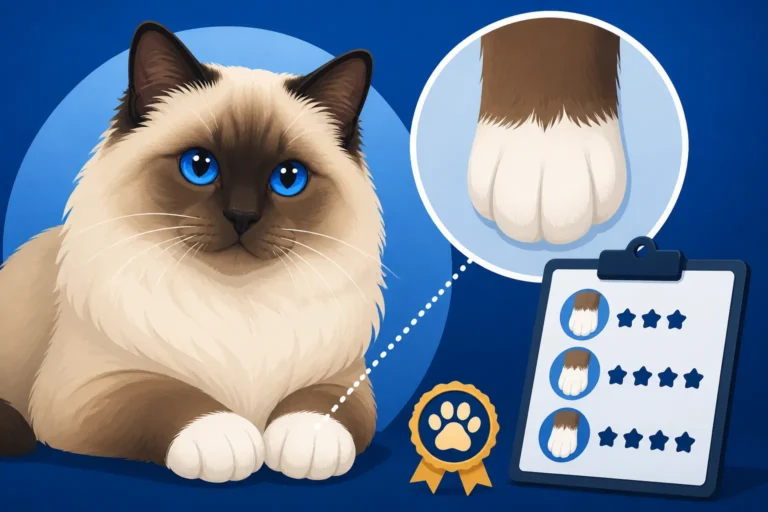
Two correctly identified, genetically typical Birman cats are not expected to produce a kitten with completely ungloved paws: the breed’s characteristic white gloves are associated with a variant carried in two copies. What can happen is a kitten with tiny, uneven, incomplete, or otherwise hard-to-see markings. This guide explains the genetics, what to check if a kitten appears ungloved, and what the finding may mean.
Can two Birmans have an ungloved kitten
The short answer is no in the expected Birman genetic pattern
A Birman’s white gloves are not just a grooming feature or a random splash of white. They are part of the breed’s distinctive appearance and are associated with a variant in the KIT gene. In the expected Birman pattern, cats carry two copies of the gloving variant and pass one copy to each kitten. When both parents pass on that variant, their kitten is expected to have the genetic pattern associated with Birman gloves.
That makes a genuinely ungloved kitten from two typical Birmans unexpected. It does not mean every kitten will have perfectly matched, show-quality gloves. The genetic basis of the marking and the exact shape of the white on each paw are not the same thing: a kitten may carry the Birman gloving pattern yet have markings that are too short, uneven, or otherwise imperfect.
The distinction matters when someone says, “Two Birmans had a kitten with no gloves.” Sometimes they mean the kitten’s white markings are difficult to judge, rather than that it has absolutely no white on its paws. For background on the gene itself, see What the KIT Gloving Variant Does and How the Birman Gloving Variant Was Identified.
A breed label does not confirm a kitten’s exact genetics
“Birman” may refer to a recognized, pedigreed cat, or it may be a description used in an online listing. Those are not equivalent. A cat can resemble a Birman without having verified Birman ancestry, and a pedigree is only useful when the records and parentage behind it are reliable. If a kitten appears to have no gloves, it is sensible to check the parents’ registrations, the litter records, and what the breeder means by “Birman.”
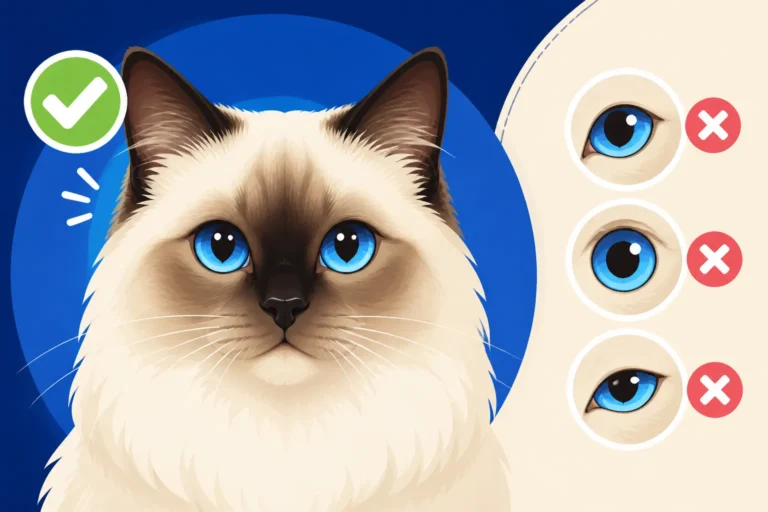
It is also worth being precise about the word ungloved. A small white mark can be hidden by how the kitten is sitting, by pale fur around the toes, or by a quick photograph. Conversely, dark coloring on the body points can make the contrast look dramatic, while the paws still need close inspection. Looking at all four feet in good light is more useful than relying on a single image.
| What you see | What it may mean | A sensible next step |
|---|---|---|
| White markings on all four paws, but uneven | Gloves are present but may not meet show preferences | Compare each paw carefully and ask the breeder how markings are assessed |
| A very small white area or unclear marking | The kitten may be young, poorly photographed, or mismarked | Inspect the paws in natural light and ask for clear, recent images |
| No visible white on one or more paws | Could be a serious mismatch with the expected Birman appearance | Ask for pedigree and parentage information; consider qualified genetic advice |
| A kitten advertised as a Birman without supporting records | Breed identity may be uncertain | Request registration details and the parents’ documentation before relying on the label |
A genuine absence of visible gloves deserves a calm investigation, not an immediate accusation. There may be an explanation involving identification, records, or how the kitten was assessed. But it is reasonable to ask clear questions, especially if the kitten is being sold as a pedigreed Birman.
Why Birman gloves can look different from kitten to kitten
The gene does not guarantee perfect symmetry
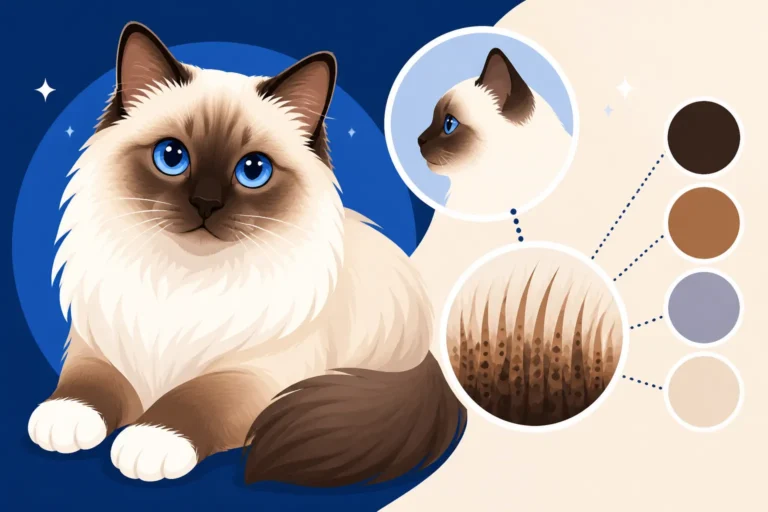
People often assume that if the gloving trait is genetically associated with the breed, every kitten’s paws should look like matching white socks. That is not how appearance works. Glove length, the boundary between white and point color, and symmetry between left and right paws can vary. The hind feet also have their own expected markings, often described as laces, and these may differ in length or shape from one kitten to another.
That variation can be confusing because a Birman’s gloves are judged as part of its appearance. A kitten may have the characteristic white markings but still be mismarked according to a breed standard. A marking that extends too far, stops too early, or differs noticeably between paws is not the same as having no Birman gloving pattern at all.
This is why a breeder cannot promise perfect glove symmetry just because both parents have white feet. The topic is explored further in Why Birman Gloves Vary Despite the Fixed Gene and Which Modifier Genes Affect a Birman's Gloves. The practical takeaway is simple: the presence of gloves and the quality of their shape are related questions, but they are not interchangeable.
Age and photographs can make the markings harder to judge
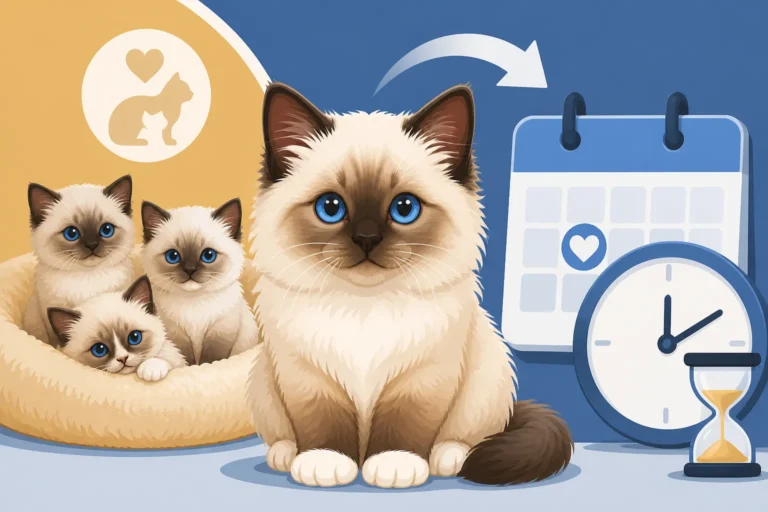
Birman kittens are born very pale, and their darker points develop as they grow. Their paws may be easier to inspect than their developing body color, but tiny markings, shadows, and camera exposure can still make a photograph misleading. A bright, washed-out image may blur the boundary of a small white marking; a dark indoor picture may hide it altogether.
Ask for clear images of the underside and top of all four paws, ideally with the kitten standing or resting in natural light. If you are visiting in person, look gently rather than pulling at the kitten’s feet. The goal is not to pressure a young kitten into a show pose; it is to understand what markings are actually present.
For more on how the markings and coat change during kittenhood, see How a Birman Kitten's Gloves Change as It Grows and Why a Birman Kitten Is Born Almost White. If the kitten’s pattern remains genuinely unclear, the breeder or a veterinarian can help distinguish a visibility issue from a more substantial concern.
What to do if a Birman kitten appears to have no gloves
Start with the breeder and the paperwork
Begin with a straightforward question: “Can you show me the markings on all four paws and confirm how this kitten is registered?” A responsible breeder should be able to explain the kitten’s pedigree, identify both parents, and discuss any unusual markings without becoming evasive. Ask whether the kitten is being sold as a pedigreed Birman, whether it is registered, and whether the breeder considers it pet-quality or suitable for showing.
Look at the documents as a group rather than treating one paper as proof of everything. Registration details, a pedigree, and records identifying the parents can help establish the kitten’s claimed ancestry. They do not automatically answer every genetic question, but they provide a basis for asking informed follow-ups. If the breeder says the kitten is a Birman but cannot explain the lack of gloves, ask what evidence supports the breed identification.
A kitten with imperfect markings may still be a much-loved companion. Show eligibility, breeding suitability, and suitability as a pet are different matters. For the specific registration question, see Why a Gloveless Birman Kitten Cannot Be Registered. Registration rules can depend on the relevant registry, so check the applicable organization’s requirements rather than assuming every registry handles the issue identically.
Consider testing only when it would answer a real question
A genetic test may be useful if the identity or inheritance pattern is genuinely in doubt, but it should not be treated as a shortcut to answering every question about a kitten. Before arranging one, ask a veterinarian, a qualified feline geneticist, or an appropriate testing laboratory what the test detects, what sample is required, and what the result can and cannot establish. A test for a known variant is not necessarily a complete review of ancestry, parentage, or every gene that may influence the visible pattern.
Testing is especially worth discussing if the kitten’s markings conflict with the claimed breed, if a breeder proposes using the cat for breeding, or if the parents’ records are incomplete. A swab result should be interpreted alongside the kitten’s appearance and documentation. If there is a question about whether a particular test is available or relevant, Whether a Birman Glove Test Exists is a useful related topic.
If you are considering a kitten, keep the conversation factual and save the listing, messages, and copies of any documents. This is not about assuming bad faith; it is about making sure the breed claim and the kitten’s actual markings are explained before you make a decision.
What an apparent lack of gloves means for ownership
A mismarked kitten can still be a companion
White gloves are a defining breed feature, but they do not determine whether a cat can be affectionate, playful, or a good fit for a household. If a kitten has imperfect markings, that may affect how it is described, registered, or considered for showing. It does not by itself tell you what the kitten’s temperament or health will be.
When choosing a pet, give the same attention to the basics you would for any kitten: its health records, socialization, living conditions, veterinary care, and the breeder’s willingness to answer questions. A striking photo or a promise of rare markings should not distract from those essentials. A calm, well-documented conversation is a better sign than a seller’s confidence alone.
Once you have chosen a kitten, practical preparation matters more than trying to correct its appearance. You can find basics such as litter, a carrier, and grooming supplies through retailers including Chewy, but ask the breeder what food and litter the kitten already knows. Keeping familiar routines during the move can make the first few days easier.
Do not try to alter the markings
A kitten’s gloves are not dirt that needs whitening, and they cannot be changed through bathing, clipping, or special products. Avoid using whitening products or dyes to make paws appear more even. Such efforts can irritate a kitten’s skin and still cannot change the underlying pattern. If there is actual staining or a skin concern, ask a veterinarian rather than treating the paws as a cosmetic problem.
For day-to-day care, gentle handling and a gradual introduction to grooming are more useful than frequent washing. A soft comb, clean resting areas, and familiar food are sensible starting points; retailers such as Chewy may carry ordinary care supplies, but the kitten’s breeder or veterinary team can help you choose what is appropriate. The aim is comfortable care, not changing the markings.
The clearest answer, then, is that two typical Birman parents are not expected to produce a truly ungloved kitten. Uneven or imperfect gloves are possible, and a kitten’s appearance can be hard to judge from a photo. If no white markings are visible, verify the kitten’s identity and records, ask direct questions, and seek qualified advice before drawing a conclusion. For a new-home checklist, Chewy can be one convenient place to look for everyday essentials, while the breeder’s records and your veterinarian are the right places to turn for questions about ancestry and health.
Disclaimer
This article is for general informational purposes only and does not constitute professional advice. Laws, prices and regulations vary by location and change over time. Consult a qualified professional for guidance on your specific situation.