How a Birman Kitten’s Gloves Change as It Grows
When you welcome a tiny Birman kitten into your home, it's often a fluffy bundle of white or incredibly pale cream. You know about those stunning white "gloves" that are the hallmark of the breed, but when your kitten arrives, those paws might just seem… well, white. Like the rest of them! It’s completely natural to wonder, and perhaps even feel a little anxious, about how these unique markings will develop and if they'll live up to the iconic Birman standard you've admired in pictures. This guide is here to unravel that delightful mystery, showing you precisely how those precious paws transform into the magnificent gloves that define this sacred cat.
The Birman's Magical Birth: Pure White Paws and the Gloving Gene
It’s one of the most charming surprises for first-time Birman owners: a kitten that looks nothing like the adult cat! The deep, contrasting points and those pristine white paws aren't there from day one. Instead, you're greeted with a little snowdrift, and the journey from that pure white start to the sophisticated adult Birman is truly fascinating to watch.
Born Snow White: The Initial Appearance of Birman Kittens
Imagine eagerly awaiting your Birman kitten, picturing the deep seal points and crisp white gloves you've fallen in love with. Then, your breeder sends a photo of your newborn, and it's a tiny, almost entirely white fluffball. You might even do a double-take! This initial pale appearance is completely normal and expected for all Birman kittens. Their distinctive color-point pattern, which includes the darker extremities (points) and the pure white paws (gloves), is caused by a temperature-sensitive albinism gene. In the warm environment of the womb, pigment doesn't develop, so kittens are born with very little to no visible coloration.
When your kitten finally arrives home, perhaps around 12 to 14 weeks, you'll see more color, but they still won't be as dark as a mature Birman. Their paws, specifically, will look quite white, often blending seamlessly with the lighter body fur. This lack of initial pigment is what sets the stage for the dramatic reveal of their points and, crucially, their gloves. Don't worry if you don't immediately see the sharp definition you're expecting; it’s all part of the magical transformation. It's a journey, not an instant arrival, and understanding Why a Birman Kitten Is Born Almost White can really help set expectations.
The Genetics Behind the Birman's Signature Gloves
So, what exactly is happening behind the scenes that gives the Birman its unique white gloves? It's all down to a specific genetic variant, often referred to as the KIT gloving gene. Every single Birman carries two copies of this particular gene. This means that unlike some other breeds where white markings can be a bit hit-or-miss, the presence of white gloves is a fundamental characteristic of the Birman cat. It's fixed in the breed's genetic makeup, a legacy of its long and fascinating history.
However, just because every Birman has the gene for gloves doesn't mean every Birman will have "perfect" gloves by show standards. This is where other "modifier genes" come into play. These are like little genetic assistants that fine-tune the expression of the main gloving gene, influencing the length, symmetry, and crispness of the white markings. This interplay of genes is why, even from the same litter, you can see a range of glove patterns, from perfectly even to slightly asymmetrical. Breeders spend years studying and understanding How the Gloving Gene Works in a Birman to produce kittens that adhere closely to the breed standard, but ultimately, nature still has its subtle ways of creating individuality. This genetic lottery is also a big part of The Gloving Gene Every Birman Carries Two Copies Of.
Watching the Color Come In: Points and Gloves Define Themselves
The first few weeks and months of a Birman kitten's life are a period of rapid and enchanting change. It's during this time that their true colors begin to shine through, literally, and those iconic white gloves start to take on their distinctive form and definition.
When the Point Colors Begin to Emerge
After the initial pure white stage, the kitten's journey into its full Birman splendor begins. Usually within the first week or two, you’ll start to notice faint, subtle hints of color emerging on the coolest parts of their bodies – primarily the tips of their ears, their nose, the very end of their tail, and their tiny paw pads. These are their "points," and they'll continue to deepen and enrich over many months, sometimes even years. The colder the part of the body, the darker the pigment will eventually become.
As these points slowly start to show, usually as a soft cream or very pale fawn, the contrast with the still-white body begins to create that classic color-point effect. This is the exciting phase where the kitten’s future color, whether it's a Seal Point, Blue Point, Chocolate Point, or Lilac Point, begins to reveal itself. It’s like watching a painter slowly add detail to a canvas. Knowing When a Birman Kitten's Points Start to Show can help you appreciate this gradual process rather than expecting immediate, dramatic change. Patience is definitely a virtue when watching a Birman grow!
The Slow Reveal of the White Gloves and Laces
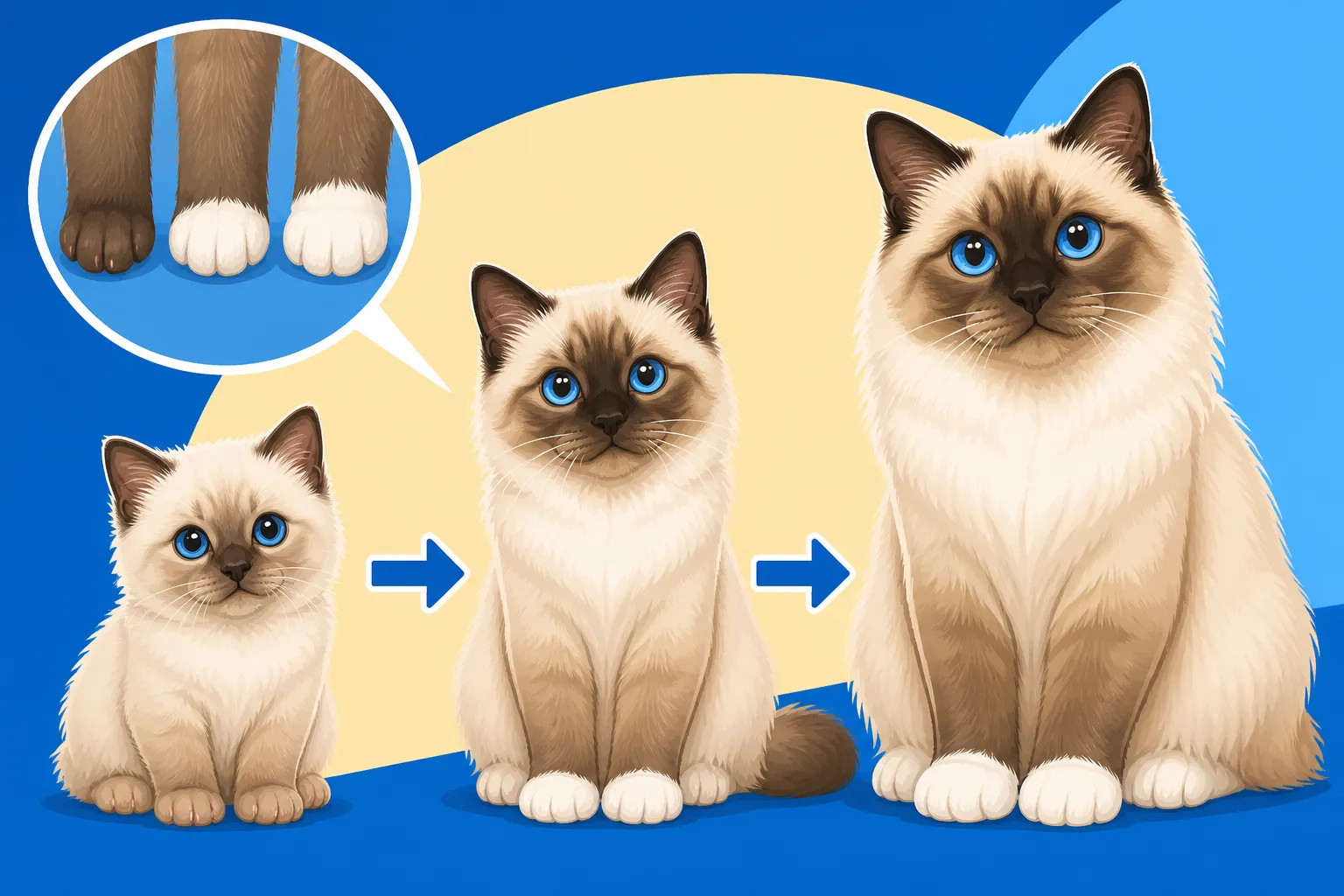
While the points are developing, something equally captivating is happening on those tiny feet. What were initially just plain white paws gradually transform into the Birman's renowned white gloves. As the darker point coloration spreads up the kitten's legs, it meets the inherent white marking on the paws, creating a distinct, crisp line. The front paws should ideally exhibit "gloves" – pure white markings that end in a straight, even line across the paw, perfectly symmetrical on both front feet. It’s a clean, elegant look.
On the hind legs, the white markings are a bit more complex and charming, often extending further up the hock in what are called "laces" or "gauntlets." These laces typically form an inverted "V" shape, or sometimes a slightly rounded V, extending partway up the back of the leg. The ideal is for these laces to be of equal length and shape on both hind legs, adding to the Birman's refined appearance. While the basic pattern is usually apparent by around eight weeks, the full clarity and definition continue to develop as the kitten grows, with the white fur becoming denser and the contrast with the darkening points becoming sharper. Many breeders consider Why a Birman Kitten's Gloves Are Clearest at Eight Weeks, making this a critical assessment period, though final judging isn't done until much later. You can learn more about the ideal front glove appearance by checking out What a Birman's Front Gloves Should Look Like.
What Affects the Birman's Glove Development?
Even with the strong genetic blueprint for gloves, you might notice subtle differences in how they develop, not just between kittens from different lines, but sometimes even within the same litter. There are a few factors that can play a role in the nuances of these beautiful markings.
The Role of Temperature and Environment
We already touched on how the Birman's color-point pattern is temperature-sensitive, which is why they're born pale and develop darker points in cooler areas of their body. This principle also has a subtle, though usually minor, influence on the crispness and spread of their white gloves. A Birman kitten raised in a consistently cooler environment might develop slightly darker overall point coloration, which could theoretically lead to a slightly less stark contrast where the gloves meet the darker fur. Conversely, a warmer environment might keep the points a touch lighter, making the white pop a bit more.
However, it's crucial to understand that this is a very subtle effect and not something an owner should actively try to manipulate. You wouldn't want to keep your kitten in an uncomfortable environment just to influence its markings! The inherent genetic pattern of the gloves will always be there, and environmental temperature merely adds a whisper of nuance to its expression. Providing a comfortable, stable home environment is far more important for your Birman's overall health and well-being than trying to tweak its glove lines. They're going to be gorgeous no matter what the thermometer says, as long as they're loved and cared for.
Genetic Modifiers and Individual Variation
While the core KIT gloving gene is a constant in all Birmans, the perfection of those gloves is often influenced by a complex cocktail of "modifier genes." Think of the main gloving gene as the command to "have white feet," and the modifier genes as instructions on "how much white," "where it stops," and "how even it should be." This is precisely why breeding Birmans to the exacting show standard for gloves is such a challenge and a true art form. You can have two parents with excellent gloves, but due to these modifiers, their offspring might have a range of variations.
Some kittens might inherit modifier genes that give them perfectly symmetrical front gloves and beautifully defined laces, while others might have gloves that are slightly uneven, or laces that extend too far up the leg (often called "gauntlets"), or perhaps even a little spot of color within the white (a "runner"). These are considered "mismarkings" in the show ring, but they do not diminish the cat's health, temperament, or beauty as a cherished pet. Understanding Why Birman Gloves Vary Despite the Fixed Gene helps us appreciate the genetic complexity and the unique beauty of each individual cat. It's a reminder that even with careful breeding, some things are simply left to nature's artistic hand. This also touches on Why Glove Genetics Are Unpredictable in a Birman.
Tracking the Birman's Glove Evolution: From Kitten to Adult
The development of a Birman kitten's gloves isn't an overnight event. It's a journey that unfolds over months, culminating in the mature, defined markings that are so characteristic of the breed. Observing this evolution can be a delightful pastime for any Birman owner.
Observing Glove Clarity and Symmetry Over Time
From those initial faint outlines in early kittenhood, your Birman's gloves will continue to refine and gain clarity. While the basic shape and placement are typically established by about 8 to 12 weeks, the white fur itself will often densify, becoming even brighter and more opaque against the deepening point colors. This process can continue for up to a year, sometimes even longer, as your Birman slowly reaches its full physical maturity and its coat fully develops.
Many owners find it fascinating to take regular photos of their kitten's paws over time. A monthly "paw pic" can create a wonderful visual diary, showcasing the gradual increase in contrast and the crispness of the lines. You’ll notice how the points around the gloves become richer, making the white stand out even more. Remember, perfect symmetry is incredibly hard to achieve, even for champion lines. Most pet Birmans will have slight variations, and these subtle imperfections are part of what makes each cat unique and endearing. Embrace the individuality of your cat's beautiful feet, and enjoy watching them become fully defined works of art.
Understanding "Mismarked" Gloves and What They Mean
It's common for breeders to evaluate a Birman kitten's glove markings around 8 to 12 weeks, as this is when they're usually clear enough to assess their potential for the show ring. Kittens with gloves that perfectly meet the breed standard – even white front gloves, symmetrical laces of the correct length on the hind feet, and no streaks of color – are rare and are often held back for show or breeding programs. However, many perfectly healthy and wonderful Birmans will have what are considered "mismarked" gloves.
Mismarkings can include:
- Gauntlets: Where the white on the hind legs extends too high up the leg, beyond the hock.
- Uneven Gloves/Laces: One front glove might be slightly longer or shorter than the other, or the hind laces might not be perfectly symmetrical or the same length.
- Runners: Small streaks of color running through the white glove, or small white spots outside the expected glove area.
- "Seal Spots": A small patch of color within an otherwise white glove.
It's really important to understand that these mismarkings do not affect the cat's health, temperament, or its ability to be a loving companion. They simply mean the cat wouldn't qualify for the show ring, or would be penalized. Kittens with mismarkings are typically sold as "pet price" cats, often with a spay/neuter contract. A reputable breeder will be transparent about a kitten's markings and explain any "faults" relative to the standard. Knowing What Counts as a Mismarked Birman can empower you to ask the right questions and appreciate that these beloved cats are just as beautiful and deserving of a loving home. Indeed, Why a Mismarked Birman Is a Pet Price Cat is a common topic of discussion when choosing a kitten, and it's good to be informed.
Table: Birman Glove Development Timeline
Here's a quick overview of how a Birman's distinctive gloves and points typically develop from birth to adulthood.
| Age/Stage | Point Color Development | Glove Appearance & Definition | Key Considerations for Owners |
|---|---|---|---|
| Newborn – 1 Week | Almost entirely white, subtle hints of color on ears. | Paws are pure white, blending with the rest of the body; no distinct gloves. | Enjoy the ethereal, fluffy white stage! |
| 2 – 4 Weeks | Ears, nose, and tail tip begin to show faint, soft coloration. | White on paws starts to become slightly more distinct as surrounding fur darkens. | First glimpses of the future "gloves" start to form; still very subtle. |
| 8 – 12 Weeks | Points are clearly visible, deepening in color on extremities. | Gloves are well-defined on front paws; symmetry and laces become apparent on hind paws. | Prime age for breeders to assess show potential based on markings. |
| 3 – 6 Months | Points continue to darken and enrich, especially on legs and face. | Gloves generally stable in shape, but the white fur densifies for greater clarity. | Keep those white paws clean! Consider a low-dust litter, perhaps available from retailers like Chewy, to help prevent staining. |
| 1 Year + | Points reach near-final, deep coloration. | Final clarity, density, and crispness of the white gloves are achieved. | The mature beauty of your Birman’s signature look is complete, ready for many years of admiration. |
Caring for Those Pristine Paws: Keeping the Gloves Glorious
Once your Birman’s gloves have developed, keeping them looking their best becomes a small but important part of their routine care. Those bright white feet can be a magnet for dirt, especially if your cat is an enthusiastic explorer or a vigorous digger in the litter box!
Routine Grooming to Maintain Whiteness
The Birman's single, silky coat is relatively low-maintenance compared to some other longhaired breeds, but their white gloves require a little extra attention. Regular combing, about three times a week, will help keep their fur clean and free of tangles, which can collect debris. While grooming, pay special attention to their paws. Gently check between their toes for any trapped litter, dirt, or even small mats that might form there.
Sometimes, despite your best efforts, those pristine white gloves might get a bit discolored, especially if your Birman is particularly playful or steps in something unexpectedly. A quick wipe with a damp cloth designed for pets can often do the trick. For more stubborn stains, a gentle cat-safe shampoo designed for white coats can be used for spot cleaning, rather than a full bath. Remember, patience and a calm demeanor during grooming sessions, established early on, will make these tasks much easier for both of you. You might find a good selection of specialized combs and grooming wipes on sites like Chewy that are perfect for maintaining a Birman’s silky coat and white gloves.
Choosing the Right Litter to Prevent Stains
One of the biggest culprits for dingy white Birman gloves is the litter box. Dusty or fine-grained litters can cling to their silky fur, especially between their toes, and over time can cause a yellowish or dull discoloration on those beautiful white paws. To combat this, choosing the right type of litter is paramount.
Look for low-dust, larger-granule litters. Many Birman owners find success with pellet-style litters (like paper or wood pellets) or crystal litters, as these tend to be less dusty and less prone to sticking to fur. Clumping clay litters can work, but opt for brands that specifically market themselves as "low dust" or "multi-cat" formulas, as these often have better dust control. You'll also want to ensure the litter box is large enough for your Birman to move comfortably and dig without excessive contact with the sides, minimizing the chance of litter sticking to their body fur. Keeping the litter box meticulously clean, scooping daily, and performing regular full litter changes will also go a long way in preserving the pristine white of your Birman’s gloves. Remember, a clean environment helps keep those signature markings sparkling!
Conclusion
The journey of a Birman kitten's gloves, from pure white infant paws to the distinctly marked, show-stopping features of adulthood, is a truly captivating aspect of this remarkable breed. It’s a testament to the intricate dance of genetics, subtle environmental influences, and the natural maturation process that defines these "Sacred Cats of Burma." Understanding this evolution allows you to appreciate the unique beauty of your own Birman, whether their gloves are picture-perfect by show standards or carry the charming individual nuances that make them uniquely yours. Each pristine paw, with its contrasting white glove and delicate lace, is a beautiful reminder of the Birman’s enchanting heritage and enduring appeal.
Disclaimer
This article is for general informational purposes only and does not constitute professional advice. Laws, prices and regulations vary by location and change over time. Consult a qualified professional for guidance on your specific situation.