What Happens If Your Birman Kitten’s Gloves Come In Wrong
You’ve been eagerly awaiting the arrival of your Birman kitten, dreaming of those striking blue eyes, silky coat, and, of course, the signature white ‘gloves’ and ‘laces’ on its paws. It’s an iconic look, central to the breed’s allure. But sometimes, as those little points start to mature and deepen in color, you might notice that the white markings on your kitten’s paws aren't quite what you expected, or what the breed standard describes. This can be a bit disheartening, even confusing, especially if you've done your research. This guide is here to walk you through exactly what happens when a Birman kitten’s gloves come in "wrong," what it means for you and your beloved furball, and why it’s really nothing to worry about in the grand scheme of things.
Understanding "Wrong" Birman Gloves: What the Standard Really Means
When we talk about a Birman's "gloves" coming in "wrong," we're essentially talking about a deviation from the very specific, almost poetic, breed standard that describes these unique white markings. For breeders and show enthusiasts, these markings are the Birman's calling card, but for pet owners, it's often more about aesthetics than strict adherence.
The Ideal Birman Gloving
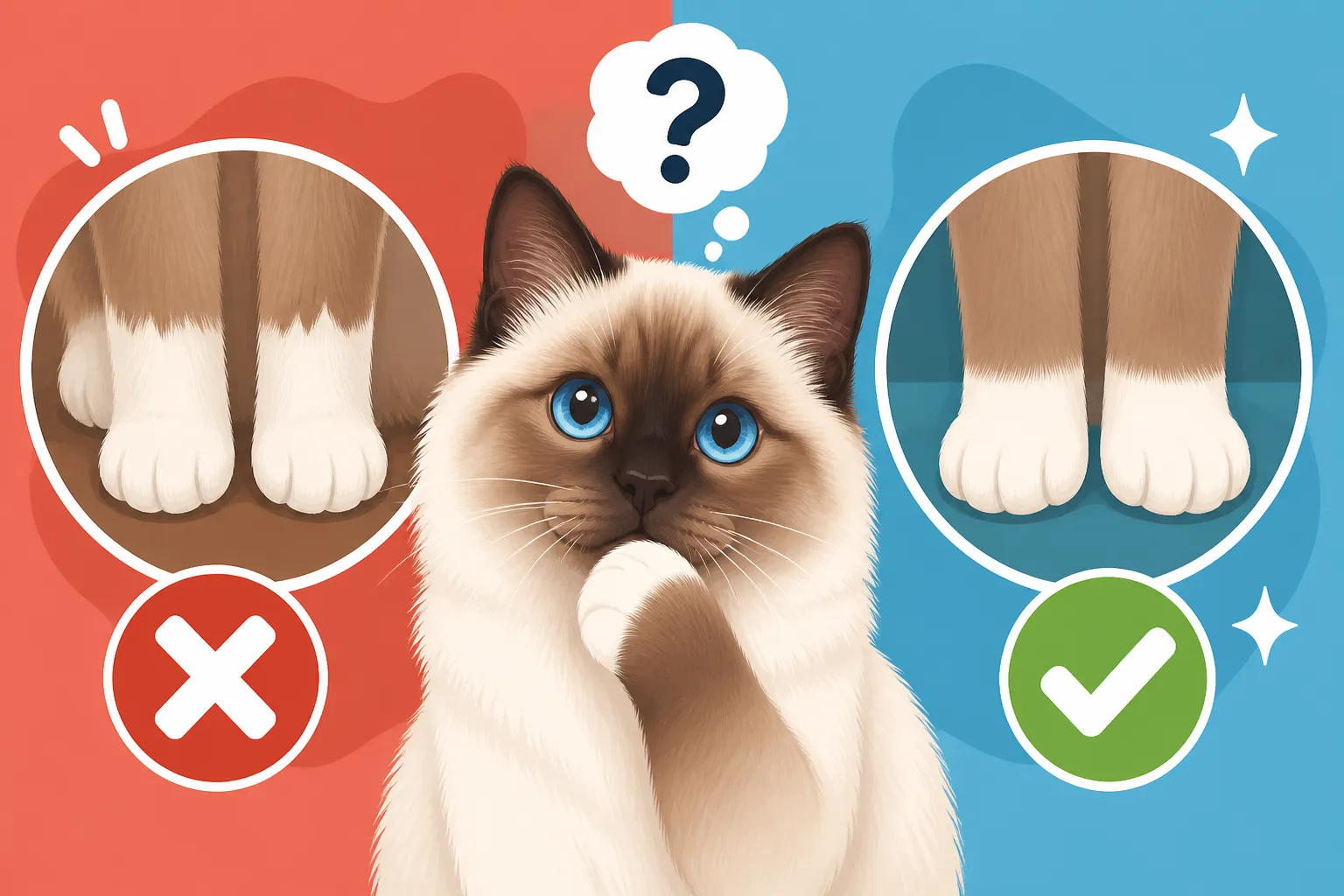
The ideal Birman has a truly captivating set of white gloves. On the front paws, these white markings should be symmetrical, ending in a straight line or a slight, even curve, right where the paw meets the leg. It should look like the cat has dipped its paws into a pot of pure white cream. Then, on the back paws, the white extends further up, forming what are known as "laces" or "gauntlets," which ideally end in a symmetrical 'V' shape, extending up the back of the hock. These laces should also be even in length on both back legs. Achieving this level of perfection is incredibly difficult, almost like winning the genetic lottery, which is Why Perfect Birman Gloves Are Almost Impossible to Breed. Breeders work tirelessly, sometimes through many litters, to try and get close to this ideal. You can get a better sense of the desired look by understanding What a Birman's Front Gloves Should Look Like.
Common Mismarks and Faults
It’s far more common for a Birman kitten to have some kind of variation in its glove markings. These variations are what breeders call "mismarks" or "faults," and they range from minor imperfections to significant deviations.
- Uneven Gloves: This is probably the most frequent deviation. One front paw might have a glove that extends higher than the other, or the line where the white meets the point color might be jagged rather than straight.
- "Runners": Sometimes, a streak of white will run up the leg beyond the expected glove line. This can happen on front or back paws and disrupts the clean edge of the glove.
- Gauntlets on Front Paws: While white laces are desirable on the back paws, if the white extends too high up the front legs, effectively creating gauntlets there, it’s considered a fault.
- Missing Laces or Gauntlets: Conversely, the back paws might not have any white extending upwards, just a simple glove like the front paws, or the 'V' shape might be broken or absent.
- Gloveless: In very rare cases, a Birman might be born without any white gloves at all. This is a severe fault and technically means the kitten cannot be registered as a Birman. However, such instances are extremely rare, as Whether Every Birman Carries Two Copies of the Gloving Gene for white paws.
These mismarks are generally cosmetic, affecting only the cat's suitability for show or breeding, not its health or temperament. It’s important to remember that What Counts as a Mismarked Birman in the show ring might simply be a unique pattern for a loving pet owner.
Why Do These Markings Go Awry? The Genetics Behind Birman Gloving
It might seem baffling that a breed known for such specific markings can produce kittens with such variability. The answer lies in the complex world of feline genetics, where even a single gene can be influenced by many other factors.
The 'Gloving Gene' (KIT) and its Variability
Every Birman cat carries a specific genetic variant, known as the KIT gene, which is responsible for those signature white paws. It's an autosomal recessive gene, meaning a Birman needs two copies of it to express the gloving pattern. And indeed, all Birmans do carry two copies of this specific gloving variant. The existence of this gene is precisely How the Gloving Gene Works in a Birman. However, while the presence of this gene ensures some white on the paws, it doesn't dictate the exact shape, height, or symmetry.
The Role of Modifier Genes
This is where things get truly intricate. Think of the main gloving gene as the conductor of an orchestra, but there are dozens of other "modifier genes" that play individual instruments, subtly altering the final output. These modifier genes influence how much white is expressed, where it starts and stops, and how symmetrically it appears. The interplay of these many genes is Why Birman Gloves Vary Despite the Fixed Gene, even among littermates. It's not a simple "on/off" switch; it's a finely tuned dimmer and shape tool, and nature often has its own ideas. These modifiers are inherited from both parents, and their combinations are incredibly difficult to predict.
The Breeder's Challenge
For dedicated Birman breeders, trying to consistently produce kittens with perfect, symmetrical gloves and laces is an ongoing quest. They study pedigrees, observe previous litters, and select breeding pairs in hopes of improving the markings. However, due to the complex nature of modifier genes, even the most experienced breeders with lines known for excellent markings will occasionally produce kittens with mismarks. It’s a testament to the challenge that How Many Litters It Takes to Get a Well Gloved Birman. This unpredictability is also why Whether Show Marking Can Be Predicted From Birman Parents with absolute certainty is still largely impossible; there’s always an element of surprise, which is part of the charm and challenge of breeding.
Practical Implications of Mismarked Gloves for Owners
So, your adorable Birman kitten has gloves that aren't quite "perfect." What does this actually mean for you as a pet parent? The good news is, for the vast majority of owners, the implications are minimal, if not entirely nonexistent.
Pet vs. Show/Breeding Quality
The primary difference between a perfectly marked Birman and one with mismarks lies in its potential for the show ring or a breeding program.
- Show Cats: Cats intended for show must adhere very closely to the breed standard. Any significant mismark, such as uneven gloves, runners, or missing laces, will result in disqualification or heavy penalization by judges. This is why a kitten with less-than-perfect markings is typically not sold as a "show quality" cat.
- Breeding Cats: Similarly, breeders aim to improve the breed, and that includes striving for ideal markings. While a cat with a minor fault might occasionally be used in a breeding program if it possesses exceptional other qualities (like temperament or health lines), generally, mismarked Birmans are not considered ideal breeding stock.
- Pet Cats: This is where the vast majority of Birmans, including those with mismarks, shine! For a pet owner, a cat's markings are purely aesthetic. A mismark does not affect the cat's health, its loving personality, its playful nature, or its stunning blue eyes. In fact, many owners find these unique markings add character to their beloved companion. This is the core reason Why a Mismarked Birman Is a Pet Price Cat – it’s still 100% Birman in every way that matters, just not suited for the intense scrutiny of the show bench.
Neuter Contracts and Registration
When you purchase a Birman kitten with mismarks from a reputable breeder, it will almost certainly come with a spay/neuter contract. This contract legally obliges you to have your kitten spayed or neutered by a certain age (usually 6-12 months). This is standard practice for pet quality kittens across many breeds, not just Birmans. Breeders do this to protect their lines, ensure responsible pet ownership, and maintain the integrity of the breed standard. Why a Mismarked Birman Is Sold on a Neuter Contract simply means the breeder believes your kitten's best life is as a cherished pet, not as a contributor to a breeding program. Your kitten will still be registered with a cat association (like CFA or TICA), and you'll receive its pedigree, confirming its purebred status, even with mismarks.
Impact on Price and Demand
The price of a Birman kitten can vary significantly based on its markings, lineage, and the breeder's reputation. Kittens with show-quality markings that closely match the breed standard will command the highest prices, reflecting the rarity and difficulty of achieving such perfection. Kittens with slight mismarks, destined for pet homes, are typically priced lower. This explains Why One Birman Litter Spans Two Thousand Dollars in Price, with siblings having vastly different price tags purely based on their aesthetic potential. This doesn't mean the “pet price” kitten is any less wonderful; it simply reflects the market value placed on cosmetic perfection in the breeding and showing world. When planning for your Birman, remember to budget for ongoing needs like quality food, because a happy cat is a healthy cat, regardless of paw markings!
What to Do If Your Birman Kitten's Gloves Aren't "Perfect"
Discovering your Birman kitten's gloves aren't picture-perfect can be a momentary blip, but it's important to put it into perspective. Your relationship with your cat is about so much more than its markings.
Embracing Your Unique Companion
First and foremost, embrace your kitten for who they are! That little individual with the slightly lopsided glove or the charming 'runner' up their leg is still your loving, gentle, and utterly devoted Birman. Their personality, their purr, their soft trills, and their habit of following you from room to room are what truly define them, not the precise placement of their white socks. Many owners find that these unique quirks make their cat even more special and distinctive.
Working with Your Breeder
A reputable Birman breeder will be transparent about a kitten's markings from the outset. By the time a kitten is ready to go to its new home, typically around 12-16 weeks, its point colors and glove markings will be largely established. A good breeder will have already assessed the gloves and priced the kitten accordingly. They should be able to explain any deviations from the standard and discuss what it means for the kitten's future. How a Breeder Prices a Birman at Twelve Weeks usually takes into account these markings. If you have questions or concerns, always reach out to your breeder; they are a valuable resource and usually keen to ensure you're happy with your new family member.
Here's a quick comparison of what makes a difference in a Birman's gloves:
| Feature | Ideal Show-Quality Gloving | Common Pet-Quality Mismarks |
|---|---|---|
| Front Paws | Pure white, symmetrical, ending in a straight line or even curve at the joint. | Uneven lengths, 'runners' (streaks of white up the leg), slight smudges. |
| Back Paws | Pure white 'gloves' with symmetrical 'laces' (V-shape) extending up the hocks. | Laces are uneven, broken, missing, or extend too high (gauntlets). |
| Symmetry | Perfect or near-perfect balance between all four paws. | Noticeable differences in length, shape, or placement between paws. |
| Overall Impact | Meets breed standard for showing and breeding; higher price. | Does not meet show standard; perfect pet companion; lower price. |
Prioritizing Health Over Aesthetics
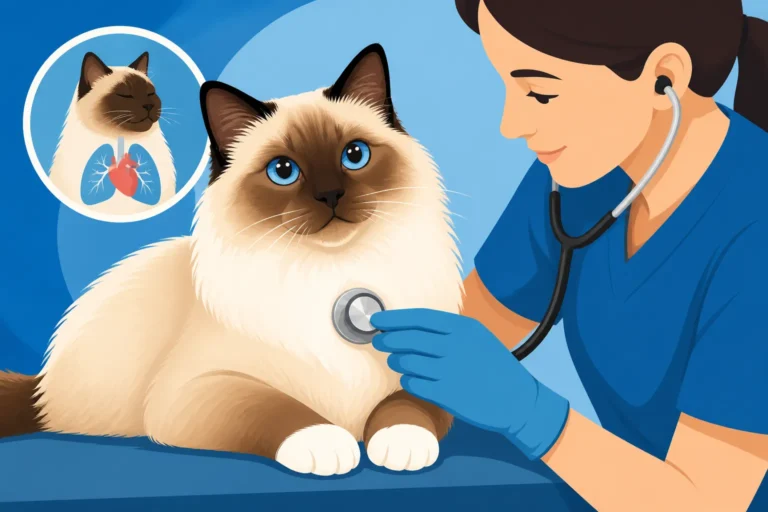
While markings might catch the eye, a Birman’s health is paramount. Reputable breeders prioritize health testing to ensure their kittens are free from genetic diseases common in the breed. This includes screening for HCM in a Birman Has No DNA Test, Only an Echo and testing for Why a Birman Breeder Still Tests for PKD and FOXN1 Is the Birman's Own Genetic Disease. These health clearances are far more critical than glove symmetry. When you're considering a kitten, always ask to see the health certificates of both parents. What Testing a Birman for FOXN1 and PKD1 Together Costs is a small price to pay for peace of mind. Investing in pet insurance from providers like Healthy Paws can also offer invaluable protection against unexpected veterinary costs throughout your Birman’s life, allowing you to focus on their well-being rather than their markings. A Birman with perfect health and a wonderfully sweet temperament, even with a few unique glove patterns, is truly a treasure.
Disclaimer
This article is for general informational purposes only and does not constitute professional advice. Laws, prices and regulations vary by location and change over time. Consult a qualified professional for guidance on your specific situation.