How Many Litters It Takes to Get a Well Gloved Birman
If you've ever admired the absolutely stunning Birman cat, with its gorgeous silky coat, sapphire eyes, and those distinctive white 'gloves' on its paws, you might naturally assume that breeding kittens with those perfect markings is a straightforward process. But the truth is, achieving that ideal, show-quality gloving is one of the most challenging aspects of Birman breeding, and it's a journey that often spans many, many litters and years of dedicated effort. This guide is here to shed light on just how elusive that perfect paw can be and what it really means for breeders and future owners.
The Elusive Ideal: Understanding Birman Gloving
When we talk about a "well-gloved" Birman, we're not just talking about any white paws. Oh no, the Birman standard is incredibly specific, almost to the point of being a work of art in itself. It’s this meticulous detail that makes perfect gloving so notoriously difficult to achieve.
What Defines "Well-Gloved" in a Birman?
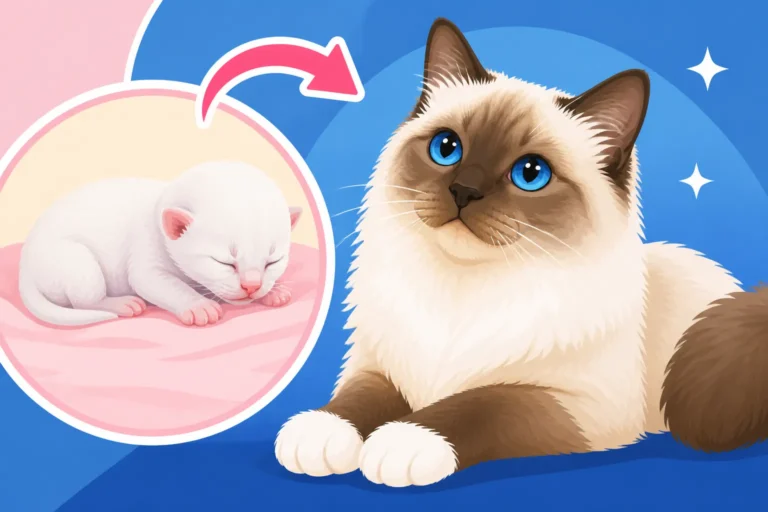
Imagine a Birman standing gracefully. Its front paws should have perfectly symmetrical white 'gloves' that end in an even, straight line across the top of the paw, where the toes meet the metatarsals. Not too high, not too low, and certainly not uneven. It's like finding four perfectly fitted white socks of the same length, without a single wrinkle or misalignment. These are supposed to be the "gloves" that are integral to the breed's legendary origin.
Then, you move to the back paws, and here's where it gets even more intricate. The white should cover the toes, just like the front, but then extend up the back of the leg in what's called 'laces' or 'gauntlets.' These laces should ideally form a perfect "V" shape, reaching about two-thirds of the way up the hock (the ankle equivalent). Critically, these laces must also be symmetrical, ending at the same height on both back legs. Any deviation – a lace too high, too low, crooked, or absent altogether – is considered a fault in the show ring. This level of precision is why it's often said that Why Perfect Birman Gloves Are Almost Impossible to Breed. It's a tall order for genetics to deliver consistently!
The Genetic Puzzle Behind Birman Gloves
You might think that after all these years, breeders would have a foolproof genetic test to guarantee perfect gloves. Unfortunately, it's just not that simple. We know that the white gloving trait in Birmans is caused by a specific genetic mutation, specifically a variant of the KIT gene. This is what gives the Birman its unique white feet, distinguishing it from other pointed breeds like the Himalayan or Ragdoll. We even know What the KIT Gloving Variant Does.
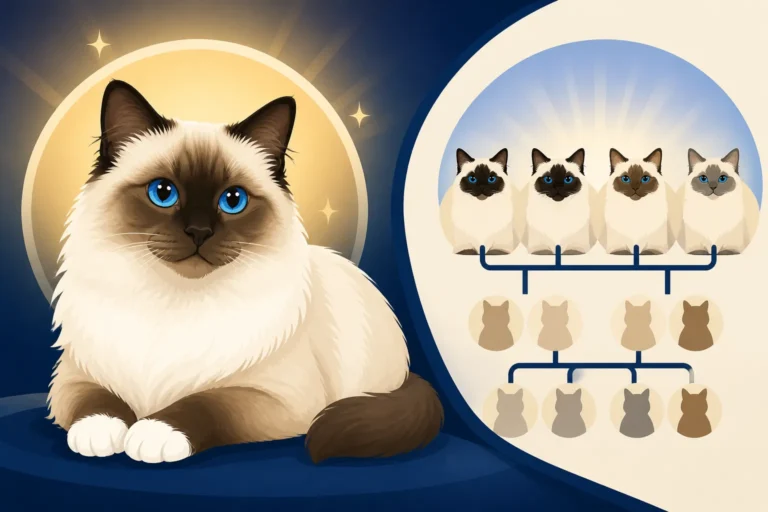
However, while the KIT gene variant is responsible for the presence of white gloves, the perfection of those gloves – their symmetry, height, and crispness – is influenced by a whole host of other "modifier" genes. Think of it like a conductor leading an orchestra: the KIT gene plays the main melody, but a multitude of other instruments (modifier genes) subtly adjust the tempo, dynamics, and tone. These modifier genes are not yet fully understood, and their interplay makes predicting the exact outcome of gloving incredibly complex. This genetic dance means that even if both parent cats have excellent gloves, their offspring can still display a wide spectrum of markings, from show-stopping perfection to charmingly mismatched pet quality. It’s a bit like rolling a very complicated set of dice every time a litter is conceived.
Why No Genetic Test for Glove Perfection
Given the complexity, it's clear why there isn't a single "glove test" you can send to a lab for results. We have tests for the presence of the gloving gene, but not for its expression in that perfect, symmetrical pattern. If there were, breeders would undoubtedly be using it to ensure every litter met the exacting standards.
The reality is that until genetic science advances further to identify and understand all the contributing modifier genes, breeding for perfect gloves remains an art form, relying on a breeder's deep knowledge of their lines, careful selection of breeding pairs, and a healthy dose of luck. Breeders spend years studying pedigrees, observing past litters, and analyzing how specific pairings tend to influence the glove markings. It's a continuous learning process, and every new litter provides another piece to the puzzle, pushing the breed closer to the ideal while still respecting genetic diversity and health. Whether Show Marking Can Be Predicted From Birman Parents is often a matter of educated guesswork based on extensive experience rather than a definitive science.
The Breeder's Journey: Navigating Litters for Ideal Markings
For a dedicated Birman breeder, the quest for that perfectly gloved kitten is a long-term commitment, full of anticipation, occasional disappointment, and immense satisfaction when a truly outstanding example emerges. It's less about a magic number of litters and more about a persistent, thoughtful approach.
The Unpredictable Nature of Birman Litters
Even with the most carefully selected breeding pair, two Birmans with impeccable gloves and a history of producing well-marked kittens can still throw a "mismarked" kitten into the mix. It's the nature of those elusive modifier genes at play. You might have a litter of four, where one kitten has breathtakingly perfect gloves and laces, another has excellent front gloves but slightly uneven back laces, a third has high "gauntlets" (laces that run too high up the leg), and the fourth might have a tiny splash of white running up a toe, breaking the line of a front glove.
These variations aren't necessarily "bad" – they're just not "show perfect." Each kitten is still a beautiful, healthy Birman, but its future role might shift from a potential show star to a beloved pet. Breeders approach each new litter with a mix of excitement and trepidation, knowing that while they've done their best to stack the genetic deck, nature still holds the final say. It's a powerful lesson in humility for even the most experienced cattery.
How Many Litters Might It Take? A Realistic Outlook
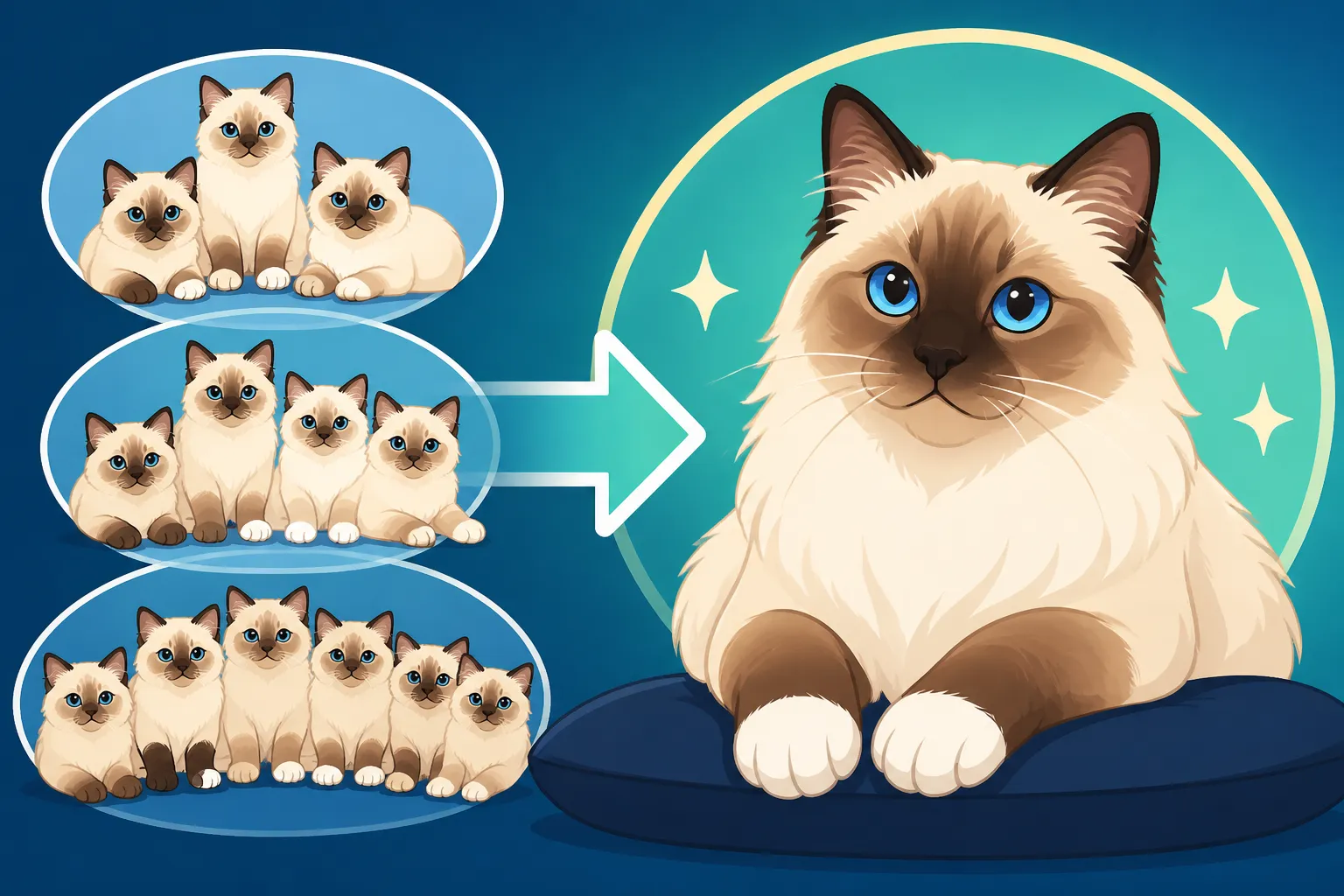
So, to answer the burning question: how many litters does it take to get a well-gloved Birman? The honest answer is, there's no fixed number. It's not a formula where X number of litters guarantees Y perfect kittens. For some incredibly fortunate breeders, an outstandingly gloved kitten might appear in their very first litter from a new pairing. For others, it might take many years and many litters to produce just a few individuals that truly meet the exacting show standard for gloving. It's a continuous, generational effort.
Many dedicated breeders spend decades refining their lines, aiming for consistency in type, temperament, and health, with glove markings being a significant but challenging part of that equation. They might breed several queens over many years, carefully selecting studs to complement their queens' strengths and weaknesses in markings. It’s a long game, often requiring a breeder to produce dozens of litters over their career to yield a handful of truly "perfectly" gloved specimens. This is why when you encounter a Birman breeder, you're usually speaking to someone with years, if not a lifetime, of experience and passion poured into the breed.
Ethical Considerations: Breeding for Markings vs. Health
It's absolutely crucial for any reputable Birman breeder that the pursuit of perfect glove markings never overshadows the primary goal: breeding healthy, well-tempered cats. A beautiful cat is not truly beautiful if it's prone to serious genetic illnesses or has a nervous disposition. The best breeders are constantly performing health screenings, genetic tests, and veterinary check-ups on their breeding stock. They test for critical issues like FOXN1 Is the Birman's Own Genetic Disease and Why a Birman Breeder Still Tests for PKD, even though these issues aren't directly related to coat color or glove markings.
This commitment to health means that a breeder might pass on an otherwise exquisitely marked kitten for breeding if its health screening results are less than ideal, or if its temperament doesn't fit the gentle Birman standard. It's a tough decision, but it's the mark of an ethical breeder. The focus is always on improving the breed as a whole, which means prioritizing genetic health, robust immune systems, and the wonderfully placid Birman personality above all else. Finding a well-gloved Birman is a bonus when the cat's fundamental health and happiness are secure.
The Reality of Breeding Well-Gloved Birmans
Understanding the sheer effort involved in breeding Birmans with ideal markings gives us a real appreciation for the dedication of ethical breeders. It also helps set realistic expectations for those looking to bring a Birman into their home.
The High Percentage of "Pet Quality" Kittens
It might come as a surprise, but even from champion lines where both parents have near-perfect markings, the majority of kittens in a litter will not meet the stringent criteria for showing or breeding. These kittens are what breeders lovingly refer to as "pet quality" or "mismarked." Their gloves might be slightly uneven, a lace might be too short or too long, or there might be a tiny "spot" of color on a white paw.
But here's the kicker: these mismarked kittens are just as healthy, just as loving, and just as much of a Birman as their show-quality siblings. Their "faults" are purely aesthetic and have no bearing on their wonderful temperament or their potential for a long, happy life as a cherished family member. In fact, many people prefer the idea of a pet-quality Birman, as they often come with a slightly lower price tag and the same amazing personality. Breeders typically sell these kittens on strict neuter/spay contracts to ensure they don't contribute to unplanned litters or the propagation of non-standard markings. This is why Why a Mismarked Birman Is a Pet Price Cat is a common practice in the Birman world.
The Patience and Persistence Required
Breeding for ideal glove markings is definitely not for the faint of heart or the impatient. It requires an incredible amount of patience, meticulous record-keeping, and a willingness to learn from every single kitten produced. A breeder must evaluate each kitten's gloves as they develop, often having How a Breeder Judges a Birman Kitten's Gloves from a very young age and monitoring them as they mature. This isn't a one-and-done assessment; glove patterns can sometimes shift slightly as a kitten grows.
Beyond the genetic puzzle, there's the sheer time, effort, and financial investment involved. From quality nutrition and veterinary care for the queen and her kittens to the emotional energy poured into socializing each little fluffball, it's a huge commitment. Many breeders consider this a lifelong passion, understanding that true mastery of their lines and consistent production of show-quality individuals will take years, if not decades.
Recognizing When to Keep or Rehome for Breeding Purposes
A significant part of a breeder's role is making tough decisions about which kittens to keep for future breeding and which to place in pet homes. They might hold back a kitten for evaluation, hoping its markings will mature into show quality, only to decide later that it's better suited as a pet. Conversely, a kitten that wasn't initially earmarked for breeding might surprise them with its development.
Sometimes, even adult Birmans, like retired queens or studs, might be rehomed. These cats often come with the added benefit of having their gloving already "judged" and fully developed, providing a clear picture of their markings. Why an Adult Birman Comes With Its Gloves Already Judged is a factor for potential owners looking at rehomed adults, as there's no guesswork involved with how their gloves will turn out. These decisions are always made with the cat's best interest at heart, ensuring they go to loving homes where they will thrive, whether as a show cat or a cherished companion.
What This Means for Prospective Birman Owners
If you're dreaming of bringing a Birman into your life, understanding the complexities of breeding for perfect gloves can really help you navigate the process and find the right kitten for you.
Accepting Imperfections: The Beauty of Unique Markings
The vast majority of Birmans, even those from the most respected breeders, will have some slight variation in their glove markings. Embrace it! These unique little quirks are part of what makes each Birman an individual. A slightly higher lace on one back leg or a tiny spot of color on a front paw doesn't diminish their beauty, their charming personality, or their health.
Instead of fixating on perfection, focus on the overall picture: a healthy, well-socialized kitten from a reputable breeder. Remember, a Birman's most cherished qualities are its gentle nature, deep blue eyes, and incredibly soft coat, not whether its gloves are absolutely identical. These cats are known for their sweet, placid temperaments, and that's something far more valuable than a perfectly even glove line.
Finding a Reputable Breeder: Beyond the Gloves
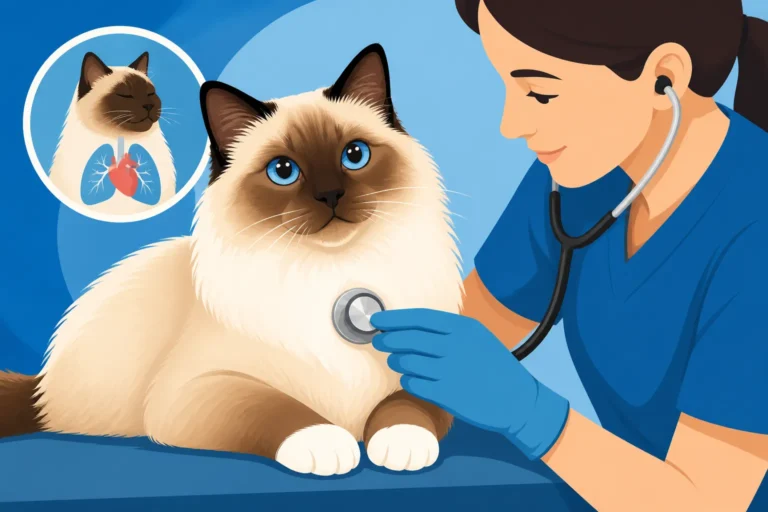
When you're searching for a Birman, look for a breeder who emphasizes health, temperament, and ethical practices above all else. A good breeder will be transparent about their cats' health testing (including genetic tests and regular heart scans for conditions like HCM, where Why a Birman Kitten's First Exam Includes Its Heart is crucial), openly discuss the markings of the parents and previous litters, and welcome your questions. They'll also be interested in your home and lifestyle, ensuring their kittens go to suitable environments.
Don't be afraid to ask to see the parents, their health certificates, and to observe the kittens in their home environment. A responsible breeder will be a wealth of information and a lifelong resource. They'll also guide you on the best foods, whether it's specific brands available at Chewy, or more specialized diets. Consider looking into pet insurance providers like Healthy Paws early on, especially if you want peace of mind regarding future vet expenses, as even the healthiest lines can encounter unexpected medical needs.
Cost Implications of Glove Perfection
The level of glove perfection can indeed influence a Birman kitten's price. Kittens that meet or come very close to the show standard for gloving are often priced higher due to their rarity and the immense effort and careful breeding that went into producing them. These are the cats that might go on to compete in shows or become part of a breeding program to further the breed's standard. Such cats cost the most (Why a Birman With Four Matching Gloves Costs the Most) because they are the pinnacle of what breeders strive for.
However, as discussed, "pet quality" Birmans, despite their minor cosmetic variations, offer all the love and companionship of their show-marked siblings at a more accessible price point. The key is to decide what is most important to you as a prospective owner. If you simply want a loving, healthy companion, a mismarked Birman is an excellent choice. If you aspire to show or breed, then investing in a kitten with exceptional markings from a reputable breeder who focuses on all aspects of the standard is paramount. Either way, you're getting a truly special feline friend.
Disclaimer
This article is for general informational purposes only and does not constitute professional advice. Laws, prices and regulations vary by location and change over time. Consult a qualified professional for guidance on your specific situation.