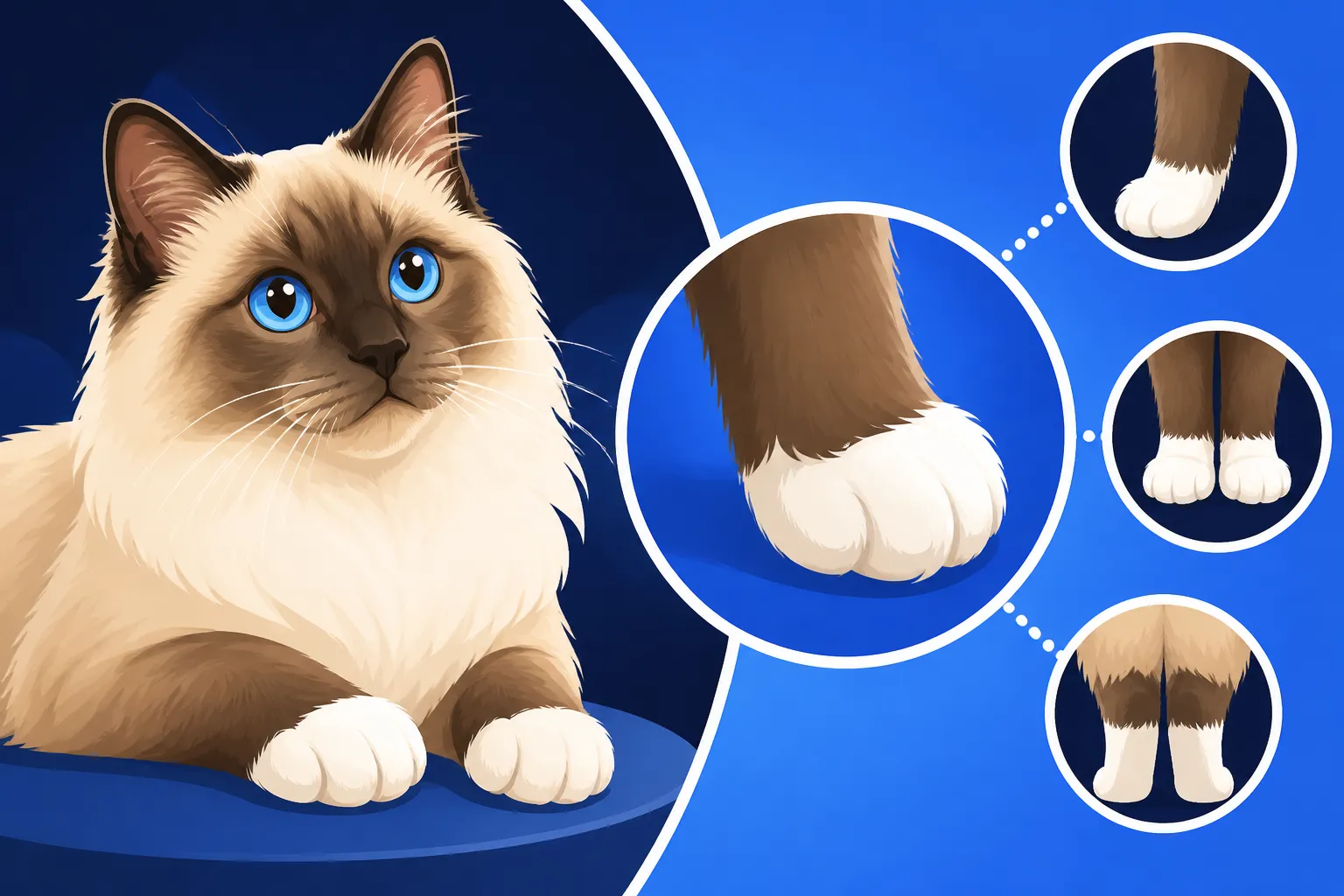
What the KIT Gloving Variant Does
If you've ever admired a Birman cat, you know its stunning blue eyes, plush coat, and those immaculate white "gloves" on its paws are what truly set it apart. But for many aspiring owners and even some seasoned enthusiasts, the genetic magic behind these distinct white markings can feel like a mystery. You see kittens born with what looks like the perfect gloving, only for it to shift slightly as they grow, or you hear breeders talk about the "gloving gene" as something inherent to the breed. This guide aims to demystify that genetic characteristic, delving into the specific role of the KIT gloving variant and how it shapes the Birman's iconic appearance.
Unpacking the Birman's Signature White Gloves
The Birman cat's white paws are not just a charming aesthetic; they are a defining characteristic, so much so that they are often referred to as "gloves." These aren't just random patches of white; they adhere to a very specific pattern that is rigidly judged in the show ring and highly sought after by breeders and owners alike. Understanding the visual standards helps appreciate the underlying genetics.
The Distinctive "Gloved" Appearance
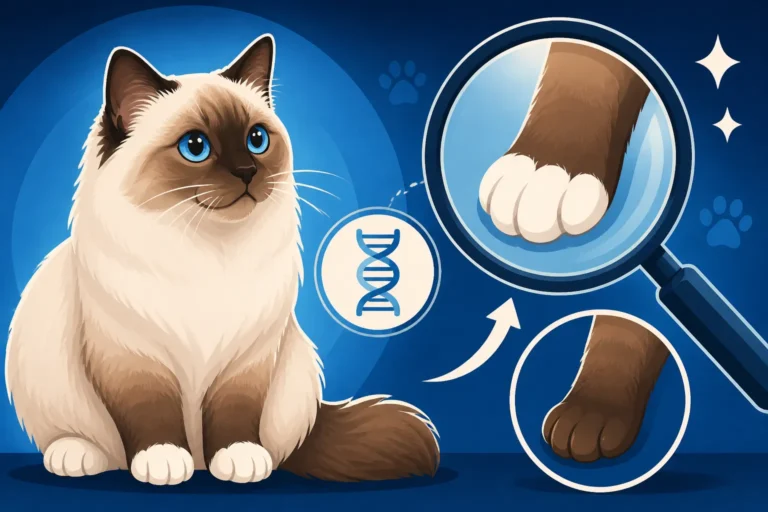
Imagine a Birman, elegant and poised. Its front paws are adorned with symmetrical white markings, extending from the toes up to the metacarpal-phalangeal joint, often looking as though the cat has dipped its paws in fresh cream. These are the "gloves." On the hind paws, the white extends further, forming "laces" that run up the back of the leg. Ideally, these laces should end in a perfect V-shape and match in height on both back legs. It's this precise balance and symmetry that makes the Birman's gloving truly unique among colorpoint breeds.
The standard calls for these white areas to be pure white, devoid of any colorpoints or flecks, creating a stark contrast with the deeper body color points. What a Birman's Front Gloves Should Look Like is something breeders spend generations working towards. Any deviation, such as white extending too high, uneven laces, or missing white on a toe, is considered a "mismark" and, while it doesn't diminish the cat's health or personality, it certainly impacts its show potential and, consequently, its price from a reputable breeder. This strict visual criteria makes the genetic control even more fascinating, as we seek to understand why this specific pattern appears so consistently, yet with subtle variations.
Why the Gloves Are So Crucial to the Breed Standard
For anyone involved with Birman cats, from a casual admirer to a dedicated breeder, the gloves are paramount. In show circles, the gloving accounts for a significant portion of a Birman's total points, often as much as a quarter of the entire score. What Judges Look For on a Birman's Paws First is typically the symmetry and pristine nature of these white areas. A judge will meticulously inspect the length of the white on the front paws, the precise "V" shape and height of the laces on the back, and the overall cleanness of the white.
This high emphasis means that breeders dedicate considerable effort to producing kittens with ideal gloving. It’s a challenge because, while the primary gene for gloving is fixed, the exact expression can be influenced by other, less understood "modifier" genes. This makes achieving perfection akin to a genetic lottery in each litter. A Birman without the proper gloving, while still a beautiful and loving companion, simply wouldn't meet the stringent requirements for show-quality status. This emphasis drives the continuous selection for specific traits within breeding lines.
The Science Behind the White Paws: The KIT Gloving Variant
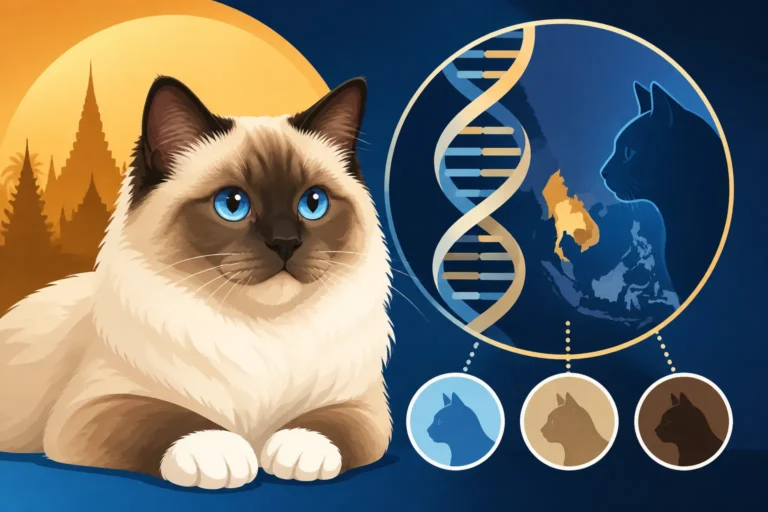
The Birman's distinctive white gloves are not merely a random genetic quirk; they are the direct result of a specific genetic mutation on the KIT gene. This gene is a fascinating piece of the feline genome, playing a critical role in various biological processes, not least of which is the migration and survival of melanocytes—the cells responsible for producing pigment.
What the KIT Gene Is and Where It Lives
The KIT gene, officially known as the proto-oncogene c-Kit, is located on a specific feline chromosome. It's a fundamental gene involved in cell signaling pathways that are crucial for the development of several cell types, including primordial germ cells, hematopoietic stem cells (blood cells), and, significantly for our discussion, melanocytes. Think of the KIT gene as a kind of cellular GPS system and growth stimulant for these cells. If the KIT gene isn't working correctly, these cells can't develop, migrate, or survive as they should.
In the context of coat color, the KIT gene is famously associated with white spotting patterns across many species, including cats. Mutations in this gene can lead to varying degrees of white fur, from small white patches to extensive white coats, even deafening dominant white cats. This particular gene is a heavyweight in the world of mammalian coat color genetics, dictating how pigment is laid down during embryonic development. Where the KIT Gloving Variant Sits in the Genome provides insight into its precise location and how scientists have pinpointed this specific mutation in the Birman.
How the KIT Variant Specifically Affects Birmans
What makes the Birman's KIT variant special is its specific mutation and how it manifests. Unlike other KIT mutations that might cause large, irregular white patches (like those seen in bicolored cats or van patterns) or even completely white cats, the Birman's variant produces a highly restricted and predictable pattern of white on the paws. This isn't random spotting; it's a precise "gloving."
This particular variant is thought to cause a delay or disruption in the migration of melanocytes specifically to the extremities during a critical phase of embryonic development. The melanocytes simply don't make it to the paws in time or in sufficient numbers to deposit pigment, resulting in the white fur. Because the Birman is a colorpoint cat (meaning its body only develops color in cooler areas), the combination of the colorpoint gene and the KIT gloving variant leads to this unique pattern: a colorpoint body with white "gloves" where pigment cells failed to arrive. The Gloving Gene Every Birman Carries Two Copies Of is a testament to how integral this gene is to the breed's very identity.
The Role of Melanocytes and Pigment Migration
To truly grasp how the KIT gloving variant creates those iconic white paws, we need to dive into the microscopic world of cell development. It’s all about melanocytes, the cells that produce pigment, and their journey during the early stages of a kitten's life within the womb.
Melanocyte Migration During Fetal Development
During the earliest stages of a kitten's development, long before it takes its first breath, specialized cells called neural crest cells embark on a remarkable journey. These cells are essentially the precursors to many different cell types, including melanocytes. They originate along the neural tube (the embryonic structure that develops into the brain and spinal cord) and then migrate outwards, spreading across the developing embryo to various locations, including the skin. Once they reach their designated spots in the skin, they mature into melanocytes and start producing melanin, the pigment that gives fur its color.
The migration of these melanocytes is a complex, finely tuned process, heavily dependent on specific genes and signaling pathways. The KIT gene, and the protein it produces, acts as a crucial guide and survival factor for these migrating melanocytes. It ensures they move efficiently and survive long enough to populate the entire skin surface. If there’s a hiccup in this process—a mutation in a gene like KIT—the migration can be incomplete or delayed, leading to areas of skin where no melanocytes arrive. These areas then produce white fur because there's no pigment being made.
Why Only the Paws (and Not Other White Spots) Are Affected
This is where the Birman's specific KIT gloving variant becomes truly intriguing. Unlike other mutations in the KIT gene that might cause widespread white spotting across the torso or head, the Birman's variant seems to primarily affect the extremities – specifically, the paws. The prevailing theory is that this particular mutation causes a mild disruption or delay in melanocyte migration. The melanocytes are still produced and largely migrate correctly, but they might struggle to reach the furthest points of the extremities – the paws – before the window for pigment deposition closes.
Imagine a group of travelers trying to reach different destinations. Most make it, but the ones going to the very farthest outposts might be too slow or get slightly lost along the way if their guide (the KIT protein) isn't performing at 100%. The body, tail, and head, being "closer" or having a longer developmental window for melanocyte colonization, receive sufficient pigment cells. But the paws, the very tips of the limbs, end up with a deficit, resulting in the pristine white gloves and laces. This subtle, localized effect is what differentiates the Birman's gloving from the more extensive white spotting seen in other breeds. It’s a beautifully precise genetic outcome that defines the breed.
The Genetic Mechanism: How Two Copies Ensure Gloving
The Birman's gloving isn't just a trait; it's a fixed characteristic of the breed, meaning every true Birman cat will display these white paws. This isn't a matter of chance; it's due to a specific genetic inheritance pattern that ensures the consistent presence of the white gloves.
Homozygosity: Every Birman Carries Two Copies
In genetics, "homozygous" means an individual has two identical copies of a particular gene. For the Birman's gloving, this is critical. Why Every Birman Has Two Copies of the Gloving Gene is because the breed standard essentially demands it. This means that if you have a genuine Birman, it will have inherited two copies of the specific KIT gloving variant, one from each parent. We can denote this as KIT/KIT (or sometimes KIT^g/KIT^g, with the 'g' indicating the gloving variant).
This homozygosity is what makes the gloving so reliable. There's no "carrier" status for gloving in the Birman in the same way there might be for a recessive disease gene. If a cat is registered as a Birman, it carries two copies of the gloving gene. If a kitten were to somehow be born without two copies (which would mean one of its parents wasn't a pure Birman, or it was a very rare somatic mutation), it simply wouldn't have the characteristic white gloves and thus wouldn't meet the breed standard. This genetic consistency is a cornerstone of the Birman's identity and is a hallmark of dedicated breeding efforts over many generations to fix this trait within the population. It also ensures that Whether Two Birmans Can Produce an Ungloved Kitten is a resounding 'no' under normal genetic circumstances.
Distinguishing Birman Gloving from Other White Spotting
It's easy to see a cat with white paws and assume it has "Birman-like" gloving, but genetically, it's often a different story. The Birman's gloving is distinct from other white spotting patterns seen in domestic cats.
Consider the common piebald gene (often denoted as 'S' for spotting). This gene also causes white patches, but these patches are usually irregular, vary widely in size and placement, and can appear almost anywhere on the body—from a tiny locket on the chest to extensive white areas covering half the cat. The underlying genetic mechanism for piebald spotting, while also related to melanocyte migration, is different from the Birman's precise KIT variant.
Another example is the dominant white gene, which, when present in just one copy, can result in a completely white cat, often associated with blue eyes and, sometimes, deafness. This is a very powerful KIT gene mutation that has a far more profound impact on melanocyte development and survival than the Birman's specific variant.
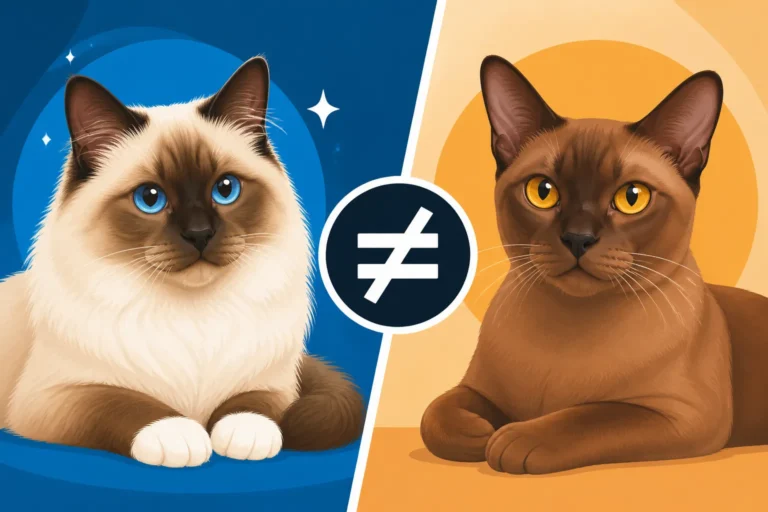
The Birman's gloving, by contrast, is highly specific to the distal limbs. It's not irregular spotting and it doesn't cause widespread depigmentation. It's a localized, symmetrical pattern that has been deliberately selected and fixed in the breed's gene pool. Breeders, often consulting genetic resources available through reputable pet supply sites like Chewy that also offer information on breed-specific traits, understand these subtle but significant genetic distinctions. What a Birman Would Look Like Without Its Gloves helps emphasize just how crucial this unique genetic variant is to the breed's appearance.
Here's a quick comparison of various white spotting genes in cats:
| Gene/Variant | Effect on White Spotting | Location of White | Consistency | Associated Health Issues |
|---|---|---|---|---|
| Birman KIT | Restricted white on paws (gloves and laces) | Symmetrical on lower limbs | Very High | None (from gloving gene) |
| Piebald (S Locus) | Irregular white patches, varying size and placement | Can be anywhere, often chest, belly, face, paws | Variable | None |
| Dominant White (W) | Full white coat, masking all other colors | Entire body | High | May be linked to deafness |
| Pointed Allele (Cs) | Restricted color to cooler body parts, not white spotting | Extremities (ears, nose, paws, tail) develop color | Very High | None |
The Nuance of Glove Expression: Why They Vary
Even with a fixed gene like the Birman's KIT gloving variant, you might notice that not all Birman gloves are perfectly identical. Some cats have flawless symmetry, while others might have slightly uneven laces or white extending a touch too far. This isn't a failure of the KIT gene itself, but rather the subtle influence of other genetic factors.
Modifier Genes and Phenotypic Variability
While the KIT gloving variant dictates that a Birman will have white paws, the exact appearance of those gloves and laces can be fine-tuned by what geneticists call "modifier genes." These are other genes, located elsewhere in the genome, that don't cause the primary trait but can influence its expression, making it slightly stronger or weaker, more or less pronounced, or altering its shape. Think of the KIT gene as the blueprint for "white gloves," and modifier genes as the interior decorator who decides on the exact shade and trim.
These modifiers might influence the precise timing of melanocyte migration, the exact rate of cell proliferation, or even minor anatomical differences in the paws themselves. Why Birman Gloves Vary Despite the Fixed Gene comes down to the complex interplay of these additional genes. This means that while every Birman carries the same base gloving gene, the "perfection" of the gloves can still be quite variable within a litter, even if the parents have excellent markings. It's a reminder that genetics are rarely a simple "on/off" switch.
The Breeder's Challenge: Striving for Perfect Gloves
For Birman breeders, this phenotypic variability presents a constant, yet rewarding, challenge. They know that every kitten will have white gloves, but getting those gloves to be symmetrical, the right length on the front, and with perfectly matched "V" shaped laces on the back is an art as much as a science. Why Perfect Birman Gloves Are Almost Impossible to Breed highlights this struggle. Breeders carefully select breeding pairs not just for their primary gloving gene status (which is a given for Birmans), but for the quality of their glove expression, hoping to stack the deck for desirable modifier genes.
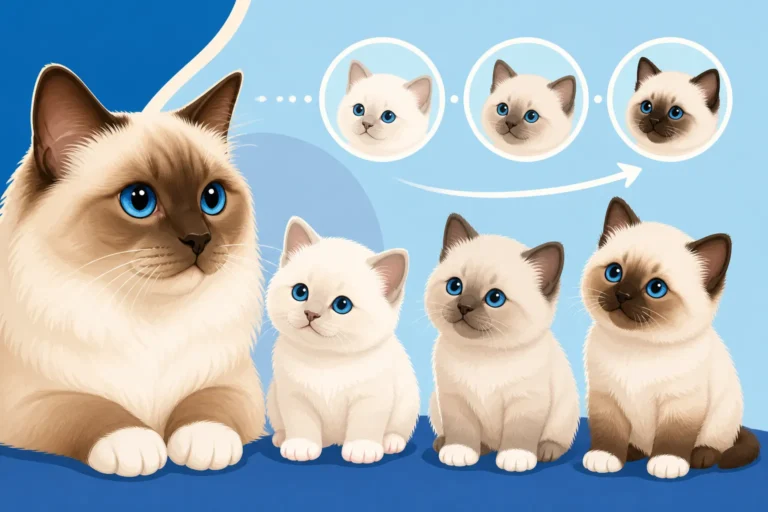
They'll assess kittens early on, often at around eight to twelve weeks, as How a Birman Kitten's Gloves Change as It Grows and reaches maturity. They look for clean white, good symmetry, and the correct height of the white on both front and back paws. Kittens with "perfect" gloves often command a higher price and are considered for show careers, while those with minor mismarks are cherished as pets. This meticulous selection process is a testament to the dedication of Birman breeders to uphold the breed's iconic standard.
Implications for Birman Breeding and Health
Understanding the KIT gloving variant is not just for curiosity; it has practical implications for breeders and owners alike. It helps clarify what breeders are striving for and assures owners about the genetic health of their beloved companions.
No Health Risks Directly Linked to Gloving
One of the most reassuring aspects of the Birman's KIT gloving variant is that, unlike some other white spotting genes in cats (like the dominant white gene that can be linked to deafness), this specific mutation in Birmans is not associated with any known health risks. The mechanism that causes the white paws is localized and doesn't appear to impact other critical developmental processes that could lead to health problems.
Owners can rest easy knowing that their Birman's beautiful white gloves are purely an aesthetic trait, without hidden health compromises. This allows breeders and owners to focus on other, more pressing genetic health concerns within the breed. Reputable breeders will always provide clear documentation, often detailing various health checks available on their preferred pet product site like Chewy or directly from veterinary labs, which is much more important than the specific gloving.
The Importance of Genetic Testing for Other Conditions
While the gloving variant itself isn't a health concern, Birmans, like many purebred cats, can be predisposed to certain genetic conditions. This makes comprehensive genetic health screening crucial for responsible breeders. Instead of worrying about the gloving gene, breeders focus their attention on tests for conditions such as:
- Hypotrichosis with Thymic Aplasia (FOXN1 deficiency): A severe, often fatal, immune deficiency condition that also causes hairlessness. What Testing a Birman for FOXN1 and PKD1 Together Costs is a common panel for breeders.
- Polycystic Kidney Disease (PKD1): A progressive kidney disease characterized by cysts.
- Hypertrophic Cardiomyopathy (HCM): A common heart disease in cats that causes thickening of the heart muscle.
Breeders use DNA tests, ultrasound screenings, and regular veterinary check-ups to monitor their lines for these conditions. This is where real health assurance comes from, not from the gloving genetics. When looking for a Birman kitten, always inquire about the parents' health clearances, particularly for these conditions, as they represent the true genetic health priorities for the breed. Sites like Chewy may not offer the tests themselves, but they are great resources for finding information on reputable testing labs and understanding general pet health. This commitment to health screening ensures the longevity and well-being of the Birman breed far beyond the beauty of its distinctive paws.
Disclaimer
This article is for general informational purposes only and does not constitute professional advice. Laws, prices and regulations vary by location and change over time. Consult a qualified professional for guidance on your specific situation.