What Counts as a Mismarked Birman
It’s easy to fall head over heels for the Birman cat with their striking blue eyes, silky coats, and those distinctive white 'gloves'. But when you start looking into bringing one home, you might hear terms like "mismarked" and wonder what on earth that means for a cat's appearance and whether it’s a big deal. It can be confusing to understand what a "perfect" Birman looks like versus one that deviates from the breed standard, especially if you’re new to the fancy. This guide will unravel the mysteries of Birman markings, explaining precisely what qualifies as a mismarked Birman, why these variations occur, and why they often make for equally cherished and wonderful feline companions.
Understanding the Birman Standard: The Ideal Birman Marking
Before we can truly understand what a "mismarked" Birman entails, it's essential to first grasp the ideal markings that breed standards across the world strive for. The Birman is a pointed cat, meaning its color is concentrated on the colder extremities like the face, ears, paws, and tail, with a much lighter body. What truly sets them apart, however, are their unique white markings – the "gloves" on their front paws and the "laces" on their hind paws. These aren't just pretty embellishments; they are the hallmark of the breed, a genetic trait that every Birman carries two copies of, as detailed in The Gloving Gene Every Birman Carries Two Copies Of.
Breeders dedicate years, even generations, to achieving these intricate patterns, which are surprisingly complex to get just right. Every registry, from The Cat Fanciers' Association (CFA) to The International Cat Association (TICA) and Fédération Internationale Féline (FIFe), has a detailed standard outlining the exact placement, symmetry, and extent of these white areas. This meticulous focus on markings is why a breeder might hold back the best marked kitten from a litter for show or breeding, acknowledging the difficulty in achieving perfection.
The Prized White Gloves
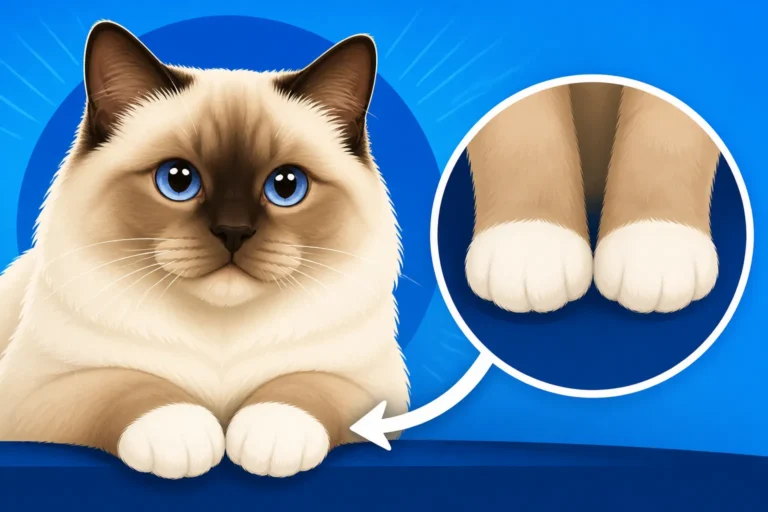
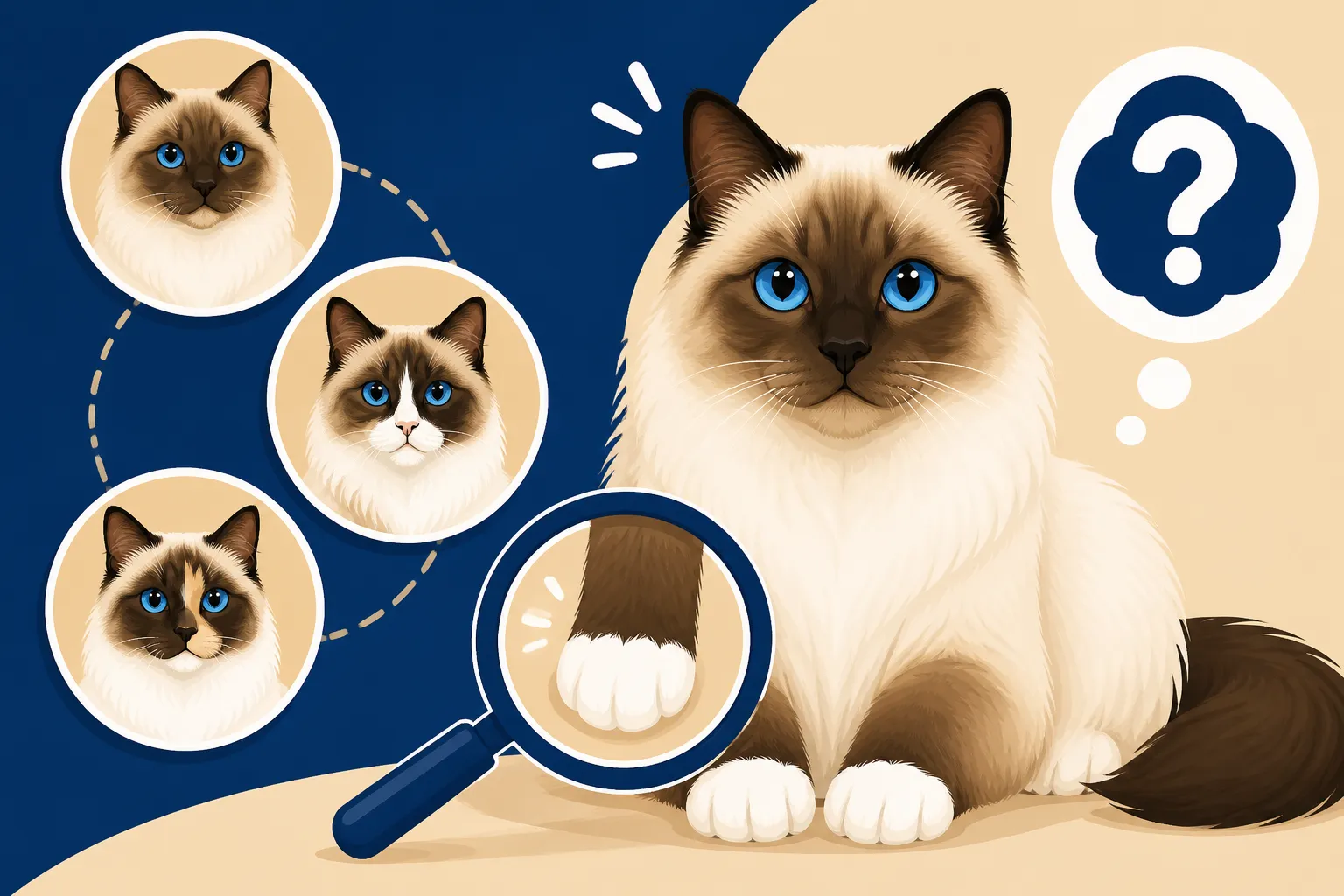
The front paws of a Birman should feature perfectly symmetrical white "gloves." Imagine your cat dipping its paws into fresh snow, and the snow sticking uniformly around its toes. That’s the vision. These gloves should terminate in an even line across the paw, at or just above the bend of the paw. The key here is consistency and balance. Both front paws should look identical in terms of the height and shape of the white. This isn't just about aesthetics; it's a direct reflection of the specific genetic modifiers that differentiate a Birman's white markings from those seen in other colorpoint breeds.
A show-quality Birman will have these gloves appear as if painted on with a steady hand, a pristine white against the darker points of the legs. They shouldn't be too high up the leg, nor should they be too sparse, barely covering the toes. This delicate balance is often what judges look for first on a Birman's paws, as outlined in What Judges Look For on a Birman's Paws First. It's a challenging trait to breed consistently, leading to variations even within the same litter.
The Perfect Rear Laces
Moving to the back paws, the Birman exhibits another unique white marking: the "laces." These are essentially white gloves on the rear paws that extend up the back of the leg to form an inverted 'V' shape, known as the lace. Like the front gloves, these laces should also be perfectly symmetrical in both height and shape. They should extend up the hock (the ankle equivalent on a cat's hind leg) but ideally not go beyond it, creating a delicate, elegant line. The "V" of the lace should be well-defined and even on both legs.
When a Birman stands, the laces should appear as if they've been carefully drawn on, highlighting the cat's powerful hindquarters without overwhelming them. The balance between the white lace and the darker leg color is critical for breed standards. Any deviation, such as the white extending too high up the leg (a "runner") or being uneven between the two legs, starts to move the cat into the "mismarked" category. Achieving perfect gloves and laces on all four paws is often considered the pinnacle of Birman breeding, and it's something that breeders strive for with every litter.
Acceptable Point Colors and Body Markings
Beyond the white feet, the Birman’s coat and point colors also adhere to specific standards. The body color should be a light, golden beige, contrasting clearly with the darker points. This lighter body is a direct result of the colorpoint gene, which restricts full color expression to cooler areas of the body. The eyes, of course, must be a deep, brilliant blue, a defining characteristic of the breed. Any other eye color is a serious fault.
When it comes to point colors, there's a range of accepted shades, including Seal Point, Blue Point, Chocolate Point, Lilac Point, Red Point, Cream Point, and various Tortie and Tabby Points. Which Point Colors the Birman Standard Allows lists these extensively. A mismark in this context might involve patches of white on the body, away from the expected glove and lace areas, or an unusually dark body color that lacks the proper contrast with the points. For instance, a Birman kitten is born almost pure white, and its points gradually come in as it grows, but sometimes, unexpected white patches can remain on the torso or belly, which are considered mismarks.
Defining Common Birman Mismarks on the Paws
Now that we have a clear picture of the ideal, let's dive into the common deviations that lead to a Birman being classified as "mismarked." It's important to remember that these variations don't impact the cat's health, temperament, or its ability to be a loving companion. They simply mean the cat doesn't perfectly conform to the strict aesthetic standards set for showing or breeding.
A mismarked Birman might be sold as a "pet quality" cat, often at a lower price point than a show-quality kitten. This is a common practice, and reputable breeders are transparent about these markings. You might find a significant price difference between littermates, purely based on their glove and lace perfection, as discussed in Why One Birman Litter Spans Two Thousand Dollars in Price. This transparency allows potential owners to make informed decisions, knowing they are getting a healthy, well-socialized pet, even if its markings aren't show-ring perfect.
Uneven Gloves and Their Impact
One of the most frequent types of mismarking relates to the symmetry of the front white gloves. Instead of two perfectly matched white socks, you might see one glove that's higher on the leg than the other, or one that has an irregular edge. Perhaps one glove might have a "spot" of color within the white area, or the white might not extend far enough down to cover all the toes uniformly. These are all considered uneven gloves.
For a breeder aiming for show champions, uneven gloves are a significant fault. They break the visual harmony that is so highly prized in the Birman standard. While a cat with slightly uneven gloves might still be registered, it likely won't achieve championship status in the show ring. For a pet owner, however, this variation is purely cosmetic. Your Birman will still be just as affectionate, playful, and charming. It's simply a unique characteristic, a little beauty spot that makes your cat truly one-of-a-kind.
Gauntlets: When White Runs Too High
A "gauntlet" occurs when the white marking on a Birman's hind leg extends too high, running up past the hock and onto the colored part of the leg. Instead of the delicate "V" lace, it looks more like the cat is wearing tall white boots. This is another common mismark and is considered a serious fault in the breed standard. The white should stop cleanly at the hock, creating that distinct inverted 'V' on the back of the leg.
Gauntlets detract from the elegant appearance defined by the standard. A Birman with gauntlets cannot be shown, as explored in Why a Birman With Gauntlets Cannot Be Shown. This doesn't mean the cat is any less beautiful or healthy. It merely means it doesn't meet the specific visual criteria for competition. Many wonderful Birmans with gauntlets find loving homes as cherished pets, and their unique markings often become a talking point, rather than a drawback, for their families. It's just a reminder that nature, even with selective breeding, loves to add its own little twists.
Absence of Gloves or "Booted" Markings
While rare, it is possible for a Birman kitten to be born with an almost complete absence of white on its paws, or with white markings that are entirely different from the characteristic gloves and laces. Sometimes, the white might be minimal, barely covering the paw pads, or it might extend so far up the leg on all four paws that it loses the distinct glove and lace appearance altogether, resembling more of a "booted" look found in other breeds.
The Birman's gloving gene is a fixed trait, meaning every Birman inherits two copies. However, modifier genes can influence the expression of this trait, leading to these variations. A cat without any recognizable gloves or laces is considered a severe mismark and would likely not be registrable as a Birman, as outlined in Why a Gloveless Birman Kitten Cannot Be Registered. This is the most significant departure from the standard for the paws. These kittens are always sold as pets, often with neuter contracts to ensure they aren't bred, as their markings are not representative of the breed standard.
Other Mismarkings Beyond the Paws
While the gloves and laces are the most scrutinized areas for Birman markings, deviations can also occur on the body and face. These types of mismarks are less common but still fall under the umbrella of not meeting the breed's ideal aesthetic. Again, these are purely cosmetic concerns and do not indicate any health issues or affect the cat's loving personality.
When you're looking at a Birman kitten, especially as it grows, its points will start to deepen. Remember, a Birman kitten is born almost white, and its colors emerge over time, influenced by temperature and genetics. During this process, sometimes unexpected markings can appear or fail to appear in the right places, leading to these other types of mismarks.
Body Spots and White Patches
The Birman standard calls for a body that is uniformly light, contrasting with the darker points. Occasionally, a Birman might develop unexpected white spots or patches on its belly, chest, or flank. These are often small, irregular areas of unpigmented fur. Similarly, some Birmans might have "smudges" of darker color on their body where the point color gene has expressed itself unevenly.
These body spots or white patches are considered mismarks because they disrupt the smooth, light body color stipulated by the breed standard. They are aesthetic faults that would prevent a cat from being successful in the show ring. For a family pet, however, these simply add to the cat's unique charm. It’s important to distinguish these from medical conditions like vitiligo, which causes loss of pigment; true mismarks are present from the kitten's development. If you're adopting a mismarked Birman, these unique patterns will likely become one of the endearing features you cherish most about your feline friend.
Facial Irregularities and Point Discoloration
The Birman's face should exhibit clear, well-defined point coloration on the mask, with the lighter body color extending cleanly to the base of the ears. Sometimes, a Birman might have a "blaze" of white running up its nose or between its eyes, or asymmetrical coloring on its mask. Another less common mismark involves a "split face," where one side of the face is significantly darker or lighter than the other.
Discoloration can also occur within the points themselves. For example, a Seal Point Birman should have rich, dark brown points, but a mismark might involve uneven shading or patches of a lighter, faded color within the mask or ears. Similarly, the "Roman nose" profile of the Birman is a key feature, and any severe deviation from this, such as a very flat or snub nose, could be considered a structural fault, as outlined in Why a Birman's Nose Is Called Roman. While these facial variations are generally rare, they would be significant faults in a show cat. For a pet, they are simply part of its individual look.
Eye Color and Structural Faults
While not strictly a "marking," eye color is a critical standard for the Birman. They must have blue eyes. The deeper and more brilliant the blue, the better. Any deviation from blue, such as green or yellow eyes (which are extremely rare in a purebred Birman), would be an immediate disqualification in the show ring and a serious mismark. Similarly, a pale-eyed Birman is penalized because the intensity of the blue is part of its allure, as explored in Why a Pale Eyed Birman Is Penalized.
Beyond color, structural faults, though not marking-related, can also classify a cat as pet quality. These might include issues with ear set, tail length, or overall body structure that deviates from the breed's physical ideal. For example, a Birman's long rectangular frame should have a certain proportionality. These structural aspects are part of the overall breed standard and contribute to how a cat is judged. While these don't fall under "mismarked" in the same way as coat patterns, they too mean a cat might not be suitable for showing, though perfectly healthy and loving as a pet.
The Ramifications of a Mismarked Birman
For aspiring Birman owners, understanding the ramifications of mismarkings is crucial, as it impacts whether a cat is destined for the show ring, a breeding program, or a loving pet home. The primary difference lies in purpose and price, not necessarily in the cat's intrinsic value as a companion.
Reputable breeders are always transparent about any mismarkings and explain how they might affect a kitten's future role. They will ensure that even a mismarked kitten receives the same high standard of care, health testing, and socialization as its perfectly marked littermates. The emphasis is always on producing healthy, well-adjusted animals first and foremost.
Impact on Show and Breeding Prospects
The most immediate and significant impact of a mismarking is on a Birman's prospects in the show ring. Judges are looking for cats that conform as closely as possible to the written breed standard, and any deviation, especially in the crucial glove and lace markings, will result in penalties or even disqualification. For example, an uneven Birman glove is a show fault that can prevent a cat from earning championship titles.
Similarly, a mismarked Birman is generally not suitable for a breeding program, at least not one focused on preserving and improving breed standards. Breeders strive to produce offspring that are consistently well-marked, and breeding a mismarked cat, even if otherwise healthy and of good temperament, risks perpetuating undesirable markings in future generations. This is why many mismarked Birmans are sold on strict spay/neuter contracts to pet homes. While the cat itself is perfect in every other way, its markings simply don't align with the selective breeding goals.
Mismarked Birmans as Cherished Pets
Here's the beautiful truth: a mismarked Birman makes just as wonderful a pet as a show champion. Their unique markings often become a beloved quirk, making them stand out in a crowd. The defining characteristics of the Birman – their gentle temperament, their deep blue eyes, their silky coat, and their affectionate nature – are entirely independent of whether their gloves are perfectly symmetrical or their laces run a little high.
Many families specifically seek out "pet quality" Birmans because they are often more accessible and sometimes come at a lower price point. These cats bring just as much joy, purrs, and quiet companionship to a home. They will still follow you from room to room, trill their soft greetings, and cuddle up beside you on the sofa. Their little imperfections in marking don’t detract from their boundless capacity for love and their inherent beauty. After all, love doesn't judge symmetry!
Ethical Breeding and Transparency
A hallmark of a truly ethical Birman breeder is their transparency regarding markings, health, and lineage. They will openly discuss any mismarkings in a litter, explain why a kitten is designated "pet quality," and detail the pricing differences. You should never feel pressured or misled about a kitten's markings. A good breeder will provide all necessary documentation, including parentage and health clearances, for all kittens, regardless of their show potential.
They'll also be upfront about health testing, such as for FOXN1 and PKD1, ensuring that even a mismarked kitten comes from healthy lines. For example, Why a Birman Breeder Still Tests for PKD highlights the importance of health over aesthetics. This transparency is crucial for building trust and ensuring that potential owners understand exactly what they are getting. Be wary of any breeder who dismisses questions about markings or downplays their significance without clear explanations, especially if they are trying to charge show-quality prices for a visibly mismarked animal.
Living with a Mismarked Birman: Care and Acceptance
Bringing a mismarked Birman into your home means embracing its unique beauty and focusing on its well-being, just as you would with any other pet. Their care requirements remain the same, regardless of whether their gloves are pristine or a little bit quirky. These cats still thrive on companionship, a healthy diet, regular grooming, and routine veterinary care.
Remember that the genetic variations leading to mismarkings are purely aesthetic and do not affect the Birman's intrinsic health or its renowned sweet disposition. You're getting all the wonderful qualities of the breed, wrapped in a slightly different, equally charming package.
The Unchanged Temperament and Health
One of the most reassuring aspects of a mismarked Birman is that their temperament and health are exactly the same as their perfectly marked counterparts. The genes that dictate coat pattern and glove placement are entirely separate from those that influence personality or predispose to certain health conditions. Your mismarked Birman will still possess that coveted placid temperament, being gentle, affectionate, and wonderfully social. They are known for being excellent with families and other pets, as highlighted in Why a Birman Is the Cat Families Are Told to Get.
Likewise, a mismarked Birman from a reputable breeder will have the same health screenings as any other Birman. Breeders should still be testing for conditions like hypertrophic cardiomyopathy (HCM) and polycystic kidney disease (PKD), which are critical for the long-term health of the breed. You might even find comprehensive pet insurance options from providers like Healthy Paws that cover these breeds, offering peace of mind regardless of markings. The fact that a kitten is mismarked simply means it won't be a show cat; it says nothing about its vitality or its potential for a long, healthy life.
Embracing Individuality and Character
Living with a mismarked Birman is an opportunity to celebrate individuality. Instead of seeing a "fault," you come to appreciate the unique pattern on their paw, the slightly off-kilter lace, or the small white spot on their chest as part of their personal character. These are the details that make your cat uniquely yours. It's a testament to the natural variation that occurs even within highly bred animals.
These unique markings often become conversation starters and stories to tell. Imagine explaining to friends how your Birman has one glove that goes a little higher, making them look like they're giving a subtle wave. It fosters a deeper appreciation for the cat's inherent qualities rather than just its adherence to a rigid standard. This is the essence of pet ownership – loving your animal for exactly who they are, quirks and all.
Finding a Mismarked Birman Through Reputable Channels
If you're interested in a mismarked Birman, it's vital to still go through reputable breeders. A responsible breeder will be transparent about their cats' health, genetic testing, vaccination records, and socialization. They won't use the term "mismarked" to excuse poor breeding practices or a lack of health screening. They will be happy to show you the parents and discuss their health history, even if the kitten is destined for a pet home.
A wide range of premium cat food and supplies, from specialized diets to engaging toys and comfortable beds, will keep your Birman healthy and happy. A mismarked Birman deserves the very best care, and a good breeder will ensure you're equipped with all the information to provide it. You might even find retired Birman queens or older pet-quality cats looking for forever homes through breed-specific rescues or directly from breeders, offering a wonderful opportunity to welcome a loving adult Birman into your life.
Disclaimer
This article is for general informational purposes only and does not constitute professional advice. Laws, prices and regulations vary by location and change over time. Consult a qualified professional for guidance on your specific situation.