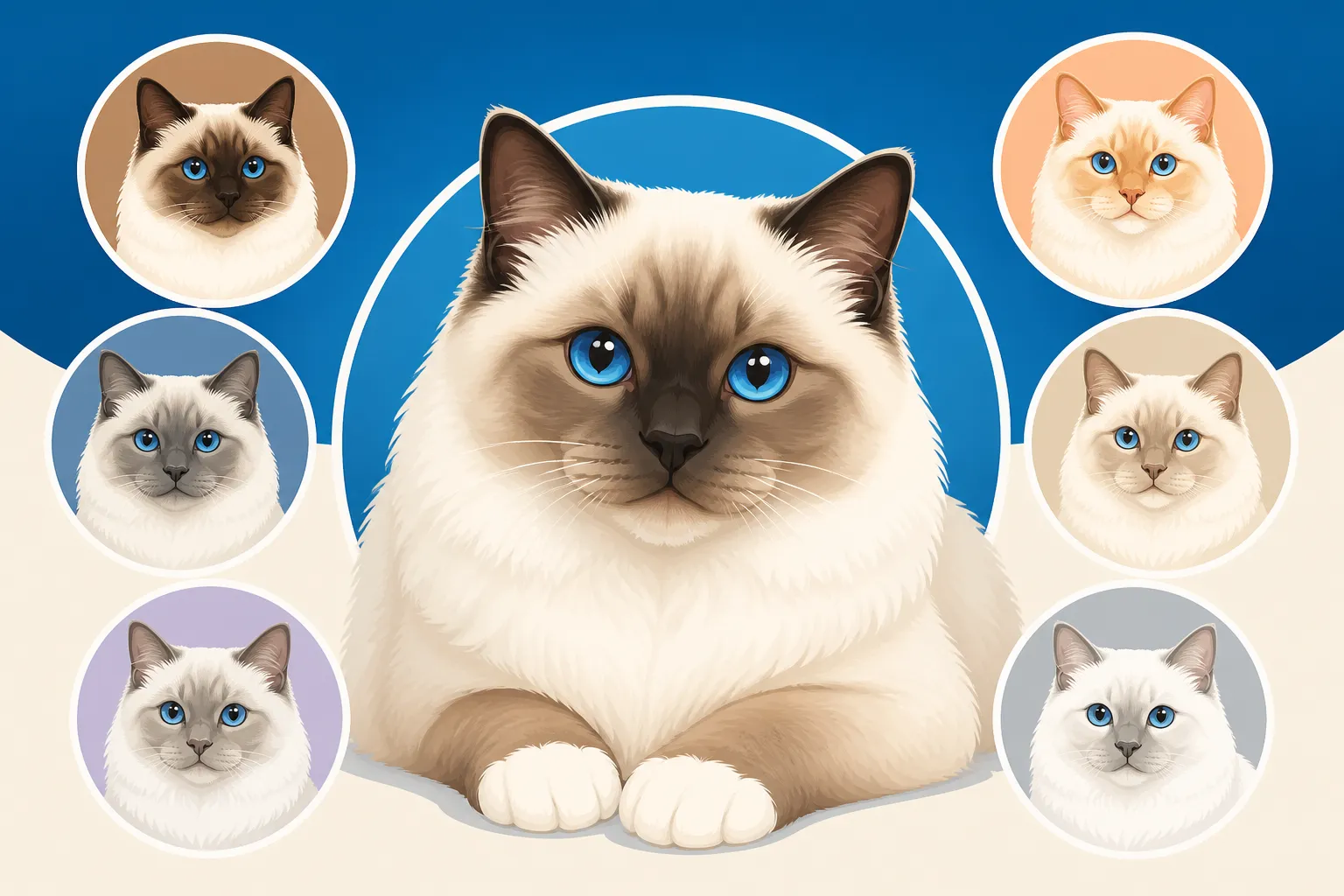
Which Point Colors the Birman Standard Allows
One of the most captivating features of the Birman cat, often drawing people in, is their stunning "pointed" coat pattern. But if you’re new to the breed, understanding what exactly constitutes an "allowed" point color can feel like deciphering a secret code. This guide is here to unravel the mystery, walking you through the beautiful spectrum of colors recognized by breed standards and explaining how these exquisite patterns develop on your cherished Birman.
The Foundation of Birman Point Coloring: What Are "Points" Anyway?
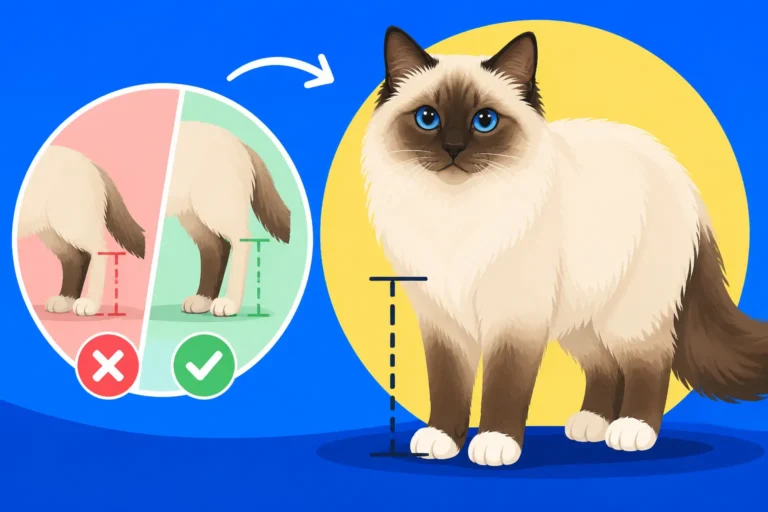
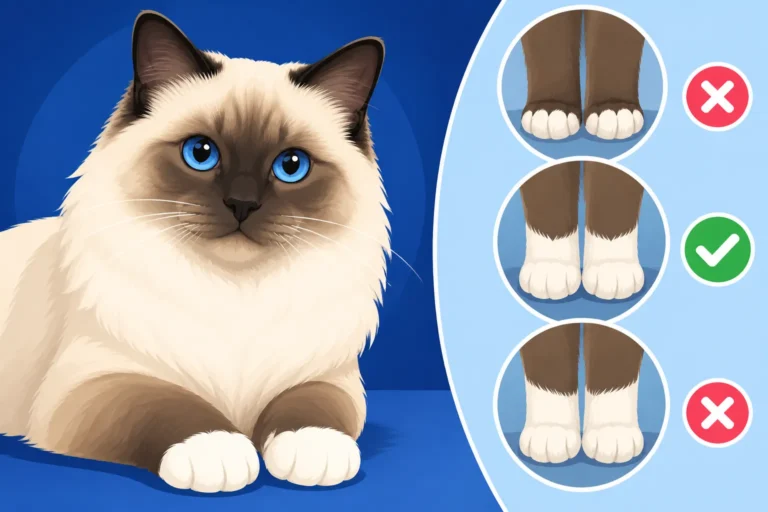
When we talk about "points" on a Birman cat, we're referring to the darker coloration on specific parts of their body: the face (mask), ears, paws (including those famous white gloves!), tail, and sometimes the legs. This distinctive pattern is a hallmark of several breeds, but on a Birman, it's combined with their luxurious silky coat and those incredible blue eyes to create something truly magical. It's what makes a Birman instantly recognizable, even across a crowded room.
Understanding the Temperature-Sensitive Gene
The science behind those beautiful points is fascinating and surprisingly simple. Birmans, like Siamese cats, carry a special gene that's temperature-sensitive. What does this mean? Basically, the gene responsible for producing pigment (color) only activates in cooler parts of the cat's body. The core body temperature is warmer, inhibiting this gene, which is why the main body of a Birman is a lighter, softer shade. Think of it as nature's own little heat map!
This unique genetic trait is why you'll see the darkest colors on the extremities – the ears, nose, paws, and tail – areas that are naturally a few degrees cooler than the warmer trunk of the cat. It's a marvel of genetics that gives us these stunning contrasts, a gentle canvas of pale cream or white gradually deepening into rich, vibrant colors at the very edges. If you've ever wondered why your Birman's body is so much lighter than its face, now you know the elegant reason behind it.
Why Birman Kittens Are Born White
One of the most charming facts about Birman kittens, and indeed all pointed breeds, is that they are born completely white or a very pale cream. It’s truly a sight to behold, a tiny bundle of fluff that gives little hint of the stunning colors to come. This happens because in the cozy warmth of their mother's womb, the temperature-sensitive gene is completely inactive across their entire body. Every part of them is uniformly warm, so no pigment is produced.
It's not until they are born and exposed to the cooler outside world that their points begin to develop. Over the first few days and weeks, as their extremities cool down, the gene slowly kicks into action, laying down the pigment that will eventually become their beautiful mask, ears, and tail. So, while you might pick up a tiny, pale kitten, rest assured that its gorgeous point color is just waiting for the right moment to emerge. Why a Birman Kitten Is Born Almost White delves deeper into this fascinating initial stage of a Birman's life.
How Points Develop and Darken Over Time
The development of a Birman's points isn't an instant process; it's a gradual unfolding of color. You'll start to see a faint hint of color on their ears and nose within the first week or two, which then slowly spreads and intensifies. By the time they are a few weeks old, the mask might be visible, and the tail will show more definition. This progression continues through their kittenhood and into their adult years.
It’s important to remember that a Birman's point color isn't static; it continues to deepen and mature for the first two to three years of their life, sometimes even longer. Environmental factors, like how warm or cool their living environment is, can also play a role. A Birman living in a colder climate might develop darker points than one residing in a consistently warm house, simply because their extremities remain cooler for longer periods. How a Birman Kitten's Points Come In explains this process in more detail, preparing you for the beautiful transformation your kitten will undergo.
The Core Birman Point Colors: Seal and Blue
When you think of a classic Birman, often the first images that come to mind are those with deep, rich points. These are typically the seal and blue points, the foundational colors from which many other variations derive. These two colors have been around since the early days of the breed and remain incredibly popular, embodying the traditional elegance of the Birman.
The Classic Seal Point Birman
The Seal Point Birman is arguably the most recognized and classic of all Birman colors. Their points are a deep, rich seal brown – almost black – contrasting beautifully with a warm cream or pale fawn body color. The paw pads and nose leather will also reflect this dark brown hue. Imagine a beautifully toasted marshmallow, golden-brown on the outside but still soft and light within; that's the kind of delicious contrast you get with a seal point.
Their body fur, ideally, should be an even, warm tone, gently shading to a lighter cream on the belly and chest. You want to see a clear distinction between the dark points and the lighter body, creating that striking visual appeal. A seal point carries a certain gravitas and timeless beauty that has enchanted Birman lovers for generations. If you're looking for that quintessential Birman look, a seal point is often the first choice. To truly appreciate this coloration, What a Seal Point Birman Looks Like provides a closer look at this magnificent variant.
The Elegant Blue Point Birman
For those who prefer a slightly softer, more ethereal look, the Blue Point Birman offers a breathtaking alternative. Instead of the deep brown, their points are a lovely, soft slate grey or blue, often described as dove grey. The body color is usually an icy white or pale blue-white, creating a cool and delicate contrast. Their nose leather and paw pads will also be a corresponding slate grey.
Blue points have a serene, almost aristocratic appearance. The lighter body color tends to hold its crispness more readily than the creamier tone of the seal point, giving a very clean, refined aesthetic. They might not have the immediate stark contrast of a seal point, but their subtle elegance is equally captivating. Many people fall in love with the gentle beauty of a blue point, finding their cool tones incredibly soothing and sophisticated. For more insights into this specific color, check out What a Blue Point Birman Looks Like.
How to Distinguish Seal from Blue
Distinguishing between a seal and a blue point Birman is usually quite straightforward once you know what to look for, but it can be tricky for newcomers, especially in certain lighting. The key lies in the tone of the points and the associated body color.
| Feature | Seal Point Birman | Blue Point Birman |
|---|---|---|
| Point Color | Deep, rich seal brown (almost black) | Soft, slate grey or dove blue |
| Body Color | Warm cream, pale fawn, or golden-cream | Icy white, pale blue-white, or cool white |
| Nose Leather | Dark brown or black | Slate grey or blue-grey |
| Paw Pads | Dark brown | Slate grey or blue-grey |
| Overall Impression | Rich, warm, classic, striking contrast | Elegant, cool, delicate, softer contrast |
When you see them side by side, the difference is quite clear. Seal points have that unmistakable warmth in their points and body, while blue points exude coolness. If you're ever unsure, looking at the nose leather and paw pads can often give you the definitive answer – a brown nose means seal, a grey nose means blue. It's a simple trick that helps differentiate these two classic point colors.
Expanding the Spectrum: Chocolate and Lilac Points
Beyond the traditional seal and blue, the Birman breed also showcases a beautiful array of dilute and genetically distinct colors, including the increasingly popular chocolate and lilac points. These colors offer a softer, often more pastel, interpretation of the Birman's classic pointed pattern, captivating many with their unique charm.
The Richness of Chocolate Point
The Chocolate Point Birman is a connoisseur's choice, offering a delectable warmth that differs from the classic seal. Their points are a warm, milky chocolate brown, often likened to high-quality milk chocolate. This rich, inviting color stands in beautiful contrast to a creamy, ivory-white body that often has a very subtle peach or warm undertone. The nose leather and paw pads will also be a warm, milk chocolate shade.
What makes the chocolate point so appealing is its distinctive warmth. Where seal can sometimes lean towards a dark, almost stark contrast, chocolate points tend to have a softer, more integrated look with their body color. They possess an undeniable elegance and a gentle intensity that many find irresistible. For a deep dive into this delightful coloration, you can explore What a Chocolate Point Birman Looks Like, and you’ll truly appreciate the nuances of their coat.
The Delicate Beauty of Lilac Point
If chocolate points are a warm embrace, then lilac points are a whisper of sophisticated beauty. The Lilac Point Birman boasts points that are a delicate, frosty grey with a distinct pinkish tinge, often described as dove grey with a hint of lavender or frosty pink. This incredibly subtle and refined color is paired with an ethereal, almost pure white body, giving them an incredibly delicate and aristocratic appearance. Their nose leather and paw pads will be a faded lavender-pink.
Lilac points are often considered one of the most elegant and refined Birman colors. Their points are so soft that the contrast with the body isn't as stark as with seal or blue, creating a flowing, harmonious look. It’s a color that truly demands a second glance to appreciate its nuanced beauty. Breeders often work hard to achieve this delicate balance, as the pinkish undertone can be fleeting. If you love subtle sophistication, the lilac point might just steal your heart. Learn more about this stunning color in What a Lilac Point Birman Looks Like.
Genetic Foundations of Chocolate and Lilac
Understanding the genetics behind chocolate and lilac points helps to appreciate their place within the Birman color palette. Both chocolate and lilac are "dilute" versions of seal and blue, respectively, caused by a recessive gene that modifies how pigment is expressed.
- Chocolate: This color is a result of a specific recessive gene (often referred to as 'b' for brown, as opposed to 'B' for black). A Birman must inherit two copies of this 'b' gene (one from each parent) to express chocolate points. If a cat has at least one 'B' gene, they will be seal (or a dilute of seal, like blue). So, a seal point cat genetically carries the dense black pigment, while a chocolate point carries the genetically modified brown pigment.
- Lilac: Lilac is essentially the dilute form of chocolate. This means a lilac point Birman has both the 'b' gene for chocolate and the 'd' gene for dilution (as opposed to 'D' for dense pigment). So, genetically, they would be 'bb dd'. The 'd' gene essentially "waters down" the chocolate pigment, giving it that frosty, pinkish-grey appearance. This makes lilac points genetically rarer to achieve, as the cat needs to inherit two copies of both the chocolate and the dilute genes. Breeders meticulously plan pairings to bring out these exquisite shades.
The presence of these recessive genes means that chocolate and lilac points can often appear in litters where parents are seal or blue point, provided the parents carry the recessive genes for chocolate and/or dilution. This complex interplay of genetics is what keeps breeding Birmans so engaging and ensures a beautiful variety of kittens.
The Warm Hues: Red and Cream Points
Moving further into the gorgeous tapestry of Birman colors, we encounter the captivating red and cream points. These colors introduce entirely new warmth and vibrancy to the breed's palette, standing out with their fiery or gentle golden tones. They represent a different genetic lineage compared to the seal/blue and chocolate/lilac families, bringing exciting variations to the Birman world.
The Vibrant Red Point Birman
The Red Point Birman is a true showstopper, radiating a bright, sunny energy. Their points are a clear, warm apricot or orange-red, creating a striking contrast against a creamy white body. The nose leather and paw pads will typically be a delicate rose pink. It’s a color that instantly brings to mind warmth and sunshine, a cheerful presence in any home.
Red points can sometimes have subtle tabby markings (stripes) within their points, which is a common characteristic of the red gene, even in solid red cats. These are usually acceptable within the breed standard as long as they don't overpower the point color. The depth of the red can vary, from a soft ginger to a more intense, fiery orange. These vibrant cats often capture hearts with their unique warmth and striking appearance. If you're drawn to a cat with a fiery spirit, the red point Birman might be your perfect match. Find out more about them in What a Red Point Birman Looks Like.
The Softness of Cream Point Birman
The Cream Point Birman offers a softer, more pastel version of the red points. Their points are a delicate, pale cream or apricot, often described as a warm buff. This gentle color pairs beautifully with a pure, cool white body, creating a very harmonious and understated elegance. Like their red point cousins, their nose leather and paw pads are a soft rose pink.
Cream points are essentially the dilute version of red points. They possess all the charm of the red points but in a much softer, more subtle expression. They can also exhibit faint tabby ghosting in their points, much like red points, but these markings are even more muted. Cream points are often adored for their gentle appearance and serene aura, offering a beautiful, light alternative to the more intense point colors. They truly embody a delicate beauty.
Understanding the Red Gene's Influence
The red and cream point colors are governed by a completely different gene set than the black-based colors (seal, blue, chocolate, lilac). This gene, known as the "Orange" or "Red" gene, is located on the X chromosome, which leads to some interesting patterns of inheritance.
- Red Point: A male Birman (XY) only needs one copy of the red gene on his single X chromosome to be a red point. A female Birman (XX) needs two copies of the red gene (one on each X chromosome) to be a red point. If a female only has one red gene and one non-red gene, she will be a tortie point (more on those in the next section!). This is why solid red cats are more commonly male, while tortie cats (with patches of red and non-red) are almost exclusively female.
- Cream Point: Just like lilac is the dilute of chocolate, cream is the dilute of red. The red gene is present, but it's combined with the dilute gene ('dd'). So, a cream point Birman is genetically red (on the X chromosome) and dilute. The dilute gene softens the intense red pigment into that beautiful, gentle cream color. Again, the same rules of inheritance apply regarding sex, meaning male cream points are more common than female cream points, and females with one red and one non-red gene, plus dilution, become blue-cream or seal-cream torties.
The presence of the red gene also introduces a natural predisposition for subtle tabby markings within the points. Even if a cat is not genetically a "tabby," the red pigment, by its nature, tends to lay down in a tabby pattern. These "ghost markings" are usually accepted by breed standards for red and cream points, as long as they don't detract from the overall color impression.
Patterned Points: Tortie and Tabby
Beyond solid point colors, Birmans also come in dazzling patterned variations: tortie points and tabby points. These add another layer of complexity and visual interest to their already stunning appearance, making each cat truly unique. These patterns introduce speckles, patches, and stripes to the points, expanding the breed's visual diversity.
The Intricate Tortie Point Birman
The Tortie Point Birman is a marvel of feline genetics and a true individualist. "Tortie" refers to "tortoiseshell," and these cats have points that are a mottled, random mix of a black-based color (like seal or blue) and a red-based color (red or cream). So, you might see a Seal Tortie Point (seal brown and red patches) or a Blue Cream Point (slate grey and cream patches) – the latter being the dilute version. The body color will be lighter, reflecting the base colors, usually creamy or icy white.
Tortie points are almost exclusively female. This is due to the red gene's location on the X chromosome, as discussed earlier. A female cat has two X chromosomes. If she inherits a red gene on one X and a non-red gene (e.g., black) on the other, she will express both colors, resulting in the distinctive tortie pattern. Male cats, having only one X chromosome, can only express either red or non-red, not both in patches. Occasionally, a male tortie can occur, but this is extremely rare and usually due to a genetic anomaly (XXY chromosome combination). Each tortie point Birman is truly one-of-a-kind, with no two patterns ever being exactly alike. What a Tortie Point Birman Looks Like offers a beautiful insight into these unique felines.
The Striking Tabby Point Birman
The Tabby Point Birman, also sometimes called a "Lynx Point," showcases distinct stripes within their point coloration. Instead of a solid color, their mask will have tabby markings, often resembling the "M" shape on the forehead, with stripes around the eyes, on the cheeks, and on the legs. Their ears will typically have a thumbprint-like marking, and their tails will have prominent rings. The body color usually carries faint tabby markings or a light dusting of ticking.
Tabby points can come in any of the base colors: Seal Tabby Point, Blue Tabby Point, Chocolate Tabby Point, Lilac Tabby Point, Red Tabby Point, and Cream Tabby Point. You can even have a Tortie Tabby Point, where the tortie patches also have tabby stripes within them! This pattern is caused by the "agouti" gene, which is responsible for tabby markings. A Birman must inherit two copies of the recessive non-agouti gene to have solid points. If they inherit at least one dominant agouti gene, they will express the tabby pattern. These cats have a wild, captivating look, and their striped points are incredibly engaging.
Combined Point Colors and Patterns
The world of Birman point colors really opens up when you consider the combinations of tortie and tabby.
- Tortie Tabby Points: Imagine a Seal Tortie Point, but now picture distinct tabby stripes within those seal brown patches and within those red patches. This combination creates an incredibly rich and complex pattern, showcasing both the mottled tortie effect and the crisp tabby lines. These cats are truly a living work of art, with a depth of pattern that is endlessly fascinating. As with solid torties, these are almost exclusively female.
- Dilute Combinations: The dilute gene (d/d) also works its magic on these patterns. So, a Seal Tortie Point becomes a Blue Cream Point when diluted, and a Seal Tabby Point becomes a Blue Tabby Point. A Chocolate Tortie Point, if diluted, would become a Lilac Cream Point, and so on. The dilute gene softens and lightens the entire pattern, turning intense shades into pastels.
These combined patterns add immense diversity to the Birman breed, allowing for a huge range of individual expressions. While all Birmans share the basic pointed gene and the distinctive white gloves, these patterned points ensure that each cat has a truly unique visual story to tell. For breeders, understanding these genetic interactions is crucial to producing healthy, beautifully patterned kittens that meet breed standards. Which Registries Recognize the Birman Today will often detail which specific point colors and patterns they allow for championship status.
What the Birman Standard Says About Point Colors
Breed standards are the blueprint for what makes a Birman, well, a Birman! They ensure that breeders are working towards a consistent ideal, preserving the unique characteristics of the breed. When it comes to point colors, the standards are quite specific, outlining what is considered acceptable, preferred, and what might be a fault.
The Importance of Clear Color Definition
For every recognized point color – be it Seal, Blue, Chocolate, Lilac, Red, Cream, or any of their Tortie or Tabby variations – the breed standard describes the ideal shade and depth. This isn't just about aesthetics; it's about maintaining the integrity of the breed and ensuring clarity for judges and breeders alike. For instance, a "Seal Point" should be a rich, deep seal brown, not a diluted brown that might be confused with chocolate. Similarly, a "Blue Point" should be a clear, slate grey, without any brown undertones that would suggest a poor quality seal.
The standards emphasize the importance of distinct points that are well-defined and clearly contrasted with the body color. There should be no muddiness or blurring where the points meet the body. This clear definition is a hallmark of a well-bred Birman and demonstrates the breeder's dedication to quality and adherence to the breed's genetic potential. It's about showcasing the beauty of that temperature-sensitive gene in its purest form.
Consistency in Body Color vs. Point Color
Beyond the points themselves, the standard also pays close attention to the body color of the Birman. For all point colors, the body should be a significantly lighter shade than the points, creating that dramatic contrast the breed is famous for. The ideal body color should be an even shade, gently lightening towards the belly and chest, and free from any mottling, spotting, or dark patches that don't belong to the point pattern.
For example, a Seal Point should have a warm cream or pale fawn body, while a Blue Point should have an icy white or pale blue-white body. The body color should harmonize with the point color, complementing it rather than clashing. A Birman's body color also tends to darken slightly with age, a natural process, but it should never reach the intensity of the points. The goal is always that beautiful, striking contrast that makes the Birman so captivating.
Acceptable Variations and Disqualifying Faults
While the standard sets an ideal, it also acknowledges that nature isn't always perfectly precise. Some minor variations in point color are generally accepted. For instance, a slight darkening of the body color due to age or climate is usually not considered a fault. Likewise, faint "ghost markings" within the points of a red or cream Birman are often tolerated, as this is inherent to the genetics of red coloration.
However, certain color-related traits are considered disqualifying faults, meaning a cat exhibiting them cannot be shown or bred under the standard. These might include:
- Solid white patches on the body (apart from the gloves): The Birman's body should be colored, not patched with white.
- Lack of white gloves: The white gloves are a defining characteristic, and their absence is a major fault.
- Incorrect eye color: Birman eyes must be blue. Any other eye color is a disqualification.
- Points that are too pale or too dark to match the declared color: For example, a "Seal Point" that looks more like a chocolate, or a "Blue Point" that is almost black.
- Excessive darkening or "sooting" of the body color: While some darkening is normal, if the body color becomes too close to the point color, reducing the contrast significantly, it can be considered a fault.
Breeders, such as those registered with the Cat Fanciers' Association (CFA), adhere strictly to these guidelines. Knowing Which Point Colors CFA Accepts in a Birman is crucial if you're interested in showing or breeding, or even just appreciating the finer points of the breed standard. Reputable breeders will also be transparent about their cats' color genetics and how they align with the standard.
The Journey of Color: How a Birman's Points Mature
One of the most unique aspects of owning a Birman is watching their colors evolve. Their points aren't a fixed shade from birth but undergo a fascinating maturation process throughout their life. This journey of color is a testament to the temperature-sensitive gene at play and adds another layer of wonder to this already enchanting breed.
Environmental Factors and Point Darkening
As we touched on earlier, a Birman's point color is intrinsically linked to temperature. This means that environmental factors can actually influence how dark their points become over their lifetime. A Birman living in a colder environment, where their extremities are consistently cooler, will likely develop deeper and darker points than one residing in a perpetually warm climate. This isn't a permanent change that can be reversed by moving them to a warmer house, but rather a reflection of the long-term conditions.
Even subtle things like spending more time in a cooler room or habitually sleeping by a drafty window could, over years, contribute to slightly darker points compared to a Birman who prefers sunbathing in a warm spot. It's a gentle reminder that their beauty is a living canvas, subtly shaped by the world around them. While you can't drastically alter their genetically determined color, you can certainly observe the subtle shifts caused by their surroundings. To understand this phenomenon better, explore How a Birman's Points Darken With Cold and Why a Birman Living Somewhere Cold Gets Darker.
Age-Related Darkening and Its Impact
Beyond environmental factors, age is perhaps the most significant influencer on a Birman's point coloration. All Birman cats, regardless of their genetically determined color, will experience a natural darkening of their points as they mature. This process begins in kittenhood and continues gradually throughout their lives. An older Birman will almost always have deeper, richer points than they did as a young adult.
This age-related darkening can sometimes lead to a "sooting" effect, where the body color also darkens slightly, reducing the contrast between the points and the body. While a strong contrast is desirable in younger cats for show purposes, a certain level of body darkening in an elderly Birman is perfectly normal and simply a sign of their graceful aging. It's a natural and beautiful progression, adding character and depth to their appearance. Don't be surprised if your beautifully pale kitten eventually becomes a rich, deeper-hued senior!
The Difference Between Kitten and Adult Point Colors
The contrast between a Birman kitten's points and an adult's is truly remarkable. A kitten's points will be much lighter and softer, often appearing almost pastel compared to the intense, well-defined colors of a mature adult. For example, a Seal Point kitten might have points that look more like a light coffee brown, whereas an adult Seal Point will exhibit a very dark, almost black-brown. Similarly, a Blue Point kitten's points might be a delicate baby blue, while an adult's will be a solid, smoky slate.
This gradual darkening means that judging a Birman's final color from kittenhood is an art form. Experienced breeders can often predict the ultimate depth and quality of the points, but for a new owner, it's a delightful surprise to watch the colors unfold. It's one of the many joys of welcoming a Birman into your home – you get to witness their transformation from a pure white, softly pointed baby into a magnificently colored adult. Understanding How a Birman's Point Color Is Registered involves documenting these colors even as they mature, ensuring pedigree accuracy.
Choosing Your Birman: Considerations Beyond Color
While point color is undoubtedly a major draw for many looking to welcome a Birman, it's essential to remember that it's just one aspect of these incredible cats. Their temperament, health, and overall care needs are far more important considerations for a long and happy life together.
Temperament: The Birman's Golden Trait
No matter their point color, all Birmans share that famously sweet, gentle, and docile temperament. They are known for being incredibly affectionate, often described as "dog-like" in their devotion to their human companions. Birmans thrive on companionship and are generally very tolerant, making them wonderful pets for families with children and other animals. They are typically quiet, using soft trills and gentle purrs instead of loud meows.
You might find a Red Point to be just as calm and cuddly as a Lilac Point, or a Seal Tabby Point just as playful as a Blue Point. Their color does not dictate their personality. The true "Birman experience" comes from their loving nature and their desire to be close to you, always. This consistent temperament is why The Birman Is the Cat Families Are Told to Get and Why a Birman Follows You Without Demanding Anything are often true regardless of their outward hue. They are truly companions for life.
Health and Longevity: Prioritizing Well-being
When choosing a Birman, prioritizing health should always come before color preference. A reputable breeder will focus on the health of their lines, performing genetic testing for common Birman health concerns like Hypertrophic Cardiomyopathy (HCM) and Polycystic Kidney Disease (PKD), and ensuring their breeding cats are sound. A beautiful cat is only truly beautiful if it's also healthy.
Don't be swayed by a specific color if it means compromising on health checks or choosing a breeder who seems less than transparent about their practices. A healthy Birman, regardless of its point color, has the potential for a long and vibrant life, typically The Twelve to Sixteen Years a Birman Usually Gets. Always ask to see health certificates for both parents and inquire about the health history of their lines. The emotional and financial cost of dealing with preventable genetic diseases far outweighs the desire for a specific aesthetic. Even if you're admiring a stunning Cream Point kitten, remember that its health is paramount.
Grooming Needs: Keeping Those Points Pristine
While Birmans are generally considered lower maintenance than some other longhaired breeds due to their single coat (meaning no woolly undercoat to mat extensively), they still require regular grooming. Their silky fur, especially on the ruff and tail, will benefit from regular combing to prevent tangles and keep it looking its best. The gorgeous white gloves also require special attention to keep them bright and free from staining.
Regardless of whether you have a dark Seal Point or a delicate Cream Point, the grooming routine will be largely the same. You'll want to ensure their coat remains free of mats, particularly around their long ruff and britches. Products from places like Chewy can be helpful for maintaining their beautiful coats – think wide-toothed combs, slicker brushes, and perhaps some cat-safe wipes for those white paws. No Undercoat Is What Makes a Birman Easy to Groom might give you some relief, but Combing a Birman Three Times a Week is still a good guideline for maintaining their luxurious look.
Disclaimer
This article is for general informational purposes only and does not constitute professional advice. Laws, prices and regulations vary by location and change over time. Consult a qualified professional for guidance on your specific situation.