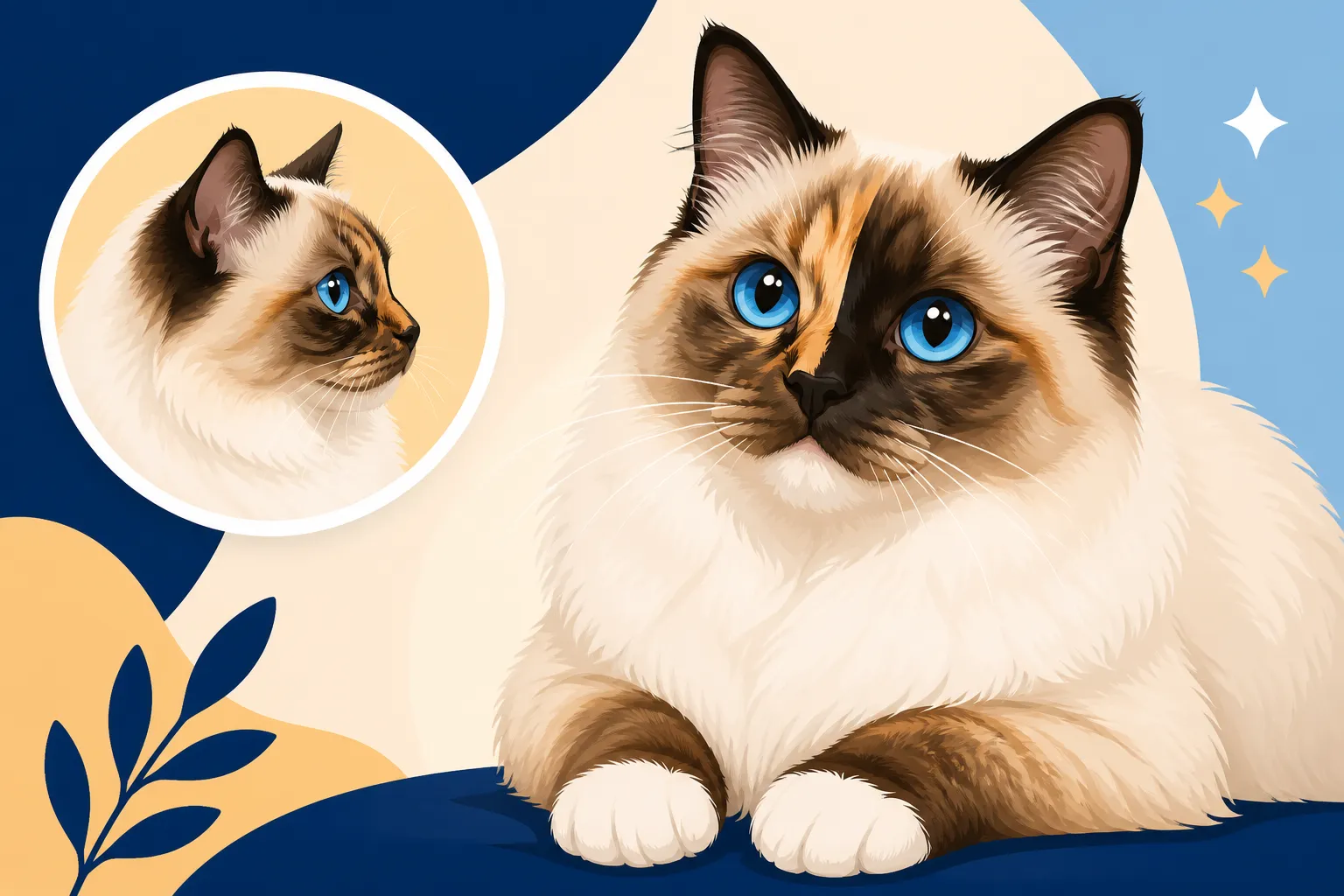
What a Tortie Point Birman Looks Like
It can be incredibly exciting when you're looking for a Birman, but also a little confusing when you start diving into all the different coat patterns and colors. One of the most unique and eye-catching variations is the Tortie Point Birman, and sometimes it's hard to picture exactly what that means beyond just "multi-colored." This guide is here to help you understand the beautiful intricacies of the Tortie Point Birman, from its genetic roots to what makes its appearance so special.
The Genetic Canvas: Understanding Tortie Points
When we talk about a Tortie Point Birman, we're really talking about a feline masterpiece painted by genetics. The "tortie" part, short for tortoiseshell, refers to the distinctive patched pattern of red (or cream) and black (or chocolate/blue/lilac) fur. The "point" means these colors are restricted to the cooler extremities of the cat's body – the face mask, ears, paws, and tail – just like all Birmans. It’s a bit of a genetic marvel, honestly, and it makes each Tortie Birman truly one-of-a-kind.
The key to understanding a tortie pattern lies in the X chromosome. The gene for orange (red/cream) and black (or dilute versions of black) fur is located on the X chromosome. Since female cats have two X chromosomes (XX) and male cats have one X and one Y chromosome (XY), only female cats can typically be tortoiseshell or calico. A male cat would need a rare genetic anomaly (like Klinefelter syndrome, XXY) to display a tortie pattern, making male torties incredibly rare and almost always sterile. So, right off the bat, if you're looking at a Tortie Point Birman, you're almost certainly looking at a queen!
The point coloration itself is controlled by another gene, often called the Himalayan gene. This gene is temperature-sensitive, meaning that color only develops in the cooler parts of the body. This is why Birman kittens are born almost pure white; their entire body is warm in the womb. As they grow and their extremities cool, the pigment starts to develop, creating those gorgeous points. So, a Tortie Point Birman combines both these genetic wonders: the X-linked color patching and the temperature-sensitive point restriction. It’s quite sophisticated, really, how these two elements work together to create such a stunning animal.
What Defines a Tortie Point Birman's Appearance
A Tortie Point Birman is truly a sight to behold, showcasing a beautiful mosaic of colors that sets it apart from other Birman variations. Unlike a solid point Birman, which has a uniform color on its points, a Tortie Point will have distinct patches of at least two colors. Think of it as a miniature, elegant stained-glass window on your cat's ears, mask, paws, and tail.
The Signature Color Patchwork
The most defining characteristic is the intermingling of red (or cream) with black, blue, chocolate, or lilac on the points. You won't see a uniform distribution; instead, it's a delightful, often asymmetrical, blend. For example, one ear might be predominantly red, while the other is mostly seal (black). The mask might have a split face, where one side is red and the other is a darker point color, or it could be a more marbled effect. This isn't just a slight variation; it's a genetic blueprint that results in unique patterns on every single cat.
The red areas can range from a deep, rich red to a softer, lighter cream. Similarly, the darker areas will correspond to the underlying point color. A Seal Tortie Point will have black and red patches. A Blue Tortie Point will feature blue and cream (the dilute version of red). A Chocolate Tortie Point will have chocolate brown and red, while a Lilac Tortie Point combines delicate lilac with cream. The contrast between these colors is usually quite striking, especially as the cat matures and its points darken. These colors don't just sit neatly next to each other; they often swirl and blend at the edges, creating a truly artistic effect that makes each cat distinctly individual.
Point Distribution and Markings
Beyond the main color patches, the distribution on a Tortie Point Birman is crucial. You'll typically find the tortie pattern on:
- Mask: The face will display the mixed colors, sometimes with a clear split, sometimes more mottled.
- Ears: Each ear might have different dominant colors, or a mix within each ear.
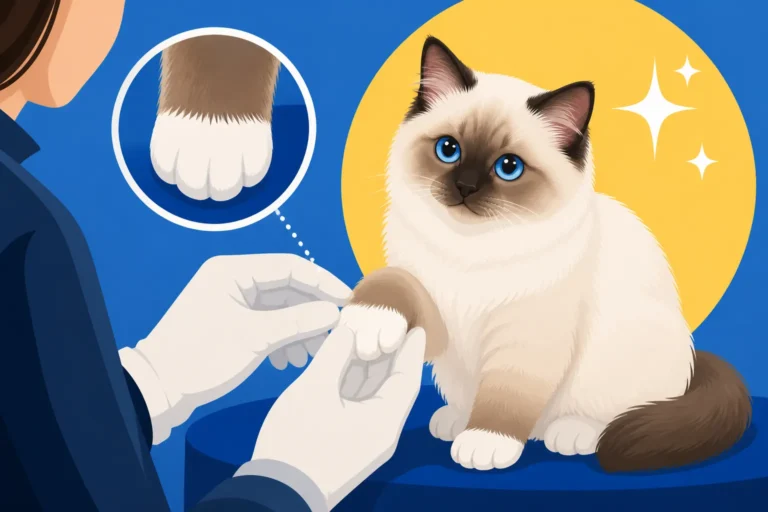
- Paws: This is where the Birman's signature white gloves come into play, making the tortie pattern even more intricate. The colored patches will be above the white gloving, often extending up the back legs as "laces." What a Birman's Front Gloves Should Look Like and Where a Birman's Back Lace Should End are key indicators of proper Birman marking, even on a tortie.
- Tail: The tail often has a beautiful blend of the tortie colors, sometimes appearing striped or banded with the different hues.
It’s important to remember that the tortie pattern doesn't usually affect the white gloves and laces, which are characteristic of the Birman breed. The gloving gene works independently, so you'll still see those pristine white feet and elegant white laces on the hind legs. The tortie colors appear above these white markings. The intensity and distribution of the red/cream patches can vary wildly, even within the same litter, meaning no two Tortie Point Birmans are ever truly identical.
Let's look at some specific combinations:
| Tortie Point Type | Primary Dark Point Color | Secondary Red/Cream Point Color | Common Appearance Notes |
|---|---|---|---|
| Seal Tortie Point | Deep Seal (Black-Brown) | Red (Orange) | Strong contrast, vivid red patches, common and classic tortie look. |
| Blue Tortie Point | Blue (Slate Grey) | Cream (Pale Orange) | Softer contrast, pastel cream patches, elegant and understated. |
| Chocolate Tortie Point | Chocolate (Warm Brown) | Red (Orange) | Rich, warm tones, often a less stark contrast than seal tortie. |
| Lilac Tortie Point | Lilac (Pinkish Grey) | Cream (Pale Orange) | Very delicate and rare, softest contrast, often difficult to discern in kittens. |
When you're looking at a kitten, the full tortie effect might not be immediately apparent. Like all Birmans, they are born almost white, and their points develop over weeks and months. How a Birman Kitten's Points Come In explains how this process unfolds. Patience is key when appreciating the evolving beauty of a Tortie Point Birman.
Distinguishing Tortie Points from Other Birman Colors
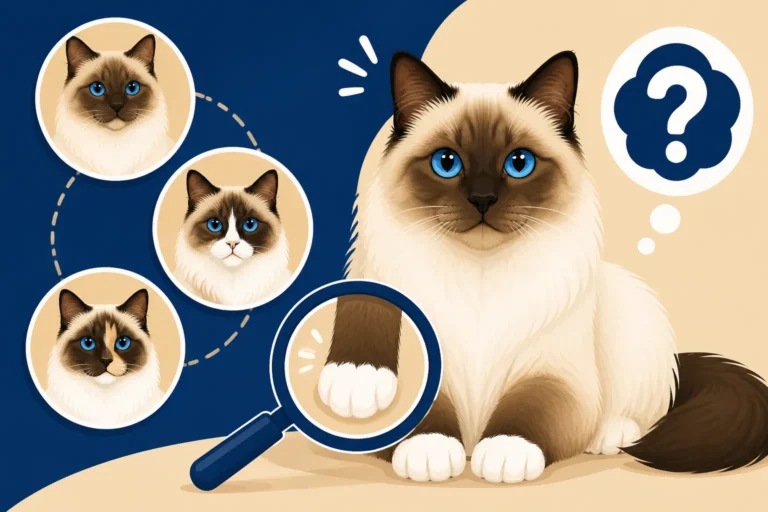
Understanding what a Tortie Point Birman looks like also involves knowing what it isn't. There are many beautiful Birman point colors, and while they all share the distinct Birman features, the color patterning itself is what truly differentiates them.
Tortie Point vs. Solid Point Colors
The most obvious distinction is from a solid point Birman, such as a Seal Point, Blue Point, Chocolate Point, or Lilac Point. These cats will have one uniform color on all their points. For example, a Seal Point Birman will have consistently dark brown-black points on its ears, mask, paws (above the gloves), and tail, without any red or cream patches. The color will be solid and even. What a Seal Point Birman Looks Like provides a great visual example of this consistent coloration.
The presence of those variegated patches of red/cream is the hallmark of a tortie. If you see a cat with clear, unblended areas of two distinct colors (like black and red, or blue and cream) on its points, it's a tortie. If the points are uniformly one shade, it's a solid point. This visual difference is quite dramatic and usually easy to spot, even for a novice Birman enthusiast.
Tortie Point vs. Tabby Point (Lynx Point)
This is where it can get a little trickier, as both tortie points and tabby points (also known as lynx points) have patterns on their points. However, the nature of the pattern is fundamentally different. A Tabby Point Birman will have distinct tabby stripes or 'M' markings on its forehead within its mask, and rings on its tail. The stripes will be a consistent color, such as seal tabby, blue tabby, or chocolate tabby. They do not have the red/cream patching characteristic of a tortie.
Imagine a Seal Tabby Point: its mask will be striped with dark brown-black tabby markings, and its tail will have dark rings. A Tortie Point, on the other hand, will have patches of red/cream mixed in with the darker point color, and these patches won't follow the typical tabby stripe pattern. So, while both have "patterned" points, one is striped (tabby) and the other is patched (tortie). It's possible to have a "Tortie Tabby Point" Birman, which combines both genetics, resulting in red/cream patches and tabby stripes within those patches – a truly complex and stunning combination, but that's a whole other level of intricate!
Tortie Point vs. Red Point (Flame Point)
The Red Point Birman, sometimes called a Flame Point, is also an X-linked color, but it doesn't involve the patching that defines a tortie. A Red Point Birman will have points that are entirely red or cream, without any black or dilute patches. Its points will be a uniform shade of red or cream across its mask, ears, and tail. What a Red Point Birman Looks Like would show a cat with consistent fiery orange or soft peach points.
A Tortie Point will always have at least two distinct colors (red/cream and a darker shade like black, blue, chocolate, or lilac) patched together on its points. If you see only red or cream on the points, it's a Red Point. If you see a mix, it's a Tortie Point. This distinction is usually quite clear, as the absence of any darker, non-red pigmentation on the points is what makes a Red Point truly stand out.
Living with a Tortie Point Birman
Beyond their stunning looks, Tortie Point Birmans, like all Birmans, are cherished for their wonderful temperaments. These cats are known for being affectionate, gentle, and incredibly tolerant, making them fantastic companions for almost any household, including those with children or other pets. Why a Birman is the Cat Families Are Told to Get really hits the nail on the head when it comes to their sweet nature.
The "Tortitude" Phenomenon
While all Birmans share a lovely disposition, some owners of tortoiseshell cats, regardless of breed, affectionately refer to a phenomenon called "tortitude." This playful term suggests that tortie cats often have a personality that matches their unique coat – a little bit sassy, a little bit independent, but still incredibly loving and devoted to their people. Of course, this is largely anecdotal and every cat is an individual, but it's a charming theory that many tortie owners attest to. You might find your Tortie Point Birman has a particularly strong opinion about certain things, or a slightly more mischievous glint in her eye!
Their placid temperament, however, can sometimes mask illness, so it's always important to be observant of any subtle changes in behavior. Why a Placid Birman Hides Pain is a crucial read for any Birman owner, as their gentle nature means they often don't loudly complain when they're not feeling well. Regular vet check-ups are always a good idea, and having a reliable pet insurance plan, like those offered by Healthy Paws, can provide peace of mind for unexpected health issues.
Care and Grooming for a Tortie Point
A Tortie Point Birman doesn't require any special grooming techniques beyond what a standard Birman needs. Their single coat, which lacks a dense undercoat, makes them surprisingly easy to groom for a longhaired cat. No Undercoat Is What Makes a Birman Easy to Groom explains why this is such a blessing. You'll still need to brush them regularly to keep their beautiful fur free of tangles and to minimize shedding, especially around their magnificent ruff and tail plume.
Keeping their pristine white gloves clean, which will be present on your Tortie Point Birman, is a common task for all Birman owners. White fur can show dirt more easily, and you'll want to make sure their litter isn't overly dusty to prevent staining. Keeping a Birman's White Gloves White offers excellent tips for this. For routine supplies, from special low-dust litter to high-quality brushes that won't damage their silky fur, services like Chewy can be incredibly convenient, delivering everything you need right to your door.
The Value of Rarity and Unique Beauty
Tortie Point Birmans are not as common as solid point Birmans, and their unique appearance can make them highly sought after. While the "tortie" pattern itself doesn't typically command a higher price than a solid point of similar quality, the overall rarity and striking beauty certainly add to their appeal. Responsible breeders focus on health, temperament, and adherence to the breed standard first, but a well-marked Tortie Point Birman is undoubtedly a treasure. Why Birman Point Color Affects Price touches on how different color patterns can influence demand and pricing.
Finding a reputable breeder who understands Birman genetics and health testing is paramount. They should be able to provide clear documentation of the parents' health screenings, including for conditions like HCM and PKD, and general well-being. A high-quality diet can help maintain their magnificent coat and overall health, ensuring your Tortie Point Birman thrives for many happy years.
Ultimately, a Tortie Point Birman is more than just a cat; it's a living work of art, a loving companion, and a testament to the diverse beauty within the Birman breed. If you're lucky enough to share your home with one, you'll undoubtedly appreciate their unique charm every single day.
Disclaimer
This article is for general informational purposes only and does not constitute professional advice. Laws, prices and regulations vary by location and change over time. Consult a qualified professional for guidance on your specific situation.