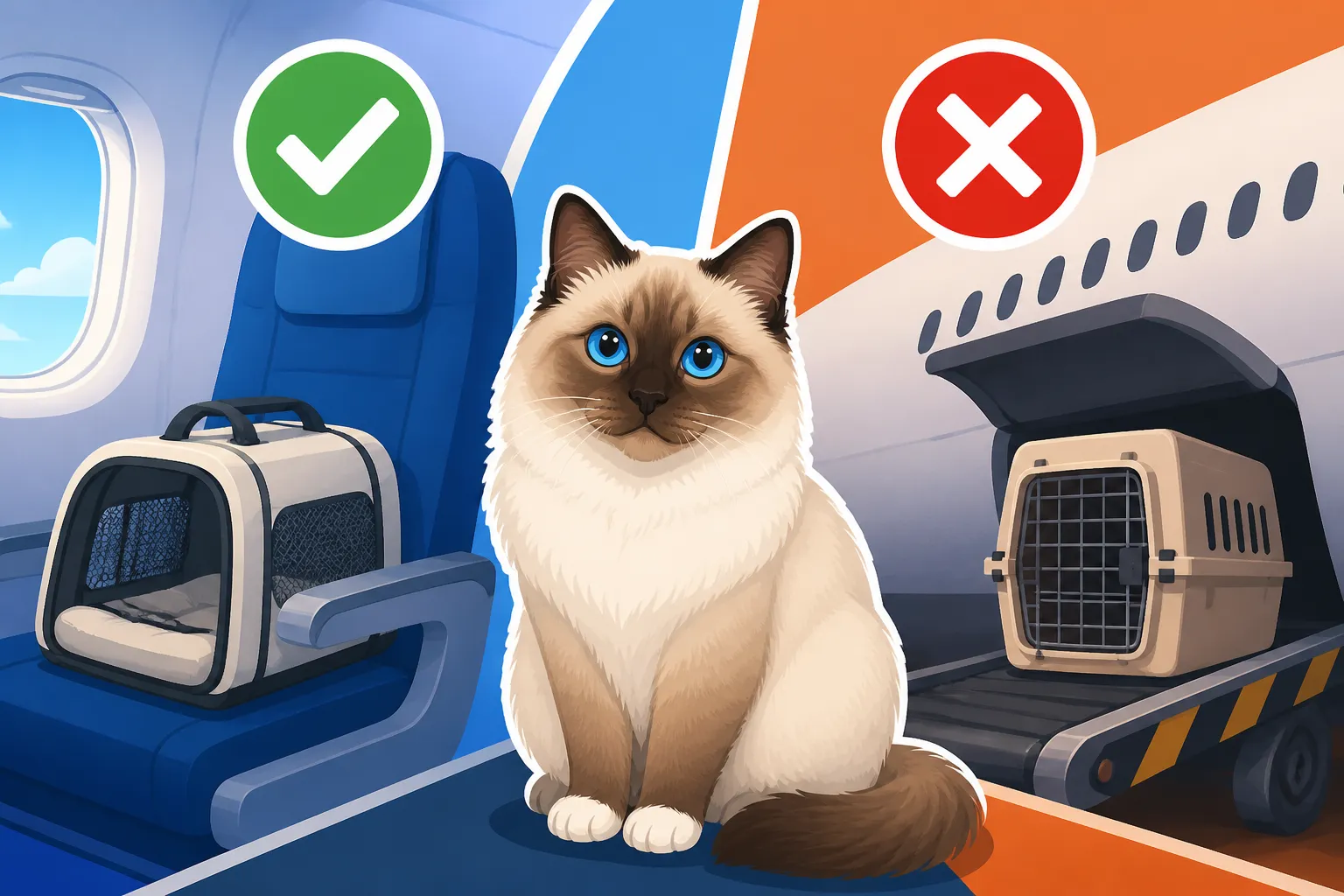
Whether a Birman Should Travel in the Cabin or the Hold
Traveling with your beloved Birman cat can be a source of immense anxiety for any pet parent. The thought of putting your gentle companion through the hustle and bustle of an airport, let alone the confined spaces of an airplane, is enough to tie most of us in knots. Deciding whether your Birman should travel with you in the cabin or journey in the cargo hold is a critical decision that impacts their well-being and your peace of mind. This guide aims to thoroughly explore both options, offering detailed insights into what each entails so you can make the most informed choice for your cherished feline friend.
Understanding the Stakes: Why Birman Air Travel Is a Big Decision
Bringing a Birman onto an airplane isn't like taking them for a car ride to the vet; it's a completely different level of stress and unfamiliarity. These beautiful cats are known for their calm and affectionate nature, but even the most placid Birman can be overwhelmed by the sensory overload of air travel. It's crucial to understand the unique challenges and considerations for your particular feline companion.
The Birman's Temperament and Stress Response
Birmans are generally known for being wonderfully serene and even-tempered cats. They often adapt well to changes in routine, as long as their human companions are nearby and providing reassurance. However, an airport environment is anything but serene. The loud noises, strange smells, constant movement, and unfamiliar people can be incredibly unsettling for a cat accustomed to a quiet, predictable home. Imagine the sudden roar of a jet engine or the clatter of luggage carts – these are sensations your Birman has likely never experienced.
Their placid demeanor, while generally a blessing, can sometimes make it harder to detect when they're truly stressed or unwell. Birmans have a tendency to internalize discomfort rather than outwardly display distress with loud meows or destructive behavior. Instead, a stressed Birman might become withdrawn, refuse to eat, or hide. It's vital to be extra vigilant, as Why a Placid Birman Hides Pain is a common trait, and any signs of illness or severe anxiety could be masked by their quiet nature. Understanding their baseline behavior is key before any stressful event like air travel.
Physical Considerations for Birman Travel
Beyond their temperament, the physical characteristics of a Birman also play a role in travel decisions. They are medium to large cats, with a sturdy, rectangular body and a magnificent, silky coat. While their coat is single-layered and less prone to matting than some other longhairs, it also means they don't have the dense insulation an undercoat provides. This makes them more susceptible to temperature fluctuations. Why a Coat With No Undercoat Is Not Warm can be a serious consideration, especially if they are exposed to extreme temperatures during transfers or in cargo areas that might not be perfectly climate-controlled.
Their size is another practical concern. While not as massive as a Maine Coon, a full-grown Birman tom can be quite substantial. This means fitting comfortably into an airline-approved under-seat carrier can be a tight squeeze. Their respiratory system, like all cats, is sensitive to stress, and anxiety can sometimes lead to panting or rapid breathing, which can be exacerbated in a confined space. Pre-existing health conditions, even minor ones, can be made worse by the stresses of travel, emphasizing the need for a thorough veterinary check-up before any flight.
Traveling in the Cabin: The Comfort vs. Constraint Debate
The idea of having your Birman right there with you, tucked under the seat, offers a lot of comfort to anxious pet parents. It feels safer, more humane, and certainly more reassuring. However, cabin travel comes with its own set of rules and limitations that need careful consideration to ensure it's truly the best option for your Birman.
The Benefits of Cabin Travel for Your Birman
The most significant advantage of cabin travel is undoubtedly the direct human supervision and reassurance you can provide. Your Birman will be in the same climate-controlled environment as you, protected from the extreme temperatures sometimes experienced in cargo areas. You can see them, talk to them softly, and even slip a finger through the carrier mesh for a reassuring touch. This constant presence can significantly reduce their stress, as Birmans thrive on companionship and familiarity. Knowing they are close by can make a world of difference for a cat that Why a Birman Needs Company More Than Stimulation.
Furthermore, the cabin offers stable air pressure, which is generally easier on a cat's ears and respiratory system than the fluctuations sometimes found in the hold. You can monitor their well-being throughout the flight, quickly noticing any signs of distress or discomfort. This immediate oversight can be invaluable, especially for cats who might be prone to anxiety or have subtle health concerns. It truly offers unparalleled peace of mind for both you and your Birman, knowing they are safe and supervised.
The Realities and Limitations of Cabin Travel
While appealing, cabin travel isn't always feasible. The biggest hurdle for many Birman owners is the airline's strict carrier size restrictions. These carriers must fit comfortably under the seat in front of you, meaning there's a maximum height, width, and length. For a Birman, who can be quite long and sturdy, finding a soft-sided carrier that meets these dimensions and allows them to stand up, turn around, and lie down comfortably can be a real challenge. You'll need to research your airline's specific requirements meticulously. Which Carrier Fits a Birman's Length is crucial here; a carrier designed for a small domestic shorthair might be far too cramped for a Birman, potentially causing more stress than comfort.
Airlines also limit the number of pets allowed in the cabin per flight, so booking well in advance is essential. These spots fill up quickly, especially during peak travel times. The cost for a cabin pet is an additional fee, and while generally less than cargo, it's still a significant expense. Beyond the practicalities, you need to prepare your Birman for the experience. This means acclimatizing them to their carrier for weeks, if not months, beforehand. It needs to be a safe, positive space, not just something that appears on travel day. How to Make a Carrier Familiar to a Birman is a critical step, ensuring they associate it with comfort and treats, rather than fear. Without proper desensitization, even a short flight in the cabin can be a terrifying ordeal for your cat.
The Cargo Hold Option: Weighing the Risks and Necessary Precautions
For many Birman owners, particularly those with larger cats or specific travel itineraries, the cargo hold becomes the only viable option. While this often evokes more anxiety for pet parents, it's important to understand that airlines have specific protocols and dedicated facilities for live animal transport. The key lies in thorough preparation and understanding how to mitigate the inherent risks.
When the Hold Becomes the Only Option
There are several reasons why your Birman might need to travel in the cargo hold. As mentioned, if your Birman is simply too large to comfortably fit the airline's under-seat cabin carrier dimensions, the hold is the only alternative for air travel. This is a common scenario for many larger cat breeds. International travel also frequently mandates cargo travel for pets, regardless of size, due to customs, quarantine, and import regulations in various countries. Some airlines might have blanket policies, or you might be traveling with more than one pet, exceeding cabin limits.
The emotional difficulty of placing your cherished Birman in the hold, out of your sight, is very real. It's completely natural to feel worried, but it's important to channel that worry into meticulous planning and preparation rather than letting it paralyze you. The good news is that many pets travel safely in cargo every day, thanks to stringent regulations and airline efforts.
Mitigating Risks for Hold Travel
Mitigating the risks associated with cargo travel for your Birman requires a proactive and detailed approach.
Firstly, choosing a pet-friendly airline is paramount. Research different carriers for their specific pet policies, including how they handle live animals in cargo, what their temperature policies are, and if they have dedicated animal handling staff. Some airlines are simply better equipped and more experienced with pet transport than others.
Secondly, the right crate is non-negotiable. This isn't just any pet carrier; it must be an IATA-compliant travel crate, often made of rigid plastic or wood, with proper ventilation, secure metal hardware, and adequate space for your Birman to stand, turn, and lie down comfortably. It needs permanent food and water dishes, easily accessible from the outside, and clear "Live Animal" labels with your contact information. For a Birman, who has a Why a Birman Needs a Longer Box Than a Round Cat, ensure the crate is long enough to prevent their tail from being curled uncomfortably. You can find robust, airline-approved crates at reputable pet supply retailers like Chewy.
Temperature control is another critical factor. Most airlines have "heat embargoes" or "cold embargoes" during certain times of the year, refusing to fly pets in cargo if ground temperatures at departure, arrival, or transfer airports are too extreme. Always choose direct flights whenever possible to minimize transfer stress and potential exposure to varying climates during layovers. Traveling during temperate seasons can also help.
Vet check-ups and health certificates are not just a good idea; they are typically mandatory. Your Birman will need a thorough health examination from a licensed veterinarian shortly before travel, and official health certificates will be required by both the airline and destination country. This ensures your Birman is physically fit for the journey. This is also a good opportunity to discuss potential anti-anxiety medications or calming supplements with your vet. Many breeders regularly put their cats through Which Tests Belong on a Birman Panel as part of routine health checks, and a travel vet visit should be just as thorough.
Lastly, consider pet travel insurance. Accidents or unforeseen medical emergencies can happen, and having coverage can provide a financial safety net. Companies like Healthy Paws offer various pet insurance plans that might cover incidents related to travel, though always check the specifics of their policies. It's often advisable to insure your pet early on, as discussed in Why to Insure a Birman Before Its First Echo, so you have coverage in place long before any travel plans.
Understanding Airline Pet Cargo Policies
Airline policies regarding pet cargo can vary significantly, making it essential to do your homework well in advance. Here's a general overview of what you might encounter:
| Feature | General Cabin Pet Policy | General Cargo Pet Policy |
|---|---|---|
| Carrier Type | Soft-sided, fits under seat, airline-specific dimensions | Hard-sided, IATA compliant, sufficient space for pet |
| Pet Size/Weight | Small enough to fit carrier and stay under seat | Larger pets, exceeding cabin carrier dimensions |
| Human Supervision | Direct, throughout flight | Indirect, by trained cargo handlers |
| Temperature Control | Same as cabin (stable) | Dedicated climate-controlled cargo hold, but ground temps vary |
| Health Certificates | Usually required | Always required, often with more specific details |
| Booking | Limited spots, early booking essential | Dedicated cargo booking, also advised early |
| Cost | Set fee, typically less than cargo | Variable, often higher, based on weight/size/distance |
| Required Paperwork | Health certificate, vaccination records | Extensive health certificate, import permits (international) |
| Arrival Process | Pick up at gate/baggage claim | Pick up at cargo facility, possibly customs clearance |
This table provides a general comparison, but always check with your specific airline and destination country's regulations. Policies change, and detailed information is your best friend when planning pet travel.
Making the Best Choice for Your Birman's Journey
The decision to travel with your Birman, and whether they go in the cabin or the hold, is deeply personal and depends on a multitude of factors. There's no single right answer for every cat or every situation.
Factors to Consider for Your Specific Birman
Your Birman's individual characteristics should guide your decision.
Age and Health: A very young kitten, especially one still developing their immune system, or an elderly Birman, who might be showing What an Old Birman Slows Down From like reduced mobility or organ function, are more vulnerable to stress and environmental changes. If cabin travel is an option for them, it's often preferred due to the immediate supervision. Cats with pre-existing heart conditions, respiratory issues, or severe anxiety might be better off avoiding air travel entirely, or strictly limiting it to cabin only after thorough vet consultation.
Temperament: While Birmans are generally calm, individual personalities vary. If your Birman is unusually timid, prone to severe stress, or exhibits extreme anxiety even during short car rides, they might struggle immensely in the hold. Observing What a Stressed Birman Does in various situations can give you clues. For an extremely anxious cat, even being near you in the cabin might be a better, though still challenging, experience than being alone in the hold. Conversely, a confident, laid-back Birman might handle the hold better than an overly sensitive one.
Duration of Travel: A short, direct two-hour flight is a vastly different experience from a 12-hour journey with multiple layovers. The longer the travel time, the more stress accumulates, and the more important it is to minimize risks. Long international flights, which often mandate cargo travel, require even more rigorous planning and vet consultations.
Preparations for Any Air Travel Scenario
Regardless of whether your Birman travels in the cabin or cargo, meticulous preparation is key to a smoother, safer journey:
- Pre-Travel Vet Visit: Schedule a comprehensive check-up. Discuss your travel plans, the route, and any concerns you have. Your vet can advise on health certificates, vaccinations, and whether anti-anxiety medications or calming supplements are appropriate for your Birman. Make sure all their regular health checks are up to date, referring to their standard How Often a Birman With Clear Papers Still Needs a Vet.
- Carrier Training: Start this process weeks or months in advance. Make the travel carrier a comfortable, safe space in your home. Leave it open with soft bedding, treats, and toys inside. Encourage your Birman to explore and nap in it. This makes the carrier a familiar retreat, not a scary new prison on travel day.
- Microchipping and ID Tags: Ensure your Birman is microchipped and that your contact information is up-to-date with the registry. Attach a sturdy tag with your name, phone number, and destination address (and possibly flight number) to their collar and the carrier itself. This is your best defense against accidental separation.
- Insurance: Look into pet travel insurance or confirm your existing pet insurance (like Healthy Paws) covers travel-related emergencies. Understand what is and isn't covered, especially regarding pre-existing conditions or breed-specific issues.
- Food and Water: Feed your Birman a light meal a few hours before the flight to prevent an upset stomach, but avoid feeding right before boarding. For cargo travel, attach water and food dishes to the crate that can be refilled without opening the door. Consider freezing water in the dish to prevent spillage and allow it to melt slowly.
- Travel Supplies: Pack a small bag with essentials: copies of all paperwork, a leash and harness, a small amount of familiar food (Chewy offers many convenient travel sizes), any medications, a small first-aid kit, and favorite toys or a blanket.
Post-Travel Care and Reassurance
Once you've arrived, your Birman will need time and patience to recover and adjust. The journey itself is just one part of the challenge; settling into a new environment is another.
Settling In: When you arrive, establish a quiet, safe space for your Birman immediately. Provide their litter box, food, water, and familiar bedding. Allow them to explore at their own pace. Moving house is stressful enough for a cat, and air travel magnifies that. Be aware that it can take How Many Weeks a Birman Takes to Own a New House for a Birman to truly feel at home in a new space.
Monitoring: Keep a close eye on your Birman for any signs of lingering stress or illness. Watch their appetite, water intake, litter box habits, and general demeanor. If they seem withdrawn, aren't eating or drinking, or are exhibiting any unusual symptoms, contact a local vet.
Re-establish Routine: As quickly as possible, try to re-establish a normal routine for feeding, playtime, and sleep. Predictability is comforting to cats and will help your Birman feel secure again after the disruption of travel. Remember that What Calms a Stressed Birman is often simply quiet consistency and your loving presence.
Choosing how your Birman travels by air is a significant decision. By understanding the nuances of both cabin and cargo travel, diligently preparing, and prioritizing your cat's well-being, you can make the best choice and ensure their journey is as safe and stress-free as possible.
Disclaimer
This article is for general informational purposes only and does not constitute professional advice. Laws, prices and regulations vary by location and change over time. Consult a qualified professional for guidance on your specific situation.