How a Birman’s Points Darken With Cold
It’s a common moment for many Birman owners: you glance at your beloved feline friend, perhaps after a particularly chilly spell or as they get a bit older, and suddenly notice that their beautifully distinct "points"—those dark splashes of color on their ears, face, paws, and tail—seem to have deepened, almost as if someone turned up the saturation dial. It’s not just your imagination; a Birman's striking color points actually do react to temperature, growing richer and darker with the cold. This guide will walk you through the fascinating science behind this phenomenon, what it means for your Birman, and what you can expect throughout their life.
The Genetic Masterpiece: How Pointed Cats Get Their Color
The Birman's stunning coat is a true marvel of genetics, a delicate balance between light body fur and intensely colored extremities. This isn't just random; it's a carefully orchestrated biological process that makes them so uniquely beautiful.
The Tyrosinase Enzyme and Temperature Sensitivity
At the heart of your Birman's changing colors lies a very special enzyme called tyrosinase. Now, don't let the fancy name scare you off; think of it as a little artist within your cat's body, responsible for creating pigment. Here's the kicker: this artist is incredibly sensitive to temperature. Specifically, the tyrosinase enzyme works best in cooler environments.
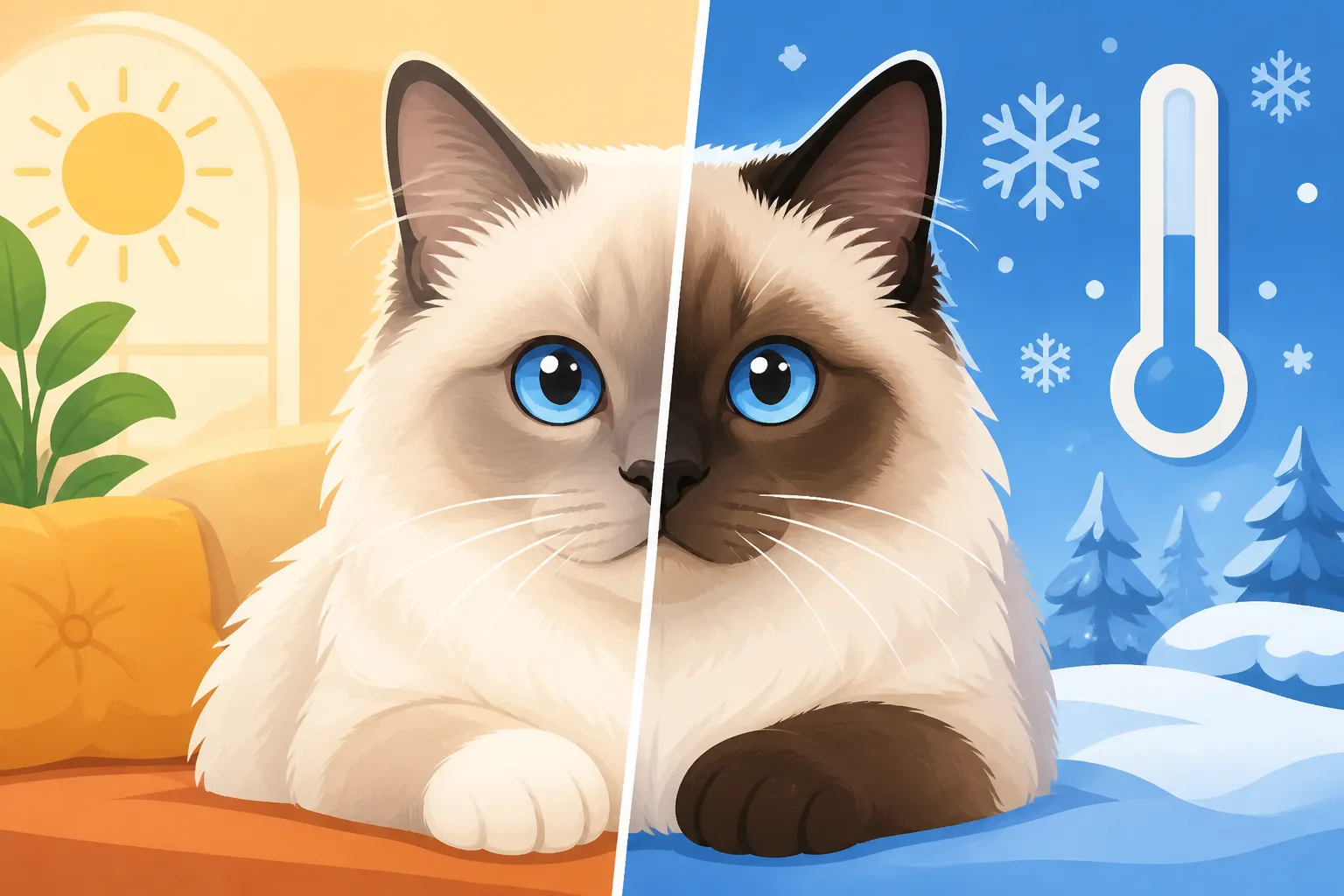
Imagine your Birman's body like a landscape with varying temperatures. The core of their body, where their vital organs are, stays lovely and warm—around 100-102°F (38-39°C) for most cats. In these warmer areas, the tyrosinase enzyme is largely inactive. It's like the artist is taking a nap because it's too hot to work. This is why the main body of your Birman remains a pale, creamy, or even pure white color. However, when you get to the extremities—the tips of their ears, their little noses, their paws, and their long, plume-like tails—these areas are naturally a few degrees cooler. In these cooler zones, our little artist, tyrosinase, wakes up and gets to work, diligently producing pigment. This is precisely why these "points" develop their characteristic deep color. It’s a brilliant natural design, resulting in the gorgeous contrast we all adore. You might recall that Why a Birman Kitten Is Born Almost White is all down to this enzyme's inactivity in the warmth of the womb.
The Birman's Unique Genetic Blueprint
The genetic blueprint for this temperature-sensitive coloring is known as the Himalayan pattern, or colorpoint trait. Every Birman carries two copies of the specific gene responsible for this, meaning it's a fundamental part of their identity. While other breeds also exhibit this trait, the Birman’s expression, combined with their striking white "gloves" on their paws, makes them truly distinctive.
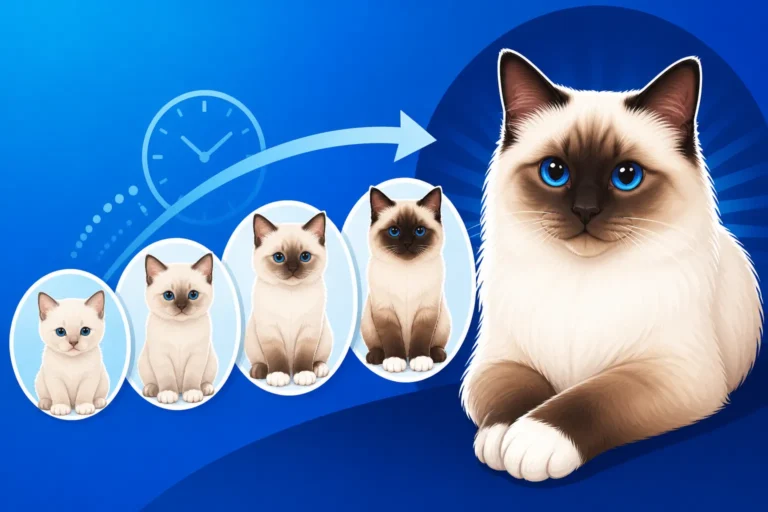
The specific gene mutation causes the tyrosinase enzyme to be thermolabile, which simply means it’s easily destroyed or deactivated by heat. So, even though your Birman has the genetic instructions to be a beautifully colored cat all over, the warmth of their core body literally prevents the full expression of that color. It’s fascinating to consider how a subtle change in a single gene can lead to such a dramatic visual effect. Beyond the primary colorpoint gene, there are also modifier genes at play, which can subtly fine-tune how much pigment is produced and how deeply saturated the colors become. These modifiers might explain why some Birmans have slightly lighter points than others, even within the same color family, or why the darkening process varies slightly from cat to cat. Observing How a Birman Kitten's Points Come In from birth truly highlights this genetic marvel in action.
Environmental Factors That Influence Point Darkening
Beyond their inherent genetics, the world your Birman lives in plays a significant role in how dark and rich their points become. It’s not just about what’s programmed inside them, but also about the temperature of their everyday environment.
The Impact of Ambient Temperature
This is perhaps the most noticeable factor in point darkening. If you live in a region with distinct seasons, or if your home's temperature fluctuates, you'll likely observe changes in your Birman's coat. A Birman living in a home in, say, New England, where winter temperatures indoors might hover around 68-70°F (20-21°C) even with heating, will typically develop darker, more intense points than a Birman living in a consistently warmer climate like southern Florida, where the air conditioning keeps temperatures mild year-round.
Even within the same home, subtle differences can affect point color. Does your Birman love to nap on a cool windowsill in the winter? You might find those ears and paws taking on a deeper hue. Do they prefer sleeping on the warmest heating vent? Their points might stay a touch lighter. The effect is gradual and cumulative; it's not a sudden shift, but a slow deepening over weeks and months of exposure to cooler temperatures. This is precisely Why a Birman Living Somewhere Cold Gets Darker. It's a natural adaptation and a visual testament to their unique temperature-sensitive genetics.
Age and Metabolic Changes
As much as we wish our feline companions could stay kittens forever, time marches on, and with it come natural changes, including in coat color. One of the most significant factors in point darkening, alongside ambient temperature, is age. As a Birman matures and enters its golden years, its metabolism tends to slow down. This reduction in metabolic rate often leads to a slight decrease in overall body temperature. And what did we learn about the tyrosinase enzyme? It thrives in cooler conditions!
So, as your Birman ages, its naturally cooler extremities might become even cooler, allowing that pigment-producing enzyme to work with greater efficiency. You'll observe a gradual deepening of color across all their points, sometimes becoming quite profound. A gorgeous seal point Birman might, in its senior years, appear almost black on its extremities, while a blue point could take on a very deep, smoky charcoal hue. This slow, graceful darkening is a hallmark of the breed and a beautiful indicator of a life well-lived. It’s a process that unfolds over many years, starting subtly and becoming more pronounced with each passing year. It truly illustrates Why a Birman's Points Darken as It Ages, and understanding this helps us appreciate the beauty of our senior Birmans, even if Caring for a Birman Once Its Points Have Gone Dark might involve a few extra grooming considerations.
Understanding the Spectrum of Birman Point Colors
The Birman breed boasts a stunning array of point colors, each with its own charm. While the temperature-sensitive gene dictates that their points will darken, the underlying genetics for their specific color dictates what shade that darkening will be.
Common Point Colors and Their Variations
When we talk about Birman point colors, we're usually referring to the base pigment that is then "activated" by the cold. The most classic and perhaps most well-known is the Seal Point, which develops into a rich, dark brown, almost black, on the points. Then there's the elegant Blue Point, where the points mature into a striking slate grey-blue. The Chocolate Point offers a warm, milky brown, while the Lilac Point is a delicate, pale grey with a pinkish undertone. You can also find Red Points, which have a lovely orange-red hue, and Tortie Points, which feature patches of red or cream alongside another color.
The degree of darkening is influenced by the base color. A seal point, with its strong black-based pigment, will typically show the most dramatic darkening, potentially becoming almost black on its points with age or in cooler conditions. In contrast, a lilac point, which starts much paler, will also darken, but it will deepen into a more intense lilac-grey rather than ever becoming truly dark brown or black. It's a spectrum, and each color maintains its inherent characteristics while undergoing the process of deepening. For instance, knowing What a Seal Point Birman Looks Like helps you understand just how much difference a few degrees of temperature can make to its point saturation compared to What a Lilac Point Birman Looks Like.
Recognizing "Hot" vs. "Cold" Points
Within the Birman community, breeders and enthusiasts often use terms like "hot points" and "cold points" to describe the intensity and saturation of the point color. This isn't a judgment of quality, but rather an observation of how the temperature sensitivity has manifested in an individual cat.
A Birman with "hot points" will tend to have lighter, less saturated point colors, even on its extremities. This might be due to living in a consistently warmer environment, having a slightly higher overall body temperature, or even subtle genetic modifiers that lead to less pigment production. Conversely, a Birman with "cold points" will display deeply saturated, rich point colors. These cats might thrive in cooler homes, naturally run a little cooler, or simply have genetics that favor maximal pigment expression. Neither is inherently better or worse; it's simply a natural variation of the breed trait. This understanding is particularly important when evaluating kittens. What you see at 8-12 weeks isn't necessarily what you'll have for life, as the points continue to develop and darken significantly over the first year and beyond. This is why When a Birman Kitten's Points Start to Show is just the beginning of a lifelong color journey.
| Factor | Impact on Point Darkening | Explanation |
|---|---|---|
| Ambient Temperature | Higher (warm) = Lighter | Tyrosinase enzyme less active; less pigment produced. |
| Lower (cold) = Darker | Tyrosinase enzyme more active; more pigment produced. | |
| Age | Younger = Lighter | Higher metabolism, generally warmer body temperature. |
| Older = Darker | Slower metabolism, slightly lower body temperature; cumulative effect of pigment production over time. | |
| Genetic Base Color | Seal/Blue Point = More dramatic darkening | These colors have stronger pigment bases, showing more noticeable darkening. |
| Lilac/Cream Point = Subtler darkening | These colors have weaker pigment bases, resulting in a less intense, but still noticeable, deepening of hue. | |
| Activity Level | Active = Potentially slightly lighter | Increased metabolism from activity can slightly raise body temperature, though minor effect. |
| Sedentary = Potentially slightly darker | Lower metabolism, slightly lower body temperature, allowing more pigment development. |
Practical Implications for Birman Owners
Understanding why your Birman's points darken isn't just a fun scientific fact; it can influence how you approach their care and environment. While you can't stop the inevitable march of time, you can certainly make choices that cater to their unique physiology.
Managing Your Birman's Environment for Desired Color
If you adore the paler, softer points often seen on younger Birmans or those from warmer climates, you might consider keeping your home consistently warm. This doesn't mean cranking the heat to uncomfortable levels, but maintaining a steady, comfortable temperature year-round. Avoiding drastic temperature drops, especially in sleeping areas, can help keep those points a touch lighter.
However, and this is crucial, your Birman's health and comfort should always take precedence over aesthetic preferences. Don't sacrifice a comfortable living environment for the sake of slightly lighter points. If your Birman is chilly, they'll appreciate a cozy spot. Many Birmans adore a heated pet bed, which can be found readily on platforms like Chewy or Amazon. These provide localized warmth, which is fantastic for their comfort, especially in cooler rooms, and also means that if you're trying to influence point shade, the localized heat will keep those areas 'hot' to the tyrosinase enzyme. Remember, a Birman's single coat means they don't have the insulating undercoat of some other longhaired breeds, so they can feel the cold more keenly. Knowing Where a Birman Goes When the Heating Goes Off can give you clues about their preferred temperature zones in your home.
The Unavoidable March of Time and Natural Darkening
No matter how warm you keep your home or how carefully you manage their environment, some degree of point darkening is an inevitable part of your Birman's life journey. As we discussed, age plays a significant role in this, and you can expect your Birman's points to gradually deepen over their lifespan, often becoming quite rich and striking by the time they reach their senior years.
This isn't a sign of poor health; it's simply a natural expression of their unique genetics and the aging process. Instead of viewing it as a loss of their "kitten colors," try to appreciate the evolving beauty of your Birman. That deep mahogany seal, the smoky blue, or the richer chocolate on an older cat tells a story of years of love and companionship. Focus on their overall well-being. If your Birman is active, happy, eating well, and otherwise healthy, then their darker points are simply a natural part of who they are. What an Old Birman Stops Doing Once It Passes Ten often includes less jumping and more lounging, which can contribute to the cooler body temperature that leads to darker points. Embrace the changes and continue to provide them with the best care possible.
Distinguishing Healthy Darkening from Other Coat Changes
While gradual point darkening is a normal and expected part of owning a Birman, it's always wise to be observant of your cat's overall health. Not all coat changes are benign, and sometimes, a seemingly aesthetic shift could hint at something more.
When Darkening Might Signal a Health Issue
It's important to stress that point darkening itself is rarely a sign of ill health. However, if you notice unusual or sudden changes in coat color, particularly if accompanied by other symptoms, it's always worth a vet visit. For example, if your Birman's body fur, which should remain light, starts to darken significantly in patches, or if the color change is uneven and patchy in ways that don't follow the natural point pattern, it could be a symptom of an underlying condition.
Conditions affecting circulation, thyroid issues, or even certain skin diseases could potentially impact coat appearance. However, in these cases, you would almost certainly see other signs: lethargy, changes in appetite or thirst, weight loss or gain, skin irritation, excessive grooming, or behavioral shifts. A Birman, with their naturally placid temperament, can be incredibly good at hiding discomfort, so it's essential to be attuned to any subtle cues. Why a Quiet Birman Is Easy to Misread means that any noticeable change in their normal demeanor, combined with unusual coat changes, warrants a professional check-up. Trust your instincts; if something feels "off" about your cat, a vet appointment is always the safest bet.
The Role of Nutrition in Coat Health and Color Vibrancy
While diet won't magically reverse the natural darkening of your Birman's points, it plays an absolutely critical role in the overall health, shine, and vibrancy of their coat. A well-nourished Birman will have a soft, silky, and lustrous coat, regardless of the depth of its point colors.
Look for high-quality cat foods that list a named meat source as the first ingredient. Adequate protein is essential for healthy hair growth and maintaining the thick, beautiful ruff that Birmans are known for. Additionally, omega-3 and omega-6 fatty acids are crucial for skin and coat health. These can be found in fish oils or certain plant-based supplements. A healthy intake of these fats helps keep your Birman's skin moisturized and their fur supple, reducing dryness and breakage, which can sometimes make a coat appear dull or less vibrant. Even if their points are deepening with age, a healthy diet ensures that the color that is there looks its absolute best. Understanding Which Protein Level Keeps a Birman's Ruff Thick is key to supporting their magnificent mane.
Remember, a healthy Birman is a beautiful Birman, regardless of whether their points are light or dark. Focus on providing them with a loving home, good nutrition, and regular veterinary care, and they will grace your life with their serene presence and stunning, ever-changing beauty for many years to come.
Disclaimer
This article is for general informational purposes only and does not constitute professional advice. Laws, prices and regulations vary by location and change over time. Consult a qualified professional for guidance on your specific situation.