Why Every Birman Kitten Is Born Pure White
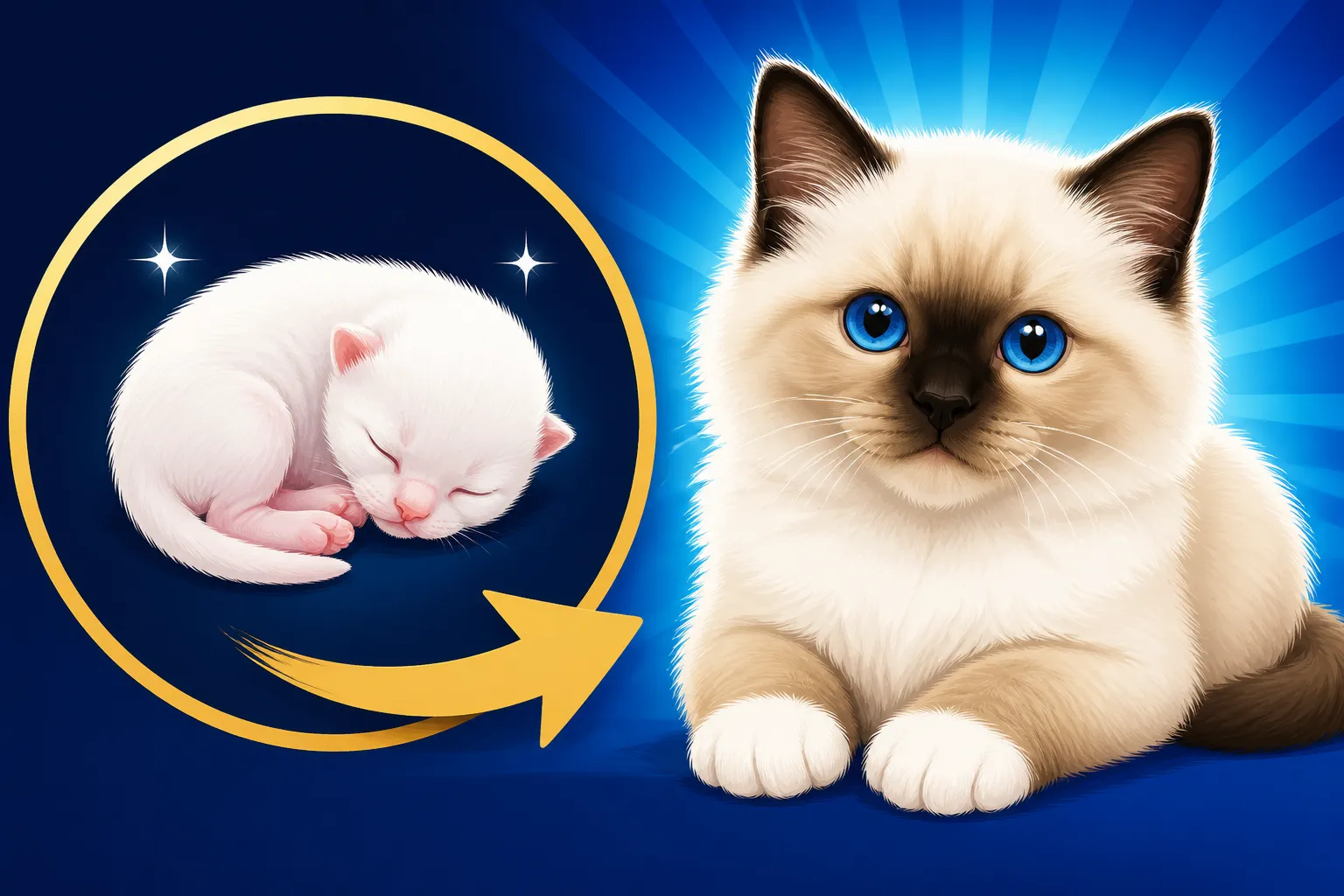
It's a common sight for anyone welcoming a new Birman kitten into their home – a tiny, fluffy bundle of pure white innocence. You know these cats grow into magnificent creatures with striking 'points' of color on their ears, face, paws, and tail, so it's only natural to wonder: why are they born completely white? This guide will dive deep into the fascinating genetics behind this phenomenon, explaining exactly why your Birman started as a blank canvas and how those beautiful colors will slowly, magically appear.
The Magic of Temperature-Sensitive Genetics
The seemingly miraculous transformation of a pure white Birman kitten into a richly pointed adult isn't magic at all; it's pure genetics, specifically a fascinating quirk that makes pigment production temperature-dependent. This isn't unique to Birmans, but it's certainly one of their most charming and defining characteristics, directly linked to their lineage and how their stunning coat pattern evolved. Understanding this genetic "switch" is key to appreciating the initial pure white stage.
Understanding the Pointed Pattern Gene
At the heart of a Birman's coloration lies a specific gene, often referred to as the Himalayan gene or the "pointed pattern" gene. This gene is responsible for inhibiting the production of pigment in warmer parts of the cat's body. Cats carrying two copies of this recessive gene (all Birmans do, which is why they consistently display this pattern) will only develop color in cooler areas. It's like having a little internal thermometer that dictates where the color can bloom.
Think of it like this: your Birman has all the genetic instructions for, say, a beautiful seal point coat, but those instructions are only "turned on" when the body temperature drops below a certain threshold. In warmer areas, the pigment-producing enzymes simply can't function effectively, leaving the fur pristine white. This is why you see the striking contrast on a mature Birman – dark extremities against a much lighter body.
How Temperature Influences Pigment Expression
The concept of temperature influencing pigment is crucial here. Inside the warm environment of the mother's womb, a Birman kitten is uniformly cozy. This consistent warmth means that the pigment-producing enzymes are essentially "switched off" across the entire tiny body. There are no cooler areas for the color to develop, resulting in a completely white coat at birth. It’s the ultimate blank slate.
As the kitten is born and exposed to the outside world, different parts of its body will experience varying temperatures. Extremities like the ears, nose, paws, and tail are naturally cooler than the core of the body. This drop in temperature in these specific areas allows the pigment-producing enzymes to activate, slowly, gradually, bringing forth the magnificent colors we associate with the Birman breed. It's a slow burn of beauty.
The Birman's Specific Genetic Blueprint
Every Birman cat inherits two copies of this special gene, ensuring that they will always exhibit the pointed pattern. This isn't a random occurrence; it's a fundamental part of what makes a Birman, well, a Birman. Their genetic blueprint is precisely designed for this elegant, color-changing display. This consistent genetic inheritance is why breeders can reliably predict that a Birman kitten will be born white, regardless of its parents' specific point colors.
The specific shade and intensity of the points—be it seal, blue, chocolate, lilac, or even a red point—are determined by other modifying genes, but the underlying mechanism that creates the pointed pattern itself is constant across the breed. How a Birman Kitten's Points Come In is a process driven by this precise genetic coding, making each kitten's journey from white to wondrously colored a predictable and beautiful one.
A Blank Canvas: The Birman Kitten's First Weeks
Bringing a new Birman kitten home is a time filled with anticipation, especially as you watch for those first hints of color to appear. For those first weeks, your little furball will remain a pure white bundle, indistinguishable in terms of color from any other pointed breed's newborn. It’s an exciting waiting game, watching the canvas gradually fill with its unique masterpiece.
The Warmth of the Womb and Early Days
Inside the mother cat, the temperature is consistently warm, typically around 100-102°F (37.8-38.9°C). This optimal warmth prevents any significant pigment development in the developing kittens. They are perfectly insulated and protected, which is ideal for growth but not for early color expression. Why a Birman Kitten is Born Almost White isn't just a quirk; it's a direct consequence of this prenatal warmth.
Even immediately after birth, a kitten's tiny body is primarily focused on maintaining warmth and feeding. Their core body temperature is still relatively high, and they huddle close to their mother and littermates. This continued warmth means the visible points won't start showing up right away. It's a few days, sometimes a week or more, before you might notice the faintest shadow on their little ears.
The Gradual Appearance of Points
The magic truly begins as the kitten starts to spend more time away from the direct warmth of its mother and siblings, even for short periods, and its own body systems become more efficient at regulating temperature. The cooler extremities, such as the tips of the ears, nose, paws, and tail, will be the first areas where the pigment-producing enzymes kick into gear. You might spot a subtle creaminess on the ear tips, or a faint smudge on the nose.
This process is incredibly gradual. It’s not an overnight transformation. Over the course of the first few weeks, those faint hints will deepen and spread. The ears will usually darken first, followed by the tail. The paws might show a slight discoloration, eventually developing into the beautiful white 'gloves' that are a hallmark of the breed. When a Birman Kitten's Points Start to Show can vary slightly, but it's typically within the first few weeks.
Patience as the Pigment Develops
It’s easy to get impatient, constantly checking for new color, but remember that nature works on its own timeline. The full expression of a Birman's point color takes months, sometimes even years, to completely develop. A kitten bought at 12 or 13 weeks will have clearly visible points, but they will continue to deepen and enrich over its first year, and sometimes even into its second or third year. How a Birman Kitten's Gloves Change as It Grows is a testament to this ongoing process.
Breeders often need to wait a while before they can accurately assess a kitten's markings and potential show quality, precisely because the colors are still developing. So, if you're eagerly awaiting those rich seal points or delicate blue points, embrace the journey. It's part of the unique experience of owning a Birman.
What Influences the Final Color Intensity
While genetics lay the groundwork for a Birman's pointed pattern, the exact shade and depth of those points are influenced by a surprisingly wide array of factors. It’s not just about the specific genetic code, but also how that code interacts with the environment, diet, and even the cat's overall health. This intricate dance of nature and nurture means no two Birmans will ever have identical point coloration.
Environmental Factors Beyond Temperature
Beyond the initial womb warmth, external environmental factors continue to play a significant role in how dark a Birman’s points become. The ambient temperature of the cat's living environment is a huge influence. Cats living in colder climates or in homes kept at cooler temperatures will often develop darker, more extensive points. Their bodies are working harder to keep warm, and those cooler extremities allow for more pigment production.
Conversely, a Birman living in a consistently warm climate or a very toasty home might have lighter points. It's a fascinating display of thermoregulation and genetics in action. This is why Why a Birman Living Somewhere Cold Gets Darker is a well-known phenomenon among Birman enthusiasts. Even factors like prolonged periods outdoors (in a safe, enclosed catio, of course!) can influence the depth of their color over time.
Genetic Modifiers and Point Shade
While the main gene dictates the pointed pattern, other genetic modifiers influence the specific shade and saturation of the color within those points. These genes determine whether your Birman will be a striking seal point, a delicate blue point, a warm chocolate point, or a softer lilac point. Breeders carefully select pairings to achieve certain desired point colors, adding another layer of complexity to the genetic puzzle.
For instance, a cat with the "dilute" gene will have its colors lightened, turning a black-based (seal) point into a blue point, or a chocolate point into a lilac point. These modifying genes are inherited independently but work in concert to create the beautiful spectrum of Birman colors. Understanding these nuances is a deep dive into feline genetics, but for owners, it just means appreciating the subtle variations in their cat's individual beauty. For example, knowing What a Seal Point Birman Looks Like compared to What a Blue Point Birman Looks Like helps appreciate these distinctions.
Diet and Overall Health
Believe it or not, a Birman's diet and overall health can also subtly influence the quality and depth of its coat color. A diet rich in essential nutrients, particularly amino acids like tyrosine, which is a precursor to melanin (the pigment responsible for dark colors), can support robust pigment production. Conversely, a poor diet or chronic health issues might lead to a duller coat, including less vibrant points.
Ensuring your Birman receives a high-quality, balanced diet is crucial for its overall well-being, including its stunning coat. A wide range of premium cat foods can contribute to a healthy, lustrous coat. While diet won't change a seal point into a blue point, it certainly supports the genetic potential for the richest, most vibrant expression of its inherited color. Good hydration is also vital, impacting skin and coat health, and indirectly, its appearance.
Common Misconceptions and Concerns
The unique way Birman kittens develop their color can lead to a few natural questions and even some concerns for new owners. It's important to separate fact from fiction and understand that a pure white start is perfectly normal and healthy for this breed. Don't let curiosity turn into worry when it comes to your beautiful Birman.
Is a Pure White Kitten a Sign of Health Issues?
Absolutely not! For a Birman, being born pure white is the epitome of normal and healthy. It is precisely what you should expect from a purebred Birman kitten. Some people unfamiliar with the breed might mistakenly think a lack of color at birth indicates a genetic flaw or health problem, but for Birmans, it’s quite the opposite. It's a sign that their pointed genetics are working exactly as they should.
In fact, any significant color present at birth on a Birman kitten would be unusual and might suggest that the kitten isn't a true Birman, or that there's some unusual genetic anomaly. So, embrace the white! It’s simply the first stage of their magnificent color journey. Rest assured, your pristine white kitten is just waiting for the world's cooler temperatures to reveal its true palette.
Distinguishing Birman Kittens from Other White Breeds
When a Birman kitten is pure white, it can be hard to tell it apart from other breeds that are genuinely born white, or from domestic shorthairs that happen to be white. However, a trained eye or a reputable breeder will always be able to confirm the kitten's breed, even at the earliest stages. They look for specific physical characteristics beyond color.
Birman kittens, even white ones, will have the distinctive round face, strong boning, and specific head shape that breeders recognize. Their fur, even before points develop, tends to be of a certain texture – soft and silky, rather than woolly or coarse. What a Birman's Coat Texture Should Be is a consistent trait across all Birman kittens, regardless of their temporary lack of color. A pedigree will, of course, remove all doubt.
When to Expect Full Color Development
The timeline for a Birman’s points to fully develop can be quite extended, often spanning several years. While the first hints of color will typically appear within the first few weeks, and most of the main points will be clearly visible by 3-4 months of age, the deepening and enrichment of these colors continues long after. It's not uncommon for a Birman to still be "darkening" its points up to three years old.
How Many Years a Birman's Points Take to Finish Darkening depends on individual genetics and environmental factors, as discussed earlier. Don't be surprised if your adult Birman, especially if it's a lighter point like a lilac or cream, continues to show subtle changes in color intensity over time. This ongoing development is part of the breed’s charm and a testament to the dynamic nature of their unique coat genetics.
The Beauty and Practicality of the Birman's Changing Coat
The Birman's unique color development, starting from a pure white canvas, adds an extra layer of wonder to owning one of these magnificent cats. It's not just a genetic quirk; it's a characteristic that defines their beauty and influences practical aspects of their care, particularly when it comes to grooming and maintaining that pristine look.
Appreciating the Color Transformation
Watching a Birman kitten transform from a fluffy white cloud into a cat with striking, well-defined points is one of the true joys of the breed. It’s like owning a living, breathing work of art that slowly reveals itself. Each day brings a subtle change, a deeper hue on an ear, a clearer definition on a mask, or richer tones on the tail. This slow reveal fosters a deeper connection and appreciation for the intricacies of feline genetics.
The contrast between the soft, pale body fur and the darker points is a signature look that is deeply appealing. This beautiful color transition, from almost invisible markings to a clearly defined pattern, ensures that every Birman has a truly unique and evolving coat. It’s a testament to nature’s artistry, playing out right in your living room.
Grooming for a Pristine White Coat
While their points are developing, and even once fully mature, Birmans maintain a largely pale body coat, including their signature white 'gloves'. This beautiful white fur, while stunning, requires some attention to stay pristine. Unlike cats with dense undercoats, Birmans have a single, silky coat that is surprisingly easy to maintain and less prone to matting than many other long-haired breeds. Why a Birman's Single Coat Never Developed a Woolly Layer makes their grooming needs generally simpler.
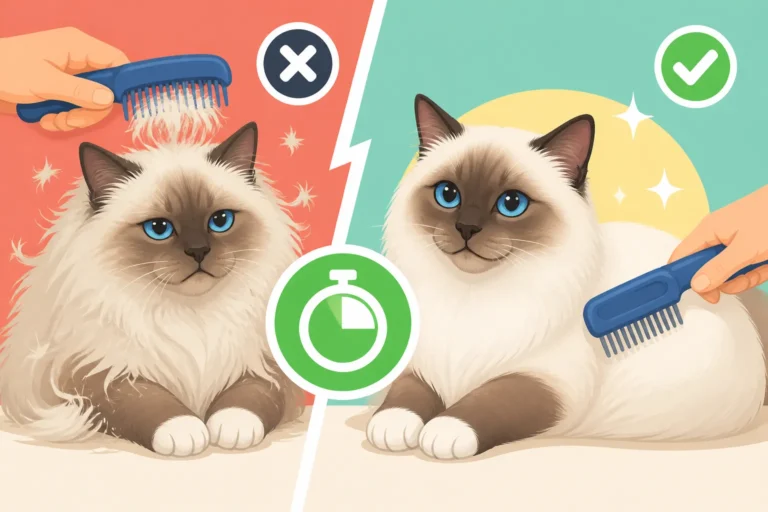
However, those white gloves and pale body fur can pick up dirt or get stained by dusty litter. Regular combing, ideally three times a week, is essential not only to prevent any tangles but also to keep the coat clean and shiny. Keeping a Birman's White Gloves White often involves choosing low-dust litter, which can be easily found on platforms like Amazon, and sometimes a quick wipe with a damp cloth if they've been exploring. While Birmans rarely need baths, attention to their paws keeps them looking their best.
The Longevity of the Pointed Pattern
The pointed pattern is a permanent feature of the Birman breed, continuing throughout their entire lives. However, just as the points darken from birth, they also tend to deepen with age. An older Birman will often have significantly darker and more extensive points than when it was a young adult. Why a Birman's Points Darken as It Ages is a common and natural phenomenon. This is due to a combination of sustained exposure to cooler temperatures over time and a gradual accumulation of pigment.
You might notice that an elderly Birman's body fur, especially along its back, also takes on a slightly darker hue, almost appearing smoky compared to its youthful pearly white. This continuous evolution of their coat color is yet another fascinating aspect of living with a Birman, making each stage of their life a visual treat.
Disclaimer
This article is for general informational purposes only and does not constitute professional advice. Laws, prices and regulations vary by location and change over time. Consult a qualified professional for guidance on your specific situation.