Why Combing a Birman Takes Ten Minutes, Not an Hour
Many new Birman owners, looking at that gorgeous, flowing coat, immediately picture hours spent wrestling their beloved feline with brushes and combs. It's a common misconception, born from experiences with other long-haired breeds. But let me tell you, when it comes to a Birman, grooming isn't the arduous, hour-long chore you might be bracing for; it's often a surprisingly quick, ten-minute affair. This guide will walk you through why that's the case and how to make the most of your Birman's easy-care coat.
The Secret to Speed: Why the Birman's Coat Makes Grooming a Breeze
It's easy to assume that any cat with long fur must be a grooming nightmare. Visions of matted, tangled horrors often come to mind, particularly if you've had experience with Persian cats or other breeds known for their dense, woolly undercoats. But the Birman is a different story entirely, a truly unique blend of beauty and practicality that makes its maintenance surprisingly minimal. This isn't just wishful thinking; it's a direct result of their specific coat genetics.
Understanding the Birman's Unique Single Coat
The Birman possesses what we affectionately call a "single coat." Unlike many other long-haired breeds, which boast a thick, fluffy undercoat beneath a layer of longer guard hairs, the Birman essentially has only one layer of fur. This distinction is absolutely crucial to understanding why their grooming needs are so much less demanding. Imagine trying to comb through two separate, dense layers of hair versus just one silky, flowing layer. The difference is night and day. This single coat is wonderfully soft to the touch, often described as feeling like silk or spun cotton, and it's this texture, combined with the lack of an undercoat, that prevents the deep-seated tangles that plague other breeds. It truly is No Undercoat Is What Makes a Birman Easy to Groom.
The Absence of a Dense Undercoat
Let's dive a little deeper into that lack of an undercoat. An undercoat is typically made up of very fine, downy hairs that are incredibly effective at trapping warmth. While fantastic for insulation, these hairs are also notorious for matting when shed, creating dense knots close to the skin. Think of trying to comb through a sheep's wool versus a fine silk shawl – the latter is far easier. Since the Birman doesn't have this dense, woolly layer, there's simply less hair to tangle and fewer opportunities for mats to form in the first place. This means that when you do run a comb through your Birman's coat, it glides through smoothly, encountering minimal resistance. It's truly a marvel to behold how freely the comb moves through that luxurious fur, something that would be utterly impossible with many other long-haired cats. This characteristic is a huge part of Why a Birman Mats Far Less Than It Looks Like It Should.
Where a Birman's Few Mats Form
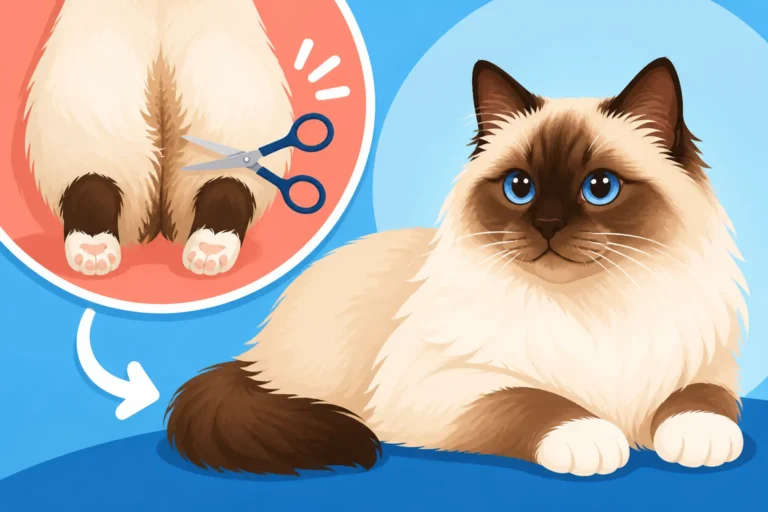
Now, while I've painted a rosy picture of easy grooming, let's be realistic: no cat with long fur is entirely immune to the occasional tangle. Even with their glorious single coat, Birmans can develop small mats, though they are far less common and less severe than in other breeds. These tend to form in specific areas where friction is highest or where the fur is naturally longer and denser. The most common culprits are usually behind the ears, in the "armpit" regions of their front legs, in the britches (the long fur on their hind legs), and occasionally on their belly, especially if they're a particularly active floor-sleeper. These are the areas you'll want to pay a little extra attention to during your ten-minute sessions. They're not usually large, felted mats, but rather small, localized tangles that are easily brushed out if caught early. Understanding Where a Birman's Few Mats Form is key to staying ahead of any potential issues and keeping your grooming sessions brief and pleasant.
The Right Tools and Techniques for a Ten-Minute Tidy
Achieving those quick, effective grooming sessions isn't just about the Birman's amazing coat; it's also about using the right equipment and approaching the task with a calm, confident demeanor. You don't need an arsenal of expensive brushes, but a few key items will make all the difference in keeping your Birman looking pristine without turning grooming into a battle.
Choosing the Ideal Comb for Your Birman
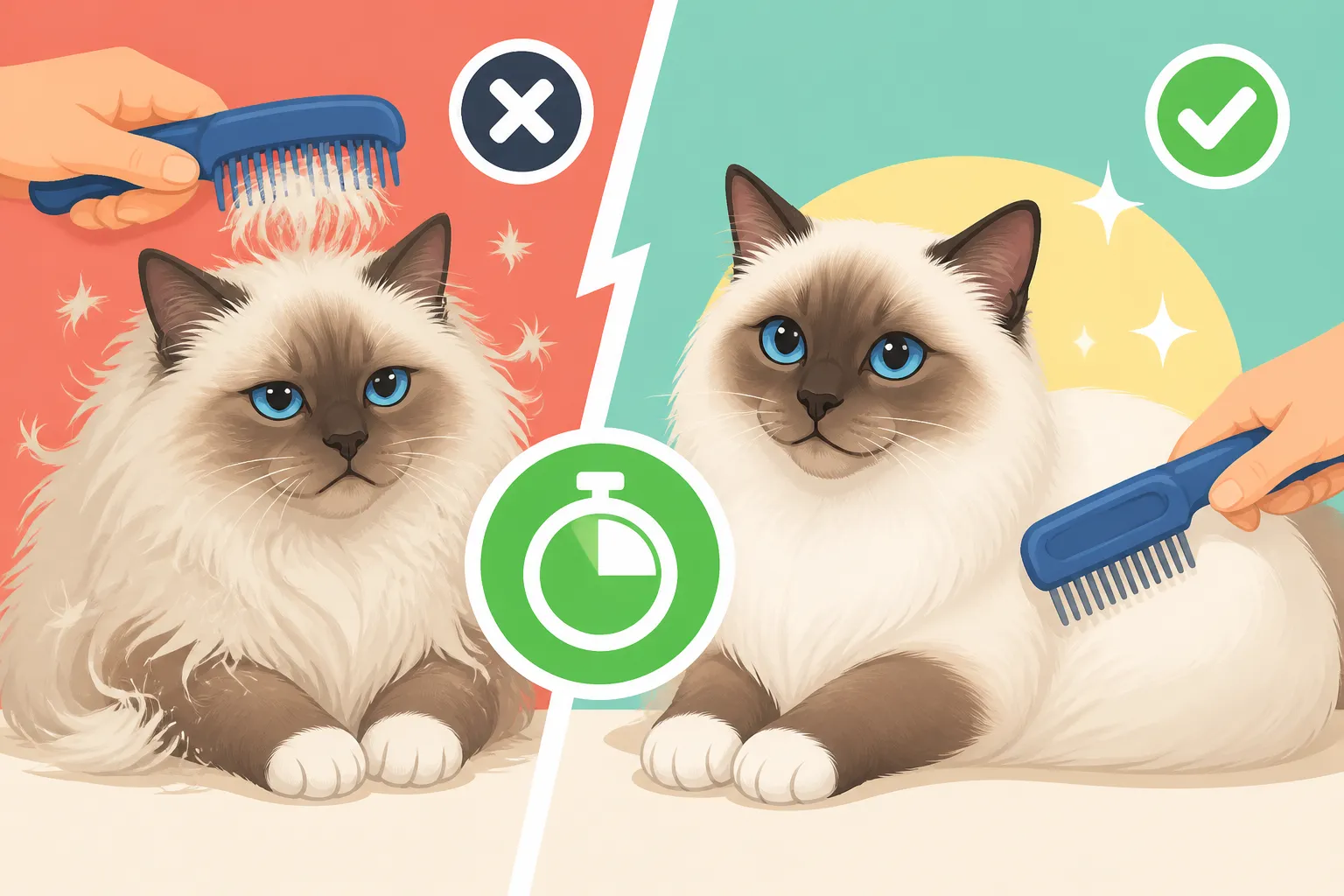
Forget the slicker brushes and dematting rakes often recommended for other long-haired breeds. For a Birman's silky single coat, these tools can actually do more harm than good, potentially pulling and breaking the delicate guard hairs. What you truly need is a high-quality metal comb. Look for one with both wide and narrow-set teeth, ideally with rounded ends to prevent scratching your cat's skin. A good sturdy steel comb will glide through their fur, detangling gently without snagging. Some owners even prefer a comb with rotating teeth, as these are excellent at gently separating hairs and preventing painful pulling. You can find excellent options on platforms like Amazon or Chewy, reading reviews to ensure you're getting something durable and cat-friendly. The key is gentle detangling, not aggressive raking. This is crucial for Which Comb Gets Through a Birman's Ruff Without Pulling.
Here's a quick comparison of comb types and their suitability for Birmans:
| Comb Type | Description | Suitability for Birman Coat | Notes |
|---|---|---|---|
| Metal Comb (Fine/Wide) | Dual-sided comb with varying tooth spacing. | Excellent | Ideal for daily use, detangling, and finishing. Rounded teeth are best. |
| Rotating Tooth Comb | Metal comb with teeth that rotate independently. | Excellent | Reduces pulling and snagging, great for sensitive areas or slight tangles. |
| Slicker Brush | Fine wire bristles, often on a flat or curved head. | Poor | Can pull and damage the Birman's delicate guard hairs. Avoid. |
| Dematting Rake | Sharp blades designed to cut through mats. | Poor (usually) | Only for severe mats, which Birmans rarely get. Too harsh for regular use. |
| Rubber Curry Brush | Soft rubber nubs, good for shedding loose hair. | Good (for massage/loose fur) | Can be used gently for massage and to gather loose surface hair, but not for detangling. |
Mastering the Gentle, Efficient Combing Stroke
Once you have your comb, the technique is paramount. The goal is efficiency and gentleness. Start by gently running the wide-toothed side of the comb through the easiest parts of their coat – usually the back and sides. Use short, even strokes, always combing in the direction of hair growth. If you encounter a minor snag, don't yank! Instead, gently work the comb through, perhaps using your fingers to carefully separate the tangle first. Many Birmans actually enjoy these grooming sessions, purring contentedly as you comb. Their placid nature is one of their defining characteristics, and it extends even to grooming, making it a pleasant bonding experience rather than a struggle. Remember, it's about making it a positive experience every time.
As you progress, move to the areas that are more prone to tangles: the britches, the tummy, and behind the ears. For the ruff around their neck, take your time and gently work through the longer fur. This part of their coat is often the longest and most luxurious. For the tail, comb gently from the base to the tip, supporting the tail with one hand as you comb with the other. The entire process, with a little practice, should genuinely take around ten minutes. It's a testament to their easy-care coat and temperament that this can be achieved so quickly and without stress.
Quick Fixes for Tangles, Not Mats
Even with regular combing, you might occasionally find a small knot. The distinction here is important: Birmans rarely get mats in the severe, felted sense that requires professional intervention or cutting out. What they usually develop are tangles. A tangle is a loose knot of hair that can still be gently combed out. If you find one, resist the urge to pull. Instead, hold the hair at the base of the tangle with your fingers to prevent pulling on the skin, and then gently work the comb from the outside edge of the tangle inwards, teasing it apart small section by small section. You can even use a tiny dab of cornstarch or a conditioning spray designed for cats to help loosen the hairs before combing. This approach is much kinder and more effective than trying to force a comb through. If you keep up with your three-times-a-week, ten-minute routine, these tangles will be few and far between, and easily resolved.
Establishing a Stress-Free Grooming Ritual
The secret to quick, effective grooming isn't just about the Birman's coat or the right comb; it's about consistency and making the experience a positive one from the very beginning. A calm, cooperative cat makes grooming infinitely easier, turning a potential chore into a bonding opportunity.
Starting Early: Training Your Birman Kitten
If you're bringing home a Birman kitten, you have a golden opportunity to establish excellent grooming habits. Start early, even before their coat grows in fully. Gently handle their paws, touch their ears, and introduce the comb for very short, positive sessions. Just a minute or two of gentle combing, followed by a treat and praise, can go a long way. Make it a routine, something they associate with comfort and affection. This early conditioning will pay dividends for their entire life. A kitten that grows up accustomed to being handled and combed will be a much more compliant adult, making those ten-minute sessions truly effortless. Remember, the How to Get a Birman Used to a Comb is a marathon, not a sprint, built on trust and positive reinforcement.
The Magic of Consistency: Short, Frequent Sessions
The reason those ten-minute sessions are so effective is consistency. Instead of letting tangles build up over weeks and then facing an hour-long battle, regular, short bursts of grooming prevent problems before they start. Aim for three times a week, as recommended for their coat type. It's truly a case where prevention is better than cure. By regularly removing loose hairs and gently detangling any nascent knots, you stop them from escalating into painful mats. This frequency is enough to keep their beautiful coat in top condition, preventing the need for longer, more stressful sessions. Imagine adding "comb the Birman" to your evening routine, perhaps while you're watching TV or winding down. It becomes a natural, calm interaction that benefits both of you.
When More Than Ten Minutes Becomes Necessary
While ten minutes is the typical ideal, there might be times when you need a little more. If your Birman has been particularly playful and rolled around in something sticky, or if they've been outdoors (though indoor living is generally recommended for Birmans), a more thorough cleaning might be in order. Also, during seasonal shedding periods, you might find a bit more loose hair than usual, requiring a slightly longer comb-out. This isn't matting, just extra shedding.
However, if you consistently find yourself needing significantly more than ten minutes to get through their coat, or if you encounter dense, felted mats, it's worth considering a few things. First, are you using the right tools? Second, is your technique gentle enough? And finally, is there an underlying health issue causing changes in their coat texture or increased matting? In such rare cases, don't hesitate to consult your veterinarian or a professional groomer experienced with long-haired cats. They can help identify any issues or provide guidance on technique.
Beyond the Comb: Nurturing a Healthy Birman Coat
While regular combing is essential for maintaining your Birman's beautiful coat, true coat health goes beyond just the brush. What you feed your Birman, how you manage their environment, and even seemingly unrelated aspects of their care all play a role in keeping their fur silky, shiny, and easy to manage.
How Nutrition Impacts Coat Condition and Shedding
A healthy coat starts from within. A high-quality diet rich in essential fatty acids, particularly Omega-3 and Omega-6, is crucial for maintaining the luster, softness, and overall health of your Birman's fur. These nutrients help keep the skin healthy, which in turn supports a strong, resilient coat that's less prone to dryness and breakage, and therefore, less prone to tangling. Look for cat foods that list real meat as the primary ingredient and contain sources of these beneficial oils, such as fish oil or flaxseed. Some premium cat foods are specifically formulated for coat health. Conversely, a poor diet can lead to a dull, brittle coat that sheds excessively and becomes more difficult to groom. Ensuring your Birman gets all the necessary nutrients means less time spent battling a lackluster coat. The protein level in their diet also plays a significant role in keeping What Protein Level a Birman's Ruff Needs to Stay Full.
Protecting Those Pristine White Gloves
One of the Birman's most striking features is their pure white "gloves" on their paws. While beautiful, these white areas can be magnets for dirt and discoloration, making them look less than pristine. Keeping them clean is part of maintaining that overall "ten-minute tidy" look. The biggest culprit for discolored gloves is often the litter box. Dusty or fine-grained litter can easily cling to their fur and stain it. Opting for a low-dust, larger-granule litter can make a huge difference. You might also find that some Birmans need their paws wiped down after using the litter box, especially if they're particularly enthusiastic diggers. A quick wipe with a pet-safe grooming wipe or a damp cloth is usually all it takes. For stubborn stains, a very gentle, pet-safe shampoo specifically designed for whitening can be used, but baths should be infrequent. Preventing the staining in the first place is far easier than trying to remove it later, aligning perfectly with the goal of quick, efficient care. This is why Which Litter Leaves a Birman's Gloves Clean is important.
Adapting to Seasonal Coat Changes
Even with their single coat, Birmans do experience some seasonal changes in their fur. You might notice a bit more shedding during spring and autumn as their body adjusts to temperature shifts. While they don't "blow a coat" like breeds with dense undercoats, there will be periods where you collect a bit more loose hair during your combing sessions. During these times, you might find those ten-minute sessions are needed a bit more frequently, or you might choose to extend them by a minute or two to ensure all the loose hair is removed. This extra effort during shedding seasons helps prevent any increase in tangles and keeps your home a little cleaner. Pay particular attention to their ruff and tail plume, which tend to be the densest areas of their coat. Remember that their points, the darker areas of their fur, can also deepen with colder weather, as the color is temperature-sensitive. It's a fascinating characteristic and part of the charm of living with a Birman!
Disclaimer
This article is for general informational purposes only and does not constitute professional advice. Laws, prices and regulations vary by location and change over time. Consult a qualified professional for guidance on your specific situation.