What Protein Level a Birman’s Ruff Needs to Stay Full
One of the most glorious features of a Birman cat, often the first thing people notice after their stunning blue eyes and pristine white paws, is that magnificent ruff. This silky mane frames their face beautifully, giving them a regal, almost lion-like appearance. But when that ruff starts to look a bit sparse, dull, or isn't as full and luxurious as it should be, it's a genuine worry for any Birman parent. You might spend hours grooming, wondering if there's something you're missing. This guide is here to unravel the mystery of keeping that Birman ruff in peak condition, focusing specifically on the crucial role of protein in their diet.
The Unique Glory of the Birman Ruff and Its Foundation
The Birman cat's coat is truly a marvel. Unlike many other longhaired breeds that boast a thick, woolly undercoat, the Birman has a unique single coat that is incredibly silky to the touch. This makes them relatively easy to groom compared to a Persian, but it doesn't mean their coat requires less attention to its nutritional foundation. That lush ruff, the flowing plume of their tail, and the soft, medium-long hair across their body all depend heavily on the right building blocks from their diet.
Understanding the Birman's Silky, Single Coat
Imagine the feel of fine silk slipping through your fingers – that's the Birman coat. It lacks the dense, fluffy undercoat that often traps loose hairs and leads to mats in breeds like the Maine Coon or Ragdoll. This single-layered structure is what makes grooming somewhat less of a Herculean task, as No Undercoat Is What Makes a Birman Easy to Groom. However, while it's less prone to tangles, each individual hair strand still needs to be strong, healthy, and properly nourished from the root to maintain that lustrous sheen and full volume.
The length of a Birman's coat isn't uniform across their body. Their ruff, or mane, around their neck and chest, is often the longest and most prominent feature. You'll notice How Long a Birman's Coat Actually Is can vary, with some individuals having an even more spectacular collar than others, often more pronounced in males. The health and thickness of this ruff are direct indicators of their overall well-being, reflecting everything from hydration to stress levels, but primarily, their nutritional intake. A lack of proper nourishment will show here first, as the body prioritizes essential functions over luxurious hair growth.
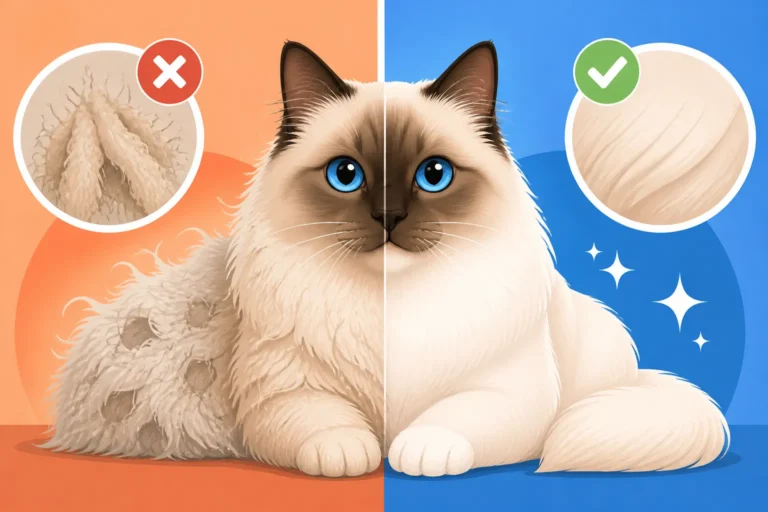
When that glorious ruff starts to thin, feel brittle, or shed excessively, it's not just a cosmetic issue. It's often a sign that something deeper is at play. The individual hairs, meant to be strong and resilient, become weak and break easily, or the growth cycle itself might be disrupted. This is where diet, particularly the quality and quantity of protein, becomes paramount. Without adequate protein, the body simply doesn't have the materials it needs to produce and maintain healthy hair follicles, leading to a visibly diminished ruff.
Why a Full Ruff Signifies Optimal Health
A Birman with a rich, full ruff isn't just a pretty sight; it's a clear signal of a cat that is thriving. Think of your Birman's coat as a mirror reflecting their internal health. When their diet is balanced, their skin is hydrated, and their overall system is functioning optimally, that fabulous ruff will be thick, lustrous, and shed minimally. It’s a joy to run your fingers through and a testament to your careful care.
Conversely, a sparse, dull, or brittle ruff can be an early warning sign of underlying issues, sometimes even before other symptoms appear. It could indicate anything from dietary deficiencies to stress, or even more serious health concerns. When a cat's body is under stress, whether from illness or inadequate nutrition, hair and skin health are often among the first things to be compromised. The body diverts resources to more critical functions, and the production of healthy hair slows down or becomes inefficient.
Maintaining that signature full ruff is a continuous effort. It’s not just about grooming; it’s about providing the foundational support through their diet, especially as they grow and mature. For a Birman, the coat continues to develop and fill out well into their second or even third year. Providing them with optimal nutrition, including the right protein levels, throughout their life ensures they have the best chance to develop and maintain their full, beautiful coat, year after year, even as What an Old Birman Needs Once Its Ruff Starts Matting or its condition subtly changes with age.
Why Protein is Non-Negotiable for Your Birman's Coat
Cats are obligate carnivores, meaning their bodies are designed to derive essential nutrients primarily from animal sources. This isn't just a dietary preference; it's a biological necessity. Protein, specifically animal-based protein, is the cornerstone of a cat's diet, and it plays an utterly critical role in the health, strength, and lusciousness of their coat, including that spectacular Birman ruff.
Cats: True Carnivores and Protein's Role
Unlike omnivores who can synthesize some essential amino acids from plant sources, cats cannot. They must obtain these vital amino acids directly from animal protein in their diet. Amino acids are the building blocks of protein, and proteins, in turn, are the building blocks of virtually every tissue in a cat's body, from muscles and organs to enzymes, hormones, and, yes, hair. Without a consistent supply of high-quality, digestible animal protein, a cat's body simply cannot function as it should.
Think of it this way: your Birman's coat is almost entirely made of protein, primarily keratin. Every single hair shaft is produced by specialized cells in the hair follicles, and these cells require a constant supply of specific amino acids to create the keratin structure. If the diet is lacking in these crucial components, the hair produced will be weaker, thinner, and prone to breakage. It's like trying to build a brick wall without enough bricks – the wall will be flimsy and incomplete.
Furthermore, a cat's metabolism is uniquely adapted to processing protein for energy. While they can utilize fats, and to a lesser extent carbohydrates, protein is their primary fuel source. This means that if their diet is deficient in protein, their body will start to break down its own muscle tissue to get the necessary amino acids, which is obviously detrimental to overall health and, in turn, will severely impact the quality and quantity of their coat.
Essential Amino Acids and Hair Growth
For coat health, certain amino acids are particularly vital. Methionine and cysteine, for example, are sulfur-containing amino acids that are critical components of keratin. Taurine, another essential amino acid for cats (not directly a hair component but crucial for overall health), if deficient, can lead to a dull, dry, and poor-quality coat because the cat's health is suffering in general. These aren't just 'nice-to-haves'; they are absolute 'must-haves' that can only be found in sufficient quantities in animal proteins.
When a Birman's diet provides an ample supply of these essential amino acids, the hair follicles can work efficiently, producing strong, resilient hair shafts. This translates directly to a full, thick ruff, a shiny coat, and reduced shedding. You'll notice less hair on your furniture and more on your cat, where it belongs! Conversely, a deficiency can lead to a sparse, brittle coat, excessive shedding, and a dull appearance. It's a noticeable difference, especially on a breed known for its spectacular mane.
This constant demand for amino acids highlights why protein quantity and quality are so intertwined. Not all proteins are created equal. Highly digestible animal proteins (like chicken, turkey, beef, and fish) provide a complete amino acid profile that a cat's body can readily use. Plant-based proteins, while offering some amino acids, often lack the full spectrum or are not as bioavailable for a strict carnivore, making them an inadequate substitute for a cat's primary protein source.
Decoding Protein Levels: What to Look For in Birman Food
Navigating the world of cat food labels can feel overwhelming, with percentages and ingredients lists that sometimes seem written in a foreign language. When it comes to your Birman's protein needs, focusing on the "guaranteed analysis" and understanding ingredient quality will be your best allies in ensuring that majestic ruff stays in top form.
Understanding "Minimum Crude Protein" on Labels
When you pick up a bag or can of cat food, you'll see a "Guaranteed Analysis" panel. Here, you'll find "Minimum Crude Protein" expressed as a percentage. This percentage tells you the lowest amount of protein present in that food, on an as-fed basis. For an adult Birman, you're generally looking for a minimum crude protein content of 30-45% in dry kibble, and 8-12% in wet food (which has a much higher moisture content). These are general guidelines, and individual needs can vary.
However, a raw percentage doesn't tell the whole story. "Crude protein" refers to the total protein content, including both animal and plant sources. As we discussed, cats need animal-based protein. So, a food with a high crude protein percentage might look good on paper, but if a large portion of that protein comes from plant derivatives or low-quality meat by-products, your Birman won't be getting the optimal amino acid profile they need. Always check the ingredient list in conjunction with the crude protein percentage.
When comparing foods, especially between wet and dry, remember the moisture content. A dry food with 35% protein might sound higher than a wet food with 10% protein, but once you convert them to a dry matter basis (removing the water), their actual protein content might be very similar or even higher in the wet food. Most veterinarians or pet nutritionists can help you do this conversion, or there are online calculators available. This helps you make a truly informed decision about the nutritional density of what you're feeding.
Prioritizing High-Quality Animal Protein Sources
The ingredient list is where the real detective work begins. The first few ingredients listed are the most abundant in the food. For your Birman's splendid coat and overall health, you want to see named animal proteins at the very top of that list. Look for ingredients like "chicken," "turkey," "salmon," "beef," or "lamb." Meat "meal" (e.g., "chicken meal") is also a concentrated, excellent source of protein, as the moisture has been removed, making it nutritionally dense.
Avoid foods where the first few ingredients are ambiguous terms like "meat by-products" (unless specified as high-quality), or primarily plant-based proteins like "corn gluten meal" or "soy protein isolate." While not inherently harmful in small amounts, they shouldn't be the primary protein source for an obligate carnivore. Some reputable brands, like those you might find on Chewy or Amazon, clearly list their primary protein sources, making it easier for you to choose wisely.
It’s also helpful to consider the overall digestibility of the food. Even if a food contains high levels of protein, if it's not easily digestible, your Birman won't be able to absorb and utilize those nutrients effectively. High-quality animal proteins tend to be more digestible for cats. This is why many owners lean towards premium brands or even fresh food options, which often emphasize human-grade ingredients and high digestibility. The better the absorption, the more amino acids are available to fuel that glorious ruff.
Tailoring Protein Intake to Your Birman's Life Stage and Lifestyle
Just like humans, a Birman's nutritional requirements aren't static throughout their life. A playful kitten needs different fuel than a serene senior, and an active Birman might burn more calories than a contented couch potato. Adjusting protein intake to match these individual needs is key to maintaining optimal health and, of course, that stunning coat.
Protein Needs for Birman Kittens, Adults, and Seniors
Birman Kittens: These little bundles of fluff are growing at an incredible rate, and their bodies are rapidly developing muscles, bones, and, yes, a burgeoning ruff! Therefore, Birman kittens have the highest protein requirements per pound of body weight. They need a diet rich in high-quality protein to support this rapid growth. Look for kitten-specific formulas with a minimum crude protein level of around 35-50% (dry matter basis). This ensures they have all the amino acids necessary to build a strong foundation for their adult coat and overall health. Adequate protein at this stage is crucial for How a Birman Kitten's Points Come In and for establishing the density of their adult coat.
Adult Birmans: Once your Birman reaches maturity, typically around 1-2 years of age, their protein needs stabilize. For most healthy adult Birmans, a diet with 30-45% crude protein (dry matter basis) from high-quality animal sources is generally appropriate. This level supports muscle maintenance, organ function, and the ongoing renewal of their beautiful coat. A Birman's energy level is generally moderate – they enjoy play but also love a good long nap – so their protein intake should match this balanced lifestyle. Too little protein can lead to a dull coat and muscle loss, while excessive protein without sufficient fat and other nutrients might not be beneficial either.
Senior Birmans: As your Birman gracefully ages, usually past 10-12 years, their body undergoes changes. They may become less active, their metabolism might slow down, and their ability to digest and absorb nutrients can sometimes decrease. However, it's a common misconception that senior cats need less protein. In fact, many senior cats benefit from increased protein intake (still high-quality and highly digestible) to help prevent muscle wasting and maintain a healthy weight. Their bodies often become less efficient at utilizing protein, so providing readily available, quality protein becomes even more vital. Their coat might naturally thin or lose some luster, as seen in What an Old Birman's Coat Loses Its Shine, but proper protein can help mitigate these effects. Consult your vet to determine the best protein level for your individual senior Birman, especially if they have any health conditions like kidney disease, where specific dietary adjustments might be necessary.
Activity Level and Lifestyle Considerations
Beyond life stage, your Birman's individual activity level plays a role in their protein requirements. While Birmans are generally known for their calm and gentle temperament, some are more active and playful than others. A Birman that spends more time playing, climbing (within their usual lower limits), or engaging in spirited zoomies will naturally burn more calories and might benefit from a slightly higher protein and fat content to fuel their energy demands and support muscle recovery.
Conversely, a Birman that prefers a more sedentary lifestyle, perhaps one who is a true lap cat and spends most of their day napping, will require fewer calories overall. While their protein percentage should remain high to maintain muscle mass and coat quality, the total amount of food offered might need to be adjusted to prevent weight gain. Remember, How Many Calories a Birman Needs to Hold Its Coat is a delicate balance, and obesity can negatively impact coat health, making it harder for them to groom themselves effectively.
Consider their living environment too. An indoor Birman generally has different energy expenditures than one who might spend time in an enclosed catio. Most Birmans are content indoor companions, meaning their activity levels are largely controlled by their environment and human interaction. Therefore, a consistent diet with appropriate protein levels, tailored to their age and observed activity, is usually the most effective strategy for keeping their coat magnificent.
| Life Stage | Approximate Minimum Crude Protein (Dry Matter Basis) | Key Considerations for Coat & Health |
|---|---|---|
| Kitten | 35-50% | Rapid growth, muscle development, establishing dense adult coat. |
| Adult | 30-45% | Muscle maintenance, regular coat renewal, overall health. |
| Senior | 30-45%+ (often higher due to decreased efficiency) | Preventing muscle wasting, maintaining coat quality, digestibility. |
Monitoring Coat Health and Addressing Nutritional Gaps
Even with the best intentions, sometimes a Birman's coat might not be as full and glorious as we'd like. The good news is that by diligently monitoring their coat health and knowing how to adjust their diet, you can often address these issues effectively. Observing your Birman closely and partnering with your veterinarian are key steps in this process.
Signs of a Protein Deficiency Affecting the Ruff
Your Birman's coat is a fantastic barometer of their nutritional status. If their ruff, or indeed their entire coat, starts showing any of these signs, it might be an indication that their protein intake or quality isn't quite right:
- Dull or Brittle Coat: Instead of being silky and lustrous, the hair might appear dull, dry, and feel brittle to the touch. It lacks that healthy sheen.
- Excessive Shedding: While Birmans do shed, especially their How Big a Birman's Ruff Gets in Winter, an abnormal increase in shedding that seems to go beyond seasonal changes could point to weakened hair follicles due to protein deficiency.
- Sparse or Thinning Ruff: The defining feature of their ruff might start looking noticeably thinner, with less density and volume than before. This is one of the most direct visual cues related to the topic at hand.
- Slow Hair Growth or Patchiness: If you notice areas where hair growth seems particularly slow, or even small patches of thinner hair, it could be due to a lack of building blocks.
- Poor Skin Condition: Protein is also vital for healthy skin. Dry, flaky, or irritated skin under the coat can sometimes accompany a protein deficiency, as the skin barrier is compromised.
- Muscle Wasting: In severe cases, a cat will start to break down its own muscle mass to meet protein needs, which would be visible as a loss of muscle definition, particularly over the spine and hips.
If you observe any of these changes, it's always best to consult your veterinarian. They can help rule out underlying medical conditions before you make significant dietary changes. Sometimes, a compromised coat isn't just about protein but other factors like parasites, allergies, or systemic illness.
Adjusting Diet and Supplementation for Coat Improvement
Once you've ruled out medical issues, the next step is to evaluate and adjust your Birman's diet.
-
Re-evaluate Protein Source and Percentage:
- Check Ingredients: Go back to basics. Are the first ingredients truly high-quality animal proteins?
- Increase Percentage: If your current food is on the lower end of the recommended protein range, consider gradually transitioning to a food with a higher percentage of quality animal protein. Look for brands that clearly state the percentage of animal protein.
- Consider Wet Food: Wet food often has higher animal protein content on a dry matter basis and provides essential hydration, which is also beneficial for coat health. Which Wet Food Suits a Birman's Kidney History is a good read if you're exploring this option, as wet food is often recommended for overall feline health. You can find a wide variety of quality wet food options on platforms like Chewy.
-
Introduce Omega Fatty Acids: While protein builds the hair, healthy fats, especially Omega-3 and Omega-6 fatty acids, contribute to the hair's luster and strength, as well as skin health. Many premium cat foods include these, but you can also add a supplement, such as a fish oil or salmon oil, to your Birman's food. Just be sure to use a pet-specific supplement and follow dosage instructions carefully. Remember, Why a Birman's Coat Needs Fat in the Diet for that amazing shine.
-
Ensure Adequate Water Intake: Hydration is foundational to overall health, including skin and coat. Ensure your Birman always has access to fresh, clean water. If they aren't big drinkers, consider a pet fountain or incorporating more wet food into their diet. How Much Water a Birman Should Get Through in a Day is more than you might think, and hydration directly impacts skin elasticity and hair follicle function.
-
Avoid Over-Supplementation: Resist the urge to add a multitude of supplements without veterinary guidance. More isn't always better, and an imbalance of nutrients can sometimes create new problems. Focus on a high-quality, balanced diet first.
-
Patience and Consistency: Dietary changes take time to show results. You won't see an improvement in your Birman's ruff overnight. Give any new diet at least 4-6 weeks before expecting significant changes in coat quality. Consistency in feeding, grooming, and monitoring is key. A diligent approach will ensure your Birman's spectacular ruff remains a source of pride and a sign of their vibrant health.
Disclaimer
This article is for general informational purposes only and does not constitute professional advice. Laws, prices and regulations vary by location and change over time. Consult a qualified professional for guidance on your specific situation.