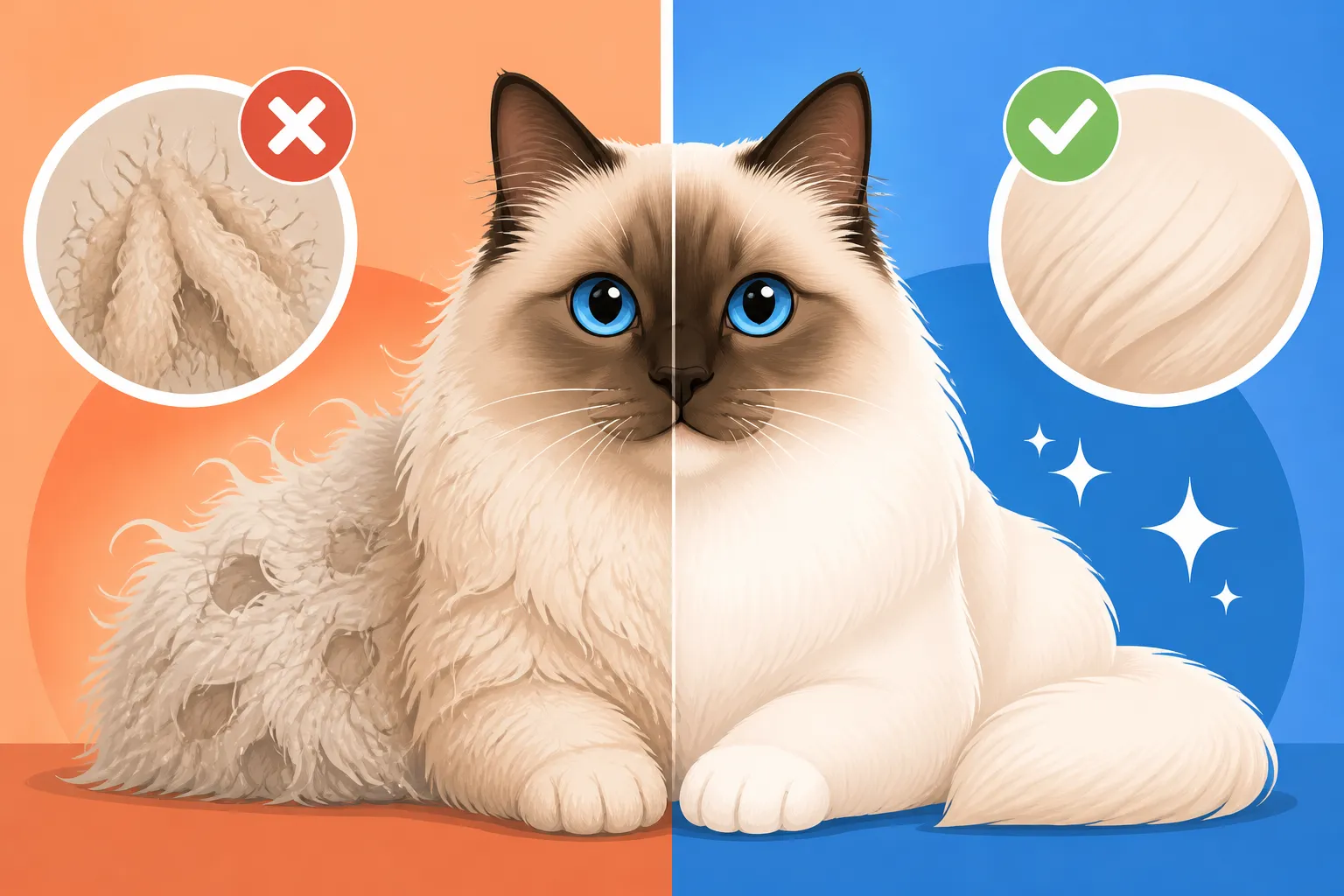
Why a Single Coat Mats Less on a Birman
One of the biggest worries many aspiring cat parents have when considering a long-haired breed is the dreaded matting. Visions of tangled fur, painful brushing sessions, and expensive professional grooming often dance in their heads. It’s a very real concern for many long-haired breeds! But if you’ve been admiring the stunning Birman, you might be pleasantly surprised to learn that their gorgeous, flowing coats are actually quite resistant to matting, making daily care much less of a chore than you might expect. This guide will dive deep into why a Birman’s single coat mats less, offering insights into their unique fur and how to keep it looking pristine.
Understanding the Birman's Unique Coat Structure
When you look at a Birman, with all that magnificent long fur, it's easy to assume they'd be a matting nightmare. But trust me, that assumption is quickly dispelled once you get your hands on their truly remarkable coat. It feels different, it behaves different, and that's all down to its unique construction.
The Absence of a Dense Undercoat
This is really the secret sauce, the defining characteristic that sets a Birman's coat apart. Many long-haired cat breeds, like the Persian, possess a thick, woolly undercoat beneath their longer guard hairs. This undercoat is often incredibly dense, designed to provide insulation. While excellent for keeping warm, it's also a magnet for trouble when it comes to grooming. Shed hairs from this undercoat tend to get caught and tangled within its own fibers, forming mats that can quickly become painful and difficult to remove.
The Birman, however, is largely devoid of this dense undercoat. Instead, they sport a single coat of fine, silky hair. Think of it more like a delicate scarf rather than a thick woolen blanket. This means there's simply less bulk, less "fluff," and fewer layers of hair to tangle up with each other. It’s a beautifully streamlined design that dramatically reduces the potential for mat formation. No Undercoat Is What Makes a Birman Easy to Groom
Guard Hairs and Their Role in Mat Prevention
So, if there's no dense undercoat, what's left? The Birman's guard hairs are the stars of the show. These are the longer, silky hairs that give the Birman its flowing appearance, particularly noticeable in their glorious ruff and tail plume. Unlike some breeds where guard hairs can be coarser or more prone to catching, a Birman's guard hairs are exceptionally fine and soft. They lie smoothly against the body, with a luxurious texture that runs through your fingers almost effortlessly. What Makes a Birman's Coat Silky Rather Than Woolly
Because these hairs are so fine and lack the gripping power of a woolly undercoat, they glide past each other rather than snagging. This greatly reduces the friction that typically initiates matting. When a Birman sheds, those single, fine hairs are less likely to intertwine and form knots. Instead, they often fall out quite readily, or are easily removed with a gentle comb. It’s this combination – the absence of a thick undercoat and the silky nature of the guard hairs – that gives the Birman its legendary low-matting coat.
Why Less Undercoat Means Less Matting
It all boils down to physics, really, and the way cat hair interacts. For anyone who's ever battled mats on a double-coated cat, you know the struggle is real. The Birman's coat just doesn't create those battlegrounds.
The Mechanics of Mat Formation
Let's imagine the typical scenario for matting in a cat with a dense undercoat. Every day, cats shed loose hairs. In a double-coated cat, these shed undercoat hairs don't just fall off; they often get trapped within the remaining undercoat, creating a sticky web. Add to this daily movement, rubbing against furniture, grooming, and even just the cat sleeping, and you have constant friction. This friction causes the trapped hairs to intertwine and bind together, forming tight knots or "mats." These mats can start small, behind the ears, under the armpits, or on the belly, areas of high friction. If left unchecked, they quickly grow, pulling on the skin and becoming incredibly uncomfortable, even painful, for your beloved feline. It's a frustrating cycle for both cat and owner.
With a Birman, this entire process is largely circumvented. There’s simply no thick, woolly layer to trap those shed hairs. The single, flowing strands shed more cleanly, having nothing substantial to cling to. Why a Single Coat Mats Less on a Birman
Reduced Friction and Hair Trapping
Because the Birman's coat is light and silky, the individual hairs don't snag on each other with the same tenacity. Think of it like comparing a pile of silk threads to a pile of tangled cotton wool. The silk threads will largely slide past each other, while the cotton wool will quickly become a dense, impenetrable mass. This reduced friction means that even when your Birman is rolling around, stretching, or rubbing against your leg for attention, their coat is less likely to knot up.
You'll particularly notice this in areas that are mat magnets for other breeds. Behind the ears, where skin rubs against fur, or in the "armpits" and "britches" (the fur on the back of their thighs), Birmans rarely develop the tight, painful mats that plague breeds like Persians. Instead, any shed hair tends to work its way out naturally or can be easily swept away with a gentle comb. It truly makes a difference in the daily management of their fur, leaving you with more time for cuddles and less time for wrestling with tangles. You might even find fewer of those annoying hair tumbleweeds floating around your home!
Grooming a Birman to Maintain Its Mat-Resistant Coat
While the Birman's coat is a dream when it comes to mat prevention, it doesn't mean you can throw out your grooming tools entirely. Regular, gentle care is still key to keeping that silky fur in top condition and ensuring your Birman feels comfortable and looks magnificent.
Essential Grooming Tools and Techniques
The good news is that Birman grooming is more about maintenance than crisis management. Forget those harsh de-shedding tools designed for dense undercoats – they'll actually damage a Birman's delicate guard hairs. Why a Deshedding Tool Damages a Birman's Coat Instead, you'll want to invest in a few key items:
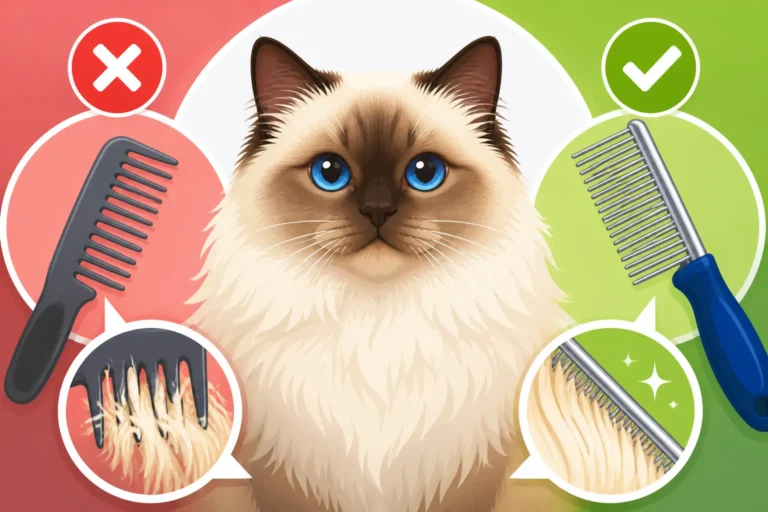
- Metal Comb: A good quality, medium-toothed metal comb is your best friend. Look for one with both wide and finer teeth sections. This will gently glide through the Birman's silky coat, untangling any minor snarls and removing loose hair without pulling. Which Comb Gets Through a Birman's Ruff Without Pulling
- Soft Bristle Brush (Optional): Some owners like a soft bristle brush for a final polish, distributing natural oils and making the coat extra shiny. This isn't essential for mat prevention but can be a nice finishing touch.
- Detangling Spray: While mats are rare, an occasional minor tangle can happen, especially in the long ruff or tail. A good quality, cat-safe detangling spray can make these small knots easier to work through without causing discomfort. You can find excellent options from reputable brands on Chewy.
When combing, always work in small sections, starting from the ends of the hair and working your way towards the skin. Be gentle, especially around sensitive areas like the belly, behind the ears, and the britches. The goal is to remove loose hair and smooth the coat, not to yank or tug.
Frequency and Focus Areas for Grooming
Given their mat-resistant coat, Birmans don't require the daily, intensive grooming sessions some other long-haired breeds demand. Aim for two to three times a week, dedicating about ten minutes per session. How Many Minutes a Week a Birman's Coat Takes This routine is usually more than enough to keep their coat tangle-free and healthy.
Even with their low-matting tendency, certain areas still benefit from a little extra attention:
- The Ruff: The luxurious fur around their neck, known as the ruff, is often the longest on a Birman. Why a Birman's Ruff Is Its Longest Fur While generally well-behaved, it can sometimes catch a stray hair or two, so a gentle comb through here is always a good idea.
- Britches and Tail: The long fur on their hind legs and their magnificent tail plume also deserve a thorough, yet gentle, combing.
- Behind the Ears: This is a common spot for tiny tangles to form due to rubbing and scratching, so always give these delicate areas a quick check.
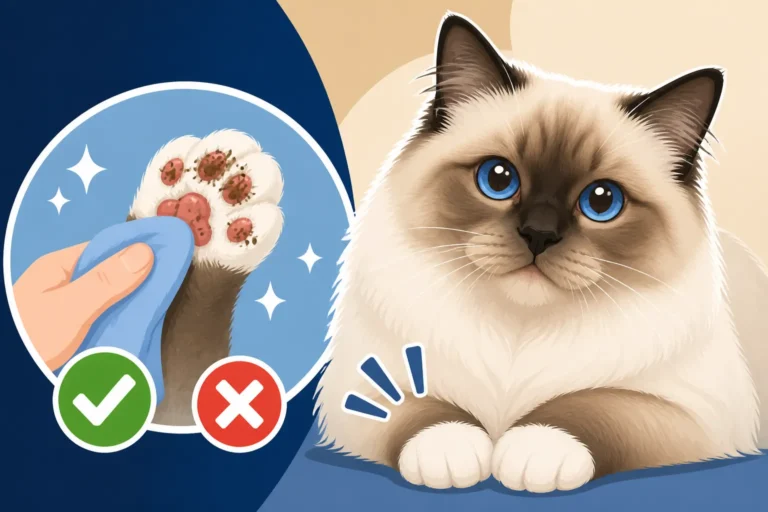
- Paws: While not directly about matting, routinely checking and trimming the fur between their paw pads helps prevent debris accumulation and keeps them comfortable. This also ties into keeping those iconic white gloves pristine!
Starting a grooming routine early in a Birman kitten's life is crucial. Even though they’re placid, getting them used to the comb from a young age makes these sessions enjoyable bonding time rather than a struggle. How to Get a Birman Used to a Comb Most Birmans actually quite enjoy the attention and will happily lie still for a good comb. Why a Birman Lies Still While You Comb It
Diet and Environmental Factors that Support Coat Health
Grooming isn't just about what you do externally; it's also about supporting coat health from the inside out. A healthy diet and a comfortable environment play significant roles in maintaining that beautiful, mat-resistant Birman coat.
- Nutrition for a Luxurious Coat: A high-quality diet rich in essential nutrients, especially omega fatty acids, is vital for coat health. These healthy fats contribute to the sheen and silkiness of a Birman's fur, making it even more resilient and less prone to any potential dryness or breakage that could lead to tangles. Why Omega Oils Matter for a Birman's Coat Look for cat foods that list sources like fish oil or flaxseed. Many premium cat foods prioritize these ingredients.
- Hydration: Ensuring your Birman has constant access to fresh water is also important. Proper hydration contributes to overall skin and coat health. A well-hydrated cat often has a healthier, more supple coat.
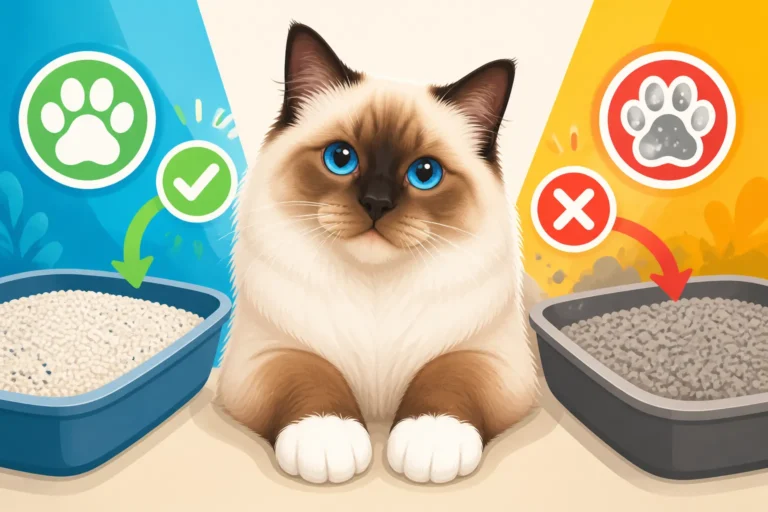
- Clean Living Environment: Keeping your home clean, especially the litter box, impacts coat cleanliness. Birmans have those beautiful white "gloves" on their paws, and dusty or unclean litter can stain them. Why Dusty Litter Ruins a Birman's Gloves While this isn't directly related to matting, a dirty coat can become greasy and more prone to minor tangles or debris getting stuck. Choose a low-dust litter to help preserve those pristine paws.
- Climate Control: While Birmans adapt well to indoor living, extreme dryness in the air can sometimes affect skin and coat health in any cat. Maintaining a comfortable indoor humidity level, especially during dry winter months, can subtly contribute to a healthier coat.
By integrating these dietary and environmental considerations with your regular grooming routine, you'll be giving your Birman every advantage for a consistently beautiful, mat-free coat.
Comparing Birman Coat Maintenance to Other Long-Haired Breeds
Understanding the Birman’s coat truly shines when you put it in context with other popular long-haired breeds. This really highlights just how easygoing Birman grooming can be.
Birman vs. Persian: A Grooming Contrast
When it comes to long-haired cats, the Persian often comes to mind as the epitome of high-maintenance grooming. Persians boast a gloriously thick, dense double coat with a substantial undercoat. While undeniably beautiful, this magnificent coat is a matting magnet. Daily, meticulous grooming is not just recommended for Persians; it's absolutely essential to prevent severe, painful mats that can quickly become a health issue. Many Persian owners spend significant time each day combing through their cat's fur, often needing specialized tools to penetrate that dense undercoat. Professional grooming sessions for dematting or full clips are also common for Persians.
In stark contrast, the Birman offers a significantly less demanding grooming routine. As we've discussed, their single, silky coat glides freely, resisting the tangles and knots that plague their Persian cousins. While a Birman still enjoys a good comb, you won't be spending hours battling dense, painful mats. It’s the difference between preventative maintenance and constant damage control. Why a Birman Needs Three Combings Where a Persian Needs Seven This makes the Birman a fantastic choice for individuals or families who adore the aesthetic of a long-haired cat but are daunted by the intensive grooming commitment often associated with other breeds.
Birman vs. Ragdoll: Subtle Differences
The Ragdoll is another popular long-haired breed known for its gentle nature and beautiful coat. Like the Birman, the Ragdoll also tends to have a relatively low-matting coat compared to a Persian. Ragdolls typically have a semi-longhair, single coat that is soft and plush, which also helps to resist matting.
So, how do they differ? While both breeds share the benefit of less matting, there are subtle textural differences. A Birman's coat is often described as finer, more like silk, with a distinct flow. A Ragdoll's coat can sometimes feel a bit more plush or rabbit-like, especially in its density, though still without the heavy woolly undercoat of a Persian. How a Birman's Coat Differs From a Ragdoll's Both are generally easy to maintain, requiring regular but not intensive combing. The key takeaway here is that if you're looking for a long-haired cat that offers beauty without the constant matting battle, both the Birman and Ragdoll are excellent choices, with the Birman often having that slightly finer, more flowing silkiness.
The table below offers a quick comparison of coat types and matting tendencies among some popular long-haired breeds:
| Breed | Coat Type | Undercoat Presence | Matting Tendency | Grooming Frequency |
|---|---|---|---|---|
| Birman | Long, silky | Minimal/Absent | Very Low | 2-3 times/week |
| Persian | Long, dense | Thick, woolly | High | Daily, intensive |
| Ragdoll | Semi-long, plush | Minimal/Absent | Low | 2-3 times/week |
| Maine Coon | Shaggy, double | Present, soft | Moderate | Several times/week |
As you can see, the Birman truly stands out for its remarkably low-maintenance coat, especially when its luxurious length is considered. This allows Birman owners to spend more time enjoying their cat's affectionate companionship and less time wrestling with knots and tangles.
Disclaimer
This article is for general informational purposes only and does not constitute professional advice. Laws, prices and regulations vary by location and change over time. Consult a qualified professional for guidance on your specific situation.