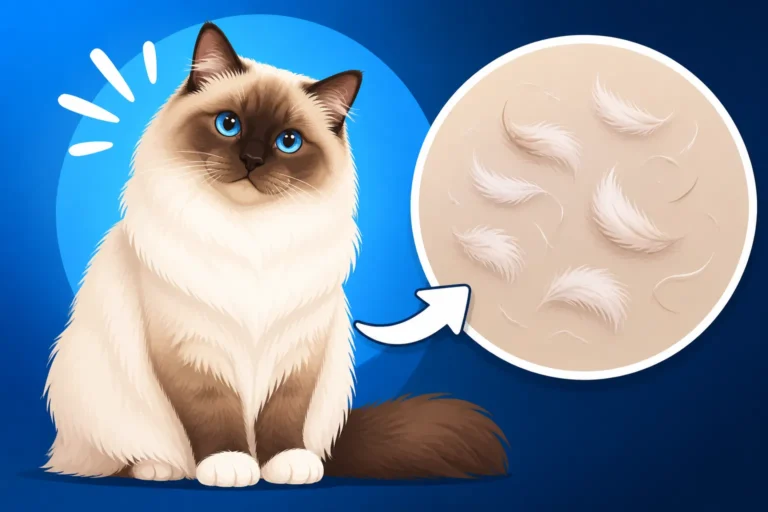
How Many Minutes a Week a Birman’s Coat Takes
Let's be honest, when you look at a majestic Birman with that flowing, silky coat, your first thought might be, "Oh boy, that's going to be a lot of work!" Many people envision hours spent battling mats and tangles, reminiscent of some other long-haired breeds. But I'm here to tell you that the reality is often a delightful surprise: a Birman's coat, despite its length and beauty, generally requires far less weekly grooming time than you might ever expect, making them a joy to care for.
The Birman's Unique Coat Texture: A Groomer's Dream (and Owner's Relief)
One of the biggest misconceptions about the Birman's stunning appearance is that such a luxurious coat must be a daily battle. Owners often brace themselves for constant shedding, endless matting, and the need for frequent professional grooming appointments. However, the Birman truly stands apart from many other long-haired cats, thanks to a very specific and owner-friendly characteristic of their fur. This unique quality is the very reason why your weekly grooming commitment will likely be surprisingly minimal, leaving you more time for cuddles and less for comb-outs.
The Secret: No Undercoat Means Less Work
Here's the absolute game-changer for Birman owners: unlike many other glamorous long-haired breeds, the Birman boasts a single coat with virtually no undercoat. Think about breeds like the Persian or even some Ragdolls – they have a dense, woolly undercoat that acts like a fluffy insulator, but it's also a magnet for tangles, loose hair, and eventually, painful mats. This undercoat is what often demands daily, intensive grooming sessions to prevent it from becoming a matted mess.
A Birman, on the other hand, is all about that glorious, single layer of silky guard hairs. When you run your hand through a Birman's fur, it feels smooth, cool, and almost liquid, rather than dense and springy. This absence of a thick, insulating underlayer means there's simply less fur to trap debris, less dense fluff to knot up, and fewer layers to become matted against the skin. It’s truly No Undercoat Is What Makes a Birman Easy to Groom, and it’s a blessing for busy cat parents.
How This Affects Shedding and Matting
While a Birman's coat might be long and flowing, the shedding situation is generally much more manageable than you'd anticipate. Yes, they do shed, as all cats do, but because they lack that dense undercoat, the shed hair tends to be individual strands that are easier to capture with a comb or even a lint roller. You won't typically find yourself wading through drifts of fluffy underfur, especially if you maintain a consistent, albeit brief, grooming routine.
And the matting? This is where the Birman truly shines. While no long-haired cat is completely immune to mats, Why a Birman Mats Far Less Than It Looks Like It Should is directly tied to its single coat. Mats form when loose fur gets tangled with healthy fur, often exacerbated by the density and texture of an undercoat. Since the Birman's fur is so fine and silky, it tends to slide past itself more easily, making severe matting much less common. You might find small, easily brushed-out tangles behind their ears, under their "armpits," or in their "britches" (the long fur on their hind legs), but large, pelt-like mats are genuinely rare in a well-cared-for Birman.
Breaking Down the Weekly Grooming Session
Okay, so we've established that the Birman's coat is wonderfully low-maintenance. But what does "low-maintenance" actually translate to in terms of real-world time and effort? The good news is that we're talking minutes, not hours, spread across the week. It's less about a grueling marathon and more about quick, pleasant check-ins that benefit both you and your feline companion. This section will walk you through the simple steps that ensure your Birman's coat remains pristine and healthy without eating up your precious free time.
The Essential Tool: A Good Comb
For a Birman, the right tool is key, and thankfully, it's not an arsenal of expensive gadgets. You really only need one or two good quality combs. I always recommend a metal comb with both wide and fine teeth. The wide-toothed side is fantastic for gently working through the longer fur, like the glorious ruff around their neck or their impressive tail plume, while the finer teeth are great for checking smaller areas for any nascent tangles. Avoid slicker brushes or deshedding tools designed for dense undercoats, as these can actually damage a Birman's delicate guard hairs. You can find excellent options for combs on sites like Chewy or Amazon that are specifically designed for long-haired, single-coated breeds.
When you're combing, remember that technique matters more than brute force. Start gently, working from the ends of the fur towards the skin, rather than trying to pull through tangles from the top. Think of it as untangling your own long hair – patience and gentleness prevent pain and damage. Which Comb Gets Through a Birman's Ruff Without Pulling is one that glides, not snags. It's also a wonderful opportunity for bonding, so make it a positive experience from the start.
The "Three Times a Week" Rule (and Why It Works)
So, how many minutes a week does a Birman's coat take? For most Birmans, dedicating about 10-15 minutes, three times a week, is usually more than enough to keep their coat in magnificent condition. This isn't a hard and fast rule, of course; some Birmans might be fine with two sessions, while others, particularly those with a very dense ruff or longer britches, might benefit from four shorter sessions. The key is consistency over intensity.
During these brief sessions, you're not just combing; you're doing a quick health check. You'll run the comb over their entire body, paying special attention to areas prone to minor tangles, such as behind their ears, under their "armpits," and on their belly and britches. This routine ensures that any loose hair is removed before it can form a mat, and it also stimulates the skin, promoting healthy coat growth. Imagine doing a quick comb-out while you're watching your favorite show – it's that unobtrusive. Combing a Birman Three Times a Week genuinely prevents bigger problems down the line, saving you more time in the long run.
Beyond the Basic Comb: Spot Checks and Extras
While combing is the main event, there are a few other quick things you'll want to keep an eye on, but these are typically on an "as-needed" basis, not weekly requirements:
- Nail Trimming: A quick glance at their claws during a comb-out is usually enough. If they look a bit long, a swift snip with cat-specific nail clippers is all it takes.
- Ear Cleaning: Birmans generally have clean ears. Unless you notice excess wax or debris, a check every couple of weeks is plenty. Never probe deep into the ear canal.
- Eye Wiping: Some Birmans might get a tiny bit of eye discharge in the corners. A soft, damp cloth can gently wipe this away.
- Keeping Gloves White: Ah, those glorious white gloves! While Birmans are generally fastidious, sometimes their white paws can get a little dingy, especially if they're particularly enthusiastic litter box users. Keeping a Birman's White Gloves White might mean a quick wipe with a pet-safe wipe, or occasionally, a focused paw wash if they've stepped in something messy. But this is definitely not a weekly task. How Often to Check Between a Birman's Toes is a good question to ask your vet, but for most Birmans, a quick peek every few weeks during a comb-out is sufficient.
In total, if you add up the combing and these occasional spot checks, you're still looking at well under an hour of active grooming time per week. It's a testament to the Birman's natural elegance and easy-care coat.
The Difference a Consistent Routine Makes
It's easy to look at a Birman's relatively low grooming needs and think, "Great, I can skip a week here and there." While their coat is forgiving, consistency is still your best friend. Establishing a regular routine, even a brief one, pays dividends in their health, comfort, and the overall beauty of their coat. It's about setting good habits early and understanding the minor inconveniences that can snowball into bigger issues if neglected.
Starting Early: Grooming a Birman Kitten
One of the best things you can do for your Birman, even before its How Long a Birman's Coat Actually Is has fully developed, is to introduce grooming from a very young age. Birman kittens are generally placid and trusting, making them excellent candidates for positive grooming experiences. Start with very short, gentle sessions using a soft comb. Reward them with praise, a small play session, or a tasty treat. The goal is to make grooming a pleasant, anticipated interaction, not a dreaded chore.
A kitten that learns to associate the comb with positive reinforcement will grow into an adult cat that tolerates, and often even enjoys, grooming. This early habituation is crucial. An adult Birman that's comfortable with being handled and combed will be much easier to care for, not just for regular grooming, but also for vet visits or if they ever need medication. Think of it as an investment in their lifelong well-being and your peace of mind. How to Start Combing a Birman Kitten is all about gentle introductions and positive reinforcement. How to Get a Birman Used to a Comb is really about making it a part of your bonding ritual.
The Cost of Neglect: When "Easy" Becomes Hard
While Birmans are low-maintenance, they are not no-maintenance. Skipping too many grooming sessions, especially during seasonal shedding periods or if your cat is less active, can lead to problems. Those small, easily brushed-out tangles can quickly become larger, tighter mats. Once a mat forms, it can pull on the skin, causing discomfort, pain, and even skin irritation or infections. Severe mats can restrict movement and become a breeding ground for parasites.
Dealing with matted fur is far more time-consuming and stressful than regular combing. It might require carefully cutting out the mats, which can be risky if you're not experienced, or even a trip to the vet for professional de-matting, sometimes under sedation. This not only costs money but also causes your Birman unnecessary stress. So, while their coat is easy, don't take that ease for granted. Those few minutes three times a week are a preventative measure that saves you hours of potential heartache and expense. Why a Birman Lies Still While You Comb It is usually because they've been accustomed to it gently from kittenhood. Even then, Where a Birman's Mats Usually Form often requires extra care.
What a Birman's Coat Doesn't Need (Compared to Other Breeds)
One of the true joys of owning a Birman is realizing just how many typical long-haired cat care rituals you can often skip entirely. This isn't to say they're completely self-sufficient, but their coat's unique structure truly minimizes the need for some of the more intensive (and often expensive) grooming practices associated with other breeds. Understanding what they don't need is just as important as knowing what they do, as it helps manage expectations and saves you from unnecessary worry or expense.
No Need for Professional Groomers (Mostly)
For many long-haired breeds, regular appointments with a professional groomer are a non-negotiable part of their care. Breeds with dense, cottony undercoats, like Persians, often require professional bathing, blow-drying, and even clipping (like a "lion cut") to keep their fur from becoming a matted nightmare. The cost and time commitment for these services can add up significantly over a cat's lifetime.
With a Birman, this is usually not the case. Their single, silky coat rarely requires professional trimming, bathing, or extensive de-matting services, provided you stick to that simple 10-15 minute, three-times-a-week combing routine. A lion cut is almost never needed for a Birman unless there's been severe neglect or a medical reason for it. So, you can strike "regular groomer visits" off your budget and to-do list, which is a huge relief for many owners. It's a clear differentiator that makes Birman ownership surprisingly economical in the long run.
Baths Are a Rarity, Not a Routine
Unlike some cats who might benefit from occasional baths to manage oiliness or shed hair, bathing a Birman is typically a very rare event. Their coat's texture simply doesn't accumulate dirt and oils in the same way. In fact, frequent bathing can strip their fur of its natural protective oils, leading to dry skin and potentially even making their coat more prone to static and tangles, which is the opposite of what you want.
When might a bath be necessary? Perhaps if they've had an unfortunate accident in the litter box, or if they've managed to roll in something truly sticky or smelly outdoors (though indoor-only is recommended for Birmans). Even then, often a spot clean of the affected area is sufficient, rather than a full immersion bath. For those times you absolutely must bathe them, use a gentle, cat-specific shampoo, and ensure you rinse thoroughly. But trust me, you won't be scheduling regular bath times for your Birman; How Rarely a Birman Needs More Than Its Feet Washed is probably a better indicator of their bathing needs.
Here's a quick comparison of grooming efforts between Birmans and some other popular long-haired breeds:
| Grooming Aspect | Birman | Persian | Ragdoll | Maine Coon |
|---|---|---|---|---|
| Undercoat | Minimal to None | Dense, Woolly | Moderate, Fluffy | Moderate to Dense |
| Matting Tendency | Low | Very High | Moderate | Moderate |
| Combing Frequency | 2-3 times/week | Daily | 3-4 times/week | 3-5 times/week |
| Weekly Time (est.) | 30-45 minutes | 60+ minutes (often more) | 45-60 minutes | 45-75 minutes |
| Bathing Frequency | Rare, spot clean as needed | Monthly to bi-monthly | Occasional | Occasional |
| Pro Grooming Needs | Minimal to None | Often essential (trimming) | Occasional (de-shedding) | Occasional (de-shedding) |
As you can see, the Birman truly stands out for its relatively low demands, especially when compared to breeds like the Persian. This makes them an excellent choice for individuals or families who desire a beautiful, long-haired companion but are concerned about the extensive grooming commitments that often come with such magnificent fur.
Disclaimer
This article is for general informational purposes only and does not constitute professional advice. Laws, prices and regulations vary by location and change over time. Consult a qualified professional for guidance on your specific situation.