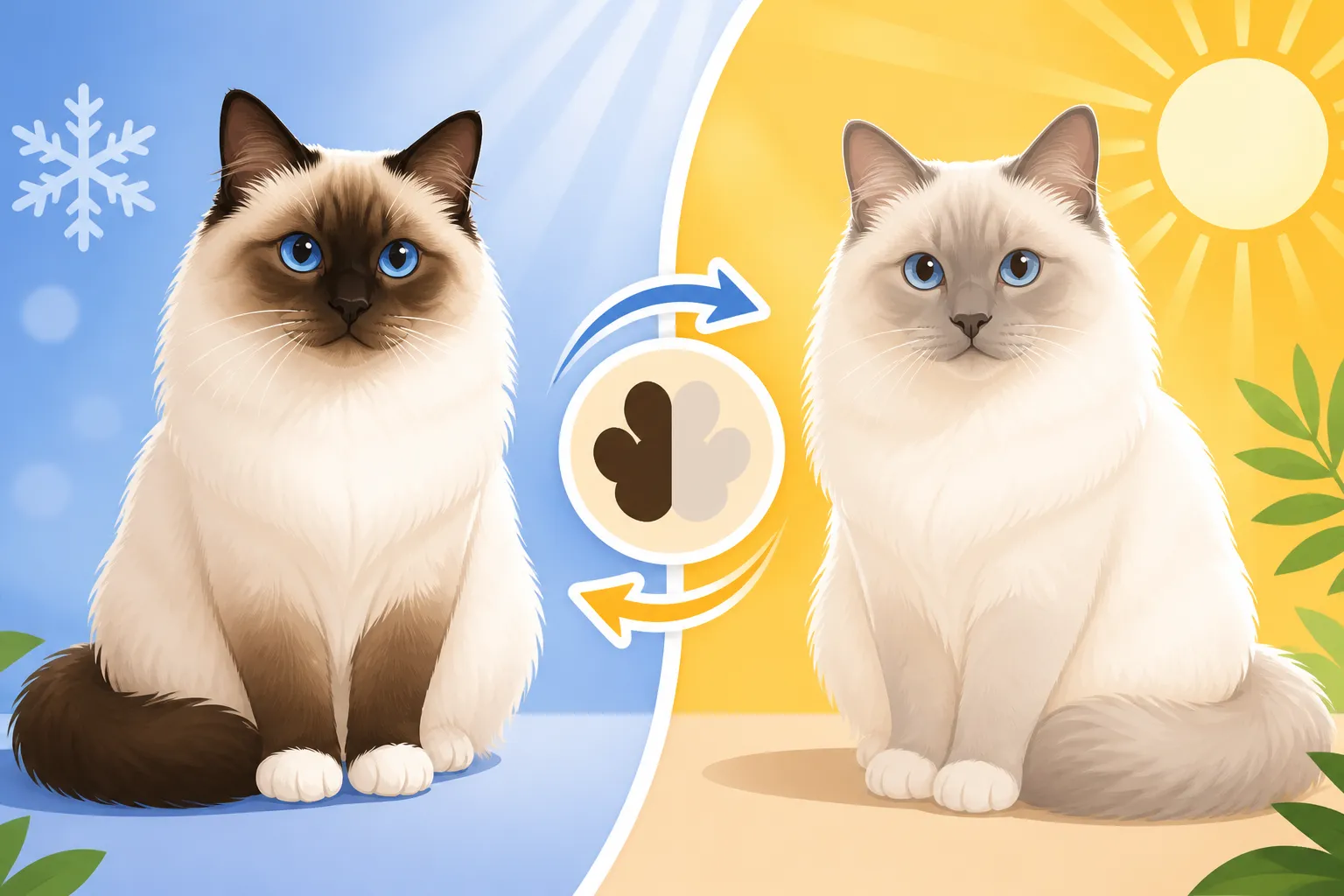
Whether a Birman’s Points Lighten in Summer
It’s a common and completely understandable question among Birman owners, especially as the seasons shift: "Will my Birman’s beautiful point colors actually get lighter in the summer?" You've lovingly watched your kitten's points darken from a creamy white, and now you might notice a subtle change as the warmer months arrive. This isn't just your imagination playing tricks on you; there’s fascinating science behind why your Birman’s coat, particularly its distinctive points, can indeed lighten up when the mercury rises. This guide will explore the genetic and environmental factors at play, helping you understand what to expect from your furry friend's magnificent coat throughout the year.
The Science Behind Birman Point Coloration
To truly understand why your Birman's points might lighten in summer, we need to delve a little into genetics. It's a marvel of nature, really, how a single gene can dictate such a beautiful, temperature-sensitive display.
Temperature-Sensitive Genes and Melanin
At the heart of the Birman's stunning "pointed" coloration is a specific genetic mutation, often referred to as the Himalayan gene. This gene is responsible for a form of albinism that is unique because it's temperature-sensitive. What does that mean exactly? Well, the gene produces an enzyme that is crucial for the production of melanin, the pigment that gives hair its color. The trick is, this enzyme only works effectively at cooler body temperatures.
Think of it like this: in the warmer parts of your Birman's body – the torso, belly, and upper legs – the enzyme is less active, or even completely inactive, due to the higher core body temperature. This results in very little to no melanin production in these areas, hence the lovely pale, creamy body coat that Birmans are known for. But on the extremities, where the body temperature is naturally a few degrees cooler – the ears, face, paws, and tail – the enzyme can kick into gear. Here, it produces melanin, leading to the rich, dark points that define the breed. This fascinating mechanism is also why A Birman Living Somewhere Cold Gets Darker.
How a Birman Kitten's Points Come In
If you’ve ever welcomed a Birman kitten into your home, you’ll remember they arrive as tiny bundles of nearly pure white fluff. It’s absolutely adorable, but it also provides a perfect illustration of this temperature-sensitive gene in action. A kitten in its mother's womb is kept at a uniformly warm, consistent temperature. This means the melanin-producing enzyme simply isn't activated anywhere on its body.
Once born, however, the kitten is exposed to the ambient temperature of the environment. Slowly but surely, over the first few weeks and months, those cooler extremities start to produce pigment. The tips of the ears might be the first to show a faint hint of color, followed by the nose, paws, and tail. It's a gradual process, almost like watching a photograph develop before your eyes. By the time they're ready to leave their breeder, usually around 12-13 weeks, their points are typically well-defined, though they will continue to deepen and develop for several years. This is why A Birman Kitten's Points Come In is such a magical thing to witness.
What Temperature Does to the Pigment
The core concept to grasp here is that the rate and amount of melanin produced are directly linked to temperature. The colder an area of the body, the more active the enzyme, and thus, the more pigment is deposited in the hair shafts. This isn't just about external air temperature; it's about the surface temperature of the skin. Even a slight variation can make a difference.
For instance, if your Birman loves to nap on a cool tile floor, those areas of its body that are in direct contact might develop slightly darker hair over time. Conversely, if they spend a lot of time basking in a sunbeam, those warmer areas might remain lighter or even lighten slightly. It's a continuous, dynamic process that ensures your Birman's coat is always a beautiful, living canvas. Understanding this interaction helps us appreciate the unique beauty of each individual Birman and why their coats are never exactly the same from one year to the next.
Seasonal Changes and Point Lightening
Now that we understand the fundamental genetics, let's specifically address the question of summer and your Birman's coat. The answer, as you might suspect, lies firmly in that temperature-sensitive enzyme.
The Impact of Summer Heat on Pigment
When summer arrives, and the temperatures soar, your Birman’s core body temperature, and consequently the surface temperature of their skin, will generally be warmer. Even those "cooler" extremities—the paws, ears, and tail—will experience a slight increase in temperature compared to the colder months. This subtle warming can directly influence the melanin production enzyme.
As the enzyme becomes less efficient at these slightly higher temperatures, it produces less pigment. The result is often a subtle, overall lightening of the points. Your Birman’s seal points might look a touch softer, their blue points a little paler, and their chocolate or lilac points might appear more muted. It’s rarely a dramatic, overnight transformation, but rather a gradual softening of color that you might notice as you spend more time with your beloved companion. It's a natural phenomenon that perfectly illustrates how deeply connected their coat color is to their environment. This is why A Birman Living Somewhere Cold Gets Darker is the opposite effect you'd see.
Why a Birman Living Somewhere Cold Gets Darker
To further highlight the summer lightening, let’s consider the inverse: a Birman living in a consistently colder climate, or one that spends a lot of time in a cooler room. These cats will typically develop much darker, richer points over time. The prolonged exposure to lower temperatures allows the melanin-producing enzyme to work at peak efficiency for longer periods, depositing more pigment into the hair follicles.
Imagine a Birman living in, say, an Alaskan winter versus one enjoying a Californian summer. The Alaskan Birman will likely have significantly deeper, more intense point coloration. This is why breeders often warn against shaving a Birman for summer; the hair grows back in response to the cooler skin surface after shaving, and those areas can come in much darker than before, sometimes permanently altering the natural point pattern. The impact of ambient temperature on their coat is undeniable and forms a crucial part of their unique breed characteristics.
Other Factors Affecting Point Darkness (Beyond Summer)
While temperature is the primary driver behind point coloration, it's not the only factor influencing your Birman's beautiful coat. There are several other elements that can contribute to how dark or light their points appear.
One significant factor is age. As Birmans mature, their points tend to deepen and darken naturally over time, regardless of the season. A young adult Birman will typically have lighter points than a senior cat. This is a gradual process that continues throughout their life, with some cats showing considerable darkening well into their later years. You might notice this especially with the "mask" on their face, which often becomes more expansive and intense with age. For tips on managing an older cat's needs, consider Caring for an Old Birman That Cannot Reach Its Back.
Diet and overall health also play a role. A Birman on a high-quality diet, rich in essential fatty acids and proteins, will generally have a healthier, shinier coat, which can impact the vibrancy of its color. Poor nutrition or underlying health issues, on the other hand, can sometimes lead to a duller, less intense coat color. It's not that their points will suddenly turn white, but the richness and depth of color might diminish. For maintaining their coat, consider products available from reputable brands like Chewy or items on Amazon that focus on coat health.
Finally, genetics within specific lines can also cause variations. While all Birmans carry the temperature-sensitive gene, there can be modifier genes that influence the degree of pigment expression. Some lines might naturally have lighter points, while others produce cats with very deep, almost black points, even in warmer climates. It's a complex interplay, but temperature remains the most direct and noticeable influencer for seasonal changes.
What to Expect and When
It's natural to be curious about your Birman's beautiful coat changes, and understanding the patterns can help you appreciate their unique beauty even more.
Observing Subtle Shifts, Not Dramatic Changes
When we talk about Birman points lightening in the summer, it's crucial to manage expectations. We're not talking about a complete reversal of color, where a seal point suddenly becomes a cream point. The changes are almost always subtle. You might notice the demarcation line between the body color and the points becoming a little softer, or the overall intensity of the point color appearing a shade or two lighter.
Think of it less like a dramatic repaint and more like a gentle fading in the sun. The paws might lose some of their stark contrast, the ear tips might seem a little less defined, and the tail could appear slightly muted. These shifts are often most noticeable if you compare current photos to pictures taken in the depth of winter. It’s part of the charm of owning a Birman – their coat is ever-so-slightly dynamic, responding to the world around them. For instance, What a Birman's Points Look Like Without Its Gloves helps highlight the unique genetic trait, but even with gloves, the point color will react to warmth.
When a Birman's Points Settle
A Birman's point coloration isn't "final" until they reach full maturity, which can be around three years of age. While the most dramatic darkening happens in kittenhood and early adolescence, their points will continue to deepen and solidify as they grow. This slow maturation means that seasonal variations can become more apparent as they get older, simply because they have more established pigment to lighten or darken.
Even after three years, minor seasonal fluctuations will continue throughout their life. Their coat is a thermometer of sorts, always reacting to their environment. It’s a wonderful example of natural adaptation, making each Birman's coat truly individual. Understanding this long developmental timeline is key for new Birman owners who might be wondering why their kitten's points are still changing so much. If you're wondering about growth more broadly, How Long a Birman Keeps Adding Coat and Weight covers the full growth journey.
Documenting Your Birman's Color Changes
For those who love to track these subtle shifts, documenting your Birman's point color throughout the year can be a fun and insightful project. Simple, consistent photography can be a great way to observe the changes that are often too gradual to notice day-to-day.
Try taking a photo of your Birman in the same lighting conditions, perhaps once a month, especially focusing on their face and paws. Use natural light if possible, and try to avoid filters that might alter the true color. Over time, you’ll build a fascinating visual record of how their coat responds to the seasons. You might even want to note down the ambient temperature or any significant changes in their routine, just to see if you can draw correlations. This kind of observation helps you understand your specific cat better and deepens your appreciation for the unique beauty of the Birman breed. You might even find some pet cameras on Amazon that could help capture regular shots!
Here’s a quick overview of what influences your Birman's point coloration:
| Factor | Effect on Point Coloration | Typical Observation |
|---|---|---|
| Ambient Temperature | Higher temps = lighter points; Lower temps = darker points | Noticeable seasonal shifts (summer lighter, winter darker) |
| Age | Points deepen and darken with age | Kittens have lighter points than senior Birmans |
| Genetics | Individual variations in pigment expression | Some lines naturally have darker/lighter points |
| Health & Diet | Good health/nutrition supports vibrant color; Poor health can dull color | Healthy cats often have more intense, glossy points |
| Sun Exposure | Direct sun can cause local warming, potentially lightening hair in that area | Parts of the face regularly exposed might lighten slightly |
Disclaimer
This article is for general informational purposes only and does not constitute professional advice. Laws, prices and regulations vary by location and change over time. Consult a qualified professional for guidance on your specific situation.