Why a Birman’s Coat Runs Through Your Fingers
One of the first things you notice when you gently stroke a Birman is how utterly different their coat feels compared to so many other long-haired cats. You expect a thick, dense fluff, maybe even a bit of resistance, but instead, their fur just glides right through your fingers, like silk slipping through water. It’s almost startlingly smooth, leaving many new Birman parents wondering if they’re doing something wrong or if their cat is simply shedding an unusual amount. This guide is here to unravel the mystery of that unbelievably soft, free-flowing Birman coat and explain exactly why it feels so uniquely exquisite, along with what that means for its care.
The Unique Structure of the Birman Coat
When you run your hand down a Birman's back, there's no mistaking that luxurious, almost liquid texture. It feels unlike many other long-haired breeds, which often boast a thick, woolly density that can be a battle to comb through. This distinctive feel isn't just a happy accident; it's a direct result of the Birman's unique coat structure, a trait that makes them both a delight to pet and surprisingly easy to maintain.
No Undercoat, Pure Silk
The secret to the Birman's "runs through your fingers" coat lies primarily in its lack of a dense undercoat. Many long-haired cats, like the Persian, have a double coat: a fine, downy undercoat that provides insulation, and longer, coarser guard hairs that protect the undercoat. This double layer, while beautiful, is also the primary culprit behind matting and the "woolly" feel. It’s a bit like having a thick sweater underneath a silk robe – the sweater provides bulk.
Birmans, on the other hand, possess what's often referred to as a "single coat" or a coat with a very minimal undercoat. This means their fur is predominantly composed of those longer, silky guard hairs. Without the dense, cotton-like undercoat to snag and tangle, their individual hairs are free to move and flow, giving you that incredible sensation of softness and effortless glide when you stroke them. It’s truly one of the defining physical characteristics that sets them apart and is a big part of No Undercoat Is What Makes a Birman Easy to Groom.
Guard Hairs and Texture
Beyond the absence of a substantial undercoat, the quality of a Birman's guard hairs themselves contributes significantly to their silken texture. These aren't coarse or wiry hairs; they are incredibly fine, lustrous, and soft to the touch. Imagine spun silk or very fine human hair, rather than a thick sheep's wool. This genetic predisposition means that even the longest parts of their coat, such as the glorious ruff around their neck or their impressive tail plume, maintain that enviable smoothness.
The natural oils produced by their skin also play a role, coating each hair strand and adding to its sleekness and sheen. This combination of fine, single-layered hairs and natural conditioning creates a coat that resists static and feels cool and smooth, rather than bulky or fuzzy. It's a marvel of feline genetics, making every stroke a truly sensory experience for the owner.
Comparison to Other Long Hairs
To truly appreciate the Birman's coat, it helps to compare it to other popular long-haired breeds. Think about the majestic Persian, with its incredibly dense, voluminous double coat. While beautiful, a Persian's fur is prone to extensive matting and requires daily, intensive grooming to keep it free of tangles. You wouldn't describe a Persian's coat as "running through your fingers" without resistance; it's more like wading through a plush cloud.
Then there's the Ragdoll, another stunning long-haired cat often compared to the Birman. Ragdolls also have a soft, plush coat, but it can sometimes have a slightly thicker, more "bunny-like" feel due to a denser undercoat. While less prone to matting than a Persian, a Ragdoll's fur often requires a bit more effort to comb through than a Birman's. The Birman truly stands out for that unique, almost ethereal lightness and flow. This is What Makes a Birman's Coat Silky Rather Than Woolly, and it's a huge benefit for owners.
What the Single Coat Means for Grooming and Shedding
That wonderfully flowing coat isn't just about aesthetics and touch; it has significant practical implications for the day-to-day care of your Birman. Many people are drawn to long-haired cats but dread the grooming commitment, and this is where the Birman truly shines, offering a luxurious look with a surprisingly manageable care routine.
Reduced Matting
One of the biggest advantages of the Birman's single coat, or minimal undercoat, is its remarkable resistance to matting. Mats form when the shorter, finer undercoat tangles and snags, especially if shed hairs get caught within the denser layers. Since Birmans largely lack this mat-forming underlayer, their longer guard hairs tend to shed cleanly and are much less likely to clump together.
Of course, "reduced matting" doesn't mean "no matting ever." Mats can still occur, particularly in areas of high friction like behind the ears, in the armpits, or on the hind legs where movement is constant. However, they are far less frequent and often much easier to gently tease out than the formidable knots found in double-coated breeds. This is why Why a Birman Mats Far Less Than It Looks Like It Should is such a relief to new owners. A quick, regular comb-through is usually all it takes to keep your Birman's coat pristine.
Shedding Patterns
Despite its silky appearance, a Birman does shed. All cats shed, it's a natural part of their hair growth cycle. However, the nature of their single coat means their shedding tends to be different. Instead of clumps of dense, woolly fur, you'll generally find fine, long, silky hairs around your home. These hairs are often white, which can make them quite noticeable against darker furniture or clothing.
Birmans tend to have seasonal shedding, with a more noticeable "blow" of coat in spring and autumn as they adjust to temperature changes. During these times, you might find a bit more fur on your sofa or clothes, but it's typically light and easily brushed away. Regular grooming, even just a few times a week, can significantly reduce the amount of loose hair floating around your house. You'll definitely notice Why a Birman Leaves Long White Hairs Everywhere, but it's usually manageable.
Hairballs and Digestive Health
Because Birmans have a long coat, ingested hairballs are a potential concern, just as with any long-haired breed. Cats groom themselves meticulously, and in doing so, they inevitably swallow loose fur. While their lack of a dense undercoat means less hair overall compared to a Persian, the length of their individual hairs can still contribute to hairball formation.
Most Birmans manage hairballs without issue, passing them naturally. However, if you notice your Birman frequently coughing, gagging, or vomiting up hairballs, it's worth discussing with your vet. Regular combing is your first line of defense, removing shed hairs before your cat can ingest them. Additionally, certain foods formulated for long-haired cats often include ingredients to aid in hairball control. You might look for options on sites like Chewy or Amazon that specify hairball control benefits, or foods rich in omega fatty acids, which can help promote a healthy coat and reduce excessive shedding. This can certainly help to address Whether a Birman's Coat Causes Digestive Trouble.
Caring for That Silky Birman Coat
Maintaining the Birman's stunning, silky coat is thankfully not an Olympic sport, but it does require consistency and the right approach. Their unique fur calls for specific tools and techniques to ensure it stays free-flowing, gleaming, and healthy.
Choosing the Right Tools
Forget those harsh de-shedding tools designed for dense undercoats; they can actually damage a Birman's delicate guard hairs. The key to successful Birman grooming is gentle, effective tools that glide through their single coat without pulling or breaking.
- Metal Comb: A good quality metal comb with both wide and narrow teeth is your best friend. The wider teeth are perfect for general detangling and working through the longer ruff and tail, while the narrower teeth can be used for the finer areas like the face and legs. Brands like Chris Christensen offer excellent, smooth-toothed combs that are ideal for Birman fur.
- Pin Brush: A pin brush with rounded tips can also be useful for distributing natural oils and adding shine, especially over the body. Ensure the pins are smooth and don't have little plastic balls on the ends, as these can snag fine hair.
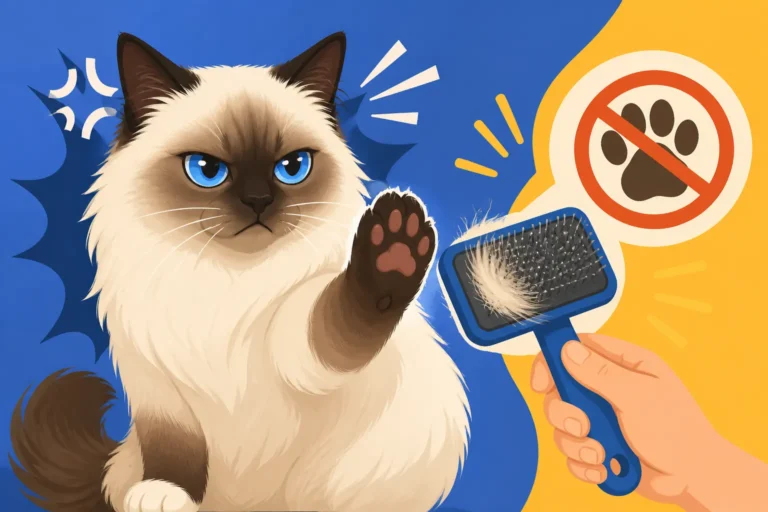
- Soft Slicker Brush (Use with caution): While generally avoided for double-coated breeds, a very soft slicker brush can be used sparingly and gently on a Birman, but only for smoothing the very top layer of the coat. The emphasis here is on soft and gentle to avoid tearing the delicate guard hairs. Remember, Why a Slicker Tears a Birman's Silky Guard Hairs is a real concern.
Brushing Frequency and Technique
For most Birmans, Combing a Birman Three Times a Week is sufficient to keep their coat in top condition and minimize shedding around the house. If your Birman is particularly active or prone to minor tangles, you might increase it to every other day.
Here's a gentle technique to follow:
- Start with a Compliant Cat: Choose a time when your Birman is relaxed, perhaps when they're sleepy or enjoying some cuddle time. Make it a positive experience with praise and gentle strokes.
- Section by Section: Begin at the head and work your way back, using the wide-toothed comb. Gently part the hair and comb downwards, ensuring you reach the skin. Pay special attention to the ruff, armpits, and britches, as these are common areas for the few mats that do form. Working a Comb Through a Birman's Ruff in Sections is key to avoiding discomfort.
- Tail Care: The Birman's tail plume is magnificent but delicate. Comb it gently, holding the base of the tail to prevent pulling on the skin.
- Check the Feet: Don't forget their glorious white gloves! Gently comb the fur on their paws and check between their toes.
- Be Gentle: If you encounter a minor tangle, don't pull. Gently work it out with your fingers first, then use the wider teeth of your comb. You can even apply a tiny bit of cornstarch or a cat-safe detangling spray to help loosen it.
- End on a Positive Note: Always finish with a stroke and a treat, reinforcing that grooming is a pleasant experience.
Bathing and White Gloves
Birmans don't typically require frequent bathing due to their low-maintenance coat. However, their dazzling white gloves are a hallmark of the breed, and keeping them pristine can sometimes be a challenge, especially if your cat is a bit of a messy eater or enjoys digging in the litter box. Keeping a Birman's White Gloves White often becomes a minor quest for owners.
If their gloves become stained or discolored, a localized spot bath might be necessary. Use a gentle, cat-specific shampoo, perhaps one formulated for white coats. For a full bath:
- Preparation: Gather everything you need: cat-safe shampoo, towels, and a non-slip mat for the tub or sink.
- Warm Water: Use lukewarm water, never hot or cold.
- Gentle Lather: Wet your Birman thoroughly, then apply a small amount of shampoo and gently lather, avoiding getting water in their ears or soap in their eyes. Focus on the dirty areas, like those white feet.
- Thorough Rinse: This is crucial. Rinse until the water runs clear and no residue remains, as leftover shampoo can irritate the skin and dull the coat.
- Towel Dry: Gently towel dry your Birman. Their single coat dries relatively quickly compared to a double-coated breed. Avoid using a human hairdryer unless it has a cool setting and your cat is completely comfortable with it, as the noise and heat can be distressing.
- Comb Through: Once mostly dry, give their coat a gentle comb-through to prevent any tangles from forming as it finishes drying.
Dietary Influence on Coat Health
Just like with us, what a Birman eats has a huge impact on their overall health, and their coat is no exception. That beautiful, silky texture and radiant shine aren't just about genes and grooming; they're deeply influenced by the quality of their nutrition. A well-fed Birman will naturally have a healthier, more lustrous coat that truly runs through your fingers.
Essential Nutrients for Coat Shine
For a coat to be truly magnificent, it needs a steady supply of high-quality nutrients, particularly proteins, fats, and certain vitamins and minerals.
- Protein: Hair is primarily made of protein, so a diet rich in animal-based protein is fundamental. Look for cat foods where real meat (chicken, fish, beef, lamb) is listed as the first ingredient. Adequate protein ensures strong, healthy hair follicles and robust growth, contributing to that thick, full ruff and tail plume.
- Healthy Fats (Omega Fatty Acids): These are absolute superstars for skin and coat health. Omega-3 and Omega-6 fatty acids, often found in fish oils (like salmon oil), flaxseed, and certain animal fats, are crucial for maintaining the skin's barrier function and giving the coat its characteristic shine and silkiness. They help to prevent dry, flaky skin and a dull, brittle coat. This is exactly Why Omega Oils Matter for a Birman's Coat – they nourish from the inside out. Many premium cat foods, available on Chewy, explicitly boast these beneficial fats to support coat health.
- Vitamins and Minerals: A complete and balanced diet should provide all the necessary vitamins and minerals. Biotin, Zinc, and Vitamin E, in particular, are known for their roles in maintaining healthy skin and fur. A deficiency in any of these can manifest as a poor coat condition, excessive shedding, or skin issues.
Hydration and Skin Health
It's easy to overlook, but adequate hydration is just as vital for a healthy coat as the food itself. A cat who isn't drinking enough can suffer from dry skin, which in turn can lead to a dull, flaky coat and even increased shedding. While Birmans aren't notoriously thirsty cats like some breeds, ensuring they have fresh water available at all times is crucial.
Many cat owners find that incorporating wet food into their Birman's diet helps significantly with hydration, as wet food has a much higher moisture content than kibble. A water fountain can also encourage some cats to drink more, as they are often drawn to flowing water rather than stagnant bowls. Keeping the skin supple and hydrated from within supports those beautiful, silky hairs, allowing them to truly shine.
Supplements (When to Consider Them)
For most Birmans on a high-quality, complete, and balanced commercial diet, additional supplements for coat health aren't strictly necessary. However, if your Birman's coat seems dull, dry, or they are experiencing unusual shedding despite regular grooming, it might be worth discussing with your veterinarian. They can help identify any underlying health issues or dietary deficiencies.
Sometimes, a vet might recommend a specific omega fatty acid supplement, like a fish oil, if your cat's diet isn't providing enough or if they have a particular skin condition. Always consult your vet before adding any supplements to your cat's regimen, as too much of certain vitamins or minerals can be detrimental. Remember, a glossy, free-flowing coat is a sign of overall good health, so prioritize a balanced diet and regular veterinary check-ups above all else.
Disclaimer
This article is for general informational purposes only and does not constitute professional advice. Laws, prices and regulations vary by location and change over time. Consult a qualified professional for guidance on your specific situation.