What an Old Birman Needs Once Its Ruff Starts Matting
It’s a heart-wrenching moment for any Birman parent when you notice that once glorious, silky ruff, a hallmark of their majestic beauty, is starting to clump and mat. Your beloved cat, who always seemed so effortlessly well-groomed, might be showing signs that they can no longer keep up with their meticulous cleaning routine. This guide will walk you through the specific challenges aging Birmans face with their coats and offer practical, empathetic advice on how to keep them comfortable and mat-free in their golden years.
The Unique Challenges of an Aging Birman's Coat
As our cherished Birmans age, their bodies and habits change, and unfortunately, their grooming capabilities often decline. This can lead to a once-unheard-of problem: matting, especially around that beautiful ruff and other hard-to-reach areas. It's not a sign of neglect, but rather a natural progression that requires a shift in how we approach their care.
Why the Ruff Becomes a Problem Area
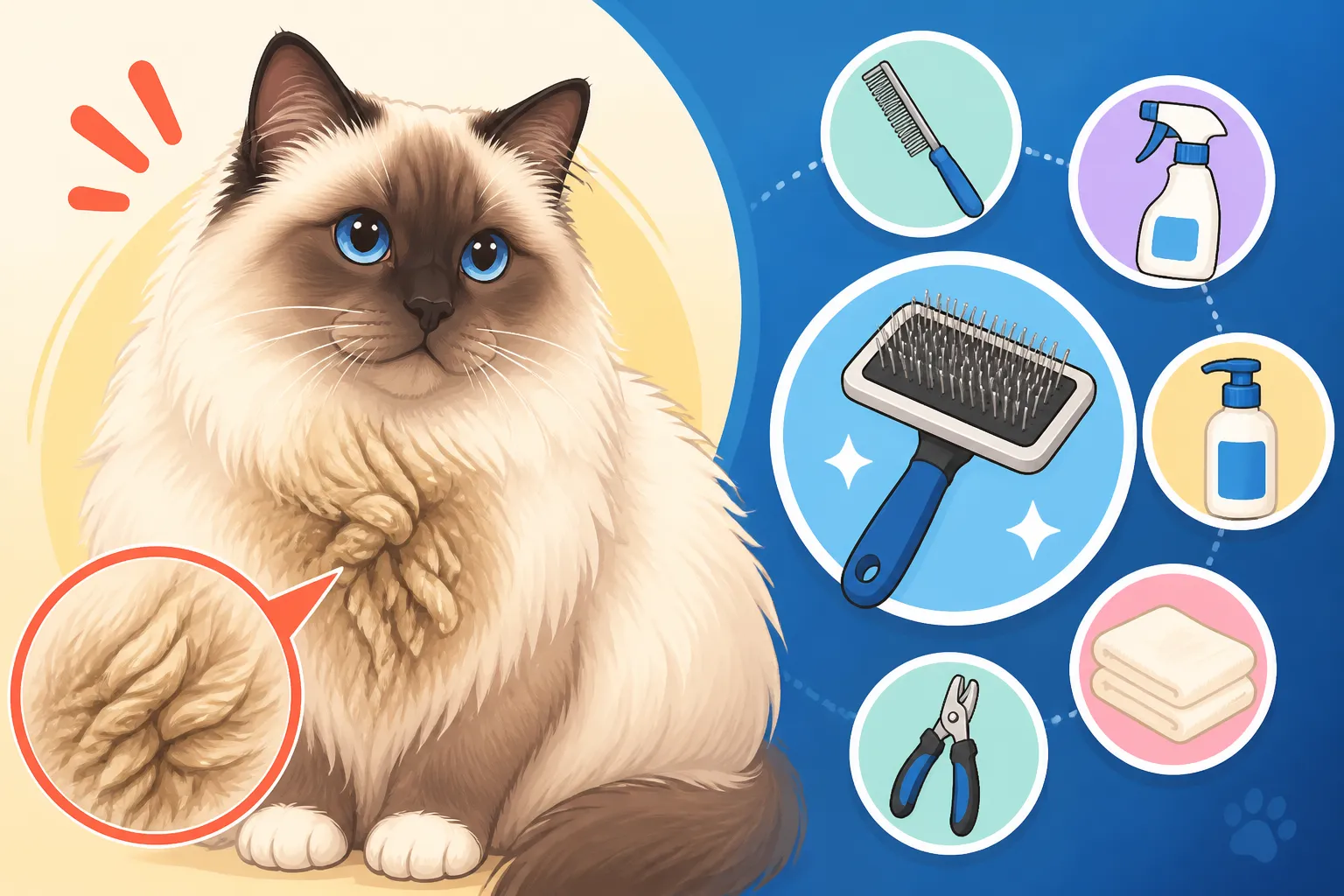
The Birman's ruff, that magnificent collar of fur around their neck and chest, is one of their most defining features. It's often the longest and densest part of their coat, which means it's also the most susceptible to matting when self-grooming becomes difficult. Think about how active their heads and necks are – eating, drinking, exploring – all these activities can rub and tangle the fur. When an older Birman starts to lose flexibility or experiences discomfort, they might not be able to twist and turn to adequately clean this area. What was once a point of pride can quickly become a source of discomfort if left unattended. It's a cruel irony that the very feature we admire most becomes the first problem area.
The Role of Decreased Mobility in Matting
One of the biggest culprits behind matting in senior Birmans is decreased mobility. Just like us, as cats get older, their joints can ache, and their flexibility wanes. Conditions like arthritis can make it painful or simply impossible for them to reach their hindquarters, the base of their tail, or even twist their neck enough to properly groom their ruff. Imagine trying to comb your own hair if your shoulders were stiff and sore – it would be a struggle! For a Birman, whose grooming is paramount, this can be incredibly frustrating and lead to those tight, uncomfortable knots. You might notice they're no longer doing what they used to (What a Birman Stops Doing Once It Passes Ten), or that they struggle to get into their favorite high spots. These subtle changes are often indicators that they're not grooming as thoroughly.
Changes in Coat Texture with Age
It's not just mobility; the coat itself changes as a Birman ages. While a young Birman's coat is known for being No Undercoat Is What Makes a Birman Easy to Groom and less prone to matting than other long-haired breeds, time can alter this. The texture might become a bit coarser, drier, or even thinner in some areas, making it more prone to tangles. You might notice What an Old Birman's Coat Loses Its Shine, losing some of that youthful luster and silkiness. These changes mean that the same infrequent combing routine that worked perfectly for years might suddenly be insufficient. Their fur, which once seemed to glide through your fingers, might now catch and knot with surprising ease.
Essential Grooming Strategies for the Matting Ruff
When your Birman's ruff starts to mat, it's a clear signal that their grooming needs have changed, and your active participation is now crucial. Don't despair; with a little patience and the right approach, you can keep them comfortable and looking their best.
Gentle Daily Combing Techniques
The key to preventing and managing matting in an older Birman's ruff is consistency and gentleness. Instead of waiting for mats to form, aim for short, frequent combing sessions, ideally daily. Use a wide-toothed metal comb or a good quality greyhound comb, designed to glide through long fur without pulling. Start by gently parting the fur and working on small sections at a time. Always comb with the direction of hair growth, never against it, and keep one hand on the skin near the comb to prevent pulling on their delicate skin. Focus on the areas around their ears, under their chin, and across their chest where the ruff is most prominent. If your Birman tolerates it, a soft brush after combing can help distribute natural oils and add shine. Combing a Birman Three Times a Week might have been enough when they were younger, but now daily gentle strokes can make a huge difference.
The Right Tools for a Senior Birman
Choosing the correct grooming tools is paramount, especially for a senior cat who might be sensitive to rough handling. A good quality metal comb with both wide and fine teeth is indispensable. Avoid slicker brushes or rakes with sharp edges, as these can be painful and damage the Birman's delicate guard hairs, especially given their lack of an undercoat. A soft bristle brush can be used for a gentle finish, but the comb is your primary weapon against mats. For stubborn tangles, a blunt-nosed scissor can be helpful, but only use it to cut through a mat, never to cut close to the skin unless you are absolutely confident and the cat is completely still. Many pet supply stores, like Chewy or Amazon, offer a variety of combs specifically designed for long-haired cats, so you can find one that feels right in your hand and gentle on their fur.
| Tool Type | Best Use for Senior Birman | Why It's Good | Avoid If… |
|---|---|---|---|
| Wide-toothed Comb | Gently detangling the ruff, body, and tail. | Glides through fur, less pulling. | Teeth are sharp or too close together. |
| Fine-toothed Comb | Removing small tangles, smoothing after wide-tooth comb. | Catches smaller knots, good for delicate facial fur. | Fur is heavily matted (start with wide-tooth first). |
| Soft Bristle Brush | Finishing, distributing oils, light daily maintenance. | Gentle massage, adds shine, good for sensitive skin. | You need to remove significant tangles or mats. |
| Mat Splitter/Rake | Carefully breaking apart dense mats (use with extreme caution). | Designed to cut through mats without cutting skin. | You are unsure of how to use it safely or the mat is very tight to the skin. |
| Blunt-Nosed Scissors | Cutting through severe mats (never along the skin). | Allows precise snips to break up mats. | You're attempting to cut mats off close to the skin. |
Tackling Existing Mats Safely
Finding a mat can be frustrating, but panic isn't the answer. Patience and a gentle touch are your best friends. First, try to work a very small amount of cornstarch or a pet-safe detangling spray into the mat – this can sometimes help loosen the hairs. Then, using the wide-toothed end of your comb, try to tease the mat apart from the outside edge, working your way inwards, hair by hair. This isn't a quick process, and it requires a calm cat. If the mat is tight and close to the skin, do not pull or force it. Instead, you might need to carefully use a mat splitter or blunt-nosed scissors to cut into the mat, breaking it into smaller sections, which are then easier to comb out. Remember, the goal is to remove the mat without causing pain or fear, so if your Birman shows signs of discomfort, take a break or consider professional help. This is where How to Get a Mat Out of a Birman's Coat becomes an art form.
Nutritional Support for Skin and Coat Health in Older Birmans
Grooming isn't just about what you do on the outside; it's also profoundly influenced by what goes on inside. An aging Birman's diet plays a critical role in maintaining skin elasticity and coat quality, directly impacting how well their fur can resist matting and how easily it can be groomed.
Boosting Skin Elasticity with Omega Fatty Acids
Healthy skin is the foundation of a healthy coat. As Birmans age, their skin can become drier and less elastic, making the fur more brittle and prone to breakage and matting. Omega-3 and omega-6 fatty acids are incredibly beneficial for skin health, helping to keep it supple and moisturized from the inside out. Look for cat foods that list fish oil (like salmon or sardine oil) or flaxseed as ingredients. You can also supplement their diet with a high-quality fish oil specifically formulated for cats, available from pet retailers like Chewy or Amazon. These essential fatty acids not only promote a shiny, softer coat but also support joint health, which indirectly aids in grooming by improving mobility. Many premium cat foods, including fresh-cooked options, prioritize these beneficial fats for overall feline well-being.
Hydration and Its Impact on Coat Quality
Dehydration doesn't just affect internal organs; it also has a significant impact on skin and coat health. A dehydrated cat will often have dry, brittle fur that is much more likely to tangle and mat. Ensuring your older Birman has ample access to fresh water is crucial. This means multiple water bowls placed throughout the house, and ideally, a running water fountain, which many cats find more appealing. Incorporating wet food into their diet is another excellent way to boost their daily fluid intake, especially since water intake (Why a Birman's PKD History Makes Water Intake Matter) is a known consideration for the breed. A well-hydrated cat's skin is more pliable, and their fur is less prone to static and breakage, making it smoother and easier to comb.
Protein for Maintaining Coat Structure
Protein is the building block of hair, and an adequate supply of high-quality protein is essential for maintaining a strong, healthy coat in your aging Birman. As cats get older, their ability to digest and utilize protein can sometimes decrease, making it even more important to feed them easily digestible sources. Look for cat foods with real meat (chicken, turkey, fish, beef) as the first few ingredients. Sufficient protein helps ensure the fur follicles produce strong, resilient hairs that are less likely to break, split, or form mats. You want Which Protein Level Keeps a Birman's Ruff Thick and strong, supporting its natural resistance to tangles. If your Birman is losing muscle mass along with coat quality, discuss protein intake with your vet, as it might be a sign they need a more nutrient-dense diet.
Addressing Underlying Health Issues Contributing to Matting
Sometimes, matting isn't just about aging and decreased flexibility; it can be a symptom of an underlying health issue. It’s vital to recognize these signs and consult your veterinarian, as addressing the root cause will significantly improve your Birman's ability to groom itself and, consequently, the state of its coat.
Dental Pain and Grooming Habits
One of the most overlooked causes of poor grooming in older cats is dental pain. Imagine trying to meticulously clean your fur with a throbbing toothache or painful gums. It's simply not going to happen. Cats are masters at hiding pain, so you might not see obvious signs. However, if your Birman suddenly avoids grooming their ruff or other areas, or if you notice bad breath, drooling, or a reluctance to eat hard food, dental issues could be at play. A visit to the vet for a thorough dental check-up is crucial. Once dental pain is managed, often through a professional cleaning or extractions, many cats will resume their normal grooming habits, leading to a noticeable improvement in their coat condition.
Arthritis and Mobility Restrictions
As mentioned earlier, arthritis is a common age-related ailment in cats that directly impacts their ability to groom. Stiffness and pain in the joints – particularly in the spine, hips, and shoulders – can prevent them from reaching around to their back, tail, or even twisting comfortably to clean their magnificent ruff. You might observe subtle changes like What an Old Birman Stops Using the Stairs, hesitant jumps, or simply moving less. If you suspect arthritis, your vet can diagnose it and recommend pain management strategies, such as anti-inflammatory medications, joint supplements, or even physical therapy. By easing their discomfort and improving their mobility, you empower your Birman to better care for their coat, reducing the incidence of matting.
Thyroid and Kidney Concerns Affecting Coat
Metabolic conditions common in senior cats, like hyperthyroidism or kidney disease, can also manifest in poor coat quality and excessive shedding or matting. Hyperthyroidism, for example, can lead to a greasy, unkempt coat that tangles easily, alongside other symptoms like weight loss despite a ravenous appetite. Kidney disease, another common condition in older Birmans, can lead to a dull, dry coat. If you notice a sudden change in your Birman's coat texture, combined with other signs like increased thirst, changes in appetite, or weight fluctuations, it's absolutely essential to get them to the vet for a comprehensive blood panel. Why a Thin, Hungry Old Birman Needs a Thyroid Test is a prime example of how these internal issues impact external appearance. Addressing these underlying health problems with appropriate veterinary care will not only improve their overall health but also often resolve the coat issues.
Creating a Supportive Environment for an Old Birman
Beyond direct grooming and medical intervention, cultivating an environment that caters to the needs of an aging Birman can significantly ease their grooming challenges and enhance their overall comfort. A thoughtful home setup can make all the difference.
Accessible Grooming Spots
Think about where your Birman likes to relax and groom. As they age and become less agile, those high shelves or the top of the cat tree might no longer be comfortable or safe. Instead, create easily accessible, comfortable spots at ground level or on low furniture where they can lie down and groom themselves without strain. A soft bed on the floor in a quiet corner, or a low-profile cat tree with wide, carpeted steps, can encourage them to continue their self-grooming. Ensure these areas are well-lit so you can easily spot any developing mats during your daily interactions. Providing a steady, non-slip surface for you to comb them on, perhaps a low table with a soft mat, can also make your assisted grooming sessions more comfortable for both of you.
Comfort and Warmth Considerations
Older cats, especially breeds with a single coat like the Birman, can sometimes struggle with regulating their body temperature. Why a Coat With No Undercoat Is Not Warm means they might feel the cold more acutely. When they are cold or uncomfortable, they might curl up tightly, which can lead to mats forming or worsening. Provide warm, cozy sleeping areas, perhaps with a soft blanket or a heated cat bed, especially in cooler months. A comfortable, warm cat is a more relaxed cat, and a relaxed cat is more likely to tolerate grooming. Moreover, warmth can help ease arthritic joint pain, further encouraging movement and self-grooming. Just making sure they're snug can make a big difference in how they feel and function.
Regular Veterinary Check-ups
While this might seem obvious, regular veterinary check-ups become even more crucial as your Birman ages. These visits allow your vet to monitor for early signs of age-related conditions like arthritis, dental disease, kidney issues, or hyperthyroidism, all of which can impact grooming. Your vet can also offer advice on diet, supplements, and pain management tailored to your individual cat's needs. Don't wait until a mat is severe or your cat is clearly unwell. Proactive care is the best care for an aging Birman. What a Birman's Yearly Panel Should Include After Eight years old can catch many issues before they become debilitating, ensuring your Birman lives out their golden years as comfortably and gracefully as possible.
When Professional Help Becomes Necessary
Despite your best efforts, sometimes matting can become too severe, or your Birman too sensitive, for home grooming alone. It's okay to admit when you need a helping hand. Professional groomers and veterinarians are equipped with the skills and tools to safely address even the most challenging mats.
Recognizing When to Call a Groomer
There's no shame in seeking professional help when mats are too numerous, too tight, or your cat is simply too stressed by your attempts. Signs that it's time to call a groomer include:
- Mats that are large, solid, and cannot be teased apart with gentle combing.
- Mats that are pulling at the skin, causing redness or irritation.
- Your Birman becoming aggressive, fearful, or highly distressed during grooming attempts.
- You feel unsure or unsafe using scissors or clippers near your cat's skin.
A professional groomer specializing in cats can often remove mats more efficiently and safely, minimizing stress for your Birman. They have specialized tools and techniques, and the neutral environment of a salon can sometimes lead to better cooperation from your feline friend. Just be sure to find a groomer experienced with long-haired breeds and senior cats, as their approach needs to be incredibly gentle.
Sedation for Stress-Free Grooming
For very severe matting, or for Birmans who are particularly anxious or in pain, sedation might be the kindest option for mat removal. This is a decision that should always be made in consultation with your veterinarian. Under light sedation, your vet or a veterinary technician can safely shave off mats without causing pain or undue stress to your cat. While it might feel drastic to shave off some of their beautiful fur, it's far better for their health and comfort than leaving painful, skin-tight mats. The fur will grow back, and in the meantime, your Birman will be much more comfortable and able to move freely. Discussing Whether a Birman Needs a Heart Scan Before Anesthetic is also a crucial part of this conversation to ensure their safety.
Partnering with Your Veterinarian
Your veterinarian is your most important ally in caring for an aging Birman, especially when dealing with matting issues. They can not only rule out underlying medical conditions but also provide referrals to trusted professional groomers. They can discuss the option of sedation for grooming, ensure your cat is healthy enough for it, and perform the procedure in a safe, clinical environment. They can also advise on ongoing preventative care, from dietary adjustments to pain management for arthritis, to help prevent future matting. Think of them as part of your team, working together to ensure your beloved Birman enjoys their golden years with dignity, comfort, and a beautifully maintained coat, even if it requires a little extra help from their human companions. Taking Over the Grooming an Old Birman Has Given Up is a responsibility, and your vet can empower you with the tools and knowledge to do it right.
Disclaimer
This article is for general informational purposes only and does not constitute professional advice. Laws, prices and regulations vary by location and change over time. Consult a qualified professional for guidance on your specific situation.