What to Do When a Birman Has Had Enough Combing
Even the most serene and gentle Birman, who typically tolerates just about anything, can reach a point during grooming where they've simply had enough. It's a common frustration for us Birman parents – you're trying to keep that gorgeous, silky coat in pristine condition, but suddenly your usually cooperative cat stiffens, shifts, or even gives a little bat with a paw. Understanding these cues and knowing how to respond is key to maintaining a positive relationship and ensuring grooming remains a calm, bonding experience, rather than a battle.
Recognizing the Signs Your Birman Has Reached Their Limit
Our Birmans are famously placid, and that's one of the many reasons we adore them. But this sweet temperament also means they're not always as vocal or dramatic about their discomfort as some other breeds. You won't often get a full-blown hiss or a frantic escape attempt without a series of smaller, quieter warnings first. Learning to read these subtle signals is vital to preventing grooming sessions from becoming overwhelming for your beloved companion.
Subtle Body Language Cues
Before your Birman decides to make a swift exit or give a gentle but firm swipe, they'll often send out a whole host of little signals that, if missed, can escalate. Think of it as a quiet conversation they're trying to have with you. An ear twitching slightly to the side, perhaps just one ear, can be an early indicator. It's almost like they're trying to tune out the comb. You might also notice a subtle flick of their tail, not a full-on whip, but just a little ripple of discontent.
Watch their muscles. Are they tensing up a bit more than usual, particularly along their back or shoulders? Is their body language moving from a relaxed sprawl to a slightly more rigid pose? If they start to turn their head away from you, avoiding eye contact, or shifting their weight as if preparing to move, these are all polite requests for a pause. They might even try to move just an inch or two away, testing to see if you'll catch the hint. Because a Birman is so good-natured, these initial signs are often incredibly understated, making it easy to overlook them if you're not paying close attention. It ties into their general tendency to Why a Placid Birman Hides Pain; they're not complainers by nature, so their discomfort is often internalised before it becomes obvious.
Vocalizations and Physical Disengagement
If those subtle cues go unnoticed, your Birman might escalate their communication ever so slightly. This could manifest as a soft, low grumble deep in their throat – almost like a quiet complaint rather than an aggressive threat. Some Birmans might let out a short, soft meow, which is quite rare for them outside of asking for attention, indicating genuine annoyance. A low growl, while uncommon, is a definite sign that you've pushed past their comfort zone and it's time to stop immediately.
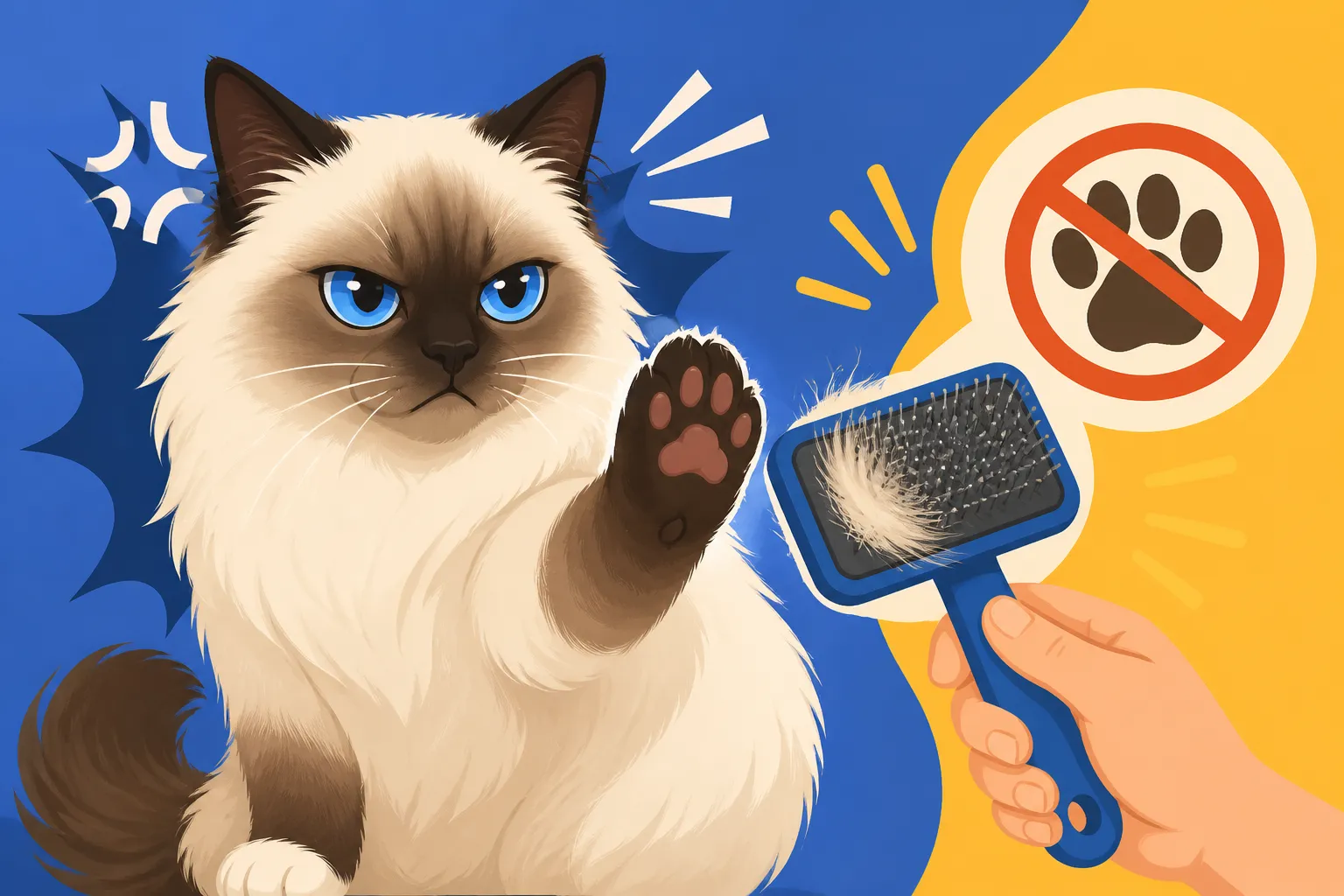
Physically, they might attempt to pull their body away from the comb more definitively. Instead of a gentle shift, they might actually stand up and try to walk a few steps. You might notice a light bat with a paw, usually with claws sheathed, aimed at the comb rather than your hand. This isn't aggression; it's them trying to physically stop the perceived irritant. It’s a polite declaration: "I'm done now, thank you." Unlike some more vocally assertive breeds, a Birman typically won't resort to loud yowls or aggressive biting unless they've been repeatedly ignored or are in significant pain. Their default is usually a quiet withdrawal, which makes it even more important for us to be attuned to their quiet language.
Respecting Their Boundaries and Taking a Break
Once you recognize those signals, the most important thing you can do is respect them. Pushing a Birman when they've clearly had enough is a surefire way to make them dread future grooming sessions. We want grooming to be a positive, even relaxing, experience for them, and that means listening when they say "enough."
The Importance of Short, Frequent Sessions
Trying to tackle a full-body groom in one marathon session is often counterproductive, especially if your Birman is showing signs of impatience. Instead, think about breaking up grooming into smaller, more frequent chunks. For instance, dedicate five to ten minutes to grooming their back and sides one day, and then their ruff and britches the next. This approach prevents them from becoming overwhelmed and allows them to maintain a positive association with the comb. You might be surprised how much you can achieve over the course of a week with these little "micro-sessions."
Even with their beautiful, flowing coats, Birmans don't require daily, hour-long grooming marathons. Their single coat, thankfully, means How Many Minutes a Week a Birman's Coat Takes is often quite manageable. By making these sessions short and sweet, you're building trust and teaching your Birman that grooming isn't something to be endured, but rather a brief, pleasant interaction. It's better to get some grooming done consistently than to aim for perfection once a month and create a stressed-out cat.
Ending on a Positive Note
This is perhaps the most crucial part of responding to your Birman's cues: always try to stop before they get truly agitated. If you notice those subtle ear twitches or tail flicks, take a deep breath, gently put the comb down, and end the session right there. Even if you haven't finished the section you were working on, stopping while they are still just mildly uncomfortable, rather than overtly distressed, preserves the positive tone.
Immediately after stopping, engage in something your Birman loves. Offer a favorite treat – perhaps a special freeze-dried chicken morsel that they only get after grooming. Provide some gentle praise and soft petting in a different area (away from the just-groomed spot). Or, if they're keen, offer a favorite wand toy for a quick play session. This immediate positive reinforcement helps to firmly associate the end of grooming with something pleasant. They learn that cooperation, even for a short time, leads to good things. This consistent positive reinforcement is key to making sure they willingly come back for the next session. What a Birman Will Work For During Grooming often includes these kinds of tasty rewards.
Strategies for a Smoother Grooming Experience Next Time
Grooming a Birman isn't just about the act of combing; it's about the entire experience. By setting up the right environment, using appropriate tools, and incorporating positive reinforcement, you can make future sessions much more enjoyable for both of you.
Optimizing Your Grooming Environment
The environment plays a huge role in how cooperative your Birman will be. First and foremost, choose a calm and quiet space in your home. Avoid high-traffic areas, loud noises from the TV or radio, or sudden interruptions. A peaceful atmosphere helps keep your Birman relaxed and less prone to agitation. Many Birman parents find it helpful to use a raised surface, like a sturdy table or even a countertop, for grooming. This not only makes it easier on your back but also gives you better control and visibility, and it often encourages a cat to be more still, as they feel more "contained" in a way. As we often discuss, Why a Birman Behaves Better Combed on a Table is a technique that many breeders and experienced owners swear by. Ensure the lighting is good so you can clearly see what you're doing, especially when tackling those tricky spots like the britches or behind the ears.
Choosing the Right Tools and Techniques
Having the correct grooming tools is non-negotiable for a Birman's silky coat. Forget those harsh slicker brushes designed for cats with thick undercoats – they'll tear at your Birman's delicate guard hairs and cause discomfort. Instead, invest in a high-quality metal comb with both wide and narrow teeth. A comb with rotating teeth can also be incredibly gentle, gliding through the coat without pulling. The spacing of the teeth really matters; Which Tooth Spacing Suits a Birman's Fine Coat often refers to these finer combs.
When you comb, always use gentle, slow strokes. Start at the head and work your way back, taking small sections at a time. Pay particular attention to areas prone to matting, such as the ruff, armpits, and britches. If you encounter a tangle, don't yank. Gently tease it apart with your fingers first, then use the wide-toothed side of your comb, working from the ends of the hair towards the skin. Remember, the goal is to glide, not to pull. How to Get a Birman Used to a Comb from a young age is crucial for making these sessions effortless later on.
Distraction and Reinforcement
Sometimes, even with the perfect environment and tools, a little distraction can go a long way. This is where high-value treats become your secret weapon. You can try a lick mat smeared with a tiny bit of wet food or a cat-safe spread (like plain meat baby food) to keep them occupied. While they're focused on licking, you can quickly get in a few strokes with the comb. Many Birmans are motivated by praise and gentle words, too. A soothing tone of voice can be incredibly calming for them.
You can purchase a great variety of these kinds of treats and grooming aids from places like Chewy or Amazon. Look for single-ingredient freeze-dried options, or even small, palatable soft treats that can be given quickly. What a Birman Will Work For During Grooming often involves these tasty incentives, reinforcing the idea that grooming is a positive interaction. Just remember to offer the treat during or immediately after a cooperative moment, not just at the end of the entire session.
| Sign Your Birman Has Had Enough | Recommended Action | Why It Works |
|---|---|---|
| Ear twitching, tail flick | Take a short break, offer gentle praise. | Acknowledges their subtle cue, builds trust. |
| Tensing muscles, looking away | Stop the session, reward with a treat. | Prevents escalation, reinforces positive association. |
| Shifting posture, attempting to move | Stop the session entirely, play a game. | Ends on a higher note, avoids resentment. |
| Low grumble, gentle paw bat | Immediately stop, give space and comfort. | Prevents overt aggression, shows respect for limits. |
| Full escape attempt | Do not chase or force; try again later. | Avoids making grooming a source of fear or trauma. |
When to Seek Professional Help or Reassess
While Birmans are generally easy to groom, there are times when your best efforts might not be enough, or when deeper issues need to be addressed. It’s important to know when to call in a professional or to consider if something more serious is contributing to your cat’s reluctance.
Dealing with Persistent Matting or Aggression
If you're consistently encountering large, tight mats that your comb simply cannot get through, or if your Birman is becoming genuinely aggressive (hissing, growling, or attempting to bite and scratch) during grooming, it’s time to seek professional help. Trying to cut out mats yourself is incredibly risky; cat skin is very thin and easy to cut, especially when hidden beneath a dense mat. A professional groomer has the right tools and expertise to safely remove mats, often with specialized clippers that get under the mat without touching the skin. They can also offer advice on specific techniques for your cat's coat type. In extreme cases, a veterinarian might even need to sedate your Birman to safely remove severe matting, which can be quite painful. We want to avoid this at all costs, but it’s sometimes necessary for their comfort. How to Get a Mat Out of a Birman's Coat is a common challenge, and recognizing when it's beyond home care is a sign of a responsible owner.
Underlying Health Concerns
Sometimes, a sudden change in a Birman's willingness to be groomed isn't about their patience; it’s about their health. If your previously cooperative Birman suddenly starts resisting grooming, especially in specific areas, it could be a sign of pain or discomfort. Older Birmans, for example, might develop arthritis, making it painful for them to stand in certain positions or have their back touched. How Arthritis Shows in a Birman That Never Jumped Much can often be subtle, presenting as a reluctance to be handled. Skin conditions, allergies, or even unseen injuries could also make brushing painful.
If you suspect a health issue, a vet visit is absolutely in order. They can rule out medical causes for the change in behavior. Additionally, stress or anxiety in the home environment can sometimes manifest as a reluctance to be groomed. A new pet, a recent move, or changes in routine can make a placid Birman feel unsettled, leading to a decreased tolerance for handling. Addressing these environmental stressors might be just as important as adjusting your grooming technique.
Disclaimer
This article is for general informational purposes only and does not constitute professional advice. Laws, prices and regulations vary by location and change over time. Consult a qualified professional for guidance on your specific situation.