Why a Birman Behaves Better Combed on a Table
If you've ever found yourself chasing your beautiful Birman around the living room with a comb, or trying to untangle a tiny mat while they squirm on your lap, you know the struggle is real. Grooming sessions can quickly turn into a frustrating dance, leaving both you and your sweet-natured cat feeling stressed. But what if I told you there's a simple change that can make a world of difference, transforming grooming from a chore into a calm, even enjoyable routine? This guide will explore why establishing a dedicated grooming station, specifically a table, can dramatically improve your Birman's behavior and overall cooperation during their regular brush-outs.
The Psychological Shift of Grooming on a Table
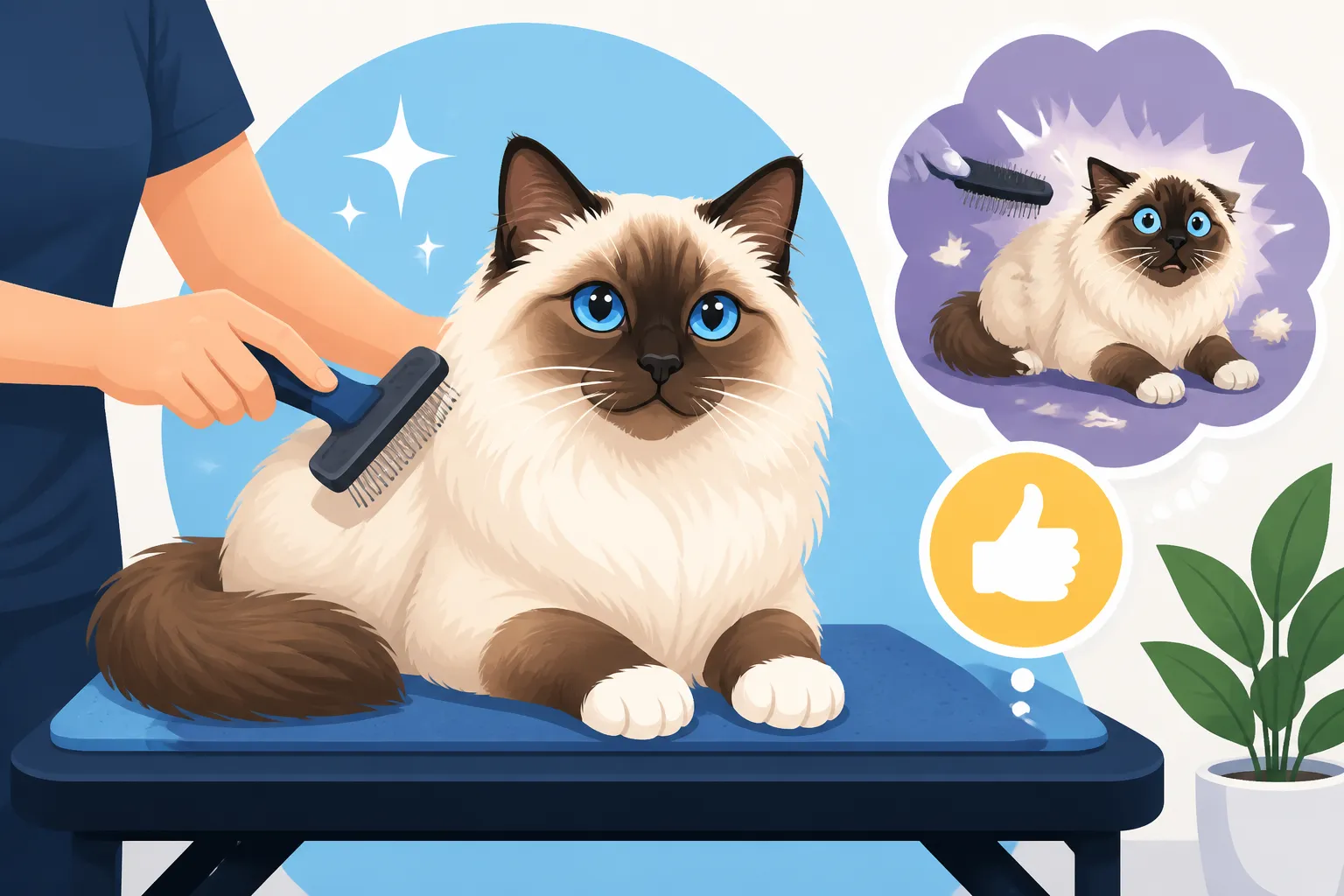
It might seem like a small detail, but simply elevating your Birman onto a table for grooming creates a significant psychological shift that can lead to far better behavior. When you’re on the floor or a sofa, you’re often seen as being on their level, which can make them feel more empowered to dictate the terms of the interaction. Moving them to a designated, elevated space subtly communicates that this is a specific activity with a specific set of rules, and often, it makes them more compliant.
Establishing the "Grooming Zone"
Think about it from your Birman's perspective. When you sit on the floor, you're entering their domain. They have easy escape routes, familiar hiding spots, and the comfort of their everyday surroundings. This can lead to them constantly trying to wriggle away, playfully batting at the comb, or simply deciding they've had enough and making a dash for it. The moment you place them on a table, especially one they don't associate with other casual interactions like playtime or napping, you're defining a new space just for grooming. This "grooming zone" sets a boundary, making it clear that for this short period, this is where the action happens.
This isn't about dominance, but about clear communication. Cats thrive on routine and understanding what's expected of them. A dedicated grooming table, even if it's just a sturdy kitchen table covered with a non-slip mat, helps them understand that when they are here, it's grooming time. It removes the ambiguity of a floor session where they might think it's just another cuddle or play opportunity that they can end at will. Suddenly, the focus is entirely on the task at hand, which can be incredibly calming for some Birmans.
The Power of Elevation and Stillness
The elevation itself plays a huge role. When a cat is on a table, they generally feel less secure about jumping down abruptly. This isn't to say they can't or won't try, but the perceived effort or risk is higher than simply strolling off a sofa. This slight hesitation often buys you precious moments of stillness, which are crucial for working through their silky coat. It helps them realize that resisting isn't as easy as it might be on a lower surface.
Furthermore, being elevated places them in a more vulnerable position, which, paradoxically, can make them more submissive to the grooming process. They rely on you for stability and safety in this new height, and this can foster a sense of trust and cooperation, provided the experience is consistently gentle and positive. You'll find that many Birmans, known for their Why a Birman rarely fights handling, respond well to this structured approach, offering less resistance than if they were being chased under a bed.
Setting Up Your Birman's Grooming Station
A successful grooming station isn't just any table; it's a carefully chosen and prepared space that prioritizes your Birman's safety and comfort, and your own ease of use. The right setup can make all the difference in turning a challenging task into a smooth, efficient routine.
Choosing the Right Surface and Location
First things first: choose a stable, sturdy table that won't wobble or slide. A kitchen island, a sturdy folding table, or even a robust desk can work. The surface should be at a comfortable height for you so you're not bending over excessively, which can strain your back and make you less patient. A surface that's too low will encourage you to hunch, while one that's too high can make it difficult to maintain control over your cat.
Next, you absolutely need a non-slip surface. Cats, especially those with fluffy paws, can feel very insecure on a slick tabletop, leading to anxiety and attempts to escape. A thick bathmat with a rubber backing, a non-slip yoga mat cut to size, or even a dedicated grooming mat can provide the necessary traction. You can find excellent options for non-slip mats on Amazon, which can be quickly rolled out and put away. This instantly boosts their confidence and reduces their impulse to struggle, knowing they have a firm grip. Position your grooming table in a quiet, well-lit area of your home, away from high traffic or sudden noises that could startle your Birman. Natural light is ideal for spotting those tiny mats or loose hairs.
Essential Grooming Tools and Their Placement
Having all your tools within arm's reach is paramount. There’s nothing worse than having your Birman settled, only for you to have to step away to grab a missing brush, breaking their concentration and potentially undoing all your good work. Prepare a small caddy or tray with everything you'll need:
- The Right Comb: For a Birman's silky, single coat, a metal comb with both wide and fine teeth is indispensable. Avoid slicker brushes, which can damage their delicate guard hairs. Which Comb Gets Through a Birman's Ruff Without Pulling is a great resource if you're unsure.
- Nail Clippers: Keep them sharp and clean.
- Ear Cleaner & Cotton Balls: For routine cleaning, if needed.
- Cat-Specific Toothbrush and Toothpaste: Crucial for oral hygiene.
- Treats: Small, high-value treats are your best friend for positive reinforcement.
- Wipes or Damp Cloth: For quick clean-ups, especially around their white gloves.
Organize these tools so they’re easy to grab without taking your eyes off your Birman. Some people use a small suction cup hook on the side of the table for clippers or a comb, while others prefer a tool belt. The goal is seamless access, minimizing disruption and maximizing focus on your cat. Remember, the investment in quality tools pays off in comfort for both you and your Birman; you can find a wide array of these tools on Amazon.
Adding Comfort and Familiarity
Even though it's a dedicated "work" space, it should still feel safe and somewhat inviting. You might place a favorite, small blanket or towel on the non-slip mat, something that carries your Birman's scent and offers an extra layer of softness. Some Birmans respond well to soft, calming music played quietly in the background, or even a pheromone diffuser plugged in nearby to help ease any anxiety.
Introducing the grooming table gradually is key. Don't just plop them on it and start combing. Let them explore it, offer treats on it, and make it a positive space before the actual grooming begins. This helps build a positive association, so they don't immediately dread the sight of the table. A routine can even include a special "table toy" that they only get when they are on the grooming table, helping them associate it with good things.
Training Your Birman for Table Grooming
Getting your Birman accustomed to table grooming isn't an overnight process, but with patience, positive reinforcement, and consistency, you can establish a routine that makes grooming a breeze. Remember, their placid nature makes them quite amenable to training when approached correctly.
Gradual Introduction and Positive Association
The trick here is to make the table a great place to be, even before you start combing. Begin by simply placing your Birman on the non-slip mat on the table for very short periods, just a minute or two. Don't do any grooming at first. As soon as they are on the table, offer a high-value treat and lavish them with gentle praise. Then, immediately take them off the table. Repeat this several times a day for a few days, gradually increasing the time they spend on the table. The goal is for them to associate the table with treats and positive attention, not with restraint or discomfort.
You want them to think, "Oh, table time! Treats are coming!" rather than "Uh oh, grooming prison." Keep these initial sessions super short and always end on a high note. If they show any signs of stress, like tail thumping or trying to jump down, calmly remove them and try again later, shortening the session next time. This early conditioning is vital; it helps to lay the groundwork for a cooperative grooming experience. How to Start Combing a Birman Kitten emphasizes the importance of these early habits.
Short, Consistent Sessions with Rewards
Once your Birman seems comfortable simply being on the table, you can introduce the comb. Again, start incredibly slowly. Just a few gentle strokes with the comb, followed immediately by a treat and praise. Focus on areas they tolerate well first, like their back or sides. Avoid sensitive areas like their belly or tail plume until they are fully relaxed with the comb. The sessions should remain short – five to ten minutes is often plenty – especially in the beginning. It's far better to have several short, positive sessions than one long, stressful one.
Consistency is key. Try to groom your Birman at the same time each day or every other day. Cats are creatures of habit, and a predictable routine reduces anxiety. Over time, your Birman will come to expect these sessions, and you'll likely find them much more cooperative. Remember the Birman's unique coat; Combing a Birman Three Times a Week is a good guideline, and frequent, short sessions are more effective than infrequent, marathon ones.
Teaching "Stand" and "Stay"
While not mandatory, teaching your Birman simple commands like "stand" and "stay" can be incredibly helpful for table grooming. You can use clicker training or verbal cues paired with treats. For "stand," lure them into a standing position with a treat, say "stand," click/praise, and reward. For "stay," ask them to stand, then take one step back, say "stay," click/praise, and reward if they remain. Gradually increase your distance and the duration of the "stay."
These commands give you more control and make it easier to reach all areas of their body without having to physically manipulate them as much. It also turns grooming into a more interactive, almost game-like experience for your Birman, engaging their mind as well as their body. Many Birmans are quite intelligent and Which Tricks a Birman Learns can be surprising. Using these skills during grooming makes the experience more about cooperation and less about passive tolerance.
Overcoming Common Challenges and Maintaining Good Habits
Even with the best intentions and a perfectly set up grooming station, you might encounter a few bumps in the road. Addressing these challenges patiently and consistently will help solidify good grooming habits for years to come.
Dealing with Resistance and Escape Attempts
Despite your best efforts, some Birmans might still protest or try to jump off the table, especially early on. It’s crucial to remain calm and firm. If they try to jump, gently but firmly block them with your hand or arm, without scolding. Immediately redirect their attention with a treat and a calm voice. If they continue to struggle, end the session and try again later, making the next session even shorter and more positive. Never punish them for trying to escape; this will only create negative associations with the table and with you.
For particularly wriggly cats, you might consider a grooming loop, which is a soft restraint that goes around their neck and attaches to an arm on the grooming table. These are commonly used by professional groomers and can be a lifesaver for safety, preventing falls and allowing you to have both hands free. Just ensure it's not too tight and never leave your Birman unattended with it. Always use it with kindness and as a safety measure, not as a punishment. Many types of grooming loops and arms are available for purchase on Amazon.
Addressing Specific Grooming Sensitivities
Birmans are generally tolerant, but every cat has their quirks. Some might hate their paws being touched (making How to Handle a Birman for Nail Trimming a challenge), others might dislike their tail plume being combed, or their belly. If you notice a particular sensitivity, approach that area with extra caution and only for very brief periods, pairing it with immediate, generous rewards. Slowly desensitize them to that touch over many sessions.
For instance, if paw touching is an issue, just gently touch a paw for a second, then treat. Gradually increase the duration and pressure. Make sure you're not pulling on their fur or being too rough; their single coat, while not prone to matting like a Persian's, can still be sensitive. Why a Birman's Single Coat Never Developed a Woolly Layer explains why their coat is so unique and easy to manage, but still requires a gentle touch. If your Birman starts showing signs of pain or discomfort, such as hissing or growling, stop immediately and consult your vet. Why a Placid Birman Hides Pain is a good reminder that changes in behavior can signal underlying issues.
Maintaining the Positive Routine
Once your Birman is a pro at table grooming, consistency remains key. Don't slack off on your regular sessions just because they're well-behaved. Continue with your scheduled comb-outs, always ending with a treat and praise. This reinforces the positive association and prevents them from regressing to old habits. Regularly check your tools, ensuring combs are clean and clippers are sharp, so grooming sessions remain smooth and comfortable.
Consider incorporating other routine care into your table sessions, like cleaning ears or brushing teeth. Because the table is already established as the "care zone," these additional tasks often meet with less resistance. A good tip is to reserve a very special treat or toy that only comes out during grooming time. This makes the session something they genuinely look forward to, rather than just tolerating. What a Birman Will Work For During Grooming often involves their favorite treat, making the experience rewarding.
Comparison Table: Grooming on the Floor vs. Table
| Feature | Grooming on the Floor/Lap | Grooming on a Table |
|---|---|---|
| Cat's Perceived Control | High; easy escape routes, feels more like casual interaction | Lower; designated space, subtle authority shift, fewer escape routes |
| Your Physical Comfort | Often poor; hunching, awkward positions, back strain | Better; ergonomic height, less bending, easier access to all areas |
| Cat's Security | Can be insecure on slick floors, but familiar environment | Enhanced with non-slip mat, feeling of stability, contained |
| Focus & Cooperation | Often distracted, playful, prone to wriggling away | More focused, less likely to resist due to established routine |
| Safety | Risk of accidental injury if cat suddenly bolts | Safer due to containment and non-slip surface, less chance of falls |
| Efficiency | Slower, more interruptions, harder to reach all areas | Faster, smoother, easier to maintain control and complete tasks |
| Training Reinforcement | Harder to establish clear boundaries for "grooming time" | Easier to build positive associations with a dedicated "grooming zone" |
By consistently using a table, you're not just making grooming easier; you're strengthening your bond with your Birman through a predictable, positive, and safe routine.
Disclaimer
This article is for general informational purposes only and does not constitute professional advice. Laws, prices and regulations vary by location and change over time. Consult a qualified professional for guidance on your specific situation.