What a Birman Kitten Should Learn by Twelve Weeks
Bringing home a Birman kitten is an incredibly exciting time, but it can also feel a little overwhelming when you consider all the things they need to learn in their crucial early weeks. It’s not just about providing food and shelter; it's about setting them up for a lifetime of confidence, good health, and harmonious living within your family. Many new owners wonder, "What exactly should my Birman kitten understand and be comfortable with by the time they hit that three-month mark?" This guide will walk you through the essential milestones and foundational lessons your Birman kitten should have under their belt by twelve weeks of age, preparing them to be the gentle, loving companion you’ve dreamed of.
Early Socialization: Building a Confident Companion
The first twelve weeks of a Birman kitten's life are absolutely paramount for socialization. While a responsible breeder will have already laid much of this groundwork, it's essential for new owners to continue and reinforce these lessons. A well-socialized Birman kitten will grow into a calm, confident adult, less prone to fear or aggression, and more adaptable to new situations and people.
Comfort with Human Handling and Interaction
By twelve weeks, your Birman kitten should be quite accustomed to being gently handled by humans. This isn't just about cuddles; it involves being picked up, held, and having various parts of their body touched. Think about the regular vet visits they'll have throughout their life – the vet will need to check their ears, paws, and mouth. If these sensations are completely new and frightening, it can make routine care incredibly stressful for both your kitten and the veterinary team.
A kitten that has been handled regularly from a young age will typically be more relaxed when you need to inspect their paws for litter debris or check behind their ears. This early exposure helps them associate human touch with comfort and safety, rather than a threat. Gentle stroking, holding them close, and even simulating a quick health check-up (like opening their mouth gently or looking in their ears) are all crucial experiences. Remember, Birmans are known for their placid temperament, which makes them generally quite accepting of handling, but consistency is key. You can find excellent resources on how to approach this, such as How to Handle a Birman Kitten From Day One, which details the specific techniques to use.
Exposure to Sights, Sounds, and New Experiences
Beyond just human touch, a twelve-week-old Birman kitten needs to be exposed to a variety of normal household sights and sounds. This includes things like the vacuum cleaner running, the washing machine humming, children playing, or the doorbell ringing. Sudden, loud noises can be startling, but if they've heard these sounds regularly and calmly in their formative weeks, they'll learn that most of these noises are just part of everyday life and nothing to be afraid of.
Imagine bringing home a kitten that has only known the quiet solitude of a breeding cattery. The hustle and bustle of a busy family home could easily overwhelm them. By contrast, a kitten that has spent its early weeks in an active household will likely be more resilient. Their environment during this period shapes their perception of the world. A confident Birman kitten will explore new rooms, investigate new objects (safely, of course), and gradually acclimate to the rhythm of your home without constant fear. This early broadening of their world also helps them be more comfortable in a carrier, which is essential for vet visits and safe travel. Consider investing in a comfortable carrier, perhaps one from Amazon, that allows them to see their surroundings, making trips less stressful. Which Carrier Suits a Birman offers great advice on choosing the right one.
Learning Polite Play and Boundaries
One of the most important lessons a Birman kitten should learn by twelve weeks is how to play politely with humans. Those tiny kitten claws and teeth might seem adorable now, but letting a kitten use you as a chew toy can quickly lead to painful habits as they grow. By twelve weeks, a kitten should understand that hands and feet are for petting, not for biting or scratching during play.
This lesson is often taught through redirection. If your kitten starts to nip or scratch, immediately offer an appropriate toy instead. Withdraw attention for a moment if they persist, teaching them that rough play with humans ends the fun. Birmans are known for playing gently, as explored in Why a Birman Plays Gently, but even the most serene kitten needs guidance. They also need to learn appropriate boundaries, such as not jumping on countertops or scratching furniture. While full mastery takes time, the initial understanding of "no" and consistent redirection away from forbidden areas or objects should begin early.
Litter Box Mastery and Basic House Rules
A key aspect of welcoming a kitten into your home is ensuring they are reliably litter trained and understand the fundamental rules of indoor living. By twelve weeks, a Birman kitten should have a solid grasp of where to relieve themselves and what objects are acceptable for scratching.
Consistent Litter Box Usage
By twelve weeks, your Birman kitten should be consistently using the litter box. This means understanding that the litter box is the designated spot for their business, not your favorite rug or behind the sofa. Most reputable breeders will have already initiated litter training, so your kitten will likely arrive with a good head start. However, the transition to a new home, new litter, and a new box can sometimes cause temporary regressions.
To reinforce good habits, always place your kitten in the litter box shortly after they wake up, after meals, and before bed. Praise them gently when they use it correctly. Ensure the litter box is clean, easily accessible, and in a quiet, private location. Birmans often appreciate a slightly larger box due to their lengthy bodies. Pay attention to the type of litter you use; some Birmans are particular about texture. Why a Birman Needs a Litter That Does Not Stain might offer some insights into litter choices, especially with their beautiful white gloves. If accidents happen, clean them thoroughly with an enzymatic cleaner to eliminate odors that might attract your kitten back to the same spot. Never punish a kitten for an accident; it only teaches them to hide their activities.
Scratching Post Preference
Beyond the litter box, another crucial house rule for a twelve-week-old Birman kitten is learning to use a scratching post or pad instead of your furniture. Kittens naturally need to scratch to condition their claws, stretch their muscles, and mark their territory. Providing attractive, appropriate scratching surfaces from day one is essential.
Offer a variety of scratching options – vertical posts, horizontal pads, cardboard scratchers – in different materials like sisal, carpet, or corrugated cardboard. Place these posts in prominent areas where your kitten likes to stretch or where they might otherwise be tempted to scratch furniture. When you see your kitten scratching appropriately, offer praise and maybe even a small treat. You can also gently guide their paws to the post. If they attempt to scratch something inappropriate, calmly redirect them to their designated post. Consistency in this training prevents future problems and saves your furniture from becoming a shredded mess.
Understanding Simple Cues and Their Name
While Birmans aren't typically known for being highly vocal or demanding, a twelve-week-old kitten should be starting to recognize their name and perhaps a few simple cues. Calling their name before feeding or during playtime helps them associate it with positive experiences. They might not always come immediately, but a head turn or a pause in their activity shows recognition.
You can also start teaching very basic commands, such as a gentle "no" or "come." Use a calm, consistent tone. Birmans are often motivated by praise and gentle attention more than food treats, as discussed in Why Praise Motivates a Birman More Than Food, so showering them with positive reinforcement when they respond is highly effective. These early lessons in communication strengthen your bond and make managing their behavior much easier as they grow.
Grooming Fundamentals: A Lifetime of Comfort
Birmans are beautiful cats with stunning, silky coats that, thankfully, are relatively low-maintenance due to their lack of an undercoat. However, introducing grooming habits early is critical to ensure a lifetime of comfortable, stress-free care. By twelve weeks, your Birman kitten should be accustomed to short, gentle grooming sessions.
Introduction to Combing and Brushing
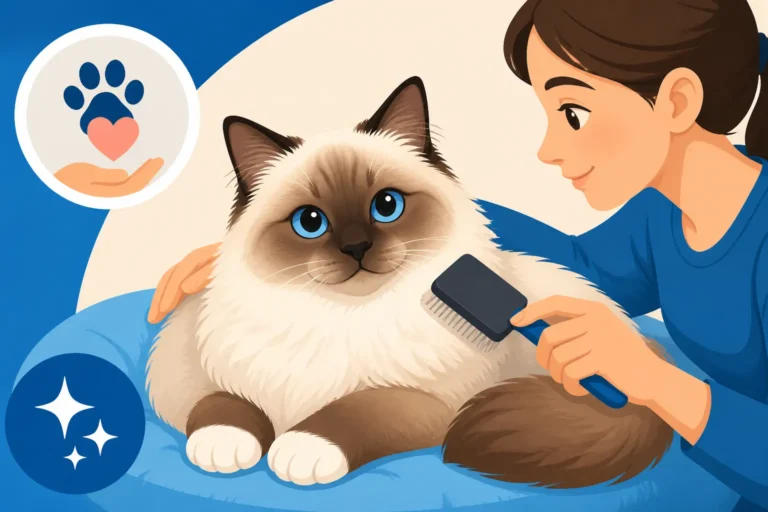
Even though a Birman's coat is less prone to matting than some other long-haired breeds, regular combing is still necessary. By twelve weeks, your kitten should be introduced to a soft brush or a wide-toothed comb. Start with very short sessions, just a minute or two at a time, making it a positive experience with praise and gentle strokes. The goal is to create a pleasant routine, not a battle.
Focus on areas they might be sensitive about later, like their belly, underarms, and the fluffy britches around their rear. Familiarizing them with the comb now will prevent them from developing a dislike for it when they are older and their coat is fuller. A smooth-toothed metal comb, easily found on Amazon, is often perfect for a Birman's fine, silky hair. How to Start Combing a Birman Kitten provides excellent tips on making these first sessions successful and establishing a routine that works for both of you.
Accepting Nail Trims
Trimming your kitten's claws regularly is vital for their health and your furniture's longevity. By twelve weeks, your Birman kitten should begin to tolerate having their paws handled and claws gently clipped. Again, start slowly. Hold a paw gently, press lightly on a toe pad to extend a claw, and offer praise. Even if you only manage to trim one nail during the first few sessions, consider it a victory!
Use sharp, cat-specific nail clippers. Ensure you only snip the very tip of the clear part of the claw, avoiding the pink quick, which contains blood vessels and nerves. A positive association with nail trims now will make it significantly easier when they're an adult. If they resist, stop, give them a break, and try again later. Never force the issue, as it can create a lasting negative impression.
Early Dental Care Introduction
Dental health is often overlooked in kittens, but it's a foundation for a healthy life. By twelve weeks, you can start introducing your Birman kitten to basic mouth handling. This doesn't necessarily mean full-fledged brushing yet, but getting them used to having your fingers gently placed in and around their mouth.
Gently lift their lips to inspect their tiny teeth and gums. Praise them for tolerating it. You can even try dabbing a tiny bit of pet-specific toothpaste (never human toothpaste!) on your finger and letting them lick it off. This introduces them to the taste and texture without the pressure of a brush. As they get older, you can gradually introduce a soft, finger-sized toothbrush. Introducing a Toothbrush to a Birman Kitten offers a step-by-step approach to make this process smooth and positive. Early dental habits can significantly reduce the risk of dental disease later in life.
Play and Exploration: Nurturing Their Gentle Nature
Birmans, while generally placid, are still kittens with a natural instinct to play and explore. By twelve weeks, a Birman kitten should be engaging in healthy play patterns and learning how to safely explore their environment. This stage is crucial for their physical and mental development.
Engaging with Appropriate Toys
A twelve-week-old Birman kitten should be actively engaging with a variety of appropriate toys. This includes things like wand toys, crinkle balls, soft mice, and puzzle feeders. Play is not just entertainment; it's how kittens develop their hunting skills, coordination, and problem-solving abilities. Interactive play with you, using wand toys, is especially important as it mimics hunting and stalking without involving your hands directly.
Observe how your kitten plays. Are they swatting, pouncing, or chasing? Provide toys that cater to these natural instincts. Rotate toys periodically to keep things fresh and interesting. Birmans generally have a calmer play style compared to more high-energy breeds. As highlighted in How Rough a Birman Kitten Plays, they tend to be gentle in their interactions, which makes toy selection a bit easier as you won't need super-durable items for aggressive play. You can find a vast selection of engaging and safe kitten toys on Amazon, perfect for encouraging healthy play.
Safe Exploration and Climbing
Kittens are naturally curious and love to explore their surroundings. By twelve weeks, your Birman kitten should be confidently (but safely!) exploring your home. This means they should be comfortable moving around, investigating new smells and sights, and perhaps even attempting some gentle climbing. Birmans aren't typically avid climbers, often preferring mid-height perches or cozy spots on the sofa.
Ensure your home is kitten-proofed: secure loose cords, put away toxic plants, and block off any dangerous nooks or crannies. Provide safe, sturdy perches or low cat trees where they can observe their domain from a slight elevation. Encourage exploration with treats or gentle calls, rewarding them for venturing into new, safe areas. This fosters confidence and helps them become more comfortable in their new home. Remember that even though Birmans are inherently gentle, they thrive on companionship, and a lonely kitten might become withdrawn. Why a Birman Does Better With a Companion Than a Toy explains the importance of interaction for their well-being.
Establishing a Routine
While kittens are adaptable, establishing a predictable routine by twelve weeks provides a sense of security and helps them understand what to expect. This includes consistent feeding times, playtime sessions, and bedtime rituals. A routine helps them feel safe and reduces anxiety, particularly important for a Birman kitten who is still adjusting to a new environment after leaving their mother and littermates.
A typical daily routine for a twelve-week-old Birman might involve breakfast, a playtime session, a nap, another playtime session, dinner, and a final quiet play before bedtime. Consistency helps with litter training, feeding schedules, and overall contentment. While the period before twelve weeks is spent with the breeder, much of the foundation for these routines is set there. As the new owner, you continue this important work, building on what the breeder started, as detailed in Why a Birman Kitten Is Sold Late.
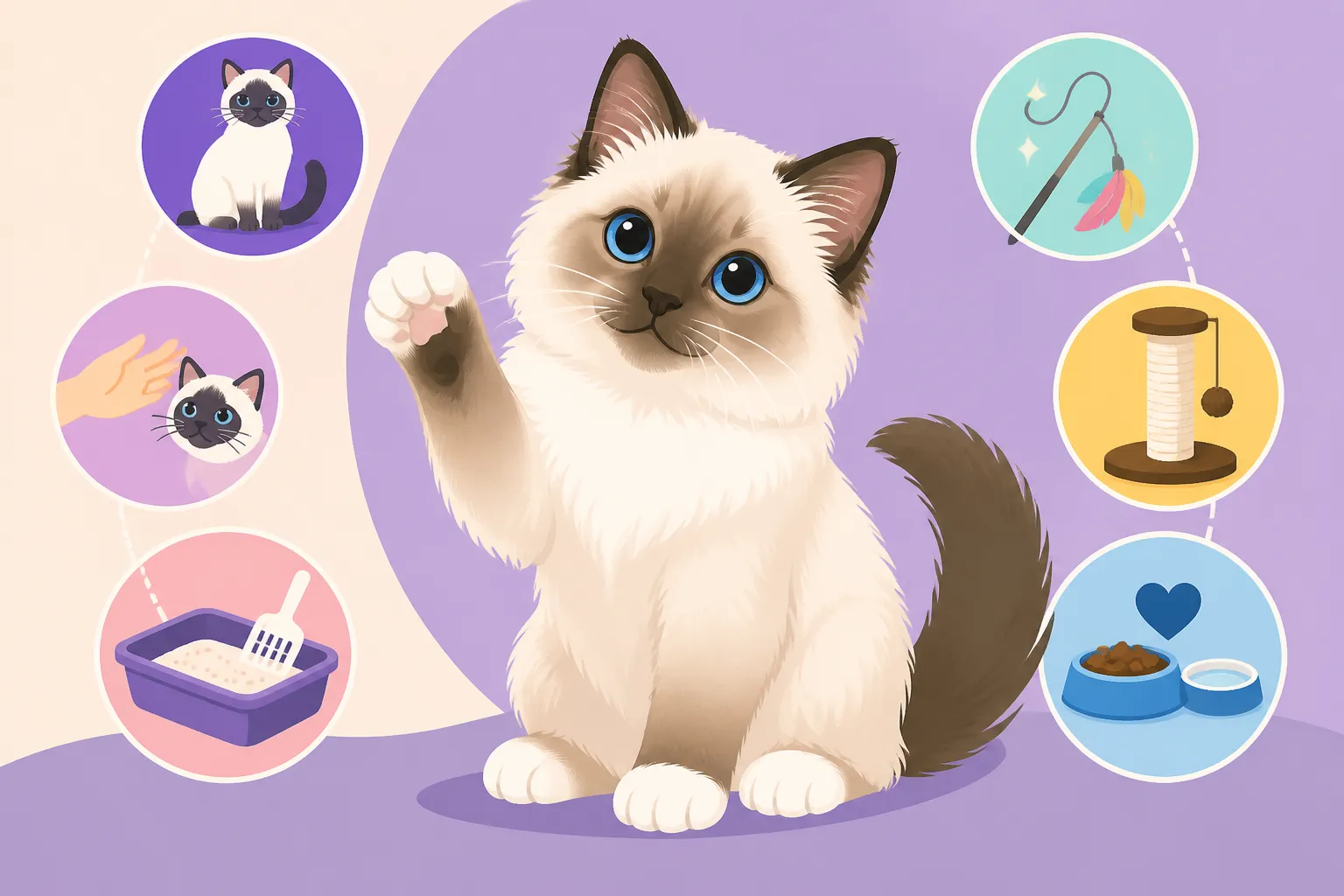
Here's a quick overview of what your Birman kitten should be learning by their twelfth week:
| Category | Key Learnings & Comfort Levels |
|---|---|
| Socialization | Comfortable with gentle human handling (picking up, petting, paw/ear/mouth touches). |
| Accustomed to common household sights and sounds. | |
| Understands polite play with humans (no biting/scratching hands, redirects to toys). | |
| House Rules | Consistently uses the litter box. |
| Reliably uses a scratching post instead of furniture. | |
| Responds to their name and simple verbal cues. | |
| Grooming | Tolerates short, gentle combing sessions. |
| Accepts having paws handled and quick nail trims. | |
| Introduced to mouth handling and (optionally) pet-safe toothpaste. | |
| Play & Explore | Engages with appropriate toys (wand toys, soft balls). |
| Safely explores their environment. | |
| Has a developing daily routine (feeding, play, rest). |
By focusing on these areas during your Birman kitten's early weeks, you're not just raising a pet; you're nurturing a well-adjusted, happy, and loving family member who will bring immense joy to your home for many years to come.
Disclaimer
This article is for general informational purposes only and does not constitute professional advice. Laws, prices and regulations vary by location and change over time. Consult a qualified professional for guidance on your specific situation.