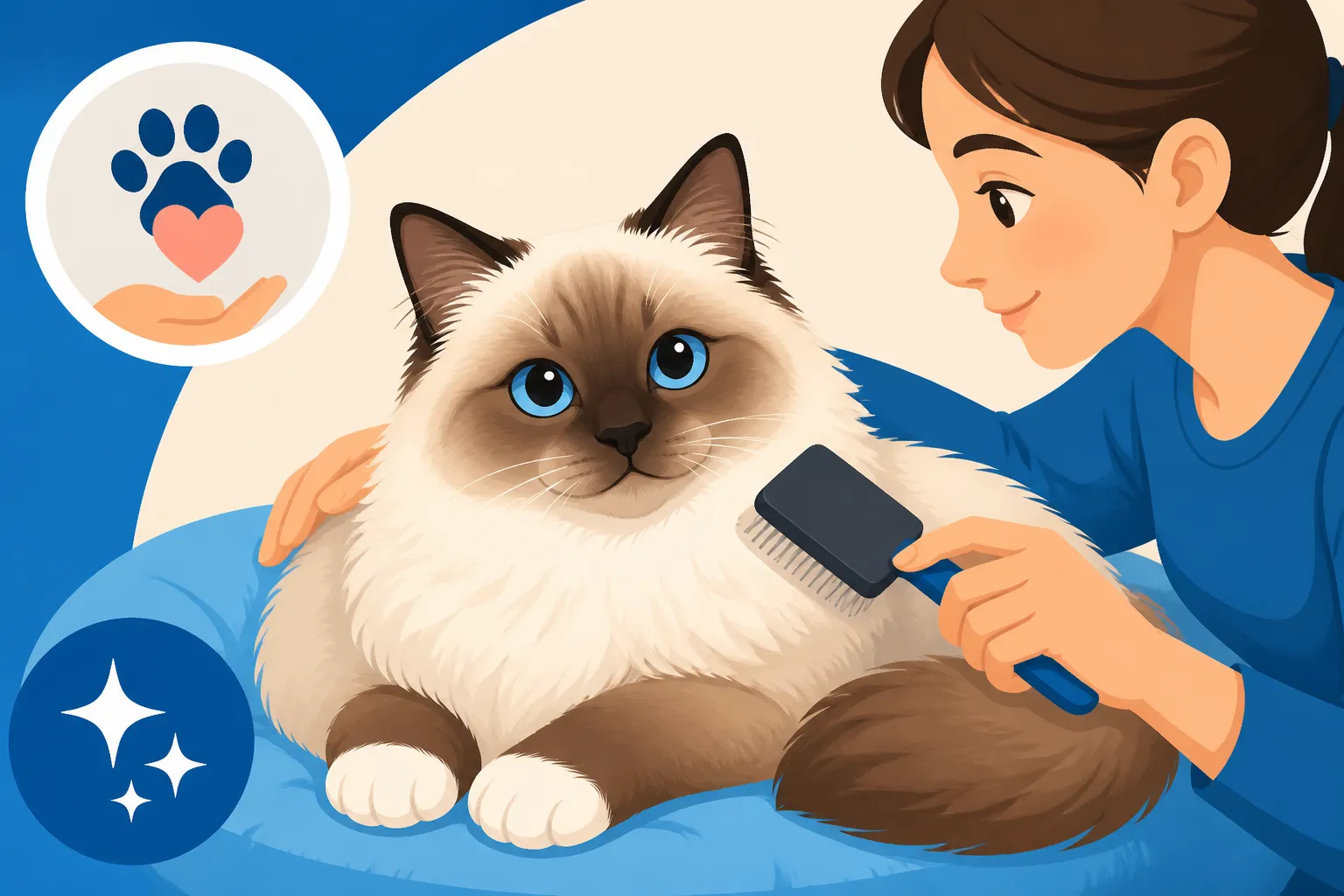
How to Get a Birman Used to Grooming
It's a common misconception that because Birmans have that flowing, silky single coat, they don't really need much grooming. Oh, how wrong that can be! While they might not mat as furiously as some double-coated breeds, teaching your Birman to accept and even enjoy grooming from an early age is absolutely crucial for their long-term health and happiness. This guide is all about making those grooming sessions stress-free for both of you, setting up habits that will last a lifetime.
Understanding the Birman Coat: Why Grooming Matters (Even if it Seems Easy)
Many new Birman owners look at that gorgeous, flowing coat and think, "Well, it looks like a lot, but I hear it's low maintenance!" And yes, compared to a Persian, it certainly is. But "low maintenance" doesn't mean "no maintenance," and overlooking regular grooming can lead to uncomfortable issues for your beloved feline companion. The unique texture of their fur, combined with their placid nature, means you have a specific set of needs to address.
The Birman's Unique Single Coat Explained
Unlike many other long-haired breeds, the Birman boasts a truly magnificent single coat. What does this mean for you? It means no dense, woolly undercoat to trap shed hair and create felt-like mats deep against the skin. Instead, their fur is soft, silky, and tends to lie flat, giving them that elegant, almost regal appearance. This is a huge bonus because it translates to significantly less matting than you might expect from a cat with such a luxuriant mane. You might notice the glorious ruff around their neck, the bushy tail, and the feathery britches on their hind legs – these are the areas where the fur is longest and most prone to tangles if neglected. What Makes a Birman's Coat Silky Rather Than Woolly dives deeper into this topic.
However, "silky" doesn't mean "invulnerable." While the lack of an undercoat does reduce the overall matting risk, those beautiful long guard hairs can still tangle, especially in high-friction areas or if your Birman isn't grooming itself as thoroughly as it should. Think of it like long human hair – it still needs brushing to stay knot-free and healthy. The benefit here is that when a Birman's coat does get a tangle, it's often more superficial and easier to work through than the deep, painful mats found in cats with dense undercoats. This makes your job as a groomer a little easier, provided you stay on top of it.
The Hidden Truth About Mats and Tangles in a Silky Coat
Despite their famously "easy" coats, Birmans can and do get mats. It's usually not the all-over dense matting you'd see on a neglected Persian, but rather smaller, insidious tangles that form in specific spots. Common culprits include behind the ears, under the armpits, in the britches, and along the flank where they might rub against furniture or their own legs. These areas experience more friction, and the fine, silky hair can quickly knot together, especially if a bit of moisture or dirt gets involved. Why a Birman Mats Far Less Than It Looks Like It Should covers this in more detail.
These mats, even small ones, aren't just an aesthetic problem. They can become tight and pull on the skin, causing discomfort and even pain. Imagine a persistent knot in your own hair, constantly tugging. For a Birman, this can lead to skin irritation, hot spots, or even infections if moisture gets trapped underneath. A matted area can also restrict movement, making your cat reluctant to stretch or play. And let's not forget the sheer difficulty of removing an established mat – it's far less stressful for everyone if you prevent them in the first place with regular, gentle combing. Ignoring a small tangle today means a bigger, more painful one tomorrow, and that's something we want to avoid for our serene Birmans.
Beyond the Brush: Other Essential Grooming Needs
Grooming a Birman isn't just about keeping their coat pristine; it's a holistic approach to their well-being. Their dental health, nail care, and even ear cleanliness are vital components that often get overlooked. Birmans, like many purebred cats, can be prone to dental issues, and their gentle nature means they often hide discomfort, making regular mouth checks and brushing even more important. Their claws, though often kept somewhat blunted by scratching posts, still need trimming to prevent them from becoming too long, snagging on things, or curling into their paw pads.
And then there are those beautiful, expressive blue eyes and neat little ears. While Birmans aren't typically a breed with excessive tear staining or ear wax issues, a quick check and gentle wipe during a grooming session can catch potential problems early. These aspects of grooming contribute significantly to your Birman's overall comfort and health, preventing larger, more expensive, and more stressful veterinary visits down the line. It's about proactive care, not just reactive fixes, and your Birman will thank you for it with continued purrs and gentle head-butts.
Starting Early: Laying the Foundation for a Lifetime of Calm Grooming
The single most effective strategy for ensuring your Birman tolerates and even enjoys grooming throughout its life is to start early. Seriously, the moment that little fluffball comes home, the clock starts ticking on forming positive associations with handling and grooming tools. Waiting until they're older and more set in their ways is a recipe for struggle and resentment, making every session a battle of wills.
The Critical Window: Introducing Grooming to a Birman Kitten
When you bring home a Birman kitten, typically around 12-14 weeks old, they are in a crucial developmental stage where they are highly impressionable. This is your golden opportunity to introduce them to the sights, sounds, and sensations of grooming. Think of it as socialisation for their skin and fur. A kitten that learns that a comb is a source of gentle strokes and yummy treats will be a vastly different adult cat from one who only experiences the brush when a mat has already formed and needs painful removal.
Begin with very short sessions – literally a minute or two at first. Don't aim for a full comb-out. The goal is simply exposure and positive reinforcement. Let them sniff the comb, gently touch it to their fur, and then reward them immediately with a high-value treat or a favourite toy. Consistency is more important than duration in these early weeks. You're building a mental framework where "grooming tool equals good things," and that foundation is priceless. How to Start Combing a Birman Kitten offers specific steps for this early introduction.
Gentle Handling and Positive Associations from Day One
Birman kittens are generally placid and curious, making them ideal candidates for this early positive conditioning. Your approach should always be calm, gentle, and reassuring. Avoid any sudden movements or forcing them into positions they dislike. Start by simply petting them all over, especially in areas that will be groomed later: under the chin, behind the ears, along their back, and even gently touching their paws. Pair these touches with soothing words and treats. This teaches them to associate handling with comfort, making the introduction of tools much smoother.
When you introduce a comb or brush, let them investigate it. Rub it lightly against your own hand first, then gently stroke it over their back for a few seconds. If they remain relaxed, offer a treat. If they show any sign of discomfort – tail twitching, flattened ears, trying to pull away – stop immediately, give them a cuddle, and try again later with an even shorter duration. It's crucial not to push them to the point of fear or struggle. Your patience now will pay dividends for years to come. Think of every interaction as building trust; a frightened cat will never be a willing grooming partner.
Short, Sweet, and Frequent: The Kitten Grooming Session
In those first few months, forget about trying to achieve a perfectly coiffed Birman. Your mission is simply to make grooming a pleasant, regular part of their day. Keep sessions brief – no more than 5-10 minutes tops, especially in the very beginning. It's far better to do two or three very short, positive sessions a day than one long, stressful one. This consistent, gentle exposure ensures that grooming doesn't feel like a punishment or an ordeal.
During these short sessions, focus on areas they tolerate well, like their back or sides. Gradually, over days and weeks, you can extend to more sensitive areas like their belly, underarms, and paws. Always end on a positive note, even if it's just one last gentle stroke and a treat before you put the tools away. This reinforces the idea that grooming leads to good things and that they can trust you to respect their comfort level. How to Handle a Birman Kitten From Day One offers more insights into gentle handling.
Gathering Your Arsenal: Essential Grooming Tools for Your Birman
Having the right tools for the job makes all the difference, not just for efficiency but for your Birman's comfort. Using the wrong comb can pull at their delicate fur, causing pain and making them dread future sessions. Investing in a few key items will set you up for success and make the whole process much smoother for both of you. You don't need a huge collection, just the right ones.
Choosing the Right Comb: A Birman's Best Friend
For a Birman's silky, single coat, a good quality metal comb is your best friend. Forget the slicker brushes or de-shedding tools designed for cats with thick undercoats – these can actually damage a Birman's fine guard hairs and cause static or breakage. Look for a comb with both wide and fine-toothed sections. The wide teeth are great for general combing through the body and ruff, while the finer teeth can be used gently on the face or to work out small tangles.
Many Birman owners swear by a simple, sturdy greyhound comb, which you can easily find on platforms like Amazon. These are designed to glide through long fur without snagging. Start with the wider teeth to detangle, then follow up with the finer teeth for a smooth finish. Always comb gently, working section by section, starting from the ends of the fur and working your way towards the skin. Never pull or yank; if you encounter a knot, work it out slowly with your fingers and the wide-toothed section. Which Comb Gets Through a Birman's Ruff Without Pulling provides more detail on comb selection.
Tackling Claws and Teeth: Beyond the Comb
Beyond the coat, you'll need specific tools for nail and dental care. For nails, a pair of sharp, cat-specific nail clippers is essential. There are scissor-style and guillotine-style clippers; choose whichever feels most comfortable and secure in your hand. The key is sharp blades for a clean cut that doesn't splinter the nail. Introducing these clippers early and pairing them with positive reinforcement will make nail trims much less of a struggle. Trimming the Claws Inside a Birman's White Gloves can guide you further.
For dental care, a soft-bristled cat toothbrush and enzymatic pet toothpaste (never human toothpaste!) are crucial. Your vet can recommend good brands. Cat toothbrushes come in various designs, including tiny brushes that fit over your finger, which can be less intimidating for a cat new to dental hygiene. The goal here is consistency, even if it's just a quick brush of the outer surfaces of their teeth for a minute or two daily. Regular tooth brushing can significantly reduce the risk of painful dental disease as they age.
Specialty Items for Spot Cleaning and Emergencies
While Birmans generally keep themselves quite clean, having a few specialty items on hand can be a lifesaver. Keep some pet-safe ear cleaner and soft cotton balls (never cotton swabs, which can push debris deeper) for occasional ear cleaning if recommended by your vet. For those beautiful white "gloves" that are prone to getting a bit dingy from litter or outdoor adventures (if your Birman is an adventurous indoor cat), a gentle, pet-safe whitening shampoo designed for white coats can be invaluable for spot cleaning. Keeping a Birman's White Gloves White offers specific tips.
You might also consider a pet-safe detangling spray for stubborn knots, but use it sparingly and ensure it's specifically formulated for cats to avoid skin irritation or if ingested. A pet-specific stain and odour remover is also handy for accidents. Having these tools ready means you're prepared for any eventuality, minimizing stress when a quick fix is needed. It’s about being proactive and ready for the unexpected, which helps keep your Birman comfortable and your home clean. You can find many of these specialized grooming aids easily on Amazon, with various brands and types to suit your Birman's specific needs.
Establishing a Routine: Consistency is the Key to Acceptance
Cats thrive on routine and predictability, and grooming is no exception. A consistent schedule helps your Birman understand what to expect, reducing anxiety and making them more cooperative. It's not about being rigid, but about creating a rhythm that fits into both your lives, turning a potential chore into a calm bonding experience.
Finding Your Birman's "Happy Time" for Grooming
Every cat has its own unique rhythms throughout the day. Some are more energetic in the morning, others mellow out in the afternoon, and some are most affectionate in the evening. Pay attention to your Birman's natural cycle. When are they most relaxed? Perhaps after a nap, or just before dinner when they're feeling a bit sleepy and content. This "happy time" is your ideal window for grooming.
Trying to groom a cat when they're feeling playful, restless, or just plain grumpy is asking for trouble. If you force the issue during an active period, they'll associate grooming with being held down or interrupted, leading to resistance. Instead, pick a time when they're already settled and amenable to being handled. For example, if your Birman enjoys a quiet cuddle on the sofa in the evenings, that might be the perfect moment for a gentle comb-through while they purr contentedly. Combing a Birman Three Times a Week suggests a frequency that can easily fit into these "happy times."
Creating a Dedicated Grooming Space
Just like humans often feel more comfortable and focused in a designated workspace, cats can benefit from a specific "grooming zone." This doesn't need to be fancy – a quiet corner of a room, a specific spot on the sofa, or even a soft mat on a table (if your Birman is comfortable being on a raised surface) can work. The key is consistency. When grooming always happens in the same place, your Birman learns to associate that location with the activity, preparing them mentally for what's coming.
Ensure the area is calm, well-lit, and free from distractions. Turn off loud music or the TV, ask family members to give you some space, and remove any toys that might tempt your Birman away from the task. Some owners even use a soft towel or blanket in their grooming spot, which can provide a sense of security and comfort. By having a predictable environment, you eliminate variables that could cause anxiety, making the entire process smoother and more predictable for your cat.
The Power of Predictability: How Routine Builds Trust
Cats are creatures of habit, and a predictable routine builds immense trust. When your Birman knows that every Tuesday, Thursday, and Saturday evening, for example, is "comb time" in the cozy corner, they'll be far less likely to resist than if grooming is a sporadic, unexpected event. This predictability reduces their stress levels because they understand the pattern and know what's expected of them.
Introduce the routine gradually. Start with your chosen "happy time" and "grooming spot," and consistently engage in those short, positive sessions. Over time, your Birman will start to anticipate these moments with less apprehension and more acceptance. It becomes just another part of their day, like feeding time or playtime. This trust is invaluable, especially as they get older and may need more thorough grooming, making life easier for both of you. Early Grooming Habits Decide a Birman's Life underscores the importance of this foundational work.
Making Grooming a Positive Experience: Rewards, Patience, and Understanding
Nobody likes a forced grooming session, especially not a cat. The secret to a successful, lifelong grooming relationship with your Birman lies in positive reinforcement, endless patience, and a deep understanding of their unique personality. Your Birman's placid nature is a huge asset here, but it doesn't mean you can take advantage of it.
The Art of Distraction: Keeping Your Birman Engaged
Sometimes, even the most patient Birman can get a little antsy during a grooming session. This is where the art of distraction comes in. A small, high-value treat can work wonders. Lickable treats in tubes or a dollop of safe cat paste on a plate can keep their attention focused on the delicious reward while you quickly work on a tricky spot. This isn't bribery; it's smart management, redirecting their focus from the mild annoyance of grooming to something they truly enjoy.
Interactive toys can also be effective for very short bursts. A feather wand or a laser pointer (used carefully, never shining in their eyes) can provide a moment of engagement while you tackle a quick comb through a less sensitive area. The key is to know your Birman and understand what truly captures their attention. If they are completely fixated on a treat, you have a better chance of getting a few more seconds of calm grooming done. However, always ensure the distraction doesn't make them too excited or wriggly, as this could lead to accidents.
Positive Reinforcement: Treats, Praise, and Play
Positive reinforcement is the cornerstone of successful Birman grooming. Every single time your Birman tolerates a comb stroke, allows you to touch their paw, or stays calm during a dental wipe, they deserve praise. Use a soft, happy voice, "Good cat! Such a good boy/girl!" and follow it up immediately with a small, tasty treat. The association needs to be instant and clear: "I allowed this, and now I get something wonderful."
Beyond treats, genuine affection and playtime are powerful motivators. A few minutes of their favorite interactive play after a grooming session reinforces that the whole experience ends on a high note. Why Praise Motivates a Birman More Than Food explains how Birmans respond to positive attention. The goal is to make them look forward to these moments, or at the very least, not dread them. This might mean starting with tiny steps – literally one comb stroke, then a treat – and gradually building up duration and intensity. Never underestimate the power of a gentle pet, a soothing voice, and a yummy reward in shaping their behaviour.
Recognizing and Respecting Your Birman's Limits
Even the most patient Birman has its limits. It’s crucial to pay close attention to their body language. Flattened ears, a swishing or thumping tail, dilated pupils, a sudden stiffness in their body, or trying to move away are all signs that they’ve had enough. Pushing past these signals can break their trust and undo weeks of positive conditioning. A Birman, with its placid temperament, might tolerate more than other breeds, but that doesn’t mean they’re enjoying it. Why a Placid Birman Hides Pain is an important read to truly understand this.
When you see these signs, it's time to stop. Give them a final stroke, a treat if they'll take it, and let them go. You can always try again later, or shorten the next session. It’s far better to have several short, pleasant sessions than one long, traumatic one. Building a positive relationship means respecting their boundaries. If there's an area they consistently dislike being groomed, approach it with extra caution and only for very brief periods, focusing on the areas they tolerate better, and working up to the trickier spots slowly over time. This mutual respect is what transforms grooming from a chore into a shared moment of care.
Troubleshooting and Advanced Tips: When Things Don't Go as Planned
Despite your best efforts, there might be times when grooming becomes a challenge. Mats can form unexpectedly, or your Birman might suddenly develop a strong aversion to a particular aspect of grooming. Don't despair! There are strategies you can employ to gently navigate these hurdles and keep your Birman comfortable and healthy.
Dealing with a Reluctant Birman: Gentle Persuasion vs. Force
If your Birman becomes resistant to grooming, perhaps due to a bad experience or simply an off day, forcing the issue is almost never the answer. Forcing will only escalate their fear and make future sessions even harder. Instead, take a step back and identify what changed. Is it a new tool? A different time of day? Are they in pain from an underlying issue (always rule this out with a vet visit first)?
Once you've ruled out health problems, return to the basics: very short sessions, high-value treats, and ending on a positive note. Use gentle persuasion rather than physical restraint. If they resist the comb, try using your hand to stroke their fur, then introduce the comb for just a few seconds, followed by a treat. If they hate nail trims, try doing just one claw at a time, perhaps over the course of an hour or two, rather than all at once. Patience is your most powerful tool. You might even want to try a pheromone diffuser in their grooming area, available on Amazon, which some owners find helps create a calmer atmosphere.
Mat Removal: A Delicate Operation
Finding a mat can be disheartening, especially if you've been diligent. But it happens! The key is to tackle it early and gently. Never try to brush through a mat, as this will pull on their skin and cause immense pain. Instead, use your fingers to gently try and tease the mat apart. Start at the very edges of the mat and work inwards, always supporting the skin at the base of the mat to minimize pulling.
For more stubborn mats, a wide-toothed metal comb can be used with extreme caution. Again, support the skin and use very short, gentle strokes, working from the outside in. Some owners find a dab of cornstarch or a pet-safe detangling spray can help reduce friction. If the mat is tight, close to the skin, or if your Birman is clearly in pain, do not try to cut it out yourself with scissors – it's far too easy to accidentally cut their skin. A quick trip to the vet or a professional groomer who specializes in cats is the safest option. They can painlessly shave out the mat, preventing injury and preserving your Birman's trust.
Maintaining Oral and Ear Hygiene in a Cooperative Cat
Once your Birman is cooperative with general combing, you can gradually expand your grooming efforts to include more consistent oral and ear hygiene. For teeth, aim for daily brushing, even if it's just a quick swipe across the outer surfaces of a few teeth. Use that cat-specific toothpaste and a soft brush. Reward generously after each attempt. Consistency is more important than perfection initially. Starting a Toothbrush Routine With a Placid Birman offers detailed guidance.
For ear cleaning, typically, Birmans don't require frequent intervention unless they have a medical condition. However, a quick visual check during grooming for redness, discharge, or foul odour is always a good idea. If you need to clean their ears, use a vet-approved ear cleaner and a cotton ball, gently wiping only the visible parts of the ear. Never insert anything into the ear canal. If you notice any signs of infection, consult your veterinarian immediately. These small, consistent acts of care contribute immensely to your Birman's overall health and well-being, proving that grooming is truly an act of love.
| Grooming Task | Frequency | Essential Tools | Key Technique |
|---|---|---|---|
| Coat Combing | 2-3 times/week | Metal comb (wide & fine teeth) | Section-by-section, ends to roots, gentle strokes |
| Nail Trimming | Every 2-4 weeks | Cat-specific nail clippers | Clip only the tip, avoid the quick, positive rewards |
| Teeth Brushing | Daily if possible | Cat toothbrush, enzymatic toothpaste | Gentle circles on outer surfaces, short sessions |
| Ear Checks | Weekly/Bi-weekly | Cotton balls, vet-approved cleaner | Inspect for redness/discharge, wipe visible areas only |
| Spot Cleaning | As needed | Pet-safe whitening shampoo | Target white gloves/britches, rinse thoroughly |
Disclaimer
This article is for general informational purposes only and does not constitute professional advice. Laws, prices and regulations vary by location and change over time. Consult a qualified professional for guidance on your specific situation.