Whether a Puzzle Feeder Interests a Birman at All
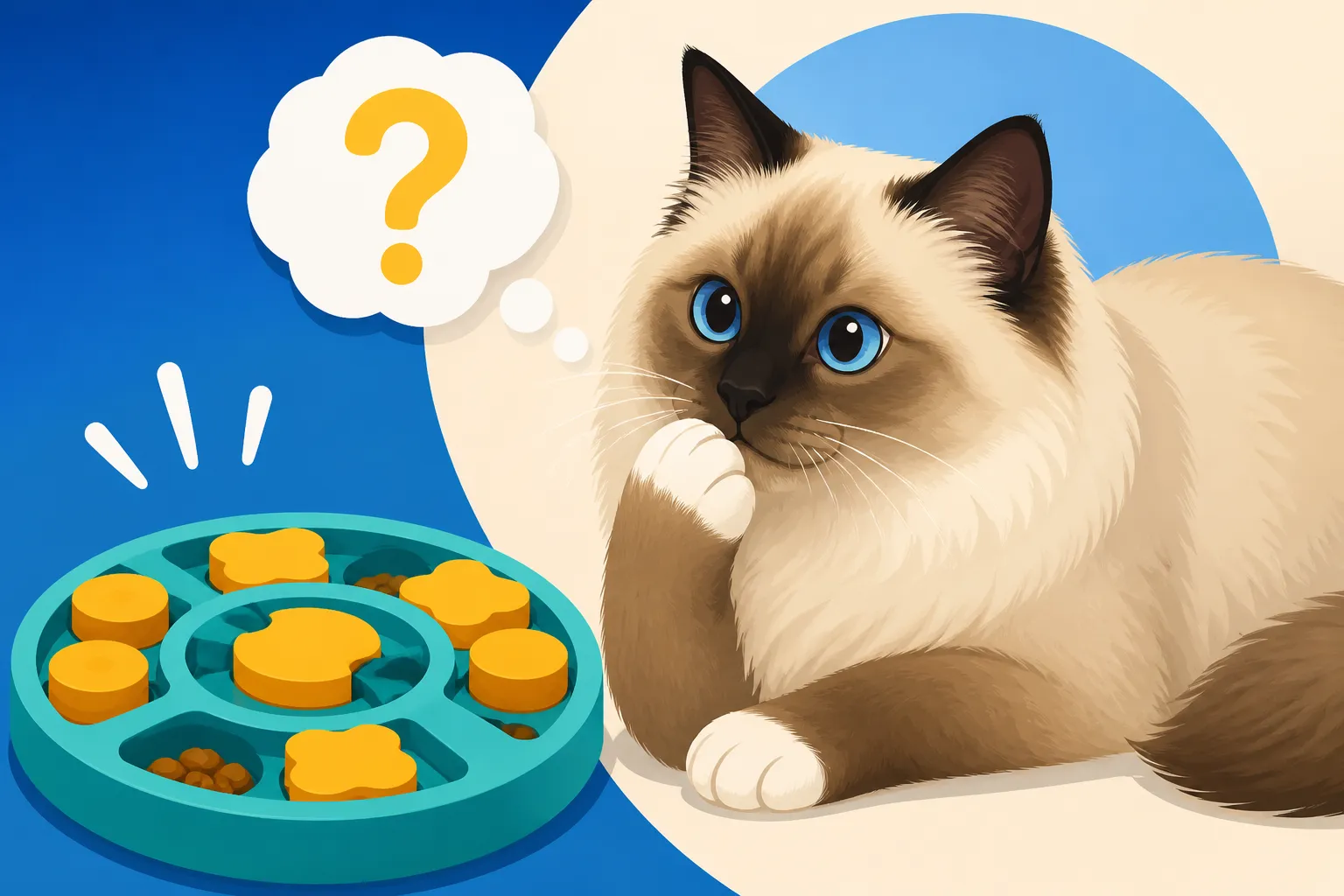
Many Birman parents wrestle with the challenge of keeping their calm, majestic feline friends truly engaged, especially when it comes to mental stimulation. Unlike some of their more boisterous cousins, Birmans aren't always keen on chasing laser pointers for hours or scaling cat trees to the ceiling. So, when you look at a puzzle feeder, a little voice might ask, "Will my serene Birman even bother with this?" This guide is here to unravel that very question, helping you understand if these clever contraptions can spark your Birman's gentle curiosity and provide valuable enrichment.
Understanding the Birman's Unique Play Style and Temperament
The Birman is a breed known for its distinctive personality, a beautiful blend of placid charm and quiet intelligence. This unique temperament significantly influences how they interact with their environment, including toys and enrichment tools like puzzle feeders.
The Birman's Gentle, Observant Nature
If you share your home with a Birman, you've undoubtedly noticed their calm and somewhat reserved demeanor. They're not typically the type to tear through the house in a frenzy of zoomies or demand constant, high-energy play. Instead, Birmans often prefer a more sedate, observational approach to life. They love to be near you, following you from room to room, often settling quietly at your feet or on a nearby sofa cushion. This isn't to say they don't play; rather, their play style is usually much more refined and less frantic.
When it comes to toys, a Birman might watch a new object with careful consideration, perhaps giving it a gentle sniff or a tentative paw tap, before deciding whether to engage further. They appreciate quiet interactions, a slow-moving wand toy that mimics a fluttering bird, or a soft ball they can bat around. The key is often a lower intensity, allowing them to participate at their own pace without feeling overwhelmed. This gentle disposition is why they rarely ever put a claw into anyone, preferring to walk away from overstimulation. It's a hallmark of their personality and something to keep in mind when introducing anything new. Their tendency to play gently and cautiously means that an overly aggressive or loud toy might be ignored rather than embraced.
Low-Key Hunting Instincts and Food Motivation
While Birmans might not possess the intense, "attack mode" hunting drive you see in some other breeds, they are still cats, and their natural instincts for foraging and acquiring food are very much present, albeit often in a subdued form. You might not see your Birman pounce on a toy mouse with the ferocity of a wild hunter, but offer a treat, and you'll likely see that serene gaze sharpen with interest. They aren't usually demanding or prone to waking you for food, preferring to watch you eat without asking, but the promise of a tasty morsel is certainly a motivator.
This subtle food motivation is a crucial element when considering puzzle feeders. Since Birmans aren't always driven by the sheer thrill of the chase, the tangible reward of a treat or a portion of their meal can be the perfect incentive to engage with a puzzle. It taps into that underlying instinct to work for their food, without requiring the high-octane energy levels of a more active breed. Instead of seeing it as a hunt, they might view it as a calm, satisfying challenge that yields a delicious prize. Observing your Birman's response to treats can give you a strong indicator of their potential interest in puzzle feeders. If they're generally enthusiastic about treats, there's a good chance they'll find some enjoyment in the process of working for them.
The Birman's Need for Company Over Intense Stimulation
One of the most defining characteristics of the Birman cat is their profound need for companionship. They are deeply social creatures who thrive on being part of the family, often described as "velcro cats" dueessing their love for proximity without being overly demanding. For a Birman, true enrichment often comes from the presence of their humans or another animal companion, rather than from a room full of elaborate toys. Why a Birman Needs Company More Than Stimulation is a core truth for this breed. They might follow you from room to room, content simply to observe your activities.
This means that while a puzzle feeder can offer mental stimulation, it's not a substitute for human interaction or the company of a fellow pet. A Birman left alone for long periods might become withdrawn or even anxious, regardless of how many puzzle feeders are scattered around. The optimal scenario involves a puzzle feeder as a supplement to their social life, providing engagement during times when you might be busy, or simply adding another layer of interest to their day. It's about enriching their environment, not replacing their need for affection and presence. Understanding that their emotional well-being is heavily tied to companionship helps frame the role of a puzzle feeder as a supportive tool, not a standalone solution for their happiness.
What Exactly is a Puzzle Feeder and How Does It Work?
Puzzle feeders for cats are essentially interactive devices designed to make your cat "work" for their food or treats. They tap into a cat's natural foraging instincts, which in the wild would involve hunting, tracking, and problem-solving to secure a meal.
Diverse Types of Puzzle Feeders for Cats
The world of cat puzzle feeders is surprisingly vast, offering a range of complexities and designs to suit different personalities and skill levels. They're not just about slowing down eating, though many excel at that; they're about providing a mental workout.
Let's break down some common types you'll encounter, many of which are readily available on platforms like Amazon:
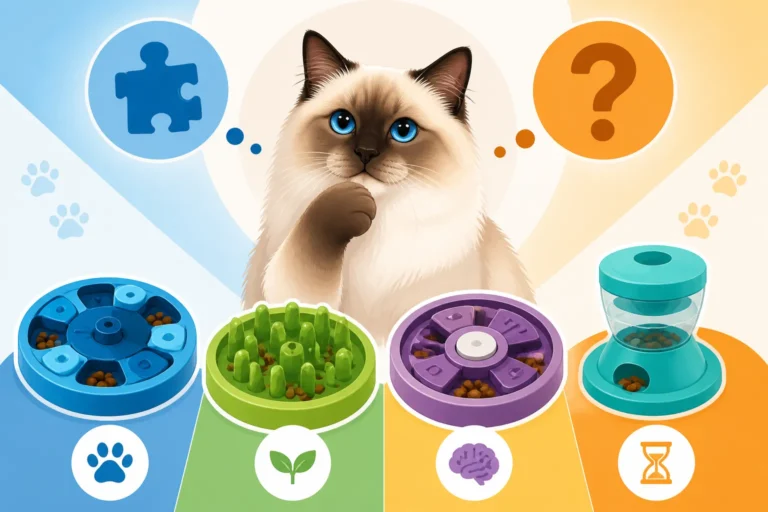
- Treat Balls and Rollers: These are often the simplest entry point. They are hollow balls or cylinders with small holes, and kibble or small treats are placed inside. As the cat bats or rolls the toy, food tumbles out. Brands like PetSafe or KONG offer excellent, durable versions. These are great for cats new to puzzle feeders because the reward is relatively easy to obtain, building confidence.
- Slow Feeder Bowls and Mats: These don't involve "puzzles" in the traditional sense but incorporate ridges, mazes, or deep crevices into a bowl's design. The cat has to navigate around these obstacles to eat, slowing down their mealtime. Snuffle mats, which are fabric mats with many strips for hiding kibble, fall into this category and are fantastic for encouraging natural foraging behavior.
- Interactive Boards and Towers: These feeders feature multiple compartments, sliders, pegs, or tubes. The cat has to use their paws or nose to move pieces, lift lids, or extract food from different levels. Catit has a popular line of Senses feeders that can be combined, offering various challenges. These are more complex and typically suit cats who have mastered simpler puzzles.
- Dispensing Stations and Automated Feeders with Games: Some high-tech options integrate timed dispensing with simple games. For example, a cat might need to tap a button or move a lever to release a small amount of food. While more of an investment, these can be good for keeping interest over longer periods.
- DIY Puzzles: Don't underestimate the power of a simple cardboard box with some holes cut in it, or a muffin tin with balls covering the treat compartments. These homemade versions can be a great way to gauge your Birman's interest without committing to a purchase.
Each type offers a different kind of engagement, from simple physical manipulation to more involved problem-solving. It's about finding the right match for your Birman's unique blend of curiosity and patience.
The Mechanics of Mental Enrichment Through Food
At its core, a puzzle feeder works by transforming mealtime from a passive activity into an active, engaging challenge. In the wild, cats spend a significant portion of their day hunting for food. This process isn't just physical; it's intensely mental, requiring planning, observation, and problem-solving. Domesticated cats, especially indoor ones like many Birmans, often miss out on this crucial mental stimulation, leading to boredom, overeating, or even behavioral issues.
When a cat interacts with a puzzle feeder, several cognitive processes kick in:
- Problem-Solving: They need to figure out how to manipulate the feeder to release the food. This might involve batting, nudging, prying, or even using their claws in a strategic way.
- Persistence: The reward isn't immediate, requiring a sustained effort. This teaches patience and the concept of working towards a goal.
- Focus and Concentration: The cat has to pay attention to the task at hand, blocking out other distractions.
- Natural Foraging Behavior: It mimics the natural act of searching and working for food, which is far more satisfying than simply eating from an open bowl. This can reduce stress and increase feelings of contentment.
Beyond mental stimulation, puzzle feeders offer practical health benefits. By slowing down eating, they can prevent gulping, which can lead to indigestion, vomiting, and obesity. For a breed like the Birman, known for its gentle nature, a slow feeder can be particularly beneficial for managing their intake and ensuring they don't overeat. It allows them to feel more satisfied with their meal because it took effort to acquire, rather than simply being presented.
Do Birmans Really Engage with Puzzle Feeders?
This is the million-dollar question for many Birman owners. Given their laid-back nature, it's easy to assume they might just sniff a puzzle feeder once and then walk away. However, with the right approach and understanding, many Birmans can and do engage positively with these enrichment tools.
The "Wait and See" Approach for Your Birman
If you've spent any time with a Birman, you know they are masters of observation. They rarely rush into anything new, preferring to assess a situation from a comfortable distance before committing. This "wait and see" attitude extends to new toys and enrichment items. You might put down a brand-new puzzle feeder, brimming with delicious treats, only for your Birman to give it a polite glance and then wander off to supervise you in the kitchen. Why a Birman Walks Past Most Toys is a real phenomenon many Birman parents have experienced.
This initial disinterest is not a sign of failure, nor does it mean your Birman is "too lazy" for puzzle feeders. It simply means they need time to process, observe, and perhaps even watch you interact with it first. They are intelligent and curious, but their curiosity is often tempered with caution. The key here is patience. Don't force the interaction. Leave the puzzle feeder out in a low-traffic area, perhaps with just a few visible, high-value treats to pique their interest. Let them discover it on their own terms, in their own time. They might investigate it in the middle of the night, or during a quiet moment when no one is watching. Often, once they realize the connection between manipulating the object and receiving a reward, their inherent curiosity will kick in.
Matching the Puzzle Feeder to Your Birman's Patience Level
Just like humans, cats have different tolerance levels for frustration and complexity. For a Birman, whose play style is generally more gentle and less frantic, starting with an overly complicated puzzle feeder can be counterproductive. Imagine trying to solve a Rubik's Cube when you've never even played with building blocks – it's likely to lead to frustration and abandonment.
Instead, think about a gradual progression. Begin with the simplest types of puzzle feeders. A treat ball that requires minimal effort to release food is an excellent starting point. You might even initially leave some treats on the feeder or sticking out of the holes, making it incredibly easy for your Birman to get a quick reward. As they gain confidence and understand the basic concept of "work equals reward," you can slowly introduce slightly more challenging designs. Which Puzzle Feeder Suits a Birman often depends on this careful matching of complexity to their individual temperament.
Observe your Birman carefully. Are they swatting at the feeder playfully, or are they sitting and staring at it with a frustrated look? Are they giving up quickly, or are they showing sustained, albeit gentle, effort? These observations will guide you in choosing the next level of challenge. The goal is to provide a stimulating activity, not to create a frustrating barrier to their meal. Many Birmans will prefer feeders that involve more gentle manipulation rather than intense pouncing or vigorous shaking.
Food Drive as the Primary Motivator
While Birmans are known for their quiet affection and love of companionship, the promise of a delicious treat or their favorite kibble can be a powerful motivator. Unlike some cats who are driven purely by the thrill of the chase or the joy of batting a toy around, for many Birmans, the reward at the end of the puzzle is what truly sparks and sustains their interest. You might find that Why Praise Motivates a Birman More Than Food is true for everyday behaviors, but when it comes to a specific task like a puzzle feeder, food can be the stronger initial pull.
To maximize engagement, especially in the early stages, use high-value treats that your Birman absolutely adores. This could be freeze-dried chicken, a favorite soft treat, or even just a particularly delicious brand of kibble they don't usually get. If you're using the puzzle feeder for regular meals, consider reserving their absolute favorite portion of wet food or a special kibble topper for the feeder itself, to make it extra enticing.
The trick is to make the reward worth the effort. Once your Birman understands that engaging with the feeder reliably delivers something tasty, they are much more likely to return to it. This isn't about training them with food in a demanding way; it's about harnessing their natural appreciation for good food to encourage a healthy, enriching activity. Over time, as they become more proficient, the act of problem-solving itself can become rewarding, reducing the sole reliance on high-value treats.
Practical Tips for Introducing Puzzle Feeders to Your Birman
Introducing anything new to a cat, especially one as observant as a Birman, requires a thoughtful and patient approach. You can't just drop a complex puzzle feeder in front of them and expect instant enthusiasm.
Starting Simple and Gradually Increasing Difficulty
Think of introducing a puzzle feeder as a gentle learning curve for your Birman. The absolute worst thing you can do is start with something too challenging, which can lead to frustration and disinterest that's hard to overcome.
Here's how to ease your Birman into the world of puzzle feeders:
- Start with "Easy Mode": Begin with the simplest possible interaction. For a treat ball, leave the holes wide open or even place treats on the ball, rather than inside. For a slow feeder bowl, scatter just a few pieces of kibble on the easiest parts of the maze. The goal is an immediate, effortless reward. This builds positive association: "Oh, this new thing gives me yummy treats!"
- Make it Obvious: Don't hide the treats. Let your Birman see you placing them in or on the feeder. You can even gently tap the feeder to draw attention to the sound of the kibble or treats rattling inside.
- Demonstrate (Gently): With your Birman watching (or even better, gently interacting with it near you), tap or roll the feeder yourself so a treat falls out. This shows them the cause-and-effect. You're teaching them how it works, rather than expecting them to figure it out from scratch.
- Gradual Progression: Once they're consistently engaging with the "easy mode," slowly increase the difficulty. For a treat ball, you might start closing one hole or using slightly smaller treats that require more rolling. For an interactive board, introduce one slider at a time. Pay close attention to your Birman's response. If they show signs of frustration (walking away quickly, pawing aggressively without success), dial it back a step. The process should feel like a gentle challenge, not an impossible task.
- Use High-Value Rewards: Especially in the beginning, fill the feeder with treats your Birman absolutely adores. This reinforces the positive experience and keeps them motivated.
Remember, the aim is to build confidence and positive associations. A Birman, with their thoughtful nature, will appreciate a clear, rewarding path to understanding this new enrichment tool.
Location, Timing, and Consistency are Key
Where, when, and how often you present the puzzle feeder can significantly impact your Birman's willingness to engage. It's not just about the feeder itself, but the entire experience surrounding it.
- Location Matters: Choose a quiet, low-traffic area where your Birman feels safe and comfortable. Placing it in the middle of a busy hallway might be too distracting or overwhelming. A corner of a room, a spot on a stable floor away from sudden noises, or even a raised platform they already love, can be ideal. Ensure it's not placed somewhere that makes it easy for the feeder to roll under furniture and become inaccessible, which could lead to frustration.
- Optimal Timing: Consider when your Birman is naturally most active or receptive. For some, this might be first thing in the morning when their appetite is keen. For others, it might be in the evening before their last meal. You can also integrate it into their regular feeding schedule, replacing a portion of their meal with the puzzle feeder. If your Birman tends to get a burst of mild energy around dusk, that might be a good time to introduce it.
- Consistency is Crucial: Cats are creatures of habit, and Birmans are no exception. Regularly offering the puzzle feeder at roughly the same time or in a consistent manner will help establish it as part of their routine. They'll start to anticipate it and understand its purpose. If you only bring it out sporadically, it might always feel like a new, unfamiliar object. Whether a Timed Feeder Suits a Birman Left Alone can also tie into consistency, as these can be programmed to release food at specific times, ensuring a regular engagement.
- Supervised Play (Initially): While the goal is often independent play, especially initially, it's wise to supervise your Birman when they're using the feeder. This allows you to observe their engagement, prevent any frustration, and even offer a quiet word of encouragement.
By thoughtfully managing the environment and routine, you create an inviting and predictable experience that encourages your Birman to embrace the puzzle feeder rather than shy away from it.
Making it an Interactive Experience (Initially)
While the ultimate goal of a puzzle feeder is often to provide independent enrichment, especially when you're busy or out of the house, Birmans thrive on interaction. Their social nature means that initially, you might need to make the puzzle feeder a shared activity rather than just an object left in a corner.
Think of yourself as their gentle guide. When you first introduce a new puzzle, sit nearby. You can point to it, gently tap it, or even place a treat and then encourage your Birman to get it. If it's a treat ball, give it a soft roll so some kibble falls out. This isn't about you doing all the work; it's about modeling the behavior and sharing the experience.
This initial interaction achieves several things:
- Builds Confidence: Your presence provides reassurance, making the new object less intimidating.
- Teaches the Mechanism: By demonstrating, you help them understand how the feeder works more quickly than if they were left to figure it out entirely alone.
- Strengthens Bond: Any shared activity, even something as simple as working on a puzzle feeder together, reinforces the bond you have with your Birman. They associate this new thing with positive interaction with you.
- Sparks Interest: Sometimes, a Birman just needs a little nudge or a shared moment of curiosity to get them started. Their quiet nature means they may not vocalize their interest loudly, but your interaction can draw them in.
As your Birman becomes more proficient and confident with the puzzle feeder, you can gradually step back, allowing them to engage independently. But don't underestimate the power of those initial shared moments to pave the way for successful, solo enrichment. Even later, occasionally joining in can reinvigorate their interest.
Benefits and Potential Drawbacks of Puzzle Feeders for Birmans
Like any enrichment tool, puzzle feeders offer a range of advantages, but also come with considerations, especially when tailored to the unique personality of a Birman.
Mental Stimulation and Boredom Prevention
One of the most significant benefits of puzzle feeders, particularly for indoor cats like most Birmans, is the mental workout they provide. Without the natural challenges of hunting and exploring an outdoor environment, indoor cats can easily fall into a routine of eating, sleeping, and minimal activity, leading to boredom. This isn't always obvious with a placid Birman, who might simply become more sedentary, but boredom can manifest in subtle ways.
Puzzle feeders combat this by:
- Engaging Cognitive Function: They require problem-solving skills, memory (remembering how to get the treats out), and sustained focus. This keeps their brains active and healthy, which is vital for all cats, especially as they age.
- Mimicking Natural Behavior: Foraging is a natural feline behavior. By providing an outlet for this instinct, puzzle feeders can reduce stress and increase overall well-being. It gives them a "job" to do.
- Preventing Destructive Behaviors: While Birmans aren't typically destructive, boredom can sometimes lead to unwanted behaviors like excessive grooming, overeating, or becoming more withdrawn. Mental stimulation can help channel their energy positively. Even an old Birman, who might stop doing some of the things they once enjoyed, can still benefit from mental enrichment. What an Old Birman Stops Doing Once It Passes Ten often includes a decrease in active play, making passive mental stimulation even more valuable.
- Building Confidence: Successfully solving a puzzle, even a simple one, can boost a cat's confidence and give them a sense of accomplishment.
For a Birman, who may not demand intense physical activity, mental stimulation from a puzzle feeder can be a perfect complement to their calm lifestyle, ensuring their minds are as healthy as their bodies.
Promoting Slower Eating and Weight Management
Many cats, when presented with a bowl of food, will scarf it down in a matter of seconds. This rapid eating can lead to several problems, including indigestion, vomiting, and a higher risk of obesity. Puzzle feeders are an excellent solution to these issues, and they are particularly beneficial for a breed like the Birman, who might be prone to silently overeating if food is freely available.
Here's how they help:
- Slows Down Consumption: By making the cat work for each morsel, puzzle feeders dramatically extend mealtime. What might take 30 seconds from a bowl can take 10-20 minutes with a feeder. This allows the cat's stomach to signal fullness to the brain, leading to greater satisfaction and less likelihood of overeating.
- Aids Digestion: Slower eating means less air is swallowed, reducing the chances of indigestion and post-meal vomiting. This is a simple yet profound benefit for digestive health.
- Weight Control: For Birmans who might struggle with maintaining an ideal weight, puzzle feeders are invaluable. What a Birman's Long Rectangular Frame Should Weigh is important to monitor, and a puzzle feeder helps manage calorie intake without making the cat feel deprived. If your Birman needs to lose weight, slowing down their eating is a key strategy. Why an Overweight Birman Must Come Down Slowly emphasizes the importance of careful dietary management, and puzzle feeders support this by making each meal last longer. You might use a puzzle feeder for a portion of their measured daily intake, which for a ten-pound Birman, typically involves around 200-250 calories depending on activity level. How Many Calories a Ten Pound Birman Burns a Day can be effectively managed with these tools.
- Increased Satisfaction: The effort involved in getting food from a puzzle feeder can make the cat feel more satisfied with their meal, even if the portion size is controlled. It fulfills a deeper, instinctual need than merely eating from an accessible bowl.
By integrating puzzle feeders into their feeding routine, you're not just providing entertainment; you're actively contributing to your Birman's physical health and digestive well-being.
Addressing Potential Frustration or Disinterest
While puzzle feeders offer many benefits, it's equally important to acknowledge that not every Birman will take to them with enthusiastic delight. There's a fine line between a stimulating challenge and a frustrating obstacle, and sometimes, a particular feeder just won't click with your cat's personality.
Here's how to navigate potential frustration or disinterest:
- Observe Body Language: Pay close attention to your Birman's cues. Are they batting playfully at the feeder, or are their ears flattened and their tail twitching in annoyance? Are they giving up quickly after a few attempts, or are they persistent in a calm manner? A Birman's gentle nature means they often communicate subtle signs of discomfort. How a Birman Asks Without Ever Raising Its Voice applies here; they might quietly walk away and not return, which is their way of saying, "I'm not interested, or this is too hard."
- Simplify or Change It Up: If your Birman is getting frustrated, immediately make the puzzle easier. Open more holes, use larger treats, or switch to a less complex feeder altogether. Sometimes, simply rotating between a few different types of feeders can re-spark interest. They might prefer a rolling treat ball one day and a snuffle mat the next.
- Don't Force It: Never try to force your Birman to engage with a puzzle feeder. This will only create negative associations and make them even less likely to use it in the future. If after several attempts and different approaches, they consistently show no interest, it might simply not be for them, and that's perfectly okay.
- Consider Alternatives: If puzzle feeders aren't a hit, explore other forms of enrichment. This could be increased interactive playtime with a wand toy, more opportunities for window viewing, supervised outdoor time in a catio, or simply more dedicated cuddle and lap time (if your Birman is a lap cat, though many Birmans prefer to sit near you rather than on you). The goal is enrichment, and there are many paths to achieve it.
It's crucial to remember that every cat is an individual. What one Birman loves, another might ignore. The journey is about discovery and finding what genuinely enhances your specific cat's life.
Recommended Puzzle Feeder Types and Brands
When venturing into the world of puzzle feeders for your Birman, the sheer variety can be overwhelming. To help you get started, let's look at some types that tend to be a good fit for the Birman's gentle, curious nature, often found with ease on platforms like Amazon.
Simple Treat Balls and Rollers
For Birmans, who appreciate a gentle approach and might be wary of overly complex devices, simple treat balls and rollers are often the perfect starting point. These feeders are designed to release kibble or treats as your cat bats them around or rolls them across the floor.
- Why they work for Birmans: Their low-frustration design means your Birman can achieve a quick reward with minimal effort, building confidence. They tap into that natural instinct to gently bat at objects, without requiring intense physical exertion or intricate problem-solving. They also provide mild exercise as your Birman follows the rolling ball.
- Examples to look for: Brands like KONG and PetSafe offer durable, easy-to-clean treat dispensers. Look for those with adjustable openings, so you can control how easily the treats fall out, starting with wider openings and narrowing them as your Birman gets more skilled. You can find a great selection of these on Amazon, often with reviews from other cat owners that can guide your choice.
- How to introduce: Start by placing a few favorite treats inside, ensuring they fall out easily. You can even leave a few treats sticking out of the holes to immediately entice your Birman. Gently roll the ball yourself a few times to demonstrate how it works. Your Birman's placid temperament means they'll likely observe intently before engaging.
Snuffle Mats and Slow Feeder Bowls
If your Birman enjoys foraging with their nose and paws but isn't keen on active rolling or batting, snuffle mats and slow feeder bowls offer a fantastic alternative. These types of feeders focus more on slowing down consumption and encouraging a more deliberate approach to eating.
- Why they work for Birmans: Snuffle mats, made of soft fabric strips, invite your Birman to use their nose and paws to "hunt" for kibble hidden within the folds. This is a very natural and low-impact foraging activity. Slow feeder bowls, with their intricate patterns and ridges, prevent your Birman from gulping down their food too quickly. Both options provide mental stimulation without demanding high energy or complex manipulation. They are particularly great for managing a Birman's meal if they tend to eat too fast.
- Examples to look for: Many independent crafters and larger pet brands offer snuffle mats in various sizes and materials. For slow feeder bowls, look for designs that are sturdy and easy to clean, with interesting maze patterns. Brands like Outward Hound have popular slow feeder bowls, and a quick search on Amazon will reveal many highly-rated options for both snuffle mats and slow feeder bowls.
- How to introduce: Simply scatter a portion of your Birman's meal or some treats across the snuffle mat or within the grooves of the slow feeder bowl. Because the food is visible and readily accessible (just slightly delayed), most Birmans will quickly understand the concept. For the snuffle mat, you can initially make the hiding spots less dense.
Multi-Stage Interactive Puzzles
For the Birman who has mastered the simpler feeders and shows a genuine curiosity for more complex challenges, multi-stage interactive puzzles are the next step. These feeders require more deliberate problem-solving, often involving sliding panels, lifting lids, or manipulating levers to reveal treats.
- Why they work for Birmans: These puzzles offer a deeper level of mental engagement, appealing to your Birman's intelligence and ability to observe patterns. They provide a sustained challenge that can keep a curious Birman occupied for longer periods. While your Birman might be gentle, their brain is still sharp, and some will truly enjoy the satisfaction of cracking a more intricate puzzle.
- Examples to look for: Brands like Catit (with their Senses line of interactive feeders) and Nina Ottosson by Outward Hound create excellent multi-stage puzzles. These often have multiple compartments, sliders, or pegs that require different paw movements or nose nudges. When browsing on Amazon, look for puzzles described as "intermediate" or "advanced" for cats, and check reviews to see how other cat owners' experiences align with your Birman's potential temperament.
- How to introduce: Start by leaving some compartments partially open or treats very visibly placed so that your Birman can easily get the first few rewards. Guide them by showing them how a slider moves or a lid lifts. Once they grasp the basic mechanics of one element, you can gradually increase the complexity by closing more compartments or introducing new obstacles within the puzzle. Remember the Birman's observational nature; they might watch you demonstrate several times before attempting it themselves.
By choosing the right type of puzzle feeder and introducing it patiently, you can turn mealtime into an enriching brain game that your Birman truly enjoys.
| Puzzle Feeder Type | Ease of Use (for cat) | Engagement Level | Birman Suitability (Gentle/Curious) | Primary Benefit |
|---|---|---|---|---|
| Treat Balls/Rollers | Easy | Moderate | Excellent for beginners | Builds confidence, light physical activity |
| Snuffle Mats | Easy | Moderate | Excellent for foragers | Encourages natural foraging, slows eating |
| Slow Feeder Bowls | Easy | Low-Moderate | Excellent for fast eaters | Prevents gulping, aids digestion |
| Interactive Boards/Towers | Moderate-Complex | High | Good for curious, patient Birmans | Deeper mental stimulation, problem-solving |
| Automated Dispensing Games | Moderate | High | Good for consistent engagement | Scheduled enrichment, independent play |
Conclusion
So, does a puzzle feeder interest a Birman at all? The answer, like with most things involving our individual feline companions, is a resounding "it depends!" However, armed with patience, understanding, and the right approach, many Birmans can and do find genuine enjoyment and valuable enrichment from puzzle feeders. While they may not attack them with wild abandon like some breeds, their innate curiosity, coupled with their appreciation for a good treat, makes them surprisingly receptive.
By starting with simple designs, introducing them gently, and respecting your Birman's "wait and see" demeanor, you can unlock a wonderful new avenue of mental stimulation. These feeders are more than just toys; they're tools that can combat boredom, slow down fast eaters, and provide a healthy outlet for their natural foraging instincts. Ultimately, it's about observing your unique Birman, adapting your approach, and celebrating every small victory in their journey to discover the joy of a good brain game. Give it a try; you might just find your serene companion quietly conquering a new challenge!
Disclaimer
This article is for general informational purposes only and does not constitute professional advice. Laws, prices and regulations vary by location and change over time. Consult a qualified professional for guidance on your specific situation.