Whether a Birman Brings a Toy Back or Just Carries It
It’s a common scene in many Birman households: you toss a beloved toy, your magnificent floof chases it down with surprising speed, catches it, and then… saunters off with it held proudly in their mouth, perhaps to a quiet corner, or maybe just a few feet away, dropping it completely disinterested. If you’re a Birman owner hoping for a game of classic fetch, this can be a little puzzling! This guide is here to shed some light on the delightful quirks of Birman play, explaining why your cat might be more of a "trophy carrier" than a "retriever" and how you can gently encourage a more interactive game.
The Birman's Play Style: Gentle and Undemanding
Birmans are famously serene and adaptable cats, known for their calm demeanor and affectionate nature. This personality extends directly into their approach to play, which is often less about high-octane acrobatics and more about connection.
A Preference for Quiet Engagement
Unlike some of their more boisterous feline cousins, a Birman typically isn't going to be scaling your curtains or tearing through the house like a furry tornado. Their energy levels are often described as "middle of the road," finding a comfortable balance between the high-energy antics of a Siamese and the more sedentary nature of a Persian. When it comes to playtime, they prefer interactions that are gentle and engaging, rather than overtly strenuous. You'll often find them happily batting at a toy or chasing a laser pointer with graceful, measured movements, rather than launching into a full-scale assault.
This preference for a calmer kind of play means that while they enjoy a good romp, they might not sustain intense activity for long periods. They're observant participants, taking in the environment and engaging when they feel the urge, which is often tied to interacting with their human. This gentle approach is one of the reasons Why a Birman Plays Gently is so well-suited to households seeking a calm, companionable pet. They’re not demanding your constant attention through destructive play or incessant meowing; instead, they express their desire for interaction in quieter, more subtle ways.
Interaction Over Athleticism
For many Birmans, play isn't solely about physical exertion or demonstrating hunting prowess; it's a profound form of social bonding. They thrive on companionship, and even their play sessions are often an extension of this desire for closeness. When you dangle a feather wand or roll a favorite ball, your Birman isn't just seeing prey; they're seeing you. The act of playing together reinforces their bond with you, making it an interactive experience rather than just an exercise session.
This is why a Birman often sits near you, observing your movements, waiting for an invitation to play, or simply enjoying your presence. How a Birman Shows Affection Without Making Demands is a great example of their subtle nature. They might bring a toy to your feet, not necessarily expecting you to throw it back, but as an offering, a way to initiate interaction. They want to be part of what you're doing, and if that involves a bit of gentle play, all the better. This social aspect of their play means that even if they don't bring the toy all the way back for another toss, the initial engagement is still highly valuable to them. They're showing you they want to spend time with you, even if the "rules" of fetch aren't entirely clear in their feline mind.
Understanding the "Fetch" Instinct in Birmans
While Birmans are known for their gentle nature, they are still cats, and cats are natural predators. The instinct to hunt, chase, and capture is hardwired into their DNA.
The Hunter's Drive, Birman Style
Every cat, regardless of breed, carries the genetic blueprint of a hunter. The thrill of the chase, the pounce, and the "kill" (the triumphant capture of a toy) are deeply satisfying instincts. For a Birman, this predatory drive is present but often expressed with a characteristic refinement. They might not stalk with the same intensity as a truly wild or highly energetic breed, but the focus, the glint in their deep blue eyes, and the quiet determination are undeniable. When you throw a toy mouse or a crinkly ball, you're tapping into this ancient instinct. They might approach it with a graceful trot rather than a frenzied dash, but the goal is the same: to catch the "prey."
The act of bringing the "prey" back is often a learned behavior, not an innate one for most cats. In the wild, a cat secures its kill and takes it to a safe, private place to eat or hide. There's no evolutionary pressure to bring it back to a larger predator (you!) for another round. This explains why many cats, including Birmans, will successfully "hunt" the toy but then simply carry it away or drop it, satisfied with their accomplishment. The capture itself is the reward for their hunting efforts, fulfilling a primal need.
What Motivates a Birman to Bring It Back
So, if it's not strictly natural, why do some Birmans learn to fetch, and how can we encourage it? The key lies in understanding what truly motivates a Birman: their deep desire for connection and positive reinforcement. Birmans are intelligent and sensitive creatures, and they respond incredibly well to praise and gentle encouragement. When they perform a behavior that pleases you, and you reward them with a soft voice, a gentle stroke, or a tiny treat, they associate that behavior with a positive outcome.
This makes them prime candidates for learning tricks, including fetch, because Why Praise Motivates a Birman More Than Food holds true for this breed. They genuinely appreciate your approval. If they happen to bring the toy closer to you after a chase, and you react with enthusiastic praise and perhaps a small, high-value treat, they'll start to make the connection. It's less about the toy itself and more about the joyful interaction and the approval they receive from their beloved human. Consistency in your reaction and reward is crucial for them to understand that "bringing it back" is part of this delightful game.
Why Your Birman Might Just Carry the Toy
It's absolutely normal for your Birman to carry a toy off after catching it, rather than returning it. This isn't a sign they're not enjoying the game; it's often just how their feline instincts and unique personality express themselves.
The Joy of the Catch is Enough
Think about it from your Birman's perspective. They’ve successfully hunted! They’ve chased, pounced, and captured the elusive "prey." For many cats, the peak of the game is precisely this moment of triumph. They’ve satisfied their inner hunter, the immediate gratification of the chase and capture is complete. Why would they then bring it back to you to start the whole process over again, especially if they’re not inherently driven by a need to re-engage in that specific cycle? They've "won" the game by catching the toy, and that's often enough for their feline satisfaction.
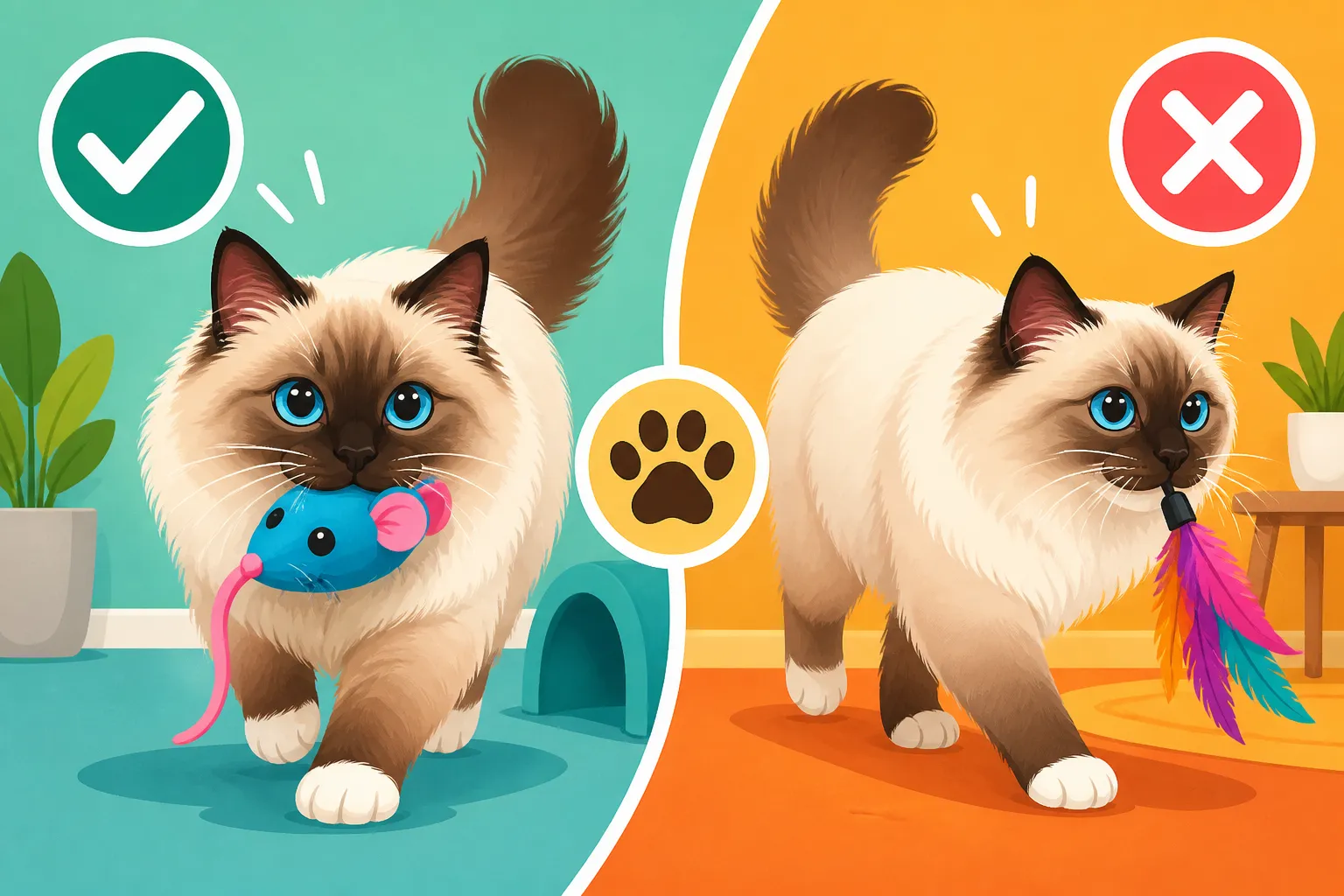
They might parade it around for a moment, a silent declaration of their prowess, before gently depositing it somewhere, perhaps to observe it further or just to enjoy the peaceful aftermath of their successful hunt. It’s their way of concluding the hunt, a small, personal victory. This behavior isn't a snub; it's simply a natural endpoint to their hunting sequence, reflecting the satisfaction of a fulfilled instinct.
"Mine!" – Possession and Comfort
Birmans, while incredibly loving and people-oriented, can also have a quiet sense of possession over items that bring them comfort or represent their successful endeavors. After catching a toy, they might carry it off to a favorite, safe spot – perhaps their cat bed, a soft rug, or even a designated corner of the sofa. This isn't necessarily about hoarding or being selfish; it's about claiming their "prize" and integrating it into their personal space. They're making it "theirs."
You might notice them taking the toy to a spot where they feel most relaxed and secure. For instance, my Birman, Willow, loves to drop her feather wand on her favorite plush blanket after a vigorous play session. It’s a bit like a child bringing their favorite blanket to a comfy chair. It’s not that she doesn’t want to play anymore, but for that moment, the toy is a comfort object in her chosen sanctuary. This behavior is reminiscent of how Why a Birman Sleeps Wherever You Last Sat; they gravitate to places that feel safe and hold your scent, extending that sense of comfort to their treasured toys.
Lack of Clear Communication
The biggest reason many cats don't "fetch" in the way a dog might is simply that they don't understand the full scope of the human game. We expect them to bring the toy back for a re-throw, but without clear, consistent training, this isn't an intuitive step for a cat. They understand the "chase and catch" part perfectly because it aligns with their instincts. The "return" part, however, is a human-designed addition to the game.
It's up to us, as their loving companions, to bridge this communication gap. Your Birman isn't being stubborn or ignoring you; they just haven't been taught that the game has a second phase. Their understanding of "play" stops at the capture. This isn't a failing on their part, but an opportunity for us to engage in some gentle, patient training to help them grasp the concept of full retrieval. It takes time, positive reinforcement, and a lot of understanding from our side to teach them this nuanced human game.
Encouraging Full Retrieval: Tips and Tricks
If you're eager to play a more interactive game of fetch with your Birman, don't despair! With patience and the right techniques, you can definitely encourage them to bring the toy back. Remember, it's about gently guiding them, not forcing them.
Start Young: The Kitten Advantage
The golden rule for teaching almost any behavior to a cat is to start when they're kittens. Birman kittens are naturally curious and often more amenable to learning new routines and games. Their minds are like sponges, soaking up information and forming associations quickly. If you begin introducing the concept of fetch early on, you have a much better chance of success. When your kitten brings a toy close to you, even if it's not a perfect drop at your feet, heap on the praise and maybe a tiny treat. This early positive association can lay a strong foundation for future retrieval.
Think of it like How to Handle a Birman Kitten From Day One; consistent, positive interactions from a young age help shape their behavior and confidence. During their impressionable kitten months, they are more open to experimenting and discovering what actions bring them joy and positive feedback from you. Make fetch a fun, low-pressure experience, and they'll be much more likely to embrace it as they grow.
Positive Reinforcement and Patience
This is arguably the most critical component for teaching your Birman to fetch. Yelling, getting frustrated, or trying to snatch the toy from them will only create negative associations and make them less likely to engage. Instead, when your Birman brings the toy anywhere near you, celebrate! Use a happy, encouraging tone of voice. Say "Good kitty!" or "Bring it here!" and offer a small, pea-sized treat or a favorite chin scratch. Over time, gradually refine the behavior by only rewarding when the toy is closer to your feet.
Consistency is key here. Every time they make an effort, no matter how small, acknowledge it positively. Birmans are highly sensitive to their humans' emotions, and positive reinforcement works wonders. As mentioned in Why Praise Motivates a Birman More Than Food, they truly value your approval, and that can be a powerful motivator. Don't expect perfection immediately; some cats might take weeks or even months to consistently bring the toy back. Celebrate the small victories, and your Birman will gradually understand what you're asking of them.
The Two-Toy Method
This is a classic technique used by many cat owners to teach fetch, and it can be very effective for Birmans. Here’s how it works:
- Start with two identical (or very similar) favorite toys. This is important because it prevents your cat from getting too possessive over just one.
- Throw the first toy. When your Birman retrieves it and takes it away, don't immediately follow them.
- Produce the second toy. Wiggle it enticingly near you. Most cats, especially Birmans who enjoy interaction, will be drawn back to the new "prey."
- As they approach with the second toy, praise them. Once they drop it (even if it's not perfectly at your feet), immediately throw the first toy again.
- Repeat. The cycle encourages them to return because they know a new "hunt" is waiting for them right where you are.
This method teaches them that bringing a toy back immediately leads to more fun, essentially rewarding the return. It leverages their natural hunting instinct while subtly guiding them toward the desired behavior. Over time, many cats will start dropping the first toy closer and closer to you in anticipation of the second.
Consistency is Key
Whatever method you choose, consistency is paramount. Make "fetch" a regular part of your play routine, even if it’s just for five to ten minutes a day. Use the same verbal cues ("Bring it!", "Drop it!") and the same rewards. If you're inconsistent, your Birman will become confused and less likely to learn. Every time you play this game, try to reinforce the "return" behavior. If they just carry it off, gently go and retrieve it yourself, bring it back to your spot, and initiate another toss, hoping they bring it a bit closer this time.
Remember that a Birman thrives on routine and predictability, and this applies to playtime too. Regular, structured play sessions where fetch is encouraged will help them solidify the learned behavior. If you only try to teach them fetch occasionally, or if your reactions vary, it'll be much harder for them to grasp what you want. Think of it as building a habit together, one successful return at a time.
Toys That Spark a Birman's Interest
The type of toy you use can significantly influence your Birman's engagement and their willingness to bring it back. Birmans typically prefer toys that mimic small prey and are easy for them to manipulate.
Wand Toys: The Ultimate Prey Mimic
If there's one category of toy that consistently captures a Birman's attention, it's the wand toy. These toys, often featuring feathers, ribbons, or small stuffed animals on the end of a flexible rod, are fantastic because they allow you to simulate the erratic movements of prey. You can make the "prey" dart, hide, and pounce, triggering your Birman's natural hunting instincts. The beauty of a wand toy for fetch training is that it's easy to guide the toy back towards you after the "capture."
Many Birmans are not overly athletic, and Which Wand Toys Move Slowly Enough for a Birman become essential. You don't need to whip it around at lightning speed. A slow, deliberate movement that allows them to stalk and pounce will be far more engaging. After they catch the "prey," gently reel it back in towards yourself, praising them as they hold onto it and bring it closer. This encourages them to follow the toy back to your location, making the transition to dropping it at your feet much smoother. You can find a huge variety of these on Amazon, from simple feather wands to more elaborate attachments, ensuring you can keep things interesting.
Small, Lightweight "Prey"
When it comes to throwable toys for fetch, think small, light, and easy to carry. Heavy balls or oddly shaped items might be fun to bat, but they're less likely to be picked up and paraded around. Birmans generally prefer toys that resemble their natural prey size, like a small bird or mouse. Look for items made of soft materials, like:
- Crinkle balls: Lightweight and make an appealing sound.
- Small fabric mice: Easy to grasp in their mouth.
- Felted wool balls: Soft, bouncy, and often infused with catnip.
- Feather toys: Very appealing due to their texture and resemblance to birds.
These types of toys are not only appealing for their "prey" mimicry but also because they are comfortable for your Birman to carry in their mouth. They won't struggle with an awkward shape or weight, making the act of carrying much more enjoyable for them. Consider adding a few new varieties from Amazon to your cat's collection to see what truly sparks their interest.
Novelty and Rotation
Even the most cherished toy can lose its appeal if it's always available. Cats, Birmans included, benefit from novelty. If you're finding your Birman's interest waning, or they're just not engaging with the same old toys, it might be time for a toy rotation. How Often a Birman Notices a Toy Has Changed is often more frequently than we realize!
Keep a collection of toys and rotate them every few days or once a week. Put some away in a drawer and bring out others that haven't been seen for a while. This makes the "old" toys feel new and exciting again. You don't always need to buy new ones (though a browse on Amazon for new, intriguing options can be fun!). Simply making some toys unavailable for a period can reignite their interest when they reappear. This strategy keeps playtime fresh and engaging, making your Birman more enthusiastic about participating, including bringing those "new" old toys back for another round.
Here's a quick comparison to help visualize the typical Birman play behaviors:
| Behavior Aspect | "Just Carries It" (Common Birman Trait) | "Brings It Back" (Learned Fetch) |
|---|---|---|
| Motivation | Satisfaction of the hunt, personal possession | Desire for continued interaction, human approval, reward |
| End of Game | Drops toy in preferred spot, observes | Returns toy to human, awaits next toss |
| Human Role | Observe, sometimes retrieve toy yourself | Active participant, rewarding the return |
| Cat's Instinct | Strong natural hunting instinct | Natural instinct combined with learned social behavior |
| Ease of Learning | Intuitive, comes naturally | Requires patience, positive reinforcement, and training |
| Social Aspect | Still a bond builder, but less direct interaction | Highly interactive, reinforces human-cat bond strongly |
Ultimately, whether your Birman consistently brings a toy back or prefers to just carry it off, the most important thing is that they are engaging in play and enjoying their time with you. Their placid, affectionate nature makes them wonderful companions, and any form of shared play strengthens that beautiful bond.
Disclaimer
This article is for general informational purposes only and does not constitute professional advice. Laws, prices and regulations vary by location and change over time. Consult a qualified professional for guidance on your specific situation.