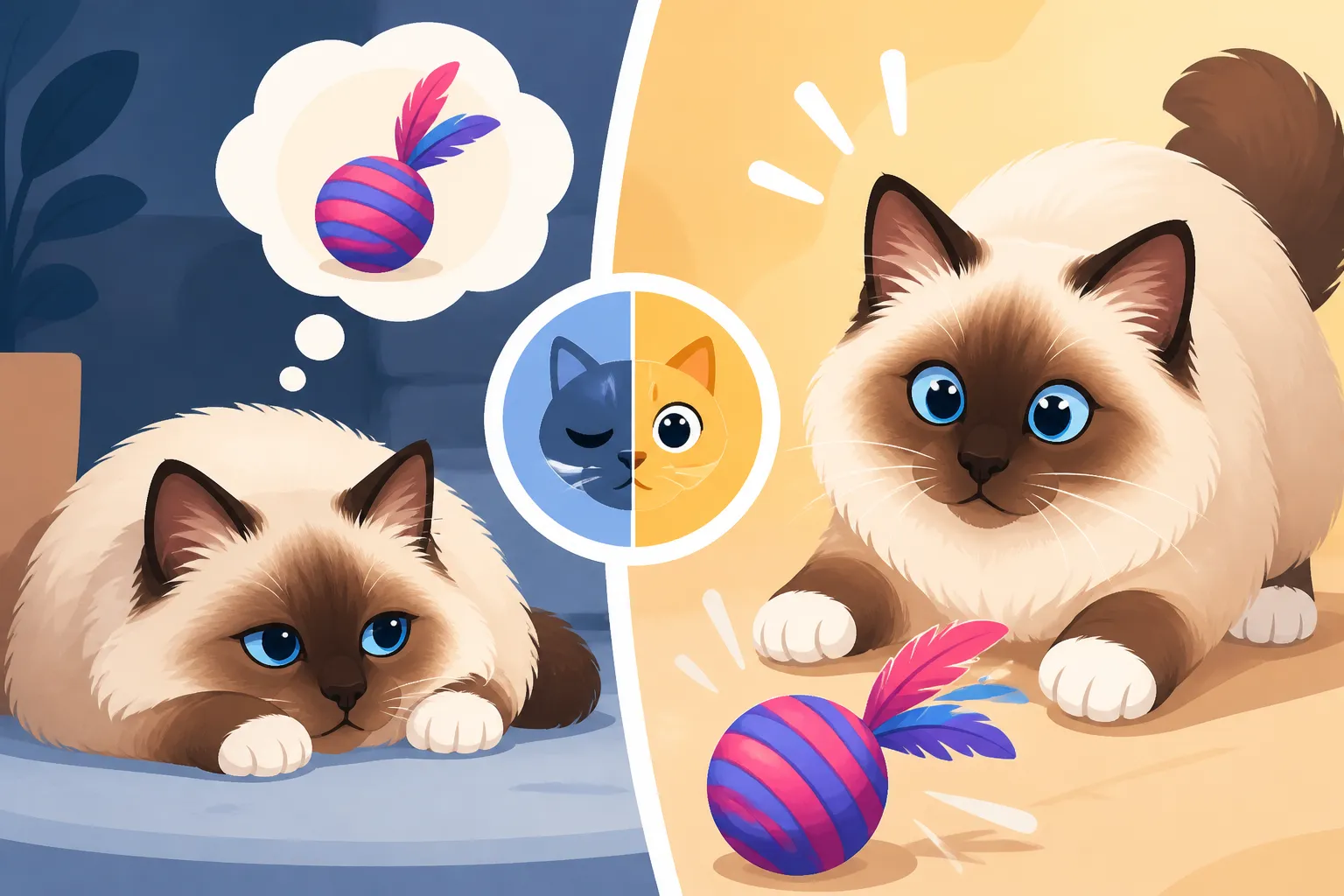
How Often a Birman Notices a Toy Has Changed
It’s a common scenario: you lovingly choose a brand new toy for your beloved Birman, imagining them pouncing with delight, only to find them giving it a cursory sniff before sauntering off for a nap. It can feel like your efforts are completely overlooked, leaving you wondering if they even noticed the change at all! This guide is here to shed some light on the Birman's unique relationship with new toys and offer practical tips to make playtime engaging, without causing unnecessary stress.
The Birman's Approach to Play and Novelty
Birmans are famously gentle, placid, and incredibly affectionate cats. They’re often described as "the middle cat" – not as intensely energetic or vocal as a Siamese, but certainly more active and engaged than some of the more sedentary Persian types. This middle-ground temperament significantly influences how they perceive and interact with new objects, including toys. Their play style is generally soft, graceful, and often quite undemanding, which means a flashy, high-energy toy might not always capture their immediate attention.
Quiet Observers, Not Instant Pouncers
Unlike some breeds that might immediately attack a new toy with gusto, a Birman often takes a more measured approach. They are keen observers, preferring to assess a situation calmly before diving in. This means when you introduce a new toy, don't expect an immediate, theatrical reaction. Your Birman might sniff it, bat at it gently, or simply watch it from a comfortable distance. This isn't disinterest; it's their way of gathering information. They're processing the new texture, scent, and movement without the urgent need to engage aggressively. This calm observation period can sometimes lead owners to believe the cat hasn't noticed the toy at all, when in fact, they're just thinking it over.
Routine and Comfort Over Constant Stimulation
Birmans thrive on routine and comfort. They love having a predictable environment and familiar spaces. While they appreciate interaction and company, they aren't typically driven by a need for constant, high-octane stimulation. This plays a big role in how they react to new toys. If a new toy disrupts their sense of calm or if they simply don't see an immediate, comfortable way to integrate it into their existing play patterns, they might ignore it. They often prefer a consistent play session with a familiar wand toy over an endless parade of new gadgets. You'll find that a Birman's play sessions are usually a gentle affair. Which Toys Suit a Birman That Plays Quietly can give you more ideas for their preferred play style.
Why a Birman Might Not Immediately Notice a New Toy
It's easy to project our human expectations onto our cats, especially when it comes to gifts. We might expect a 'wow' reaction, but Birmans often operate on a different wavelength. There are several reasons why your Birman might seem oblivious to that shiny new catnip mouse you just placed in their favorite spot.
The Placidity Factor
The Birman's wonderfully placid temperament, while a joy in many aspects, can sometimes lead to them appearing less reactive to novelties. They're not prone to sudden bursts of manic energy or extreme curiosity that might compel another breed to investigate every single new item with intense scrutiny. This means a new toy, unless it's actively presented to them in an engaging way, might just blend into the background of their familiar world. They tend to walk away rather than react strongly if something doesn't immediately appeal, which can certainly make it seem like they've overlooked the change entirely.
Scent and Familiarity are Key
Cats rely heavily on their sense of smell. A new toy comes with new scents – the factory smell, your scent from handling it, or perhaps the scent of other animals if you bought it from a store. A Birman, being a sensitive and observant cat, might take time to process these unfamiliar odors. They might also prefer toys that carry their own scent, or the scent of a beloved human or housemate. If a new toy doesn't smell "right" or "safe," they might simply avoid it. It’s not just about the visual; the olfactory experience is paramount. This is also why they might show more interest in a toy that has been handled by you for a while, allowing your familiar scent to rub off on it.
It's All About the Timing and Presentation
Sometimes, it's not the toy itself, but how and when it's introduced. If you simply drop a new toy in the middle of the living room while your Birman is deeply engrossed in a nap, or just after they've finished a meal, they might genuinely not "notice" it as something to engage with. Their focus is elsewhere. Moreover, their general preference is to be near you rather than constantly entertained by inanimate objects. How Much Play a Birman Needs Daily might surprise you; it's often more about quality interaction than quantity of toys. To really capture their attention, the introduction needs to be part of an interactive moment, ideally when they are already feeling playful and receptive.
The "Overwhelmed by Choice" Factor
Believe it or not, sometimes having too many toys out can make new ones go unnoticed. If your Birman always has access to a mountain of toys, adding one more might not register as anything special. They might simply gravitate towards their established favorites, or the sheer volume of choices might be subtly overwhelming, leading to less engagement with any single item. Think about How a Birman Walks Past Most Toys – it could be they’re simply not drawn to novel items if they don’t stand out or fit a specific play preference.
Strategies for Introducing New Toys to Your Birman
So, you've got a new toy, and you want your Birman to actually play with it? It's all about strategic introduction and understanding their unique personality. You won't just dump a new item on them and hope for the best; you'll invite them to engage.
Make it an Interactive Event
Instead of just leaving the new toy out, make its debut a special occasion. Use the new toy as part of an interactive play session. For example, if it's a wand toy, gently dangle it, make it "hunt" and "hide," mimicking prey. If it's a kicker toy, gently push it towards them, letting them bat it. The key is you being part of the introduction. This transforms the inanimate object into a vehicle for bonding and play with their favorite human. This active engagement encourages them to associate the new toy with positive, shared experiences.
Scent Integration
As mentioned, scent is vital. Before presenting a new toy, you might try rubbing it with your hands or even leaving it in your Birman's favorite sleeping spot for a day or two. This allows your scent, or their own, to transfer onto the toy, making it feel more familiar and less "alien." You can also try adding a tiny bit of catnip if your Birman responds well to it, but use it sparingly as too much can sometimes be overwhelming. A gentle rub with a catnip-laced fabric or a sprinkle of fresh catnip can make that new toy instantly more appealing and familiar. For those seeking various options, platforms like Amazon offer a wide array of catnip products and scented toys.
Gradual Introduction and Rotation
Don't overwhelm your Birman with a sudden influx of new toys. Introduce one new toy at a time. After they've had a chance to investigate it (or not!), you can consider putting some of the older, less-used toys away. This concept of "toy rotation" can make older toys feel new again when they reappear, and it prevents the environment from becoming too cluttered, which can make new additions more noticeable. Keep a small selection of toys available at any given time, perhaps 3-5, and swap them out every few days or once a week. This way, when a "new" toy appears, it's truly a novel item in their immediate environment.
Observe and Adapt
Pay close attention to how your Birman reacts to different types of toys and different ways you introduce them. Do they prefer toys that make noise, or silent ones? Are they drawn to crinkly textures, soft plush, or something they can chase? Some Birmans are more interested in toys they can stalk and pounce on, while others enjoy simply batting a small object around. Understanding their preferences will guide your future toy purchases and introduction strategies. You might notice, for example, that your Birman shows more interest in things that move slowly and deliberately, aligning with their calm play style. Why a Birman Plays Gently illustrates their typical interaction.
| Introduction Method | Birman Reaction (Typical) | Effectiveness |
|---|---|---|
| Silent Drop | Minimal initial notice, slow investigation. | Low – relies on incidental curiosity. |
| Active Play with Human | High engagement, positive association. | High – turns toy into a shared activity. |
| Scented/Catnip Infused | Immediate sniff and investigation, potential play. | Medium to High – appeals to strong senses. |
| Part of Toy Rotation | Higher curiosity due to novelty. | Medium – makes toy stand out from the crowd. |
| Placed in Familiar Spot | Gentle acknowledgment, slow assessment. | Low to Medium – comfort can override novelty. |
Keeping Playtime Fresh: Rotation vs. Constant Newness
One of the biggest questions for cat owners is how to keep their feline friends entertained. Is it better to always buy new toys, or is there a trick to making old favorites feel new again? For a Birman, the answer lies in a thoughtful balance.
The Power of Toy Rotation
You don't need to constantly buy new things to keep your Birman interested. In fact, a never-ending stream of new toys can sometimes lead to less appreciation for each individual item. Instead, embrace the concept of toy rotation. Keep a selection of toys out for a week or two, then put them away and bring out a different set. When a toy reappears after a short break, it often feels fresh and exciting to your Birman, almost like a new discovery. This method also helps prevent burnout on any single toy and keeps their environment subtly stimulating without being overwhelming. You’ll find that even an old, familiar toy becomes exciting again after a stint in the toy box.
When to Introduce a Truly New Toy
While rotation is fantastic, there's certainly a place for genuinely new toys. Consider introducing a new toy when you notice a lack of engagement with the current rotation, or if you've observed a particular play style your current toys don't cater to. Perhaps your Birman has started to lose interest in Which Games Still Interest a Birman Past Twelve, and a new texture or type of toy could reignite their curiosity. Maybe you've seen a toy on Amazon that offers a new challenge or a different kind of movement that could appeal to their gentle hunting instincts. New toys are great for adding variety and preventing boredom, but they should be integrated thoughtfully, using the introduction strategies we discussed earlier.
Understanding Your Birman's Play Habits Over Time
It's also important to remember that a Birman's play habits can change over their lifespan. A young Birman kitten might be more inclined to chase and pounce vigorously, while an older cat might prefer calmer, more interactive sessions with a wand toy. How a Birman's Play Changes at Seven is a great read on this. As they age, their energy levels naturally decrease, and their interest in certain types of toys might wane. Keep an eye on their evolving preferences. If your senior Birman is no longer interested in the puzzle feeder they once adored, perhaps a softer, easier-to-handle toy is more appropriate. The goal is always to meet them where they are and provide enrichment that aligns with their current physical and mental capabilities.
Prioritizing Interactive Play
Ultimately, for a Birman, the most engaging "toy" is often you. Their deeply affectionate and people-oriented nature means that interactive play sessions—where you're actively involved—are usually far more valuable than any expensive gadget. Whether it's a simple feather wand, a laser pointer (used carefully and always ending with a tangible prize), or just a crumpled piece of paper you toss, your presence and engagement are what truly make playtime special for your Birman. Toys are tools to facilitate that connection, not replacements for it. If you're wondering What a Birman Does During a Nine Hour Working Day, it's likely they are waiting for your interaction more than a new toy.
So, while your Birman might not give a new toy an immediate, enthusiastic reception, rest assured they've probably noticed it. Their placid, observant nature simply means they process novelties in their own calm, deliberate way. With a little patience, thoughtful introduction, and understanding of their unique personality, you can ensure new toys bring joy and enrichment to your beloved companion.
Disclaimer
This article is for general informational purposes only and does not constitute professional advice. Laws, prices and regulations vary by location and change over time. Consult a qualified professional for guidance on your specific situation.