Which Wand Toys Move Slowly Enough for a Birman
It can be incredibly frustrating when you're trying to play with your beloved Birman, only to find they seem completely disinterested in the frantic, fast-paced toys that other cats adore. Birmans have a unique, often more serene play style, and this guide is here to help you identify the perfect wand toys and techniques to truly engage your gentle giant, ensuring playtime is a joyful, bonding experience rather than a puzzling performance.
Understanding the Birman's Unique Play Style
Our Birmans are truly special creatures, aren't they? They're known for their stunning looks, their plush coats, and those captivating blue eyes, but their personality is perhaps their most endearing trait. When it comes to playtime, many Birman owners quickly realize that these cats aren't always chasing laser pointers at breakneck speed or scaling curtains like acrobats. They have a different rhythm, a more contemplative approach to fun, and understanding this is the first step to finding the perfect toys.
The Birman's Gentle Nature and Energy Levels
Imagine a graceful dancer, not a frantic sprinter. That's often the Birman's approach to play. They possess a calm, almost regal demeanor that extends even to their bursts of activity. While they certainly enjoy a good romp, their energy levels are generally more moderate compared to some of the super high-octane breeds out there. This means they often prefer interactive play that mimics natural hunting in a slower, more deliberate fashion. They aren't usually the type to dash wildly after a toy, but rather to stalk, pounce, and then carry their "prey" away with a quiet sense of accomplishment.
This gentle nature also means they thrive on connection. For a Birman, playtime isn't just about the toy; it's about the shared experience with their favorite human. They love being near you, participating in an activity that brings you both joy. This means the way you interact with the wand toy is just as important as the toy itself. Instead of trying to exhaust them, think about how to engage their minds and their natural instincts in a way that feels safe and satisfying to them. You'll notice that they spend a good portion of their day napping or simply observing the world around them. How a Birman Splits Its Day Between Sleep and Company This balance of rest and gentle engagement is key to their overall well-being and contentment. They aren't going to be demanding constant stimulation, but rather appreciate consistent, calm opportunities to play and connect.
Why Speed and Aggression Don't Work
If you've ever tried to whip a wand toy around at lightning speed for your Birman, you might have been met with a blank stare, a slow blink, or even a graceful exit from the room. It’s not that they're being rude; it's simply not their preferred style. Fast, jerky, or overly aggressive movements from a toy can actually be overwhelming or even off-putting to a Birman. They aren't looking for a high-intensity workout or a mock battle. Their hunting instincts are more about the chase, the capture, and the quiet triumph. A toy zipping past them too quickly might register more as a blur than as enticing prey.
Think about it from their perspective: a real mouse or bird doesn't usually dart around erratically at impossible speeds. They move with caution, hide, peek out, and make calculated dashes. When a wand toy simulates this kind of slow, deliberate movement, it taps into a Birman's innate predatory drive in a way that feels natural and achievable. If a toy is too frantic, they might simply decide it's too much effort, or worse, they might become stressed. We all know how stoic Birmans can be, often hiding discomfort or illness behind their placid temperaments. Why a Placid Birman Hides Pain The last thing we want is for playtime, which should be enriching, to become a source of stress. So, putting away the "crazy" wand techniques and embracing a more measured approach will yield much better results and a happier Birman.
Characteristics of the Ideal Wand Toy for a Birman
Now that we understand how Birmans prefer to play, let's dive into what kind of wand toys really hit the mark. It's not about the flashiest or loudest toy; it's about finding those gentle, inviting characteristics that resonate with their sweet disposition.
Materials and Textures That Entice Gently
When selecting a wand toy, the materials and textures of the attachment are incredibly important for a Birman. Forget noisy bells, crinkly plastics, or hard, aggressive elements. These can be startling or simply unappealing to a cat that prefers a quieter, more tactile experience. Instead, look for soft, natural materials that mimic their natural prey in a non-threatening way. Think about toys adorned with real feathers (like turkey or pheasant feathers, which have a lovely, natural drift), soft faux fur, or even gentle fabric streamers. These materials move gracefully, silently, and feel satisfying to catch and mouth.
The weight of the attachment also plays a role. Lighter attachments will float and glide more easily, allowing for those slow, elegant movements your Birman will appreciate. Heavy, clunky toys might be too much work or too jarring. Many high-quality feather wands available on platforms like Amazon are perfect for this. They often feature natural feathers that flutter with the slightest movement, making it look like a tiny bird or insect has just landed. Birmans often engage with toys with their claws in, showing their gentle play style. Why a Birman Plays Gently The right texture can encourage this soft interaction, making the game more enjoyable for both of you.
The Importance of a Long, Flexible Wand
While the attachment is the star of the show, the wand itself is the director. For a Birman, a long, flexible wand is far superior to a short, rigid one. A longer wand, typically between 2-3 feet (or even longer!), allows you to create wide, sweeping arcs and slow, graceful movements without having to lean too close or make your own movements awkward. This larger range of motion lets the attachment "fly" or "slither" in a much more natural, less frantic way.
A flexible wand also adds to the realistic movement. It bends and sways, giving the toy attachment a life of its own, even with minimal input from you. This fluidity helps simulate the unpredictable, yet not overly quick, movements of actual prey. It also creates a safer play zone, keeping your hands a comfortable distance from accidental swipes, should your Birman get a little too enthusiastic (which, let's be honest, is rare for them, but always good practice!). A good quality wand, perhaps one you might find searching for "Birman cat toys" on Amazon, will typically have a comfortable handle and durable, flexible construction, often fiberglass or a similar pliable material, ensuring it lasts through many gentle play sessions.
Attachments That Mimic Natural Prey
Ultimately, a wand toy is all about stimulating your cat's inner hunter. For a Birman, this means attachments that look and behave like something they might genuinely stalk in the wild, but in a mellow, engaging way.
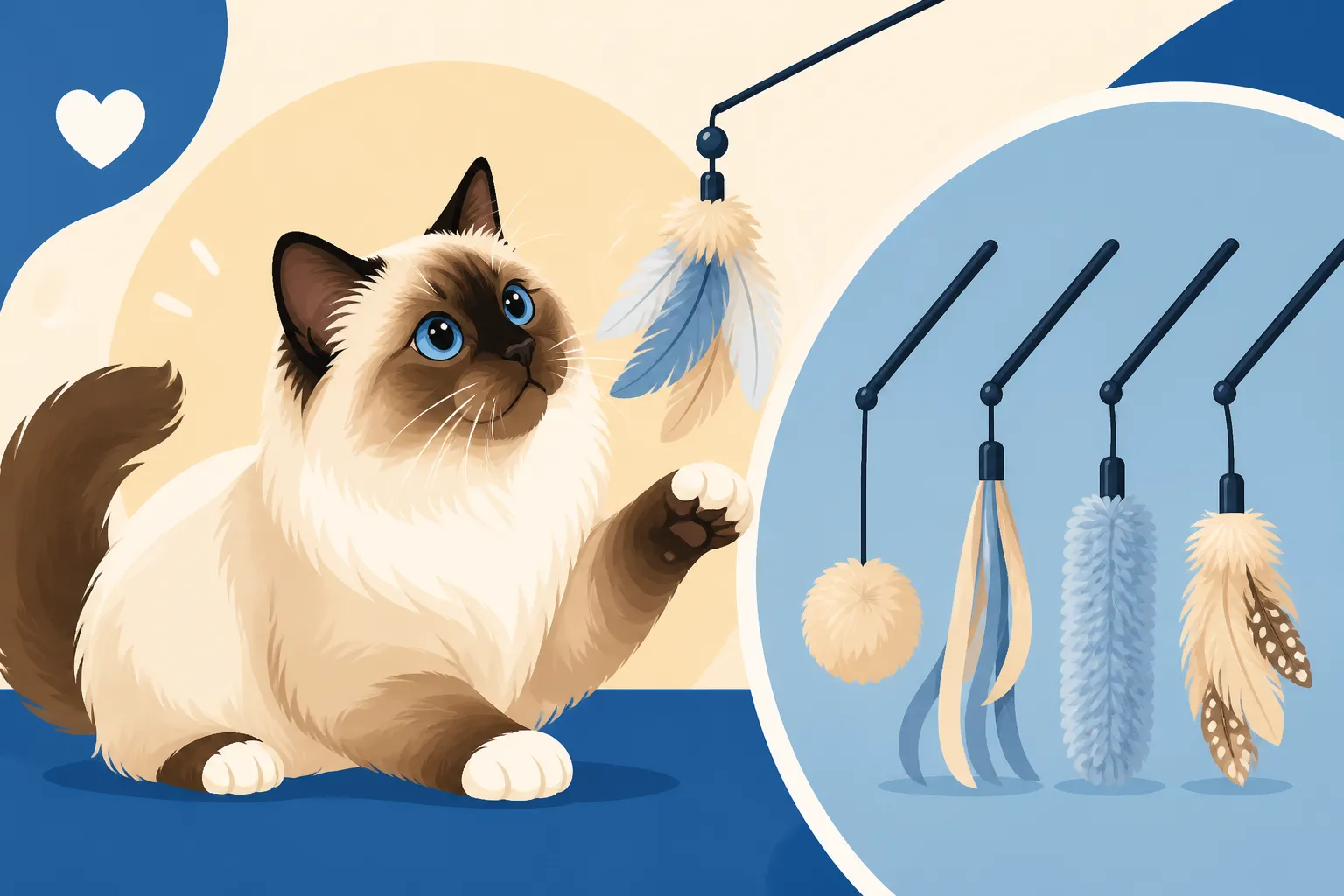
Feather wands are often the gold standard here. Real feathers, especially larger, softer ones, drift beautifully. When you gently sweep the wand, the feathers flutter and twist, creating an irresistible illusion of a small bird or moth. Look for wands with a variety of feather shapes and sizes, perhaps with some iridescent qualities to catch their eye.
Beyond feathers, soft fabric streamers or faux fur mice on a string can also be fantastic. The key is that the material should be lightweight and capable of flowing or slinking across surfaces. Imagine a small snake slithering through grass, or a mouse darting between shadows. These movements are far more likely to capture a Birman's attention than something that just bounces erratically. The goal is to present a toy that invites a slow, deliberate stalk and a satisfying, soft pounce. Many Birmans are also content with relatively simple toys, not necessarily needing the latest gadget. Which Toys Suit a Birman That Plays Quietly So, don't feel pressured to overcomplicate things; often, the most natural-looking and moving attachments are the best.
Techniques for Engaging a Birman with a Wand Toy
Having the right wand toy is only half the battle; knowing how to use it to truly captivate your Birman is the other. It’s an art form, really, and one that emphasizes patience and observation over speed and force.
Slow, Deliberate Movements
This is perhaps the most crucial technique for playing with a Birman. Forget the fast whips and sudden jerks. Instead, channel your inner ninja: slow, controlled, and deliberate. Drag the feathered attachment along the floor, making it "hide" behind chair legs or under a rug, then slowly "peek" out again. Imagine it's a mouse scurrying cautiously. Let it pause, almost inviting your Birman to approach. The suspense of the slow movement builds anticipation, which is often more exciting for a Birman than outright speed.
You can also simulate a slow, gliding bird by gently lifting and lowering the wand, letting the feathers float through the air. The aim is to make the toy seem alive but not frantic. Give your Birman plenty of time to observe, stalk, and prepare for their pounce. Don't rush them! If they just watch, try a slightly different movement, or let the toy "rest" near them for a moment before moving it again. A short, quiet trill from you can also draw their attention, as Birmans often use gentle sounds themselves. The Small Trill a Birman Uses Instead of a Meow
Short, Frequent Play Sessions
While some cats can play for extended periods, Birmans often prefer quality over quantity when it comes to playtime. Instead of one long, exhausting session, aim for several shorter, more frequent play sessions throughout the day. Five to ten minutes of focused, engaging wand play, two or three times a day, might be far more effective than one twenty-minute session where they lose interest halfway through.
This approach matches their natural energy cycles and prevents them from becoming overwhelmed or bored. It also respects their need for downtime and companionship. You might notice they'll come to find you, quietly asking for attention, and these are perfect moments to grab the wand toy for a quick, engaging session. Remember, the goal isn't to wear them out completely but to provide mental and physical enrichment that aligns with their gentle spirit. Even as they get older, Birmans maintain a playful streak, though their movements may slow down. Why a Birman Keeps Playing Into Middle Age So, adapting to shorter, focused play will serve you well throughout their life.
Incorporating Hide-and-Seek
Birmans are intelligent and enjoy a bit of a challenge that isn't overly physical. Hide-and-seek with a wand toy is an excellent way to engage their predatory instincts and provide mental stimulation. Use furniture, blankets, or even your own body to make the wand toy attachment appear and disappear slowly.
For example, drag a feather wand slowly under a blanket, letting it rustle gently, then have just the tip of the feather emerge on the other side. Or, let the faux fur mouse peek out from behind a sofa cushion, then slowly retreat. This encourages stalking, pouncing, and problem-solving. It builds suspense and allows your Birman to fully engage their hunting sequence: spot, stalk, pounce, capture. This method is incredibly rewarding because it respects their innate hunting patterns and doesn't demand frantic, high-speed reactions. They are natural observers, and this type of play taps into that beautifully. It is also a safe way to play, as Birmans are not known for aggressive play, often walking away if overstimulated. Why a Birman Walks Away Instead of Swiping
Recommended Wand Toy Types and Where to Find Them
Alright, let's get down to the specifics! Knowing the types of wand toys that generally work best for Birmans can save you a lot of trial and error (and wasted toy purchases). When you're browsing, remember the principles we've discussed: slow, deliberate movement, soft textures, and natural prey mimicry.
Feather Wands with Natural Feathers
These are often the undisputed champions for Birmans. Look for wands that use genuine, natural feathers, as these tend to have a lighter, more graceful flight pattern than synthetic ones. Turkey, pheasant, or guinea fowl feathers are excellent choices because they are soft, flutter beautifully, and often have interesting patterns that appeal to a cat's eye.
When searching online, say on Amazon, try looking for terms like "real feather wand cat toy" or "natural feather teaser." You'll often find a good selection from various independent sellers as well as established brands. Pay attention to how securely the feathers are attached to ensure durability. Some of the best ones come with very long feathers that create a substantial "prey" size without being heavy. These are fantastic for dragging slowly across the floor or letting them gently "fly" through the air, encouraging your Birman's elegant stalking and pouncing.
Soft Fabric or Faux Fur Streamers
Another excellent option are wands with soft fabric or faux fur attachments. These provide a different tactile experience and can be incredibly appealing to Birmans who enjoy a good "catch" they can mouth or gently "kill." Look for long, flowing streamers made of soft fleece, faux rabbit fur, or other plush materials. Avoid anything with glitter or loose threads that could be ingested.
These streamers are perfect for simulating a slithering snake or a small rodent moving through tall grass. You can drag them slowly, make them wiggle, or even gently toss them a short distance for your Birman to retrieve (if they're into that – some Birmans can be taught to retrieve!). When browsing on Amazon, consider options labeled "cat teaser wand with fabric streamer" or "faux fur cat toy." The softness makes them very satisfying for a Birman to "catch" and hold onto, providing that fulfilling end to the hunt.
Interactive Wands with Interchangeable Heads
For variety and to keep playtime fresh, interactive wands with interchangeable heads are a fantastic investment. These wands typically have a universal connector that allows you to swap out different attachments – feathers, faux fur, cork, felt, and more. This means you only need one durable wand handle, but you can offer your Birman a whole arsenal of "prey."
This versatility is great because, while Birmans generally have a consistent play style, they might develop preferences for certain textures or movements. One day it might be the fluffy feather, the next it's the crinkly Mylar tassel (used sparingly, of course, to avoid overstimulation). Having interchangeable heads ensures you can always provide something new and engaging without buying a whole new wand each time. You'll find many popular options on Amazon under "cat wand toy interchangeable attachments" or "cat teaser with refills."
Here's a quick comparison of some popular wand toy types and their suitability for Birmans:
| Toy Type | Birman Suitability | Key Benefits | Best Movement Style |
|---|---|---|---|
| Natural Feather Wand | Excellent | Mimics birds/insects, soft, lightweight, fluttery | Slow "flight," gentle dragging, hiding/peeking |
| Faux Fur/Fabric Streamer | Very Good | Mimics small animals, satisfying to catch, soft texture | Slithering, wiggling, slow dragging |
| Interactive/Interchangeable | Excellent | Versatile, offers variety, allows for customization | Adaptable to chosen attachment (feathers, fur, etc.) |
| Mylar Crinkle Wand (used sparingly) | Good | Auditory appeal, reflects light, lightweight (use with caution) | Slow rustle, gentle wiggles, subtle glints |
| Stiff Rod/Plastic Wand | Poor | Often too fast/jerky, less natural movement, can be noisy | Generally too aggressive for Birman's preference |
| Laser Pointer | Moderate | Mentally stimulating, but lacks physical catch/satisfaction | Slow, predictable dot movement (always end with a physical toy) |
Remember, no matter the toy, your presence and interaction are what truly make playtime special for your Birman. Enjoy those quiet moments of shared fun!
Disclaimer
This article is for general informational purposes only and does not constitute professional advice. Laws, prices and regulations vary by location and change over time. Consult a qualified professional for guidance on your specific situation.