Why a Birman’s Blue Eyes Look Paler in Dim Light
It’s a curious thing, isn't it? One moment your gorgeous Birman cat is looking at you with eyes like the deepest sapphire, and the next, in a different room or at a different time of day, they seem to have faded to a much paler, almost watery blue. It's a common observation that can leave us wondering if something is wrong or if our beloved furball's eyes are actually changing color. Rest assured, in most cases, this shift is completely normal and rooted in the fascinating way light interacts with their unique blue eyes. This guide will explore the science and common factors behind why your Birman's beautiful blue eyes might appear paler in dim light, helping you understand this charming characteristic.
The Magic of Light: Understanding Your Birman's Blue Eyes
The striking blue eyes of a Birman are one of their most captivating features, a mesmerizing contrast to their pointed coats and pure white gloves. But unlike many other colors, this blue isn't due to a specific pigment in the iris. It's actually a trick of the light, a beautiful illusion that makes their gaze so special.
Rayleigh Scattering: The Science Behind the Blue
To understand why your Birman's eyes seem to change color, we first need to delve into a little bit of physics, specifically a phenomenon called Rayleigh scattering. This is the same scientific principle that makes the sky appear blue! In the iris of a Birman's eye, there isn't any actual blue pigment. Instead, the outer layer of the iris contains very little melanin (the pigment that gives color to skin, hair, and eyes) and is made up of many tiny collagen fibers.
When light enters the eye, these microscopic fibers scatter the shorter, blue wavelengths of light more effectively than the longer, red and yellow wavelengths. The blue light is then reflected back out, creating the perception of blue eyes. The longer wavelengths simply pass through the iris. Think of it like a sieve, but for light: it lets some through and bounces others back. The intensity of this scattering, and therefore the perceived depth of the blue, is highly dependent on the amount and quality of light available. This explains why the blue isn't a fixed, painted-on color, but rather a dynamic hue that dances with the light around it.
How a Birman's Unique Genetics Define Its Gaze
The Birman cat is a pointed breed, meaning their coat color is concentrated on the cooler parts of their body—the face, ears, paws, and tail—and this same genetic trait is responsible for their brilliant blue eyes. This temperature-sensitive gene affects melanin production, leading to the characteristic color points and, crucially, the lack of pigment in their irises that allows Rayleigh scattering to create that stunning blue.
While all Birmans have blue eyes, the exact shade can vary. Some might have a deep, vibrant sapphire blue, while others might lean towards a lighter, more sky-blue hue. This variation is normal and part of what makes each Birman unique. You might notice these specific traits more clearly once When a Birman's Eye Color Reaches Full Blue, typically developing fully as they mature. Breeders often strive for a deep, intense blue, and in the show ring, a paler eye color might be viewed as less desirable, which is Why a Pale Eyed Birman Is Penalized in competition, even if it's perfectly healthy. However, for pet owners, any shade of blue is simply gorgeous, and these subtle differences are just part of your cat's charm. The structural composition of the collagen fibers in their iris can also subtly differ, leading to slightly different light-scattering properties and thus perceived shades of blue.
Why Dim Light Changes the Perception of Blue
The most common reason your Birman's eyes might appear paler isn't because they're losing their color, but because of the environment they're in. Light, or the lack thereof, plays a significant role in how we perceive the beautiful blue.
The Role of Light Intensity in Eye Color Perception
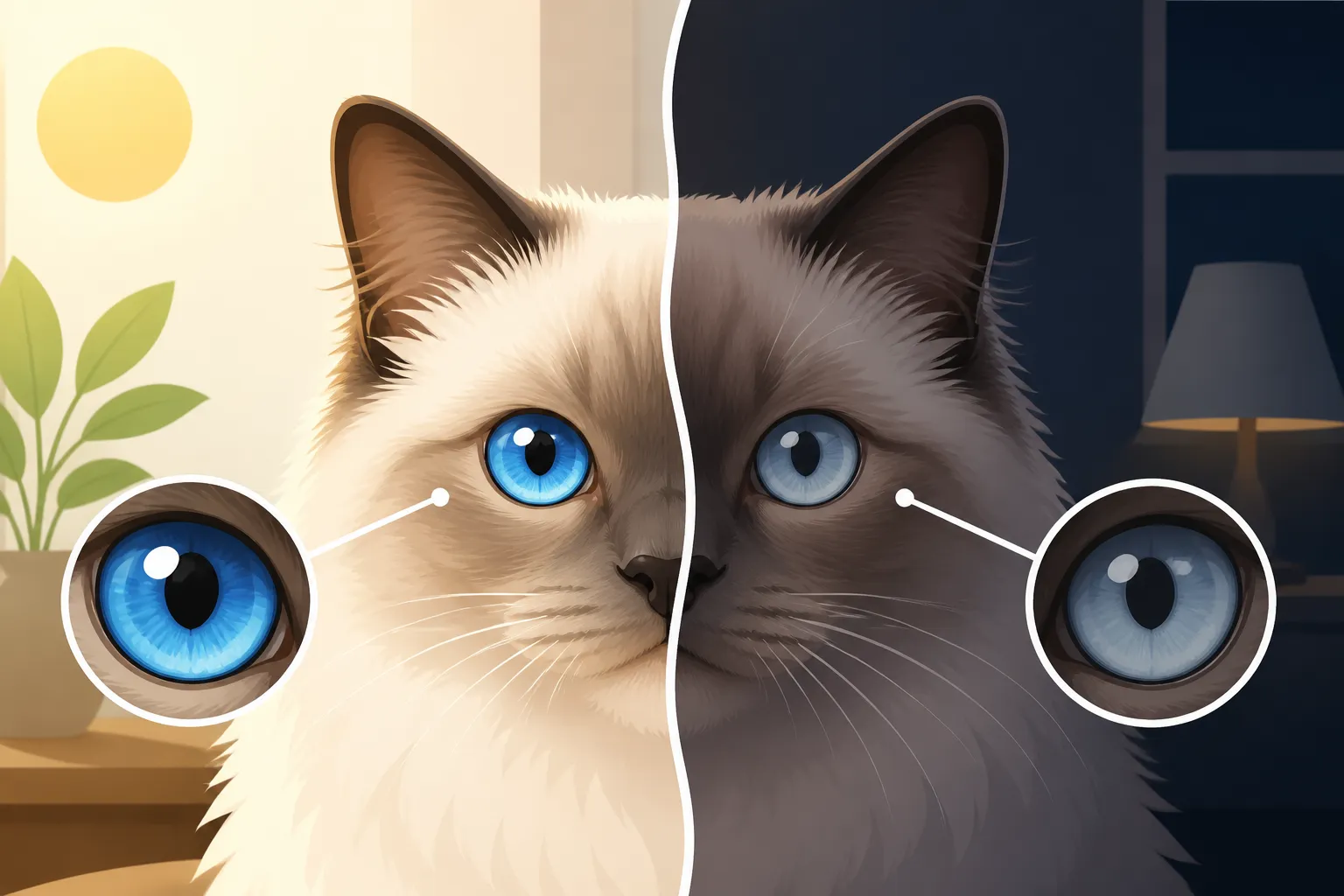
Imagine trying to appreciate the vibrant color of a painting in a dimly lit room. The colors would appear muted, flat, and less intense. The same principle applies to your Birman's eyes. In bright, abundant light, there's plenty of blue wavelength light to be scattered by the collagen fibers in their irises, allowing that rich blue to reflect back strongly to your eyes. It’s like having all the instruments playing loudly in an orchestra.
However, when the light is dim, there simply isn't as much light available to be scattered. With fewer blue light waves hitting and reflecting off those fibers, the perceived intensity of the blue diminishes. It's not that the blue has gone away; it's just that there isn't enough light to properly "illuminate" it for our eyes to see it vividly. This is why you'll often notice their eyes looking much paler, almost a smoky gray-blue, in the evening, in a heavily shaded room, or on a particularly cloudy day. Another factor is pupil dilation; in low light, a cat's pupils open wider to let in more light, which means less of the iris's colored surface is visible, further contributing to the impression of a paler eye color.
Ambient Lighting: Beyond Just Brightness
It's not just the amount of light that matters, but also the type of light. Different artificial light sources have varying color temperatures, which can significantly alter how we perceive colors, including your Birman's eye color. For example, warm incandescent bulbs emit more yellow and red light, which can make the blue in your cat's eyes appear duller or even slightly greenish-gray, as the predominant wavelengths aren't conducive to highlighting the scattered blue. On the other hand, cooler, bluer LED lights or natural daylight tend to enhance the blue, making it appear more vibrant and deep.
Think about how a photograph taken under fluorescent lights looks different from one taken outdoors. The light source has a profound effect. You might find that your Birman's eyes look their most stunning in natural daylight, especially when they're positioned so that light hits their eyes directly, allowing maximum scattering. It's important to remember that these are optical effects, and Why a Birman's Blue Eyes Are Not a Health Risk due to these variations in light. If you're really curious about how light affects their appearance or want to monitor them when you're not home, a good quality pet camera, often found on sites like Amazon, can provide different perspectives, though even camera sensors interpret light differently than the human eye.
Maintaining Eye Health and Recognizing True Changes
While most perceived changes in your Birman's eye color are harmless optical illusions, it's always crucial to stay vigilant about their overall eye health. Genuine changes in eye appearance can sometimes signal an underlying health issue.
Natural Aging and Eye Clarity
For Birmans, their beautiful blue eye color is generally quite stable throughout their lives. Unlike some human eye colors that can shift slightly in infancy or with certain conditions, a Birman's blue is largely a constant. However, just like any other part of their body, their eyes are part of a living organism that experiences the process of aging. While the fundamental color won't change, the clarity and overall health of the eye can be subtly affected by a cat's general well-being, hydration, and internal health.
As Birmans get older, you might notice other changes in their physical condition, as What an Old Birman Slows Down From First can include a general dulling of the coat or less sparkle in their eyes due to systemic health. While these are usually subtle and don't involve the actual blue pigment, any cloudiness, discharge, or visible changes within the eye itself should always be taken seriously. Regular veterinary check-ups are key to catching any potential age-related issues early.
When to Be Concerned: Spotting Real Eye Issues
It’s one thing for your Birman’s eyes to appear paler in dim light, but it’s an entirely different matter if you notice genuine physical changes to their eyes or behavior. Distinguishing between a trick of the light and an actual health concern is vital. Here are some signs that warrant a trip to the vet:
- Sudden or Drastic Color Change: If the blue genuinely seems to be fading or becoming cloudy, rather than just appearing paler in certain lighting, this could indicate an underlying issue such as corneal edema, glaucoma, or cataracts.
- Cloudiness or Film: Any white, gray, or bluish cloudiness on the surface of the eye that persists regardless of lighting needs immediate veterinary attention.
- Redness or Inflammation: Redness in the white of the eye or around the eyelids can point to conjunctivitis, allergies, or an injury.
- Discharge: Excessive tearing, pus, or a sticky discharge could signify an infection or other eye irritation.
- Squinting, Pawing, or Rubbing: If your Birman is showing signs of discomfort, pain, or irritation, it’s a clear indication that something is wrong.
- Changes in Pupil Size or Shape: Uneven pupils or pupils that don't respond normally to light changes can be serious.
Routine examinations are so important, and Why a Birman's Eyes Should Be Checked at Every Visit cannot be stressed enough. Your vet can perform a thorough eye exam and ensure everything is healthy. Maintaining a balanced diet with high-quality ingredients also contributes to overall health, which in turn supports healthy eyes and a vibrant coat.
Appreciating Your Birman's Expressive Eyes
Beyond the scientific explanations, there's a real joy in observing the subtle shifts and unwavering depth of a Birman's gaze. Their eyes are not just functional organs; they are windows to their gentle souls and a significant part of their endearing personality.
The Gaze That Speaks Volumes
Birmans are renowned for their placid, gentle, and affectionate nature. Their captivating blue eyes are a central part of this charming demeanor, often reflecting their calm curiosity and deep contentment. Unlike some more vocal breeds, Birmans aren't usually ones to loudly demand your attention. While they might offer How a Birman Is Saying With That Short Trill, their eyes often do most of the talking.
You'll notice how they gaze at you with quiet devotion, following your movements around the house. They are often described as "people-oriented" cats who love to be near their human companions, and Why a Birman Follows You Without Demanding Anything is a hallmark of their breed. Their eyes, whether appearing bright sapphire or a softer sky blue, convey their affection and their awareness of your presence. It's a look that melts hearts, and part of the reason Why a Birman Is Recommended to First Time Owners is their inherently communicative and agreeable nature, often expressed through their serene gaze.
Capturing Their Beauty: Photography Tips
If you're like most Birman owners, you probably have countless photos of your beloved feline. But capturing the true, vibrant blue of their eyes can sometimes be a challenge, especially when lighting conditions are less than ideal. Here are a few tips to help you photograph those captivating peepers at their best:
- Utilize Natural Light: The best photos of your Birman's eyes will almost always be taken in natural daylight. Position your cat near a window or outdoors in soft, indirect sunlight. Avoid harsh, direct sun as it can cause squinting and overexposure.
- Avoid Flash: Flash photography can create harsh reflections in your cat's eyes, often resulting in green "eye shine" (tapetum lucidum reflection) and obscuring the beautiful blue. Stick to natural or continuous artificial light.
- Focus on the Eyes: Ensure your camera's focus point is precisely on their eyes. This will make their gaze truly pop in the photograph.
- Get Down to Their Level: Crouching down to eye level with your Birman creates a more intimate and engaging portrait, allowing you to capture the depth of their gaze more effectively.
- Use Treats for Attention: To get that perfect, direct stare, try holding a favorite treat just above your camera. Their focus will be drawn right to you, giving you the perfect opportunity to snap.
- Observe Lighting: Pay attention to how the light falls on their face. Sometimes a slight angle shift can make all the difference, bringing out the vibrant blue that you sometimes struggle to see in dim household lighting. These photographic nuances also highlight How a Birman Differs From a Ragdoll on Sight, as the specific shade and setting of their blue eyes can be quite distinct when compared side-by-side in good lighting.
Remember, the perceived changes in your Birman's eye color are usually just a lovely quirk of physics, a testament to the dynamic nature of light and the unique genetics of this wonderful breed. So, next time you see their eyes shift from deep blue to a softer shade, appreciate the magic unfolding before you.
| Aspect | Perceived Paleness (Normal) | True Change (Veterinary Concern) |
|---|---|---|
| Appearance | Blue appears lighter, softer, or grayish-blue. | Blue color itself fades, becomes cloudy, or shifts to yellow/green. |
| Cause | Low light intensity, specific ambient light color. | Underlying eye disease, injury, or systemic illness. |
| Associated Symptoms | None, cat behaves normally. | Squinting, redness, discharge, rubbing, pain, behavioral changes. |
| Onset | Immediate, as light conditions change. | Gradual or sudden, persists regardless of lighting. |
| Recommendation | Enjoy the subtle beauty, observe under different lights. | Consult a veterinarian promptly for diagnosis and treatment. |
Disclaimer
This article is for general informational purposes only and does not constitute professional advice. Laws, prices and regulations vary by location and change over time. Consult a qualified professional for guidance on your specific situation.