Why a Birman Needs Three Combings Where a Persian Needs Seven
The thought of owning a long-haired cat often conjures images of endless grooming sessions, wrestling a disgruntled feline, and constantly battling mats and tangles. Many prospective cat parents, especially those familiar with breeds like the Persian, might assume all luscious coats come with the same high-maintenance demands. However, if you're considering a Birman, you'll be delighted to discover that their unique coat means a significantly less intensive grooming routine, saving you time, effort, and your cat a lot of stress. This guide will delve into why a Birman truly needs three combings a week, while a Persian typically requires seven, and what makes their care so wonderfully different.
The Unique Texture of a Birman's Coat
One of the most remarkable aspects of the Birman breed, and a major reason for its easier grooming, lies in the very structure of its fur. Unlike many other long-haired cats, the Birman boasts a coat that is luxurious but surprisingly low-maintenance. This isn't just breeder-speak; it's a fundamental biological difference that will make your life as a Birman parent much smoother.
A Single, Silky Layer
What truly sets a Birman's coat apart is its single-layered structure. Most long-haired cats, particularly those bred for extreme plushness, possess a dense double coat: a soft, woolly undercoat beneath a longer, coarser guard coat. This undercoat is what traps loose hairs and creates those stubborn mats. The Birman, however, lacks this heavy, woolly undercoat. Instead, their fur consists primarily of silky, fine guard hairs that lie smoothly against the body. This texture is often described as feeling like silk or spun candy floss, incredibly soft to the touch and less prone to tangling. It truly is No Undercoat Is What Makes a Birman Easy to Groom, making it a joy to run your fingers through.
This difference is critical. Imagine trying to untangle a fine silk scarf versus a chunky wool sweater – the silk is far easier to manage. The Birman's fur just glides, which means dead hair has less to cling to. When you run a comb through their coat, it removes loose strands without getting snagged in a dense, felt-like layer underneath. This unique characteristic means less time spent battling knots and more time enjoying cuddles with your placid companion.
Less Matting, More Shine
Because of its single-layered, silky nature, a Birman's coat is naturally resistant to matting. While no long-haired cat is entirely mat-proof, especially in areas of high friction like armpits or behind the ears, the Birman's propensity for matting is significantly lower than breeds with a thick undercoat. This means you won't typically face the daunting task of daily detangling to prevent painful clumps of fur from forming. Why a Birman Mats Far Less Than It Looks Like It Should is a question many people ask, and the answer lies squarely in this coat type.
The lack of a heavy undercoat also contributes to the Birman's characteristic sheen. Their fur reflects light beautifully, giving them a lustrous appearance that is often admired. Maintaining this natural shine doesn't require complex products or exhaustive brushing; simply keeping the coat free of loose hairs and healthy through good nutrition is usually enough. It's a coat designed for elegance with minimal fuss, a true gift for busy cat owners.
Why a Persian's Coat Demands More
To truly appreciate the Birman's low-maintenance coat, it's helpful to understand the contrasting challenges presented by a breed like the Persian. The grooming requirements for a Persian are vastly different, embodying the extreme end of long-haired cat care and explaining why their owners commit to a daily routine.
The Double Coat Dilemma
The Persian cat is renowned for its magnificent, dense, and luxuriant coat, which is truly a sight to behold. However, this beauty comes with significant upkeep. A Persian's fur is a double coat, featuring a thick, woolly undercoat that provides insulation, topped by long, flowing guard hairs. While stunning, this undercoat is a magnet for loose hair, dander, and environmental debris. It traps everything, forming a dense, tangled mess if not meticulously managed. The sheer volume and texture of a Persian's fur make it incredibly prone to matting, often deep within the undercoat, close to the skin.
These mats aren't just cosmetic; they can be incredibly painful for the cat. They pull on the skin, restrict movement, and can hide skin infections or parasites. Imagine wearing a tight, tangled sweater that's constantly tugging at your skin – that's what a large mat can feel like to a cat. This is why Persian owners are well-versed in daily grooming, often spending considerable time each day just trying to prevent these issues from taking hold. The difference in How a Birman's Coat Differs From a Ragdoll's is also rooted in these undercoat distinctions, though Ragdolls are still generally easier than Persians.
Daily Grooming as a Necessity
For a Persian, daily grooming isn't a luxury; it's a non-negotiable part of their care. A typical Persian grooming routine involves dedicated sessions with multiple tools, including slicker brushes, metal combs, and sometimes even de-matting rakes. Owners must systematically work through every section of the coat, layer by layer, to remove loose undercoat and prevent tangles from solidifying into painful mats. Areas like the britches, armpits, and behind the ears are particularly susceptible and require extra attention. Missing a day or two can quickly lead to extensive matting that may even require professional shaving under sedation.
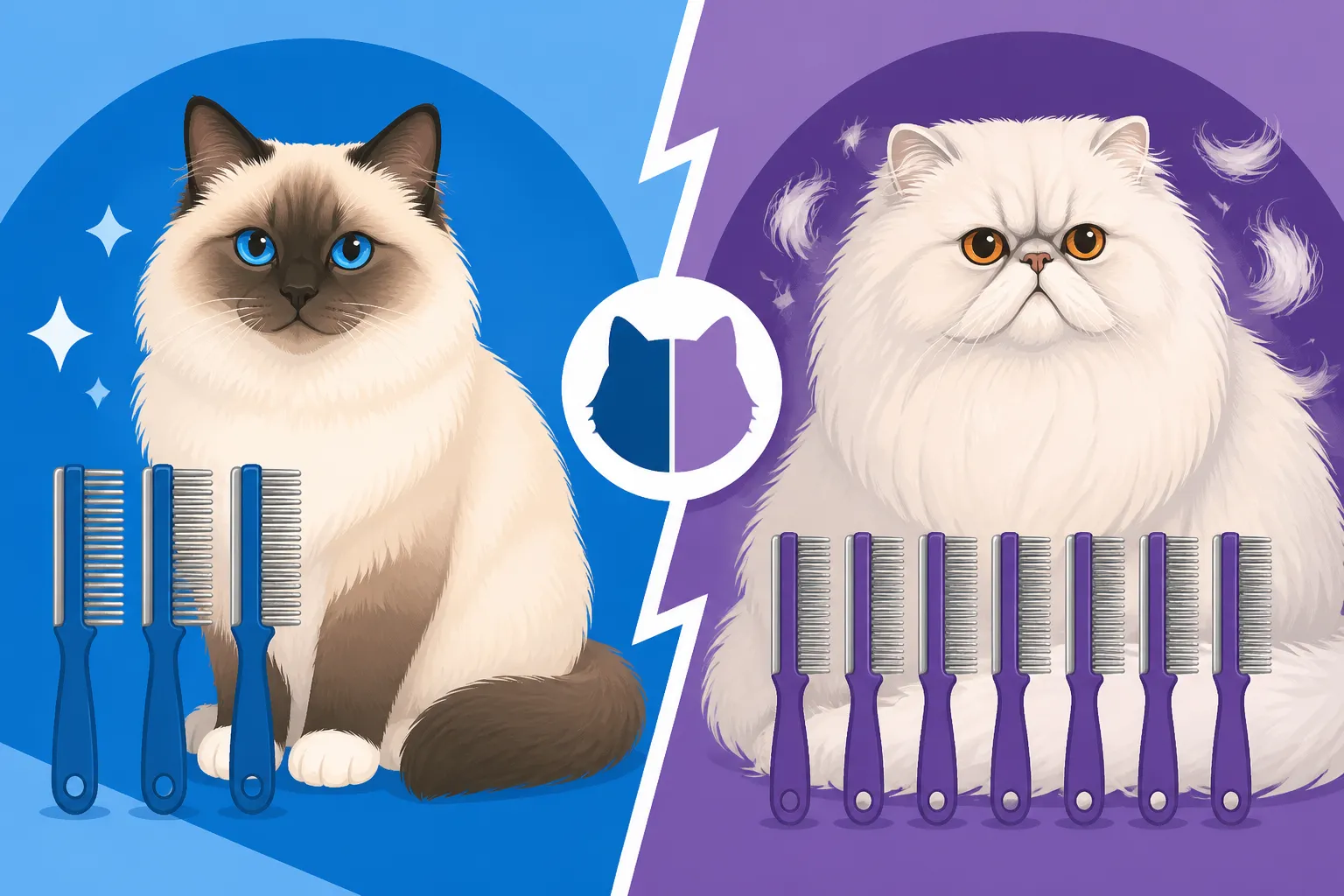
This intensive commitment is why a Persian might need seven thorough combings a week – essentially a daily routine – to maintain their health and comfort. It's a testament to the dedication of Persian owners, but it also highlights the stark contrast to the Birman, whose coat simply doesn't accumulate mats with the same aggressive speed or density. This fundamental difference in coat type is the primary reason Why a Single Coat Mats Less on a Birman and simplifies their care dramatically.
Establishing a Birman Grooming Routine
Transitioning to a Birman's grooming needs is a breath of fresh air for anyone used to more demanding long-haired breeds. Their care focuses on maintenance rather than crisis management, making it an enjoyable bonding experience rather than a chore.
The "Three Times a Week" Sweet Spot
For most Birmans, combing their coat about three times a week is the ideal frequency to keep them looking their best and feeling comfortable. This routine is typically enough to remove any shed hair, prevent minor tangles, and distribute natural skin oils, which contribute to their coat's beautiful shine. You're not battling dense undercoat, but simply maintaining the silky guard hairs. Combing a Birman Three Times a Week becomes a pleasant ritual rather than a dreaded chore.
When it comes to tools, simplicity is key. A good quality stainless steel comb with both wide and fine teeth is usually all you need. Avoid slicker brushes, which can be too harsh and may tear the delicate guard hairs of a Birman's coat. As our persona always says, Why a Slicker Tears a Birman's Silky Guard Hairs is because their coat is simply not built for that kind of aggressive detangling. Instead, focus on gently working through the fur, paying particular attention to areas like the ruff around their neck, their tail plume, and the 'britches' on their hind legs, as these are the spots Where a Birman's Few Mats Form if any are to appear. Many owners find excellent, durable combs on Amazon or specialized pet supply sites like Chewy.
Keeping Those White Gloves Pristine
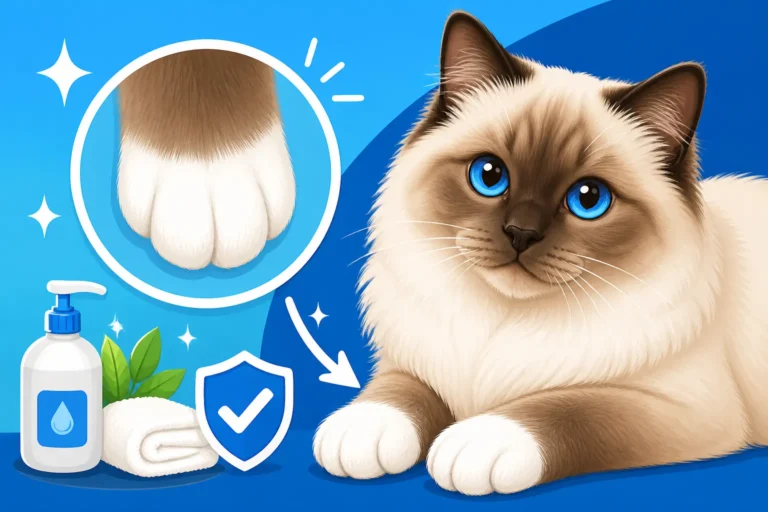
The Birman's signature white 'gloves' and 'laces' on their paws are not only beautiful but also a defining characteristic of the breed. However, these pristine white markings can be a magnet for dirt, especially if your Birman enjoys exploring dusty corners or using certain types of litter. Keeping them sparkling white is a common concern for Birman owners, but it's usually less intensive than you might imagine. Keeping a Birman's White Gloves White often involves proactive measures.
To prevent discoloration, choose a low-dust, non-clumping litter, perhaps even a paper-based or corn-based option, as these are less likely to stick to and stain their white fur. You might find a great selection of these specialized litters on Chewy or even in large boxes from Amazon. Regular combing through the paws will also help remove any stuck litter particles or debris. Occasionally, a gentle spot cleaning with a pet-safe wipe or a damp cloth might be necessary for particularly adventurous paws. Full baths are generally rare for Birmans due to their self-grooming habits and the nature of their coat, but if a paw gets truly grubby, a quick wash with a cat-specific shampoo can work wonders. Understanding Which Litter Suits a White Gloved Cat is half the battle.
Beyond the Comb: Other Grooming Needs
While combing is the primary focus for a Birman's coat, remember that comprehensive grooming includes other vital aspects that contribute to their overall health and well-being. These elements are generally straightforward for a Birman, thanks to their placid temperament.
Regular nail trims are essential to prevent claws from becoming too long, which can be uncomfortable or lead to snagging. Most Birmans are quite tolerant of having their paws handled, especially if you start this routine when they are kittens. Gently clipping the tips every few weeks will suffice. Ear checks are also important; look for any redness, odor, or excessive wax buildup. A quick wipe with a vet-approved ear cleaner, if needed, can keep them healthy. Finally, don't forget dental care! While a Birman's narrow jaw can sometimes make brushing a bit trickier, regular brushing with a cat-specific toothbrush and enzymatic toothpaste is crucial for preventing dental disease. Even with their calm nature, dental issues can creep up silently, so consistency here is key.
| Grooming Aspect | Birman Frequency | Persian Frequency | Primary Tool | Key Challenge |
|---|---|---|---|---|
| Coat Combing | 3 times/week | Daily (7 times/week) | Metal comb | Minimal mats |
| Mat Prevention | Minimal | Daily, extensive | Dematting rake (Persian) | Dense undercoat |
| Paws/Gloves | Spot clean as needed | Daily check/clean | Damp cloth/wipes | Staining (Birman), Mats (Persian) |
| Nail Trimming | Every 2-4 weeks | Every 2-4 weeks | Cat clippers | Generally easy (Birman) |
| Ear Cleaning | Monthly (as needed) | Monthly (as needed) | Ear cleaner/cotton ball | Generally easy |
| Dental Care | Daily/several times a week | Daily/several times a week | Cat toothbrush/paste | Narrow jaw (Birman) |
The Time and Effort Investment
Choosing a Birman means choosing a companion whose care aligns beautifully with a busy lifestyle, offering companionship without the constant demand for intensive grooming. This thoughtful balance makes them incredibly appealing to a wide range of individuals and families.
The Real-World Impact on Owners
The comparatively light grooming schedule of a Birman translates directly into a significant reduction in the time and effort owners need to dedicate to their cat's coat. Instead of an hour or more every single day battling knots, you're looking at quick, pleasant sessions a few times a week, perhaps totaling How Many Minutes a Week a Birman's Coat Takes. This frees up precious time, allowing for more play, more cuddles, or simply more moments of peaceful coexistence. For individuals with demanding jobs, families with young children, or older owners who might struggle with the physical demands of daily intensive grooming, a Birman offers an ideal solution.
This isn't to say Birmans don't shed – all cats do! But their shedding is manageable. The loose hairs are easily picked up by a comb during those three weekly sessions, rather than building up into a dense underlayer that turns into felt. This also means less hair around the house compared to a heavily shedding double-coated breed. You'll still want a good vacuum, of course, but you won't feel like you're constantly fighting a losing battle against cat fur. This practical aspect is a huge relief for many first-time long-haired cat owners.
When a Birman Might Need More
While Birmans are generally low-maintenance, it's important to be realistic and understand that there are circumstances where their grooming needs might increase. No cat is entirely hands-off, and being prepared for these situations is part of responsible pet ownership.
As a Birman ages, for instance, they may become less flexible and struggle to groom certain hard-to-reach areas, like their back or tail. An older cat might also have underlying health issues that affect coat quality, such as thyroid problems or arthritis, making self-grooming difficult or painful. In these cases, you might find yourself needing to increase combing sessions to four or five times a week, or even daily in specific areas, to prevent mats and ensure their comfort. Similarly, a Birman recovering from an illness or injury might need extra help keeping their coat clean and free of tangles. It's about being observant and responsive to your cat's changing needs throughout their life, always prioritizing their comfort and well-being. Keeping an eye on their diet can also support a healthy coat from the inside out.
Disclaimer
This article is for general informational purposes only and does not constitute professional advice. Laws, prices and regulations vary by location and change over time. Consult a qualified professional for guidance on your specific situation.