Why a Deshedding Tool Damages a Birman’s Coat
It’s easy to look at a majestic Birman with its long, flowing coat and assume it needs the most aggressive grooming tools out there to manage shedding. Many well-meaning cat parents grab a deshedding tool, thinking they're doing their Birman a favor by tackling what looks like a mountain of fur. But the truth is, using such a tool on your beautiful Birman can actually do more harm than good, damaging their unique coat rather than improving it. This guide will walk you through why deshedding tools are a no-go for Birmans and what gentle alternatives will truly keep their silky fur in top condition.
Understanding the Birman's Unique Coat Texture
When you first lay eyes on a Birman, you might think "long-haired cat" and mentally lump them in with other breeds known for dense, high-maintenance coats. But the Birman's fur, while definitely long and luxurious, is in a league of its own. It has a distinctive structure that makes it incredibly easy to care for, provided you understand its unique characteristics. Trying to apply grooming techniques meant for other breeds can quickly lead to frustration and a less-than-lustrous coat.
The Birman's Single Coat vs. Double Coats
The most crucial difference to understand about a Birman's coat is that it is a single coat. What does this mean in practical terms? It means there's no thick, woolly underlayer of fur beneath the longer, silky guard hairs. Think of breeds like the Persian or the Maine Coon; they possess a dense double coat, with a soft, insulating undercoat that often sheds profusely and can mat easily. This undercoat is what traditional deshedding tools are designed to remove, getting down deep to pull out the loose, dead fluff.
The Birman, on the other hand, developed without this thick underlayer. Their coat consists primarily of guard hairs, which are longer, finer, and have a more open texture. This absence of a woolly undercoat is a major blessing for Birman owners, as it significantly reduces the propensity for matting and makes grooming a far more pleasant experience than you might imagine for a cat with such a magnificent mane. It's truly one of the reasons No Undercoat Is What Makes a Birman Easy to Groom.
The Silky, Fine Nature of Birman Fur
Beyond the single-coat structure, the Birman's fur itself has a wonderfully unique texture. It’s often described as being like "spun silk" or "rabbit fur" – incredibly soft, fine, and flowing, not coarse or bristly in the slightest. When you run your hand through a Birman's coat, it just glides. This is a far cry from the dense, sometimes slightly rougher texture of some double-coated breeds. This silky quality contributes to how easily their fur lies flat and resists tangles.
This fine texture means that while Birmans do shed, the individual hairs are so light and airy that they don't form the dense, compacted clumps you might find with other long-haired cats. You'll still find Birman hairs around the house, especially during seasonal changes, but they tend to be loose and easily vacuumed or wiped away. Understanding What Makes a Birman's Coat Silky Rather Than Woolly is key to appreciating why harsh tools are simply unnecessary and counterproductive for these gentle felines. Their coat is designed for elegance and minimal fuss, not heavy-duty de-bulking.
How Deshedding Tools Work and Why They Fail the Birman
Armed with the knowledge that your Birman has a single, silky coat without a dense underlayer, let's explore why deshedding tools are completely unsuited for their grooming needs. Many of us have seen the dramatic results these tools can achieve on certain breeds, filling a brush with what looks like an entire second cat. But applying this same logic to a Birman overlooks fundamental differences in their fur.
The Mechanism of a Deshedding Tool
Most popular deshedding tools, like the well-known Furminator, are designed with a specific purpose in mind: to efficiently remove loose, dead undercoat from double-coated animals. These tools feature a unique rake-like design with closely spaced metal teeth, often with a slight curve, that are engineered to penetrate the longer topcoat (guard hairs) and reach the soft, fluffy undercoat beneath. The edges of these teeth are often sharpened or shaped to effectively grab and pull out the loose undercoat hairs that are trapped and ready to shed.
When used correctly on a breed like a Husky or a Persian, these tools can be incredibly effective at reducing shedding and preventing mats by removing the thick, dead insulation. They literally "rake" out the layers of shedding fur that would otherwise accumulate, keeping the animal cooler and their coat healthier. The process is about extracting the detached, shed hairs from the deep underlayer, without cutting or damaging the healthy guard hairs. This is where the crucial distinction lies for the Birman.
The Damage to a Birman's Delicate Guard Hairs
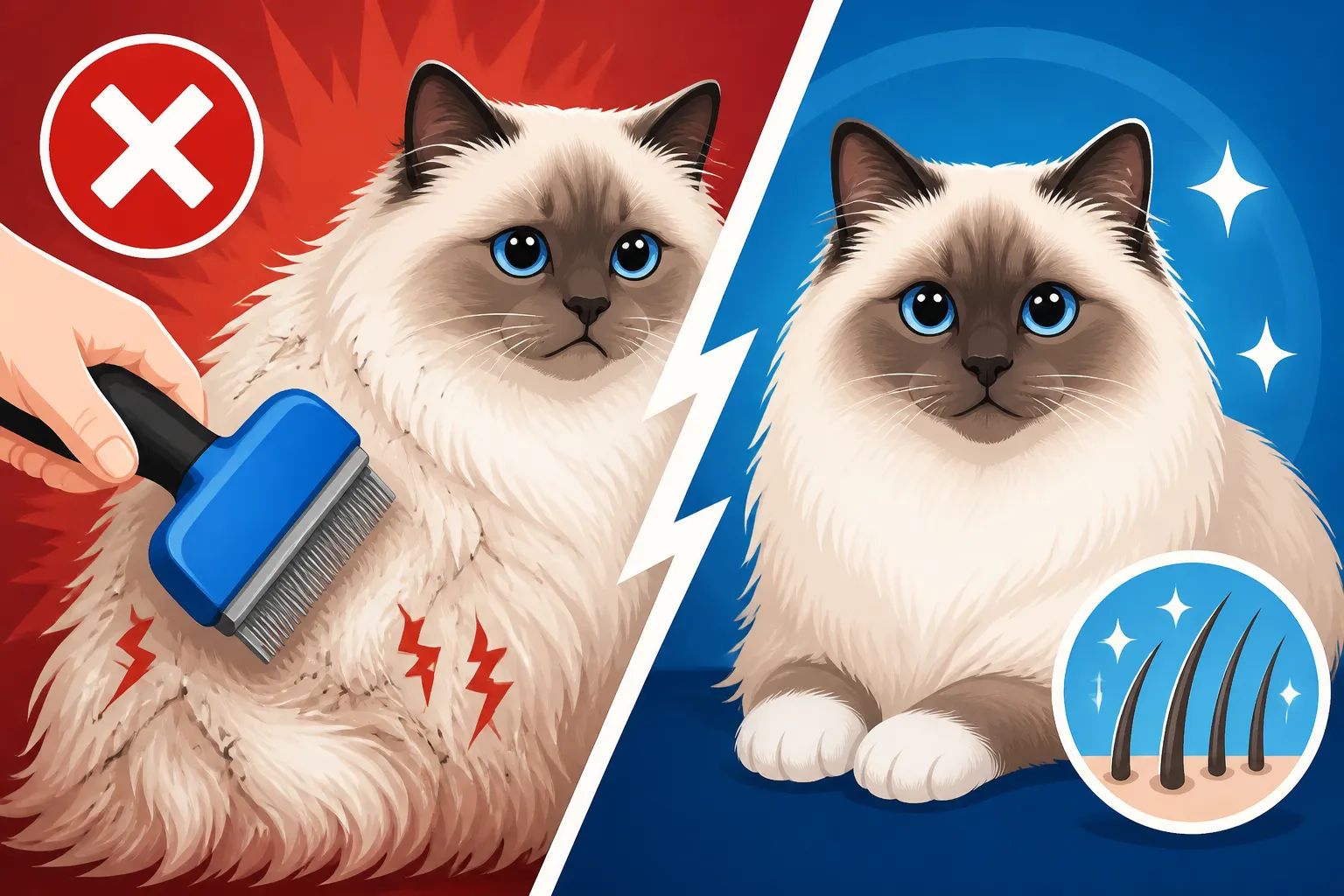
Here's the critical point: because a Birman doesn't have a dense undercoat for these tools to target, a deshedding tool has nothing to "grab" but the healthy guard hairs that constitute their entire coat. When you use a deshedding tool on a Birman, those specialized teeth aren't pulling out loose undercoat; they are essentially cutting, tearing, and ripping out the delicate, living guard hairs that form their beautiful, flowing topcoat. It’s akin to taking a razor to their fur rather than gently combing out shedding strands.
The consequences of this can be quite visible and disheartening. You might notice:
- Broken Hairs and Split Ends: The harsh action of the tool breaks the fine hair shafts, leading to a dull, frizzy appearance rather than the smooth, silky texture Birmans are known for. Imagine constantly running a blunt razor through your own hair; it wouldn't look healthy for long.
- Thinning of the Coat: Repeated use can thin out the Birman's coat, leaving patches looking sparse and uneven. This compromises the natural beauty of their fur, which should be long and full.
- Skin Irritation: The aggressive raking motion can drag against and irritate the delicate skin beneath, potentially causing redness, scratching, or even minor abrasions. A Birman's skin isn't meant to withstand that kind of force.
- Loss of Shine and Softness: The very essence of the Birman coat is its silkiness and sheen. Damaged hairs lose their integrity, resulting in a duller, coarser feel that detracts from their regal appearance. You’ll be removing the very quality that makes their coat so special.
It’s vital to remember that Why a Slicker Tears a Birman's Silky Guard Hairs is not an exaggeration. The wrong tool can undo all the natural benefits of the Birman's low-maintenance coat, turning it into a damaged, uncomfortable mess for your beloved pet. Your Birman deserves tools that respect their unique physiology, not those designed for a completely different kind of fur.
The Right Way to Groom a Birman for a Healthy Coat
Now that we understand why deshedding tools are off-limits, let's focus on the good stuff: how to properly groom your Birman to keep their coat looking magnificent and feeling wonderfully soft. The good news is, thanks to their unique single coat, it's often a much simpler and more enjoyable process than you might anticipate. The key is gentle consistency and using the right tools for the job.
Essential Grooming Tools for a Birman
Forget the harsh rakes and aggressive blades. For a Birman, less is definitely more when it comes to grooming tools. Your arsenal should prioritize gentleness, efficiency, and comfort for your cat. Here's what you'll want to have on hand:
- Wide-Toothed Comb: This is your primary tool. A good quality metal comb with both wide and medium-spaced teeth is perfect for gliding through your Birman's silky fur. It helps detangle any minor snags (which are rare!) and gently removes loose hairs without pulling or breaking the coat. Think of it as a massage rather than a battle. You can find excellent options on online retailers like Chewy or Amazon, often under "greyhound comb" or "longhair cat comb."
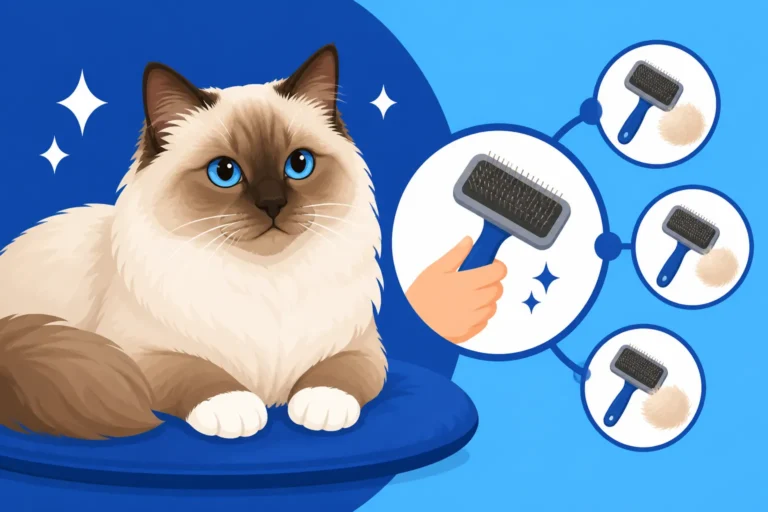
- Soft Bristle Brush: A natural bristle brush can be wonderful for distributing natural oils, adding shine, and giving a final polish to the coat. It’s also incredibly gentle and can be a soothing experience for your Birman, turning grooming into a bonding moment.
- Slicker Brush (Use with extreme caution, if at all): While I generally advise against slicker brushes for Birmans because of their tendency to pull fine hairs, some very soft, flexible-pin slickers can be used very gently in specific areas, like the ruff, for light detangling. However, if you feel any tugging, stop immediately. A wide-toothed comb is almost always a safer and more effective choice for a Birman. Always prioritize Which Comb Gets Through a Birman's Ruff Without Pulling over any tool that feels like it snags.
- Nail Clippers: While not directly for coat care, regular nail trims are essential for your Birman’s comfort and to prevent snagging their beautiful coat with sharp claws.
- Cat-Specific Wipes (Optional): For keeping those iconic white gloves pristine, especially if your Birman enjoys digging in their litter box. More on keeping those gloves white in other articles, but having some on hand can be useful.
The right tools are readily available, and investing in a good quality comb will last you for years, making your Birman's grooming a breeze.
Establishing a Gentle Grooming Routine
With your gentle tools in hand, establishing a consistent and positive grooming routine is next. Birmans generally love attention and affection, so turning grooming into a pleasant experience is usually quite easy.
Aim for two to three grooming sessions per week, each lasting about 10-15 minutes. This frequency is typically enough to prevent any tangles and remove loose hair, thanks to their non-matting coat. More frequent sessions are fine if your Birman enjoys it, especially during seasonal shedding times, but daily isn't usually necessary. For comprehensive advice, check out Combing a Birman Three Times a Week.
Here’s a simple routine:
- Start with Cuddles: Begin by petting your Birman and getting them comfortable. Many Birmans are happy to be groomed on your lap, a designated blanket, or even a low table, as long as they feel secure.
- Work in Sections: Start at the head and work your way back. Use your wide-toothed comb, gently stroking through the fur. Pay special attention to areas where friction might cause minor tangles, such as behind the ears, under the "armpits," on the britches (the fluffy fur on their back legs), and their magnificent tail plume.
- Go with the Grain: Always comb in the direction the fur naturally grows. This is more comfortable for your cat and less likely to cause static or breakage.
- Be Gentle: If you encounter a slight snag, don't yank. Gently work the comb through it, perhaps holding the fur at the base to minimize pulling on the skin. Your Birman's placid temperament means they'll usually tolerate gentle detangling without much fuss.
- Finish with a Soft Brush (Optional): After combing, a few strokes with a soft bristle brush can smooth the fur, enhance shine, and remove any remaining loose hairs.
Remember, the goal is to make grooming a positive bonding experience. If your Birman seems stressed or resists, try shorter sessions or distract them with treats.
Dealing with Mats (When They Rarely Occur)
One of the great joys of owning a Birman is how rarely they mat. Their single, silky coat is simply not prone to the dense, felt-like mats that plague many other long-haired breeds. However, no cat is entirely immune, and a small mat might occasionally form, especially in friction areas or if grooming has been neglected for a while.
If you do find a mat:
- Assess the Situation: Is it a small, loose tangle or a tight, dense mat? For small tangles, you can often gently work them out with your fingers first, teasing the hairs apart.
- Use Your Wide-Toothed Comb: Start at the edge of the mat and gently work your way in, using small strokes. Hold the fur at the skin level to prevent pulling.
- Consider a Mat Splitter (Carefully): For more stubborn mats, a specialized mat splitter (a tool with a blunt blade designed to cut through mats without harming the skin) can be helpful. Use it with extreme caution and always away from the skin. Never, ever use sharp scissors to cut out a mat near the skin, as it's incredibly easy to accidentally cut your cat. If you’re unsure, a professional groomer or your vet can safely remove mats. For further guidance, refer to How to Get a Mat Out of a Birman's Coat.
- Prevention is Key: Regular gentle combing, as outlined above, is the best defense against mats. A consistent routine means you'll likely never have to deal with anything more than a minor tangle.
By understanding your Birman's unique coat and using the right, gentle approach, you'll ensure their magnificent fur remains healthy, silky, and beautiful throughout their life, without ever needing a harsh deshedding tool.
| Coat Type | Undercoat Presence | Texture | Matting Tendency | Recommended Grooming Tool | Tool to AVOID |
|---|---|---|---|---|---|
| Birman (Single) | No | Silky, fine | Low | Wide-toothed comb | Deshedding tool, slicker (harsh) |
| Double-Coated | Yes, dense | Woolly, soft | High | Deshedding tool, slicker (gentle) | Harsh brushes that pull |
Disclaimer
This article is for general informational purposes only and does not constitute professional advice. Laws, prices and regulations vary by location and change over time. Consult a qualified professional for guidance on your specific situation.