How Much Water a Birman Should Get Through in a Day
One of the trickiest parts of caring for our beloved Birmans is making sure they're getting enough to drink. These gentle, quiet cats are masters at subtle communication, which often means their needs, including hydration, can fly under the radar until a problem arises. It’s incredibly frustrating when you’re trying your best, but your cat isn’t giving you obvious cues, and you're left wondering if that little sip from the bowl was enough. This guide will walk you through exactly how much water your Birman should be consuming daily, delve into why it’s so critical for their long-term health, and offer actionable strategies to ensure your beautiful companion stays perfectly hydrated.
The Critical Role of Hydration for Your Birman's Health
It's easy to assume that if a water bowl is available, your cat will drink what it needs. But with Birmans, this assumption can sometimes lead to trouble down the line. Cats, by their very nature, aren't built to be big drinkers. Their ancestors, desert dwellers, evolved to get most of their moisture from their prey. This means their thirst drive isn't as strong as, say, a dog's, and they often exist in a state of mild, chronic dehydration without showing obvious signs until a problem is well underway. This is especially true for our placid Birmans, who are excellent at masking discomfort or illness. Why a Placid Birman Hides Pain
Why Hydration is Paramount for Birman Kidneys
For Birmans specifically, adequate hydration is not just a nice-to-have; it's a foundational pillar of their health, particularly concerning their kidneys. This breed can have a history of certain renal concerns, often traced back to their Persian lineage which introduced conditions like Polycystic Kidney Disease (PKD). Even if your Birman is PKD-clear, maintaining optimal kidney function throughout their life relies heavily on a consistent, healthy water intake. When a cat is dehydrated, its kidneys have to work harder to filter waste, and the urine becomes more concentrated. This concentrated urine can exacerbate existing kidney issues or contribute to the formation of urinary crystals and stones, leading to painful and potentially life-threatening urinary tract infections or blockages. Keeping urine diluted is one of the best preventative measures we can take to support their renal system. Why a Birman's PKD History Makes Water Intake Matter
Understanding the Silent Threat of Dehydration
Cats are notoriously good at hiding discomfort, a survival instinct that makes it challenging for us loving owners to spot problems early. Your Birman might be feeling "off" due to mild dehydration long before you notice any overt symptoms. Think about how you feel when you haven't had enough water – sluggish, a bit headachy, perhaps not quite at your best. Cats experience similar internal malaise. Prolonged dehydration can impact everything from their digestion and nutrient absorption to their skin and coat health, making their beautiful silky fur look dull or increasing shedding. More critically, it puts a strain on their internal organs, including the heart and kidneys, silently chipping away at their long-term vitality. By the time a cat shows clear signs of dehydration, they are often already significantly unwell, requiring urgent veterinary attention.
Estimating Your Birman's Daily Water Intake Needs
So, how much water should your Birman actually be drinking? It’s a common question with an answer that isn't a single, magic number, but rather a range influenced by several factors. As a general rule of thumb, most cats need about 2-4 ounces of water per 5 pounds of body weight per day. For a typical adult Birman, who might weigh anywhere from 8 to 15 pounds, this could mean anywhere from 3 to 12 ounces of water daily. This includes the moisture they get from their food!
Factors Influencing Water Consumption
Several variables play a significant role in how much your individual Birman needs to drink:
- Diet Type: This is perhaps the biggest influencer. If your Birman eats primarily dry kibble, they will need to drink much more water from a bowl or fountain. Dry food contains only about 6-10% moisture. Contrast this with wet food, which can be 70-80% water. A Birman on an exclusively wet food diet might appear to drink very little from a bowl because they’re getting most of their hydration from their meals. Why Kibble Alone Leaves a Birman Short of Water
- Activity Level: While Birmans are generally known for their calm and placid demeanor, a younger, more playful Birman or one who has an energetic play session might need a bit more water than an older, more sedentary cat.
- Age: Kittens and senior Birmans have different hydration needs. Kittens are growing rapidly and are very active, requiring good hydration. Older Birmans, especially those with developing kidney issues, need ample water to support organ function. How Kidney Failure Arrives in a Birman Past Fourteen
- Environmental Temperature: Just like us, cats need more water when it's warmer. If you live in a hot climate or your home is particularly warm, your Birman will naturally seek out more water to help regulate their body temperature.
- Health Status: Cats with certain health conditions, like diabetes or kidney disease, will drink significantly more water. Why a Birman Drinking More Points at Its Persian Ancestry If you notice a sudden, dramatic increase in your Birman's water intake, it’s always a good idea to consult your veterinarian, as it could be an early sign of an underlying medical issue. Similarly, if your cat is unwell, they may drink less, risking dehydration.
Tracking Your Birman's Intake: A Practical Approach
Trying to precisely measure every drop your Birman drinks can feel like a full-time job! However, you can get a good estimate. If you use a traditional water bowl, fill it to a specific mark each morning and note the level again before refilling it the next day. Subtract any evaporation (you can measure this by leaving a separate, identical bowl out for 24 hours). If you have multiple pets, this method becomes less precise, but it still gives you a baseline. For those using water fountains, many have reservoirs that make it easier to track the water level over time. Don't forget to factor in the moisture from their wet food. A single 3oz can of wet food, for example, contributes about 2.5oz of water.
Here's a quick reference table for a typical Birman's estimated daily water intake:
| Birman Weight (lbs) | Dry Food Diet (oz water) | Mixed Diet (oz water) | Wet Food Only (oz water) |
|---|---|---|---|
| 8 | 6 – 8 | 4 – 6 | 2 – 4 |
| 10 | 8 – 10 | 5 – 8 | 3 – 5 |
| 12 | 10 – 12 | 6 – 10 | 4 – 6 |
| 15 | 12 – 15 | 8 – 12 | 5 – 8 |
Note: These are general estimates and include water from food. Individual needs vary.
Strategies to Encourage Your Birman to Drink More
Knowing how much water your Birman should drink is one thing; getting them to actually drink it is another. Luckily, there are many simple, effective strategies you can employ to make water more appealing to your discerning feline friend.
Optimizing Water Bowls and Placement
Sometimes, the simplest changes make the biggest difference.
- Material Matters: Plastic bowls can sometimes retain odors or flavors that cats dislike, and some cats can develop an allergic reaction known as "feline acne" on their chin. Stainless steel, ceramic, or glass bowls are often preferred because they are non-porous, easy to clean, and don't impart any taste.
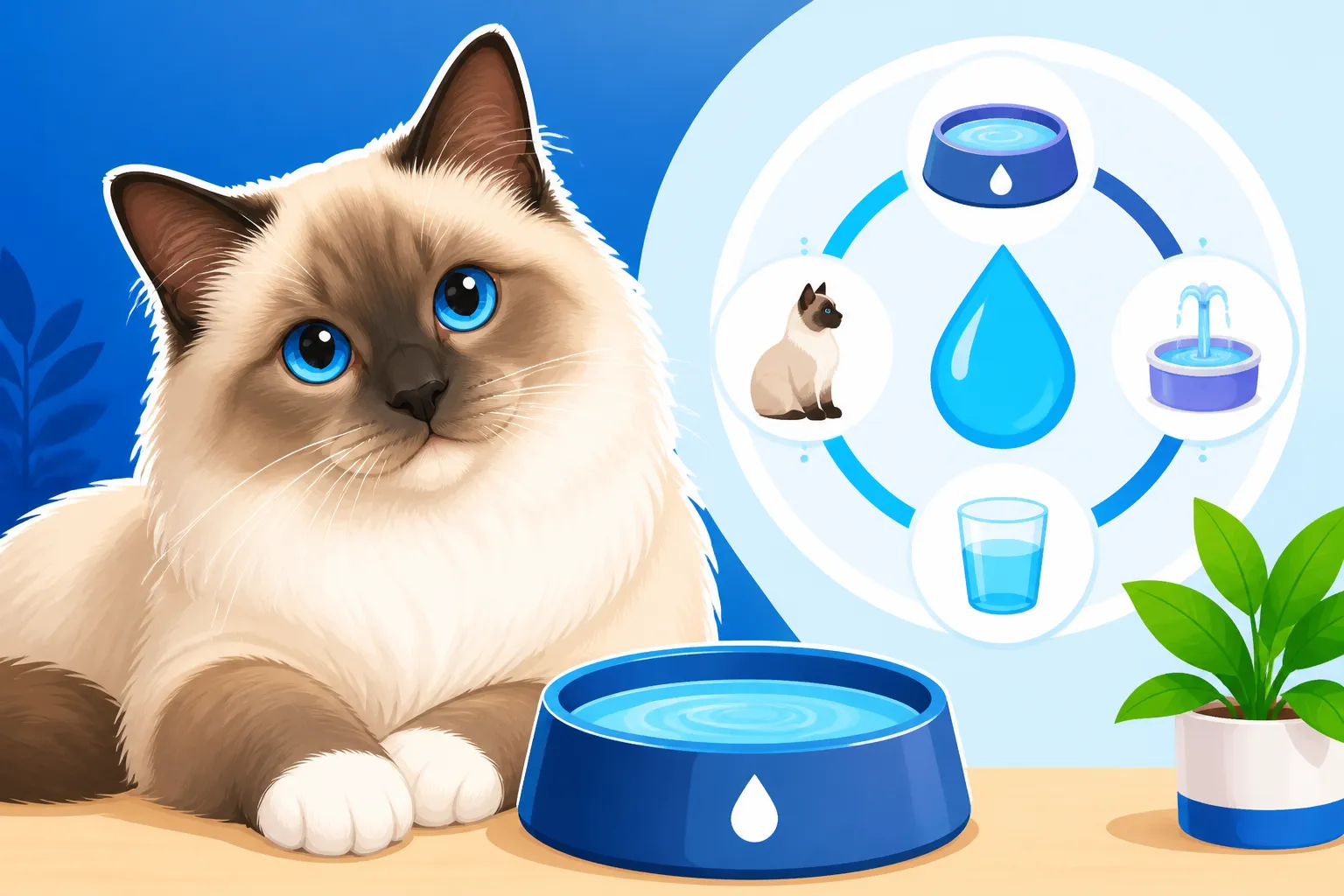
- Size and Shape: Cats, and Birmans especially with their elegant ruffs, prefer wide, shallow bowls that don't press against their sensitive whiskers. This is called "whisker fatigue," and it's a real thing! A deep, narrow bowl can be uncomfortable. Why a Birman's Whiskers Need Bowl Room
- Cleanliness is Key: You wouldn't want to drink from a dirty glass, and neither does your Birman. Wash their water bowls daily with soap and hot water to prevent the buildup of bacteria, slime, and dust.
- Multiple Stations: Place several water bowls throughout your home, especially in areas where your Birman likes to relax or play. If you have a multi-story home, ensure there's a bowl on each level. This makes access easy and encourages opportunistic drinking.
- Location, Location, Location: Avoid placing water bowls right next to their litter box or food bowl. Cats instinctively dislike drinking near where they eliminate, and some prefer not to drink right next to where they eat. Try a quiet corner, a sunny spot, or even on a sturdy table or shelf if your Birman enjoys elevated perches.
The Allure of Running Water: Fountains
Many cats are captivated by moving water, and a drinking fountain can be a game-changer for increasing hydration. The sound and sight of bubbling or flowing water mimic a fresh, natural source, which can be much more enticing than a stagnant bowl.
- Types of Fountains: There's a wide variety available, from stainless steel to ceramic and plastic, with different filtration systems. Consider a fountain with a large reservoir to minimize refills and a quiet pump so it doesn't startle your Birman. Brands like Pioneer Pet, PetSafe, and the various options found on Amazon or Chewy offer excellent choices.
- Introducing the Fountain: Some Birmans will take to a fountain immediately, while others might be wary. Introduce it gradually by placing it near their existing water bowl. You can even leave the old bowl out for a few days until they've fully transitioned. Keep the fountain meticulously clean, as any debris can deter them. Whether a Fountain Gets a Birman Drinking More
Enhancing Moisture Through Diet
This is, hands down, the most effective way to boost your Birman's daily water intake.
- Prioritize Wet Food: If your Birman isn't already on an all-wet food diet, consider making the switch, or at least incorporating more wet food into their meals. Even feeding wet food once a day can significantly increase their overall moisture intake. Look for high-quality wet foods with good protein content that supports a healthy coat and muscle mass. Many excellent options are available from various pet food brands, including those found on Chewy or specialty pet stores. Which Wet Food Suits a Birman's Kidney History
- Add Water or Broth: For dry food enthusiasts, you can add a tablespoon or two of water, or even a low-sodium, cat-safe bone broth, to their kibble. Some cats enjoy this softened texture. You can also mix a bit of warm water into wet food to create a more soupy consistency.
- Ice Cubes: On a warm day, a few ice cubes in their water bowl can make it more appealing. Some cats even enjoy batting at and licking the melting ice.
- "Water Bar": Consider a special “water bar” setup where you offer various water options: a regular bowl, a fountain, and a bowl with a few drops of tuna juice (unsalted, oil-packed tuna water only) or a tiny bit of catnip tea (cooled, unsweetened). This variety can pique their interest. For those who enjoy preparing fresh food for their pets, adding natural broth is a great idea.
Recognizing Signs of Dehydration and When to Worry
Even with the best efforts, it's crucial to know the signs of dehydration in your Birman so you can act quickly if needed. Remember, Birmans are stoic, so any visible signs often mean they're quite dehydrated.
Subtle and Obvious Indicators
- Reduced Skin Elasticity (Skin Tent Test): Gently pinch a fold of skin on your Birman's back, just behind their shoulders. On a well-hydrated cat, the skin should snap back into place almost immediately. If it's slow to return or "tents" for a moment, it's a sign of dehydration.
- Sunken Eyes: In severe cases, a dehydrated cat's eyes may appear dull or sunken into their sockets.
- Dry Gums: Their gums should be pink and moist. If they feel tacky or dry to the touch, or if you press on them and the color is slow to return, it's a red flag.
- Lethargy and Weakness: Your usually graceful Birman might seem unusually tired, less active, or generally listless. They may not greet you at the door or play as readily. What a Withdrawn Birman Is Telling You
- Reduced Urination: While challenging to monitor without a marked litter box, if you notice significantly fewer clumps in the litter box or your cat isn't urinating as frequently, it could indicate low fluid intake.
- Loss of Appetite: Dehydration can make a cat feel unwell, leading to a decrease in their desire to eat. Why a Birman's Appetite Goes First When It Is Unsettled
- Changes in Coat Appearance: A dehydrated Birman's beautiful silky coat might look duller, feel rougher, or have increased shedding.
The Importance of Prompt Veterinary Care
If you notice any of these signs, especially a combination of them, contact your veterinarian immediately. Dehydration can quickly escalate into a serious health crisis, particularly for Birmans with their potential kidney predispositions. Your vet can accurately assess your cat's hydration status, perform necessary blood tests to check kidney values, and administer subcutaneous fluids to quickly rehydrate them. Catching and addressing dehydration early can prevent more severe complications and ensure your Birman continues to live a long, happy, and hydrated life. Regular vet check-ups are also crucial to monitor their overall health, including kidney function, as they age. Which Blood Values a Birman's Kidney History Makes Important
Making sure your Birman drinks enough water might feel like a never-ending quest, but with these strategies and a keen eye for their subtle cues, you'll be well on your way to ensuring your feline companion thrives.
Disclaimer
This article is for general informational purposes only and does not constitute professional advice. Laws, prices and regulations vary by location and change over time. Consult a qualified professional for guidance on your specific situation.