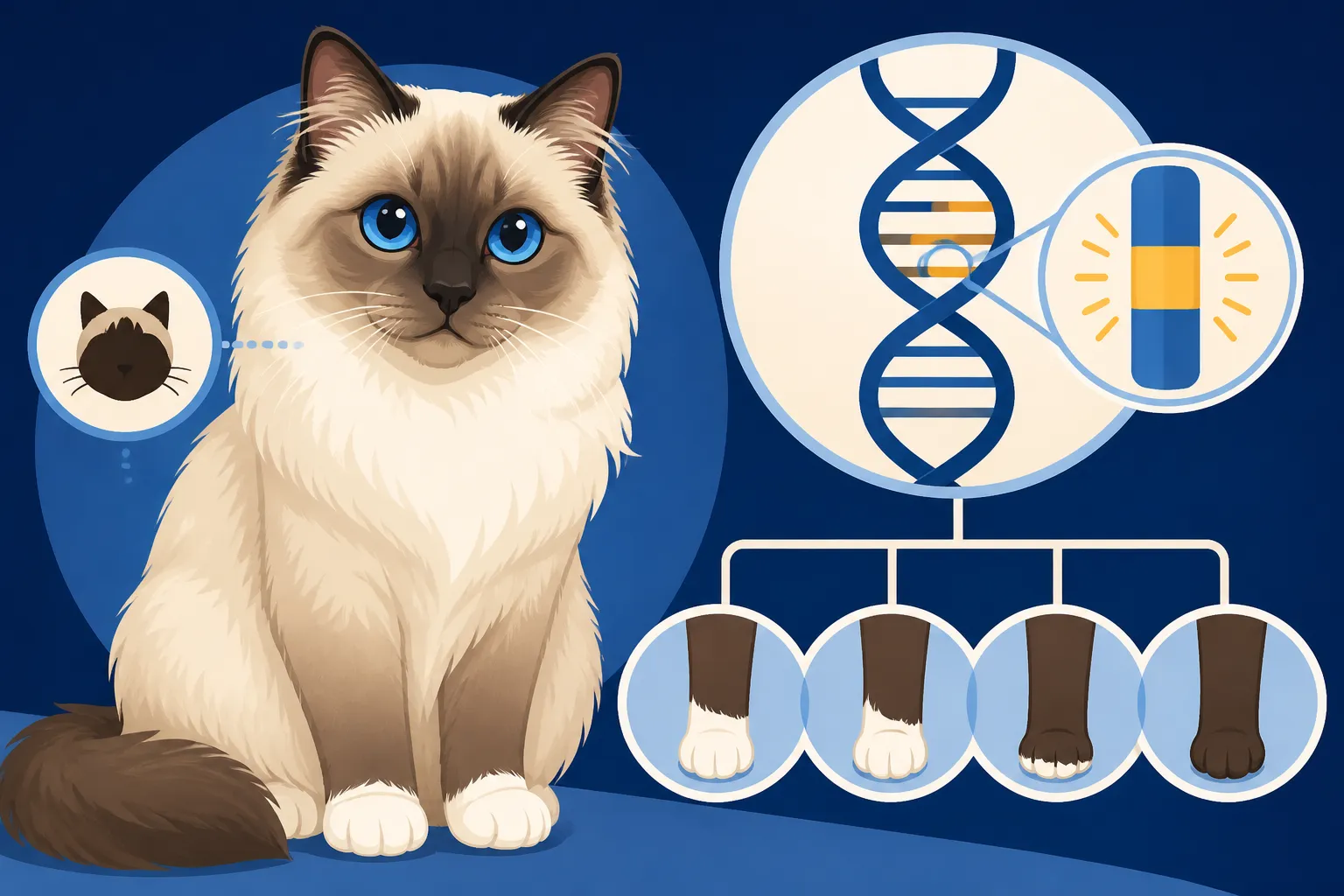
How the Gloving Gene Works in a Birman
It's quite a special experience to watch a Birman kitten grow, isn't it? They start off as these tiny, pure white fluffballs, and then slowly, almost magically, their beautiful points begin to emerge, along with those distinctive white "gloves" on their paws. But if you've ever wondered why some Birmans have what seems like perfectly symmetrical gloves while others have a little too much white, or a "lace" that runs a bit high, you're not alone. It's a question that perplexes many, even seasoned breeders, because it touches upon the fascinating and sometimes frustrating world of genetics. This guide aims to pull back the curtain on the Birman's unique gloving gene, exploring how it works, why there's variation, and what it means for our beloved feline companions.
The Unique Birman Gloving: A Defining Trait
There's no mistaking a Birman's paws for any other breed. Those crisp, pure white markings, often referred to as "gloves," are a hallmark of their elegance and mystique. It's one of the first things people notice, and for good reason – it's a feature that sets them apart from other pointed breeds like the Siamese or Ragdoll. But what exactly makes these gloves so unique, and why is their precise presentation such a celebrated, yet often challenging, aspect of the breed?
What Makes Birman Gloves So Special?
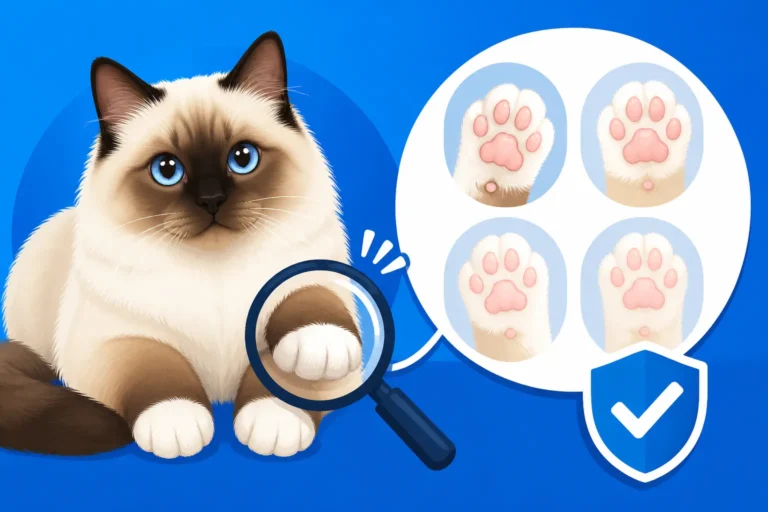
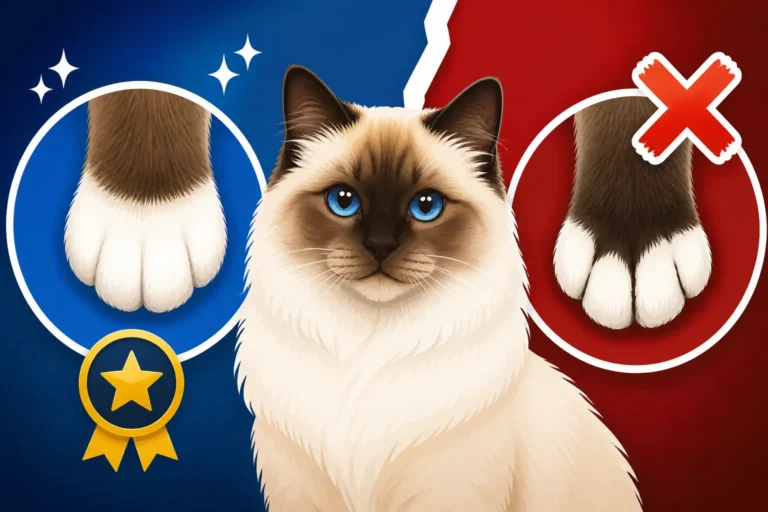
Imagine looking at a Birman's front paws, and you see pure white fur, ending in a perfectly straight, even line across the paw, just above the pads. Then, you look at the back paws, and the white extends further up the back of the leg, forming what we call "laces" or "gauntlets," which ideally should be symmetrical and end in an inverted V-shape. This specific pattern of white spotting is incredibly distinctive, and it’s a cornerstone of the Birman breed standard.
For breeders, achieving this "ideal" glove marking is often seen as the ultimate artistic challenge, a testament to careful breeding. It's a dance between art and science, knowing the lines, understanding the potential. Many breeders pour years into trying to consistently produce kittens with flawless gloves, only to find that even within the same litter, there can be a range of expressions. It can be incredibly frustrating to see an otherwise perfect kitten with just one glove slightly uneven or a back lace running a little too high. Yet, this pursuit of perfection is what drives the dedication to the breed. The legend of the Birman often highlights these white paws, linking them to a sacred transformation, reinforcing just how central this trait is to the breed's identity. The Birman Is the Sacred Cat of Burma, and the Story Is a Legend
The Genetic Basis: The KIT Gloving Variant
So, what's the scientific secret behind these beautiful white mittens? It all comes down to a specific gene, or rather, a specific variant within a gene, known as the KIT gene. The KIT gene is a big player in how pigment cells (melanocytes) develop and migrate in the body. In Birmans, there's a particular mutation, or "variant," within this KIT gene that is directly responsible for the white gloving pattern.
What's fascinating about Birmans is that every single Birman carries two copies of this specific KIT gloving variant. This is why you won't find a purebred Birman without white gloves. It's fixed in the breed's genetic makeup. Think of it like this: most breeds might have a "white spotting gene" that can cause anything from a small white locket to extensive white patches, like in a bi-color cat. But the Birman's variant is much more precise, causing only the specific glove pattern. This fixed genetic trait is fundamental to understanding The Gloving Gene Every Birman Carries Two Copies Of. It's not a gene that's "on" or "off" in terms of white presence; it's always there, always instructing those specific cells on the paws not to produce pigment.
How the Gloving Gene Interacts with Color and Pattern
Understanding that Birmans have this fixed gloving gene is just the first step. The real magic, and sometimes the mystery, lies in how this gene interacts with other genetic factors that determine a Birman's overall color and pattern. It’s not just about having white paws; it’s about how those white paws appear against the backdrop of their striking point coloration.
Points and Gloves: A Symphony of Genetics
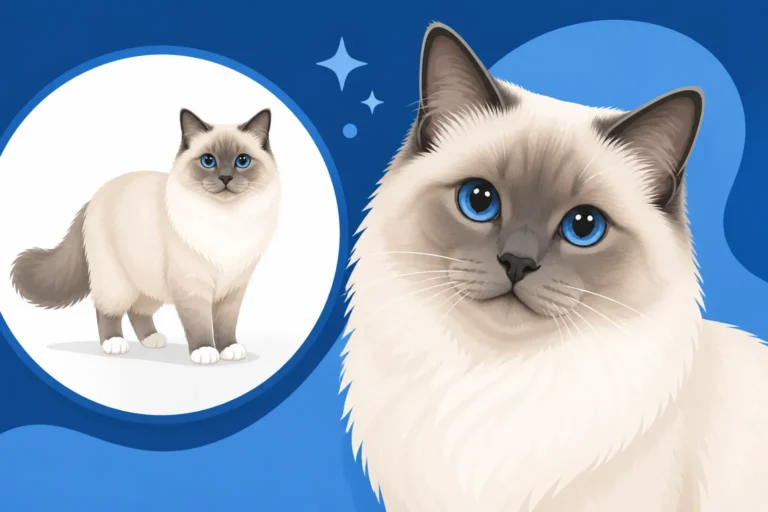
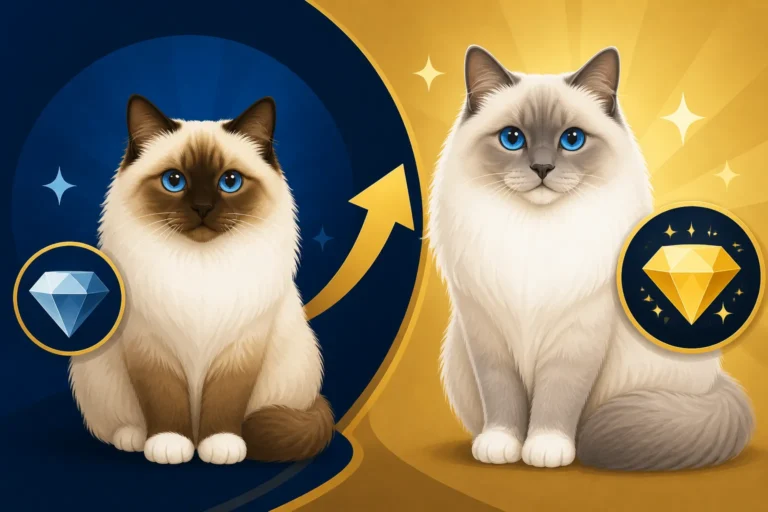
The Birman is a "pointed" cat, meaning their color is concentrated on the cooler parts of their body: the face, ears, paws (where the gloves are), and tail. This is due to a gene that's temperature-sensitive, allowing pigment to develop only in cooler areas. This is why every Birman kitten is born pure white – their entire body in the womb is warm, suppressing pigment production. As they grow and their extremities cool down, their points gradually emerge. Why a Birman Kitten Is Born Almost White
Now, imagine the gloving gene at work on top of this. The KIT gloving variant specifically instructs the melanocytes (pigment cells) in the paw areas where the gloves are supposed to be, not to produce color. So, even though the genetic code for, say, a seal point Birman is trying to put dark brown on the paws, the gloving variant steps in and says, "Nope, not here. This area stays white." It's a beautiful genetic interplay, creating that distinct contrast between the dark points and the pristine white gloves. The accuracy of these boundaries, where the white meets the color, is part of what makes a perfect glove so prized in the show ring.
Why the Variation in Glove Markings?
This is where many owners and breeders find themselves scratching their heads. If the gloving gene is fixed, and every Birman has two copies, why don't all Birmans have "perfect" gloves? Why do we see variations like gauntlets (white running too high on the hocks) or uneven front gloves? The answer lies in what geneticists call "modifier genes" or "polygenes."
Think of the primary gloving gene as the blueprint that says, "Put white gloves here." The modifier genes are like the fine-tuning instructions that dictate the exact dimensions, symmetry, and crispness of those gloves. These are other genes, scattered throughout the cat's genome, that subtly influence how the main gloving gene expresses itself. Some might encourage the white to stop sharply, others might allow it to creep up a little higher on one paw than the other.
For example, two Birman parents might both have excellent glove markings, but they could also carry different combinations of these modifier genes. When they breed, their kittens inherit a mix of these modifiers, leading to a spectrum of glove presentations. One kitten might get a combination that results in near-perfect symmetry, while its littermate might inherit modifiers that cause a back lace to extend higher on one leg than the other. It's a bit like predicting the weather – you know the general climate, but the exact daily forecast can be unpredictable. This is precisely Why Glove Genetics Are Unpredictable in a Birman, and it's a testament to the complex beauty of biology.
Breeding for Perfect Gloves and Common Marking Challenges
For those dedicated to maintaining the Birman breed standard, the white gloves are not just a charming feature; they are a critical aspect of conformation. Breeders strive for perfection, understanding that while the core gloving gene is fixed, the finer details are a lifelong puzzle.
The Breeder's Quest for Ideal Markings
The quest to consistently produce Birmans with ideal glove markings is a journey of careful observation, meticulous record-keeping, and sometimes, a little bit of hopeful guesswork. Breeders cannot simply test for "perfect gloves" because there isn't one single gene for it beyond the KIT variant. Instead, they rely on a combination of factors:
- Pedigree Analysis: Studying the glove quality of a cat's ancestors and knowing which lines tend to produce better markings.
- Observing Past Litters: A breeder keeps detailed records and photos of all kittens from previous matings to understand which pairings are more likely to result in desirable glove patterns.
- Early Evaluation: Kittens are typically evaluated for their glove markings at several stages, but particularly around eight to twelve weeks, as this is when the gloves become clearer and more stable. When a Birman Kitten's Gloves Are Final
- Selective Breeding: Only Birmans that meet a high standard of glove quality, along with other essential health and temperament traits, are chosen for breeding programs.
It's a demanding process, and even with the most careful planning, "perfect" show-quality gloves are exceptionally rare. How Rare Perfect Birman Glove Symmetry Is It highlights the art of breeding, where skill and intuition meet genetic understanding. Breeders are constantly learning from each litter, trying to refine their understanding of these elusive modifier genes.
Understanding Mismarks: Gauntlets and Beyond
So, what happens when a kitten's gloves aren't "perfect" by show standards? These variations are called "mismarks," and they're quite common. The most frequently seen mismark is often referred to as "gauntlets," where the white on the hind paws extends too far up the leg, rather than stopping in that elegant inverted V-shape. Other mismarks include uneven front gloves (one higher than the other), or a "runner" where a streak of white extends significantly up the leg, breaking the clean line.
It's crucial to understand that these mismarks are purely cosmetic. They do not affect the Birman's health, temperament, or its ability to be a loving, wonderful companion. A Birman with gauntlets is just as sweet, just as gentle, and just as beautiful in spirit as one with flawless gloves. The main consequence of mismarks is that such a cat would not be suitable for the show ring, and they are typically sold as "pet price" kittens on a spay/neuter contract. Why a Mismarked Birman Is a Pet Price Cat This ensures that the efforts to refine the show line continue without diluting the overall genetic pool for markings.
For pet owners, a mismarked Birman is often a fantastic opportunity to bring home a purebred cat at a more accessible price. These cats deserve all the same love and care as their show-quality siblings. For instance, ensuring they get top-notch nutrition, along with their favorite toys and supplies, is just as important. These little differences in their markings are part of their unique charm, telling a subtle story of their genetic heritage.
| Glove Feature | Ideal for Show Ring | Common Mismarks | Impact on Pet Birman |
|---|---|---|---|
| Front Gloves | Pure white, stopping evenly across the paw pads. | Uneven height, white extending too high up the leg. | None |
| Back Laces | Pure white, forming an inverted 'V' on the hocks. | "Gauntlets" (white too high), uneven 'V' shapes, "runners". | None |
| Symmetry | All four gloves should be as symmetrical as possible. | Noticeable differences between left/right paws. | None |
| Crispness | Clean, sharp line where white meets point color. | Blurry or feathered edges. | None |
The Future of Genetic Understanding and Birman Health
While the gloving gene itself is a fascinating aspect of the Birman breed, it’s important to remember that genetics play a much broader role in the overall health and well-being of our feline friends. The continued advancement in genetic understanding benefits Birmans in many ways beyond just their lovely paws.
Advances in Genetic Testing
For the gloving gene, we know the main KIT variant is fixed, and the variations come from modifier genes that aren't easily tested for individual influence on glove expression. So, while there isn't a specific "glove perfection test," breeders have embraced genetic testing for critical health conditions. This is where scientific advancements truly shine, offering peace of mind and proactive health management.
Reputable Birman breeders routinely test their breeding cats for genetic diseases like Polycystic Kidney Disease (PKD1) and Hypotrichosis (FOXN1). These tests are straightforward, often requiring just a simple cheek swab, and can identify carriers or affected individuals, allowing breeders to make informed decisions to prevent passing on serious health issues. Which Lab Runs the Birman FOXN1 Test Knowing What Testing a Birman for FOXN1 and PKD1 Together Costs can help owners understand the investment breeders make. Getting How the PKD1 Test Clears a Birman provides definitive results, helping to eradicate these conditions from breeding lines. This commitment to health is paramount.
For owners, knowing their kitten comes from genetically tested parents is invaluable. And for any Birman, regardless of their genetic testing history from the breeder, comprehensive veterinary care throughout their life is essential. This is where investing in pet insurance, such as a plan from Healthy Paws, can be a real lifeline. It helps cover unexpected illnesses or accidents, ensuring your Birman gets the best care possible without financial stress.
The Importance of Reputable Breeders
The discussion about genetics, markings, and health inevitably leads back to the importance of choosing a reputable Birman breeder. A good breeder prioritizes the health and temperament of their cats above all else, including achieving "perfect" show markings. While they certainly strive for the ideal glove pattern, they will never compromise health for aesthetics.
A responsible breeder will be transparent about their breeding program, including the genetic tests they conduct, the health history of their lines, and any marking variations present in a litter. They won't make grand promises about "guaranteed perfect gloves" because they understand the complexities of modifier genes. They'll readily provide documentation for their cats, often from specific registry bodies. Which Registry Body Issues a Birman's Papers They will educate prospective owners on the nuances of Birman genetics and care. They're not just selling a kitten; they're acting as custodians of the breed, ensuring its long-term health and integrity.
Ultimately, while the intricate dance of the gloving gene and its modifiers makes for a fascinating study and a beautiful visual trait, what truly matters is the happy, healthy, and loving companion that a Birman cat becomes. Their genetic makeup contributes to their unique beauty, but their gentle nature and unwavering affection are what truly define them.
Disclaimer
This article is for general informational purposes only and does not constitute professional advice. Laws, prices and regulations vary by location and change over time. Consult a qualified professional for guidance on your specific situation.