Why Rarer Birman Points Cost More
Many prospective Birman owners find themselves scratching their heads when comparing prices for kittens with different point colors. It's not just about aesthetics; the cost can vary significantly, leaving you wondering if it's purely arbitrary or if there's a genuine reason behind it. This guide is here to unravel the mystery, explaining why certain "rarer" Birman point colors command a higher price tag.
The Palette of Birman Points: Understanding Color Genetics
The beauty of the Birman cat is inextricably linked to its exquisite point coloration, a trait it shares with its Siamese ancestors. This unique pattern, where the extremities (face, ears, paws, and tail) are darker than the body, is governed by a specific genetic mechanism. Understanding this genetic foundation is key to appreciating why some colors are more common and others fetch a premium.
The Fundamental Birman Color Points
At the heart of all Birman coloration is the "Siamese" or colorpoint gene (technically the cs allele at the C locus). This gene results in a temperature-sensitive enzyme that only produces pigment in cooler areas of the cat's body. That's why Birman kittens are born almost pure white, and their points gradually darken as they mature and are exposed to cooler temperatures. The most historically prevalent and, therefore, common point colors are Seal, Blue, Chocolate, and Lilac.
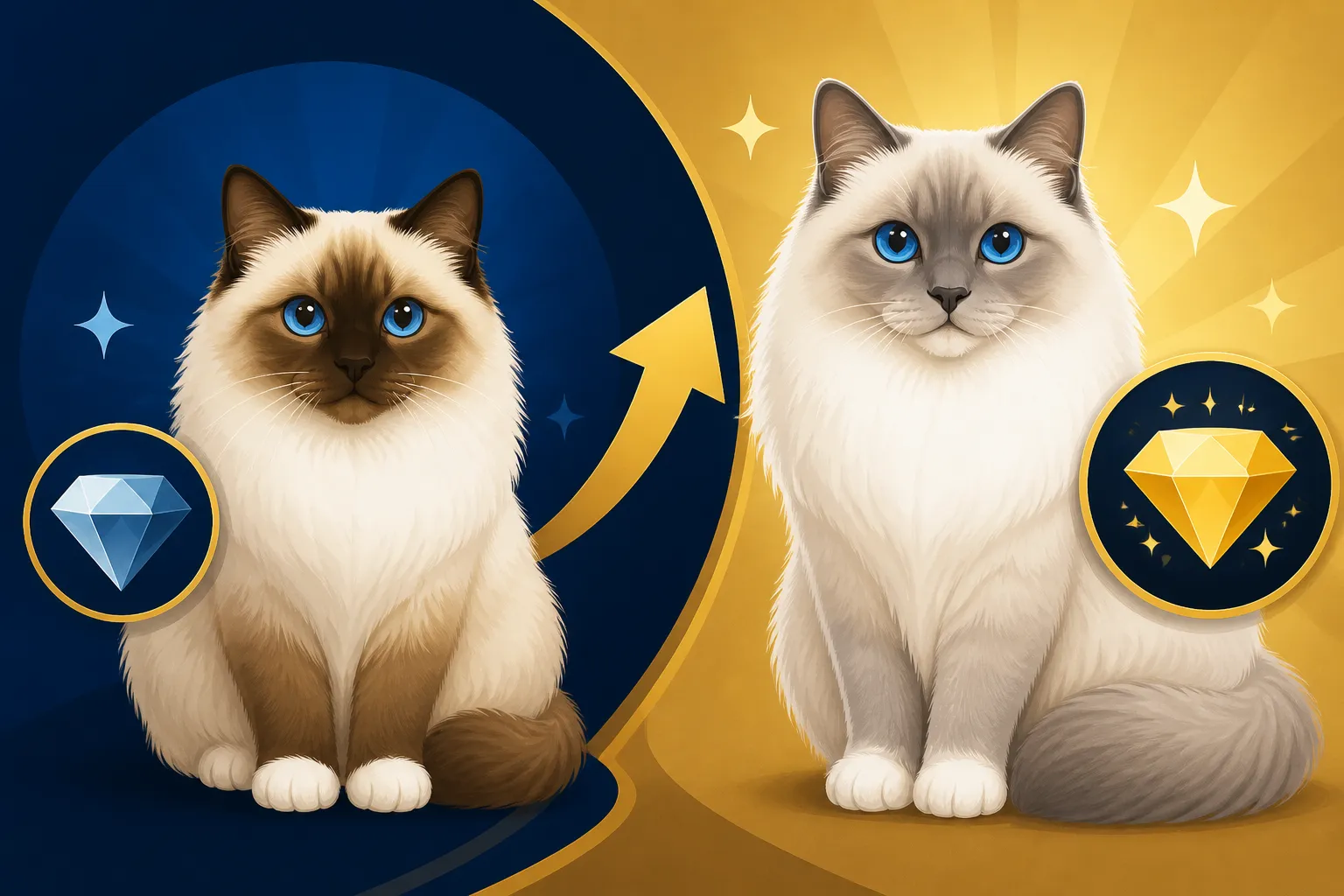
Seal Point Birmans have dense black pigment in their points, which actually appears as a rich, dark brown, often deepening to almost black in older cats. Blue Points are the dilute version of Seal, displaying a soft, greyish-blue hue on their points. Chocolate Points carry a different gene that changes the black pigment to a deep, warm brown. And finally, Lilac Points are the dilute version of Chocolate, appearing as a delicate, frosty grey with a pinkish undertone. These four colors represent the foundation of the Birman breed's recognized palette and have been consistently bred for generations, making them relatively predictable and widespread. What a Seal Point Birman Looks Like and What a Blue Point Birman Looks Like are classic examples.
The Emergence of Rarer Shades
While the traditional point colors are stunning, the allure of something truly unique has led dedicated breeders to expand the Birman's color spectrum. This is where "rarer" shades like Red (or Flame), Cream (diluted Red), and the captivating Tortie Points come into play. These colors weren't part of the original Birman genetic makeup and required careful, deliberate breeding to introduce and stabilize.
The introduction of Red and Cream points, for instance, involves incorporating the "red gene" (also known as the orange gene) into the Birman's genetic blueprint. This gene, which is sex-linked, changes black and brown pigments to red. When combined with the colorpoint gene, you get cats with warm, fiery red points or their softer, diluted Cream counterparts. Tortie Points are even more complex, arising from female cats that carry both the red gene and another point color gene (like Seal or Blue). This results in a beautiful, mottled pattern on the points, where patches of red or cream are interspersed with the darker traditional colors. What a Lilac Point Birman Looks Like and What a Red Point Birman Looks Like showcase some of these less common variations. The journey to successfully breed these colors while maintaining all other cherished Birman traits is a testament to immense breeder effort and genetic knowledge.
Defining "Rarity" in the Birman World
When we talk about "rarer" Birman point colors, it's not just a subjective term. There are concrete reasons rooted in genetics, breeding logistics, and market dynamics that contribute to a color's scarcity and, consequently, its higher price. It's a fascinating interplay of science and human preference.
Genetic Complexity and Breeding Challenges
The primary reason certain point colors are rare is often due to their underlying genetic complexity. Breeding for a specific point color, especially one involving multiple genes, is akin to solving a complex puzzle. For example, to consistently produce Red or Cream Points, both parent cats must carry the specific genes responsible for these colors, which might not be immediately apparent without genetic testing or extensive pedigree knowledge. This differs significantly from breeding common colors where the necessary genes are typically fixed in the line.
Reputable breeders don't just aim for a specific color; they are meticulously working to produce kittens that meet the overall breed standard for conformation, temperament, and, crucially, health. Trying to introduce or stabilize a rare color while simultaneously preserving the Birman's unique physical traits, like its deep sapphire-blue eyes, sturdy build, and, of course, the distinctive white gloves, adds layers of difficulty. This often means a longer development period for a breeding program, fewer kittens of the desired color in any given litter, and more intensive genetic management. Whether Show Marking Can Be Predicted From Birman Parents highlights the inherent unpredictability even in established lines. Every step of this intricate process increases the breeder's investment of time, resources, and expertise, which is naturally reflected in the kitten's price.
Demand Versus Supply for Unique Colors
Beyond the genetic hurdles, the simple economics of supply and demand play a significant role in determining the price of rarer Birman point colors. Even if a color is genetically possible, its actual rarity can be amplified if fewer breeders choose to specialize in it. This could be due to the increased difficulty, the longer timeframes involved, or simply a focus on maintaining established, successful lines of more common colors.
However, a strong demand for something distinctive creates a powerful market force. Many prospective owners are drawn to the idea of owning a Birman that stands out from the crowd, a cat with a truly unique aesthetic. When only a handful of dedicated breeders are consistently producing these specific, rarer colors, the supply is inherently limited. This creates a situation where the demand far outstrips the availability, allowing breeders to command a higher price. It's not necessarily an indication of superior health or temperament over a common-colored Birman, but rather a reflection of the exclusivity and visual appeal of owning something less often seen. This phenomenon leads to longer waiting lists for these specialized kittens, as eager owners are willing to wait, and pay, for their ideal companion.
The Breeder's Investment in Rarer Point Colors
Bringing a new Birman kitten into the world is always a labor of love, but breeding for rarer point colors amplifies the commitment involved. It's a journey that demands significant financial outlay, extensive time, and a deep understanding of genetics and breed standards. This elevated investment is a primary driver behind the higher price tags seen on these unique kittens.
The Financial and Time Commitment
To introduce and stabilize a rarer point color within a Birman line, breeders often face substantial initial costs. This might involve importing foundation cats from other countries or distant catteries known for carrying those specific genetics, which can be incredibly expensive due to international shipping, quarantine, and import fees. Once these cats are acquired, the breeding process itself can be more protracted and costly. It may take several generations of careful breeding and selecting to consistently produce kittens with the desired rare color, impeccable type, and robust health. How Many Litters It Takes to Get a Well Gloved Birman underscores the patience required.
Each litter represents an investment in stud fees, specialized veterinary care, genetic testing (for the color itself and for breed-specific health concerns), and premium nutrition. Breeders must also factor in the general upkeep of their breeding cats, including regular health screenings like heart echocardiograms (How Often a Breeding Birman Needs Scanning) and kidney checks. If a rare color line proves challenging to establish, the breeder might have to invest in more animals or wait longer for a successful pairing, extending the timeline and accumulating expenses. This comprehensive financial and time commitment is then distributed across the kittens produced, leading to a higher individual price for those rarer colors. It's the cost of pioneering and perfecting a specialized line.
Maintaining Breed Standards Across All Colors
A truly responsible Birman breeder never sacrifices breed type, health, or temperament in pursuit of a rare color. In fact, doing so would be counterproductive and diminish the value of their entire breeding program. This means that when breeding for rarer point colors, they are simultaneously working to ensure that the kittens still possess all the hallmark qualities of the Birman breed. This includes the distinctive "Roman" nose, the perfectly shaped and set ears, and of course, the iconic white gloves and laces. Achieving these precise standards alongside complex color genetics is no small feat.
The Birman standard is quite specific about the placement and symmetry of the white "gloves" on the front paws and the "laces" on the back. Why Perfect Birman Gloves Are Almost Impossible to Breed illustrates just how difficult it is to consistently produce perfectly gloved kittens. When you're also trying to get a specific rare point color, the challenge multiplies. A kitten might have a stunning Red Point, but if its gloves are uneven or missing, it might still be sold as a pet-quality cat at a lower price, despite its rare color. Breeders invest countless hours evaluating kittens, understanding pedigrees, and making difficult breeding decisions to achieve this delicate balance. The additional effort required to maintain overall breed excellence while working with novel color genetics is a significant component of the higher cost associated with rarer point Birmans.
The Value Proposition: Is a Rarer Birman Point Worth the Extra Cost?
When faced with a higher price tag for a Birman with a rarer point color, it's natural to pause and consider if the extra investment is truly "worth it." The answer often comes down to individual priorities, aesthetic preferences, and understanding what you're truly paying for beyond the color itself.
Aesthetic Appeal vs. Core Birman Traits
For many prospective owners, the unique aesthetic appeal of a rarer point color is undeniably the primary draw. Imagine a Birman with soft, ethereal Cream points, or a vibrant Red Point, or the stunning mosaic of a Tortie Point. These colors can be incredibly captivating and genuinely make a cat stand out. If you have a specific vision for your future feline companion and one of these rarer colors perfectly matches that vision, then the increased cost might feel entirely justified for that bespoke appearance. You're investing in visual uniqueness.
However, it's vital to remember that the core characteristics that make the Birman such a beloved and cherished breed are inherent regardless of point color. The gentle, placid temperament, their quiet devotion, the silky single coat that's surprisingly easy to groom (No Undercoat Is What Makes a Birman Easy to Groom), and those captivating deep blue eyes are traits that all well-bred Birmans share. A Seal Point Birman will possess the same loving personality and graceful nature as a Lilac Tortie Point, provided both come from a reputable breeder focused on health and temperament. The additional cost for a rarer color is largely for that specific visual flair, not an indication of a "better" cat in terms of companionship or overall quality of life.
Long-Term Ownership and Expectations
Regardless of the initial purchase price, the ongoing costs and responsibilities of Birman ownership remain fairly consistent across all colors. You'll be providing high-quality nutrition, regular veterinary care, grooming tools, and ensuring a stimulating environment. The rarity of your Birman's point color won't change its need for excellent food, whether a premium commercial brand or a specialized diet.
Consider also the importance of health. A reputable breeder, regardless of the colors they specialize in, will always conduct extensive health testing for common Birman genetic conditions such as HCM and PKD. This includes regular heart scans (HCM in a Birman Has No DNA Test, Only an Echo) and genetic tests for kidney disease (Why a Birman Breeder Still Tests for PKD). These health clearances are paramount for all kittens and are a far more significant factor in your cat's long-term well-being and your peace of mind than its point color. Investing in pet insurance from providers like Healthy Paws can also help manage unforeseen vet expenses, regardless of your cat's rare or common coloration. The decision to pay more for a rarer point color should come from a place of genuine aesthetic preference, understanding that it's an investment in beauty and exclusivity, not necessarily in a healthier or more affectionate companion.
| Point Color Category | Examples | Rarity Factors | Price Impact | Primary Appeal |
|---|---|---|---|---|
| Common | Seal, Blue, Chocolate, Lilac | Well-established genetics, extensive breeding history | Standard | Classic Birman look, predictable availability |
| Rarer | Red, Cream, Tortie, Lynx | Complex genetics (e.g., red gene), fewer specialized breeders, challenging to maintain full breed standard alongside color | Higher | Unique aesthetic, exclusivity, distinctiveness |
Disclaimer
This article is for general informational purposes only and does not constitute professional advice. Laws, prices and regulations vary by location and change over time. Consult a qualified professional for guidance on your specific situation.