Whether a Birman Without Gloves Exists
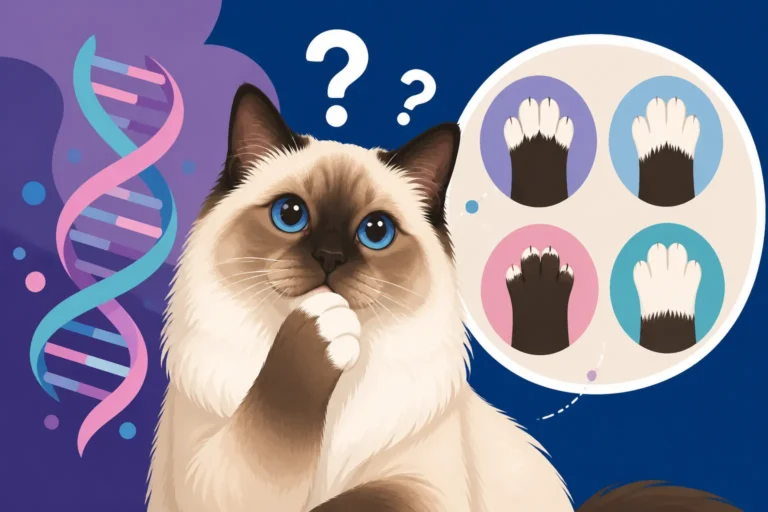
It’s a question that often pops up for prospective Birman owners, especially those who’ve fallen in love with the breed’s angelic blue eyes and distinct white "gloves" on their paws: can a Birman cat really be without those signature white feet? The short answer, from a strict genetic and breed standard perspective, is a bit nuanced, but generally, no – a Birman is defined by its gloving gene. However, what we perceive as "without gloves" often comes down to significant variations in how those beautiful white markings manifest. This guide will walk you through the genetics, the breed standards, and what it truly means when a Birman's gloves aren't picture-perfect.
The Birman's Defining Feature: Those Pristine White Gloves
When you picture a Birman, aside from those piercing sapphire eyes and luxurious, silky coat, what often comes to mind are its pristine white paws. These "gloves" are not just a charming aesthetic; they are a hallmark of the breed, deeply embedded in its history and genetic makeup. They’re what make a Birman, well, a Birman!
The Ideal Birman Glove According to Breed Standards
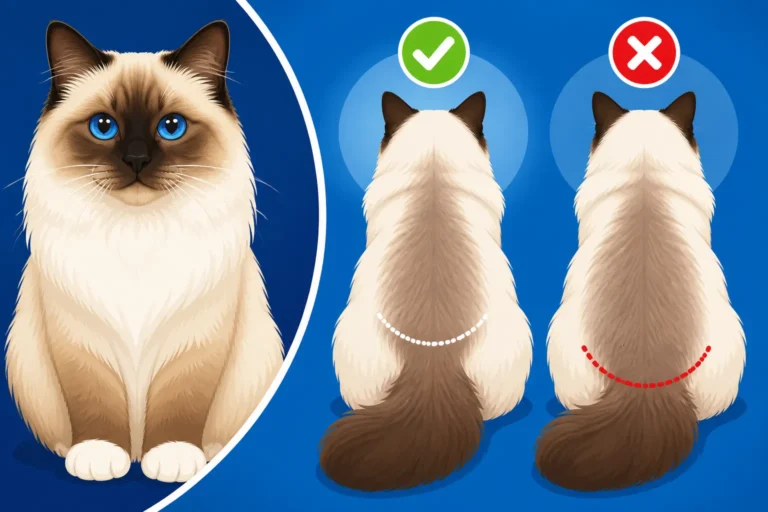
For anyone involved in showing or breeding Birmans, the perfection of these white markings is paramount. The ideal Birman glove isn't just a splash of white; it's a precisely defined feature. On the front paws, the white should end in a perfectly even, straight line where the paw joins the leg, looking as if the cat has dipped its paws in fresh cream. The back paws are even more intricate. Here, the white extends further up the hock, forming what are called "laces." These laces should be symmetrical, ending in an inverted "V" shape on the back of the leg, and ideally, they shouldn't extend past the hock joint.
This precise description is what judges meticulously look for in the show ring. Anything outside these strict parameters is considered a "fault" in terms of conformation. While it might sound incredibly nitpicky to an outsider, these details are part of preserving the unique visual signature of the Sacred Cat of Burma. The frustration for breeders trying to achieve this perfection is real, because genetics, as we’ll discuss, don’t always cooperate perfectly, leading to a significant range of expressions.
The Genetic Basis of Birman Gloving
Here’s where it gets really interesting, and why the direct answer to "can a Birman exist without gloves?" is a solid "no" from a genetic standpoint. The white gloves on a Birman are not just random white spots; they are controlled by a specific genetic mutation. Specifically, it's a variant on the KIT gene, often referred to as the "gloving gene." This gene is responsible for white spotting patterns in many animals, but in Birmans, it acts in a very particular way.
What's crucial to understand is that The Gloving Gene Every Birman Carries Two Copies Of. This means that every single Birman, by virtue of being a Birman, inherits two copies of this specific genetic variant from its parents. It’s a recessive trait, meaning both parents must contribute a copy for it to manifest. Since all Birmans carry two copies, they are considered "homozygous" for this trait. This genetic uniformity is why the white gloves are considered an intrinsic part of the breed. Without this gene, you wouldn't have the Birman as we know it.
Why the Gloving Gene Is Fixed in the Birman
The story of how this gloving gene became so absolutely fixed in the Birman breed is quite fascinating, and a testament to the breed's tumultuous history. The Birman breed faced near extinction after World War II, a harrowing time when the gene pool was severely depleted. Tragically, The Birman Came Out of the War With Two Cats Left. These two cats, a female named Xenia de Kaabaa and a male named Orloff de Kaabaa, became the foundation for virtually every Birman alive today.
This drastic "bottleneck" meant that genetic diversity was incredibly low. Any traits present in those two founding cats, and the very few outcrosses used to rebuild the breed, became overwhelmingly prevalent. The specific KIT gloving variant was clearly present in these foundational cats and their offspring, and because of the severe reduction in the gene pool, it became fixed. Essentially, there was no other version of the KIT gene for Birmans to carry for this particular trait. This is why the gene is fixed (Why the Gloving Variant Is Fixed in the Birman). It wasn't just a desirable trait; it became an inescapable part of their genetic identity, passed down through generations.
When "No Gloves" Really Means "Mismarked Gloves"
So, if every Birman genetically carries the gloving gene, why do we sometimes see cats that appear to have "no gloves," or at least, very poor ones? The answer lies in the expression of that gene. Genetics are rarely a simple on-off switch. Even with the necessary genes present, other genetic factors, often called "modifier genes," can influence how strongly, clearly, or symmetrically those genes are expressed.
Understanding Imperfect Glove Expression
When people say a Birman has "no gloves," they almost always mean the cat's white markings don't conform to the strict breed standard. These aren't Birmans without the gloving gene, but rather Birmans where the gene's expression is imperfect or "mismarked." This can manifest in several ways. For example, a cat might have "gauntlets," where the white extends too high up the front legs, sometimes past the elbow, rather than stopping cleanly at the paw. Conversely, a cat might have "uneven gloves," where one front paw has a perfect white line, but the other has a ragged, high, or very minimal white patch.
The back paws can also show variations, such as "missing laces" or laces that are too high, too low, or completely asymmetrical. What Laces and Gauntlets Mean on a Birman's Price Tag often reflects these imperfections, as they impact a cat's show potential and, therefore, its value to a breeder. It's a spectrum, from nearly perfect show-quality gloves to those that are so irregular they barely resemble the ideal. For a pet owner, these variations don't impact the cat's health or wonderful temperament one bit, but for breed enthusiasts, they are significant.
Factors Influencing Glove Expression
The variability in glove expression, despite all Birmans carrying the same underlying gloving gene, is a fascinating puzzle. While the KIT gene provides the blueprint for white markings, other genes, often referred to as modifier genes, act like dimmer switches or fine-tuners. These modifiers can influence the extent, symmetry, and clarity of the white areas. Think of it like a master artist (the KIT gene) sketching out the general shape, but then several apprentices (modifier genes) come in to add the intricate details, and sometimes those apprentices have a slightly different idea of "perfect."
This genetic complexity is Why Birman Gloves Vary Despite the Fixed Gene. It makes breeding for perfect gloves incredibly challenging and somewhat unpredictable, even for the most experienced breeders. Environmental factors are generally not considered major players in determining glove patterns once a kitten is born, but they do play a role in overall development. The truth is, Why Perfect Birman Gloves Are Almost Impossible to Breed is a constant lament among Birman breeders. They can breed for clear parents with good gloving, but there's always an element of chance in each litter as these modifier genes interact.
Visual Examples of "Ungloved" Appearances
To truly understand what "mismarked" means, let's visualize some common scenarios that might lead an observer to think a Birman is "without gloves."
- High Gauntlets: Imagine a Birman whose front paws are entirely white, not just neatly at the foot, but extending halfway up the forearm, sometimes even higher. While still white, this doesn't match the "glove" ideal, and some might feel it looks less like a glove and more like a white stocking, obscuring the distinct paw marking.
- Minimal or Ragged White: Conversely, a Birman might have very little white on its paws, perhaps just a few flecks, or a very uneven, broken line that doesn't form a clean "glove" at all. This is often more prevalent on the front paws.
- Asymmetrical Markings: One paw might have a lovely, even glove, while the other is barely marked or has a high gauntlet. Or on the rear, one "lace" might be long and perfectly V-shaped, while the other is short, crooked, or almost absent.
In all these cases, the cat does carry the gloving gene, and it is expressing white markings on its paws. However, these markings simply don't align with the aesthetic ideals set by the breed standard. They are technically "gloved," but not "standard-gloved."
The Difference Between a Birman Without Gloves and an Ungloved Cat
It's important to distinguish between a Birman whose gloves are poorly expressed, and a hypothetical "Birman" that genuinely has no white on its paws. The latter would, by definition, almost certainly not be a purebred Birman, at least not one recognized by any major registry.
The Role of Registration and Breed Purity
Breed registries like the Cat Fanciers' Association (CFA) or The International Cat Association (TICA) have very specific standards for each recognized breed. For Birmans, the white gloves are a mandatory trait. A kitten born to two registered Birmans that somehow miraculously displayed absolutely no white on its paws would be an anomaly of such significance that it would likely not be registered as a Birman. Its genetic identity would be called into question, or it would be considered such a severe deviation from the standard that it couldn't be shown or bred.
In essence, if a cat genuinely had no white on its paws whatsoever (a scenario that is incredibly rare to non-existent in true Birman lines, precisely because of the fixed gloving gene), it simply wouldn't be recognized as a Birman. Why a Gloveless Birman Kitten Cannot Be Registered highlights this fundamental requirement for breed identification. The integrity of the breed standard rests on these defining characteristics.
Other Breeds with White Paws vs. Birman Gloves
It's easy to get confused, especially since many other cat breeds can have white markings, including on their paws. Breeds like Ragdolls, for instance, are known for their gorgeous coats and can also have white feet. However, the genetic mechanism for white markings in a Ragdoll is often different from the Birman's specific gloving gene. While they might share a similar aesthetic, their genetic heritage for these traits is distinct. How to Tell a Birman From a Ragdoll by Its Feet is a common question, and while other physical differences exist, the precise nature of the white markings is a key identifier.
For example, a Snowshoe cat also has white feet, but its white markings are typically more extensive, often involving white on the chest and face, and are governed by different genes for piebald spotting. A Birman's white is usually confined to the paws, and occasionally a small abdominal patch, but never extending to the face in the same way. The specificity of the Birman's white "glove" is what makes it unique.
Implications for Owners and Breeders
Understanding the nuances of Birman gloving is important, whether you're a seasoned breeder or a first-time owner looking for a beloved pet. It affects everything from pricing to the perception of breed integrity.
What a Breeder Looks For
For breeders, the goal is often to produce kittens that adhere as closely as possible to the breed standard, especially for those involved in showing. This means a relentless pursuit of those perfectly symmetrical, cleanly defined white gloves and laces. Breeders will meticulously evaluate kittens from birth, observing how their markings develop. How a Breeder Judges a Birman Kitten's Gloves involves keen observation, often noting patterns and potential outcomes very early on. They understand the genetic lottery involved and the role of modifier genes, making each litter a hopeful endeavor.
Because of this pursuit of perfection, breeders invest heavily in health testing, proper nutrition, and extensive knowledge of pedigrees. They might use high-quality foods hoping to support overall coat health and development, although directly influencing glove markings through diet isn't generally feasible.
Pet Price vs. Show Price
This brings us directly to the economics of Birman ownership. A Birman kitten with "mismarked" gloves – perhaps a high gauntlet on one leg, or uneven laces on the back – will typically not be considered show quality. This doesn't make the cat any less healthy, loving, or beautiful, but it does impact its price. Why a Mismarked Birman Is a Pet Price Cat is a common practice among reputable breeders. These kittens are often sold on a strict spay/neuter contract, ensuring they go to loving pet homes and are not used for breeding, which helps maintain the integrity of the breed standard for show lines.
For many pet owners, a perfect show cat isn't the priority; a healthy, happy companion is. A Birman with imperfect gloves offers the same sweet, gentle temperament, the same striking blue eyes, and the same silky coat as its show-winning siblings, often at a more accessible price point. It’s a win-win for many families.
Health Over Aesthetics
Perhaps the most crucial takeaway is that the aesthetic perfection of a Birman's gloves has absolutely no bearing on its health or temperament. A Birman with "poor" gloves is just as much a Birman at heart and just as likely to live a long, healthy life if properly cared for. The breed is known for its placid nature, sometimes to its detriment, as Why a Birman Hides Illness Behind a Placid Temperament means owners need to be extra vigilant about subtle behavioral changes that could indicate a health issue.
When choosing a Birman, whether its gloves are perfect or not, the focus should always be on reputable breeding practices that prioritize health. This includes comprehensive genetic testing for conditions like HCM and PKD, and ensuring the kitten comes from a well-socialized, clean environment. Investing in pet insurance from a provider like Healthy Paws can also offer peace of mind, knowing that you're prepared for any unexpected health challenges, regardless of how perfectly gloved your companion might be. Reputable breeders often provide a health guarantee, and access to the parents' health records is a must. Don't let the visual appeal of "perfect" gloves distract you from ensuring you're bringing home a genuinely healthy kitten who has had the best start in life. For their daily needs, platforms like Chewy make it easy to order specific low-dust litter (essential for keeping white paws clean!) and specialized dietary foods.
Ultimately, while the idea of a "Birman without gloves" is a misnomer from a genetic perspective, the reality of varied glove expression means you might encounter Birmans whose white markings are far from the ideal. These cats are no less precious and will bring just as much joy and companionship to their forever homes.
Disclaimer
This article is for general informational purposes only and does not constitute professional advice. Laws, prices and regulations vary by location and change over time. Consult a qualified professional for guidance on your specific situation.