Why to Ask a Birman Breeder for Photos of All Four Paws
One of the most exciting, yet nerve-wracking, parts of bringing a Birman kitten into your home is anticipating what their beautiful, unique markings will truly look like. Many hopeful Birman parents find themselves in a quandary when relying solely on a breeder's general descriptions or partial photos, only to discover later that the "perfect" white gloves they envisioned aren't quite so. This guide dives deep into why insisting on clear, detailed photos of all four paws from a Birman breeder isn't just a good idea, it's absolutely essential for ensuring transparency, managing your expectations, and understanding the true quality of your future feline companion.
The Unique Challenge of Birman Gloves
The Birman cat is instantly recognizable by its striking pointed coat, deep blue eyes, and, most famously, its pristine white "gloves" on all four paws. These gloves are the hallmark of the breed, a defining characteristic that sets them apart. However, breeding for these specific markings is incredibly complex, making it a frequent source of confusion and sometimes disappointment for new owners.
Understanding the Birman Standard for Paw Markings
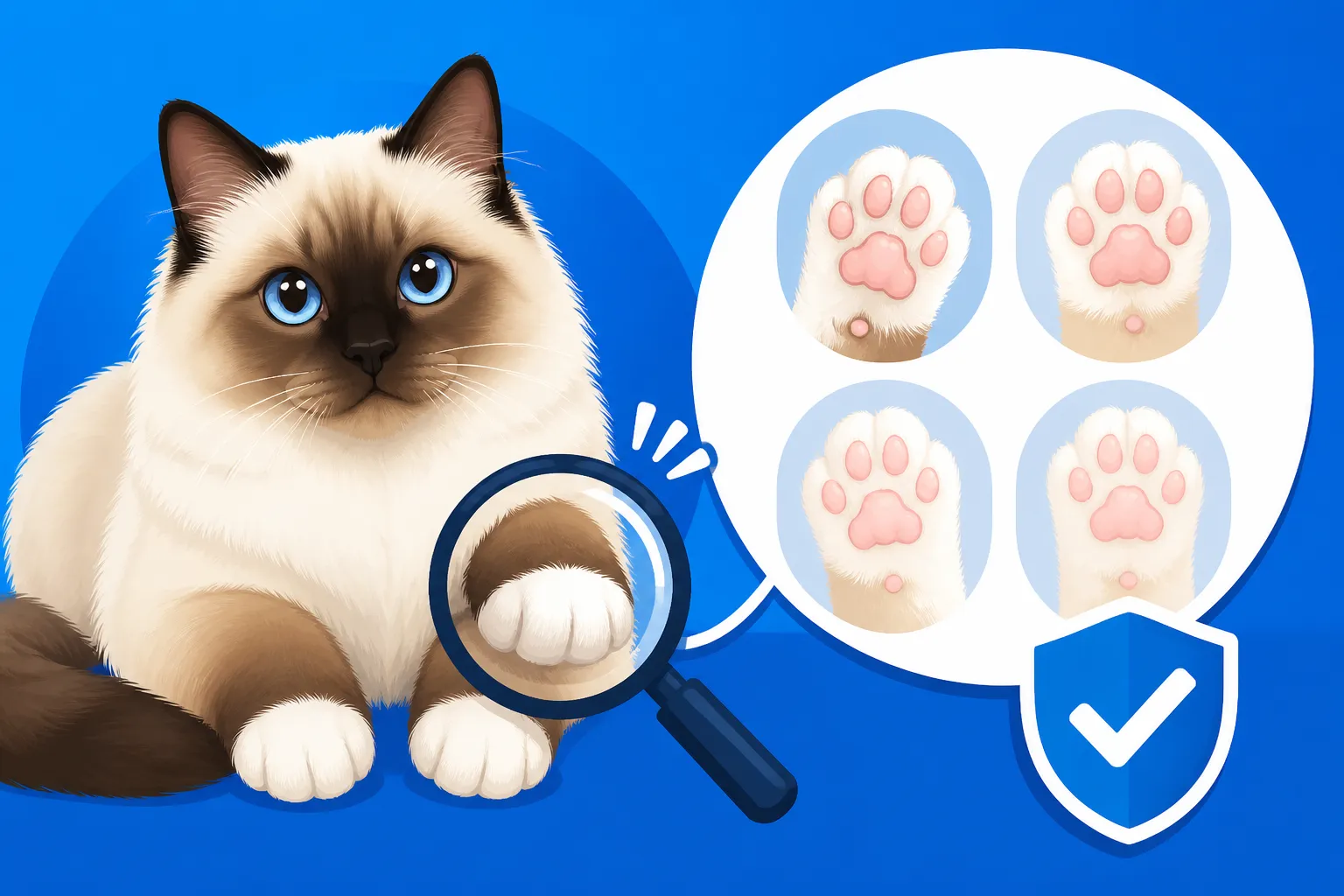
For a Birman to be considered "show quality" or even ideal, the white markings on its paws must adhere to a very strict standard. On the front paws, the white should be perfectly even, symmetrical, and stop at the articulation of the paw. Imagine a perfectly dipped paw, like it's just stepped in fresh snow. On the rear paws, the white extends higher, forming what are called "laces" that should ideally end in a symmetrical "V" shape on the back of the hock, never extending up the leg like a stocking. What Judges Look For on a Birman's Paws First delves into these details. These specific requirements are what elevate a Birman’s appearance from merely pretty to truly exquisite in the eyes of breed enthusiasts and judges.
It’s not just about the presence of white; it's about the precision, the balance, and the exact placement of those white areas. A perfect set of gloves is incredibly difficult to achieve, which is why breeders dedicate years to understanding the genetics and carefully selecting breeding pairs. Any deviation from this ideal, no matter how small, can categorize a kitten as a "pet quality" Birman, even if it's otherwise healthy and beautiful.
The Genetic Lottery of Birman Gloving
The white gloves in Birmans are controlled by a specific genetic variant, and while every Birman carries two copies of this gloving gene, the expression of these genes is notoriously unpredictable. It's not a simple "on/off" switch. Instead, various modifier genes influence how high the white goes, how even it is, and whether those crucial "laces" appear correctly on the back paws. This means even two perfectly marked Birman parents can produce a litter with a wide range of glove qualities, from near-perfect to significantly mismarked. Why Perfect Birman Gloves Are Almost Impossible to Breed explains this phenomenon in more detail.
This genetic variability is precisely why relying on a kitten's lineage alone isn't enough to guarantee ideal markings. You might assume that because both parents are champions, their kittens will inherently have perfect gloves. While good lines increase the probability of desirable markings, they never provide a guarantee. A breeder might hold back the best-marked kitten, leaving others with less-than-ideal gloves for pet homes, and that's perfectly acceptable, as long as it's transparent.
Why Photos of All Four Paws are Non-Negotiable
Given the intricacies of Birman glove genetics and the breed standard, it becomes abundantly clear why requesting photos of all four paws is paramount. It allows you, the prospective owner, to make an informed decision and understand exactly what you're getting.
Unmasking Hidden Mismarkings
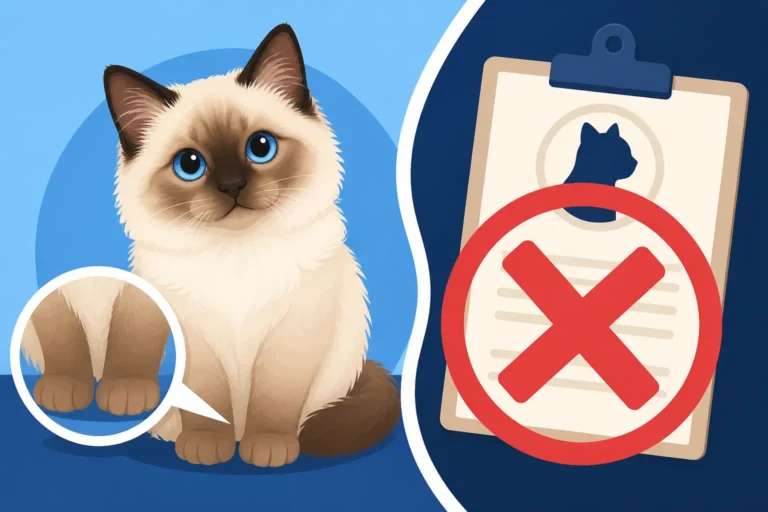
A skilled photographer and an artfully posed kitten can sometimes obscure minor mismarkings. A single photo showing a kitten sitting with its paws tucked under, or an angle that highlights only the best side, won't give you the full picture. Mismarkings can include "gauntlets," where the white extends too high up the back legs, or uneven gloves where one front paw has significantly more white than the other. Why a Birman With Gauntlets Cannot Be Shown highlights a common show fault. Without clear, individual shots of each paw, these details can easily be missed.
Imagine falling in love with a kitten's charming face from a profile shot, only to find when you pick them up that one of their front paws has a tiny splash of color or a glove that extends unevenly up their leg. While this doesn't impact their health or personality one bit, it might not be what you envisioned or what you agreed to pay for, especially if you were expecting a certain level of marking quality. Detailed photos remove much of this ambiguity and ensure you're aware of any deviations from the ideal.
Protecting Your Investment and Expectations
Birman kittens are an investment, and their price often reflects their quality, particularly the perfection of their gloves. The Gloves Decide What a Birman Kitten Costs dives into how markings directly influence price. A kitten with "show quality" gloves will command a higher price than a "pet quality" kitten with minor mismarkings. If you're paying a premium for a kitten described as having excellent markings, you deserve to see photographic evidence of those markings before committing.
Asking for specific photos helps align your expectations with what the breeder is offering. If the breeder is upfront about a kitten having slightly uneven gloves or minor gauntlets, and the photos confirm this, you can then decide if that particular kitten, at its given price point, is right for you. It prevents misunderstandings and ensures you're paying a fair price for the specific aesthetic quality of the kitten you're choosing. This transparency is key to a positive experience.
Ensuring Ethical Breeding Practices
A reputable and ethical Birman breeder will have nothing to hide. In fact, they will often go out of their way to provide comprehensive photos and videos, understanding that discerning buyers need to see the details. A breeder who is hesitant, evasive, or outright refuses to provide clear photos of all four paws might be trying to conceal mismarkings. This could be a red flag, indicating a lack of transparency or even a breeder who isn't fully knowledgeable about the importance of glove standards.
Ethical breeders understand that mismarkings are part of breeding Birmans. They are open about it and adjust prices accordingly. They want their kittens to go to loving homes where the new owners are fully aware of what they are getting. Requesting these photos is a simple yet powerful way to gauge a breeder's honesty and commitment to responsible breeding. It helps weed out backyard breeders who might not prioritize the breed standard or the satisfaction of their buyers. How to Spot a Birman Breeder Selling Untested Kittens discusses other red flags to watch for.
What to Look For in Birman Paw Photos
Once you have those precious paw photos, knowing what to scrutinize can feel a bit overwhelming. But breaking it down by front and rear paws, and understanding how point color plays a role, will make you a savvy observer.
Front Paw Gloves: Symmetry and Evenness
When examining the front paws, your primary focus should be on symmetry and evenness. The white markings, often called "gloves," should ideally be identical on both front paws. This means the height of the white should be the same on each paw, and the line where the white meets the point color should be clean and crisp. What a Birman's Front Gloves Should Look Like outlines the ideal. An uneven glove, where one paw has a higher or lower white marking than the other, is considered a fault.
Look closely for any colored spots or "smudges" within the white area, or white areas that extend unevenly up a toe. Sometimes, a tiny splash of color can appear in the white, which is also a mismarking. Pay attention to the clarity of the line between the white and the darker point color; it should be well-defined, not blurry or patchy. Remember, even minor imperfections, while not affecting the cat's health, do impact its adherence to the breed standard.
Rear Paw Laces and Gauntlets
The rear paws are where the Birman's unique "laces" come into play, extending further up the hock in a distinctive 'V' shape on the back of the leg. This is a crucial distinction from the front gloves. The most common mismarking here is "gauntlets," where the white extends too high up the leg, often appearing like white stockings rather than neat laces. Where a Birman's Back Lace Should End explains the proper termination point. Like the front gloves, the laces should be symmetrical between the two back paws.
You'll want to ensure that the V-shape is well-defined and doesn't extend too far up the leg. If the white goes too high, or covers the entire foot and part of the leg indiscriminately, it's a gauntlet. Similarly, check for any white patches on the pads of the feet that don't connect to the main glove or lace—these are also considered mismarkings. The elegance of the Birman's hind legs really hinges on the correct formation and balance of these laces.
Point Color and Its Impact on Glove Appearance
The specific point color of a Birman (e.g., seal point, blue point, chocolate point, lilac point) can sometimes influence how easily you can discern the glove markings. Darker points, like seal or chocolate, create a higher contrast with the white gloves, making them appear very sharp and distinct. Lighter points, such as blue or lilac, might offer less contrast, and it can sometimes be a bit harder to see the precise lines of the gloves, especially in less-than-ideal lighting. However, a good photo will still clarify the boundaries.
Additionally, Birman kittens are born almost entirely white, and their points darken as they mature. The full extent of their point color, and how it truly delineates from the white gloves, won't be completely final until they are much older. However, by the time a kitten is ready to go home, usually around 12-16 weeks, their points should be visible enough to assess the glove markings. How a Birman Kitten's Gloves Change as It Grows details this development. The breeder should be able to provide photos that show the current state clearly, even if the points are still developing.
| Paw Type | Ideal Marking | Common Mismarking (Fault) | Visual Cues to Look For |
|---|---|---|---|
| Front Paws | Even, symmetrical white on toes, stopping at articulation of paw. | Uneven height, colored spots, "boot-like" extension. | Clear, crisp line; identical white height on both paws; no color in white. |
| Rear Paws | White "laces" extending symmetrically up the hock in a "V" shape. | "Gauntlets" (white too high), uneven V-shape, white on pads. | Defined V-shape; white stops below the joint; symmetry between paws. |
Beyond Photos: Other Essential Due Diligence
While photos of all four paws are a vital piece of the puzzle, they are just one component of thorough due diligence when choosing a Birman kitten. A truly responsible breeder will offer much more than just good photos.
Video Calls and In-Person Visits
Once you've seen the photos and feel comfortable with the markings, the next step is to request a video call with the kitten. This allows you to see the kitten in real-time, moving around, interacting with its littermates, and letting you observe the gloves from all angles. A video call can often reveal details that even several still photos might miss. You can ask the breeder to specifically show you each paw, turning the kitten gently to demonstrate the symmetry and placement of the white.
If possible, an in-person visit is the gold standard. There's simply no substitute for seeing the kittens and their parents in their home environment. This gives you the opportunity to not only inspect the gloves directly but also to assess the temperament of the parents, the cleanliness of the cattery, and the overall health and socialization of the kittens. It allows you to confirm that the photos and videos truly represent the kitten in person.
Health Clearances and Breeder Transparency
Beyond markings, health is paramount. A responsible Birman breeder will be completely transparent about the health history of their breeding cats and the genetic testing they perform. They should provide documentation for tests like Hypertrophic Cardiomyopathy (HCM) scans and Polycystic Kidney Disease (PKD1) DNA tests. While these tests aren't directly related to glove markings, they are a fundamental part of ethical breeding. Ask to see proof of these clearances for both parents.
A breeder who is willing to provide comprehensive health information, openly discuss any health concerns in their lines (which, let's be honest, every breed has some), and explain their breeding philosophy is a trustworthy breeder. This level of transparency across the board indicates a commitment to the welfare of their cats, not just superficial appearances. Brands like Healthy Paws, for instance, highlight the importance of understanding a breed's health risks for pet insurance.
Understanding Contracts and Guarantees
Every reputable breeder will have a contract that outlines the terms of sale, health guarantees, and often, stipulations regarding future care (like spaying/neutering for pet-quality kittens). Read this contract thoroughly. It should clearly state what happens if a kitten develops a genetic health issue within a certain timeframe, and what the breeder's responsibility is regarding mismarkings if they were misrepresented. For example, Why a Mismarked Birman Is a Pet Price Cat explains why such a kitten is typically sold on a neuter contract, restricting breeding.
Don't hesitate to ask questions about anything you don't understand in the contract. A good breeder will patiently explain all clauses. This document is your protection and clarifies the responsibilities of both you and the breeder. It’s also wise to consider how you’ll continue to provide for your Birman’s needs, from quality food to specialized fresh food plans, ensuring they thrive for years to come.
Ultimately, asking for photos of all four paws is a small request that yields significant peace of mind. It's about ensuring you're fully informed and confident in your choice, setting the stage for a wonderful, long-lasting relationship with your beautiful Birman companion.
Disclaimer
This article is for general informational purposes only and does not constitute professional advice. Laws, prices and regulations vary by location and change over time. Consult a qualified professional for guidance on your specific situation.