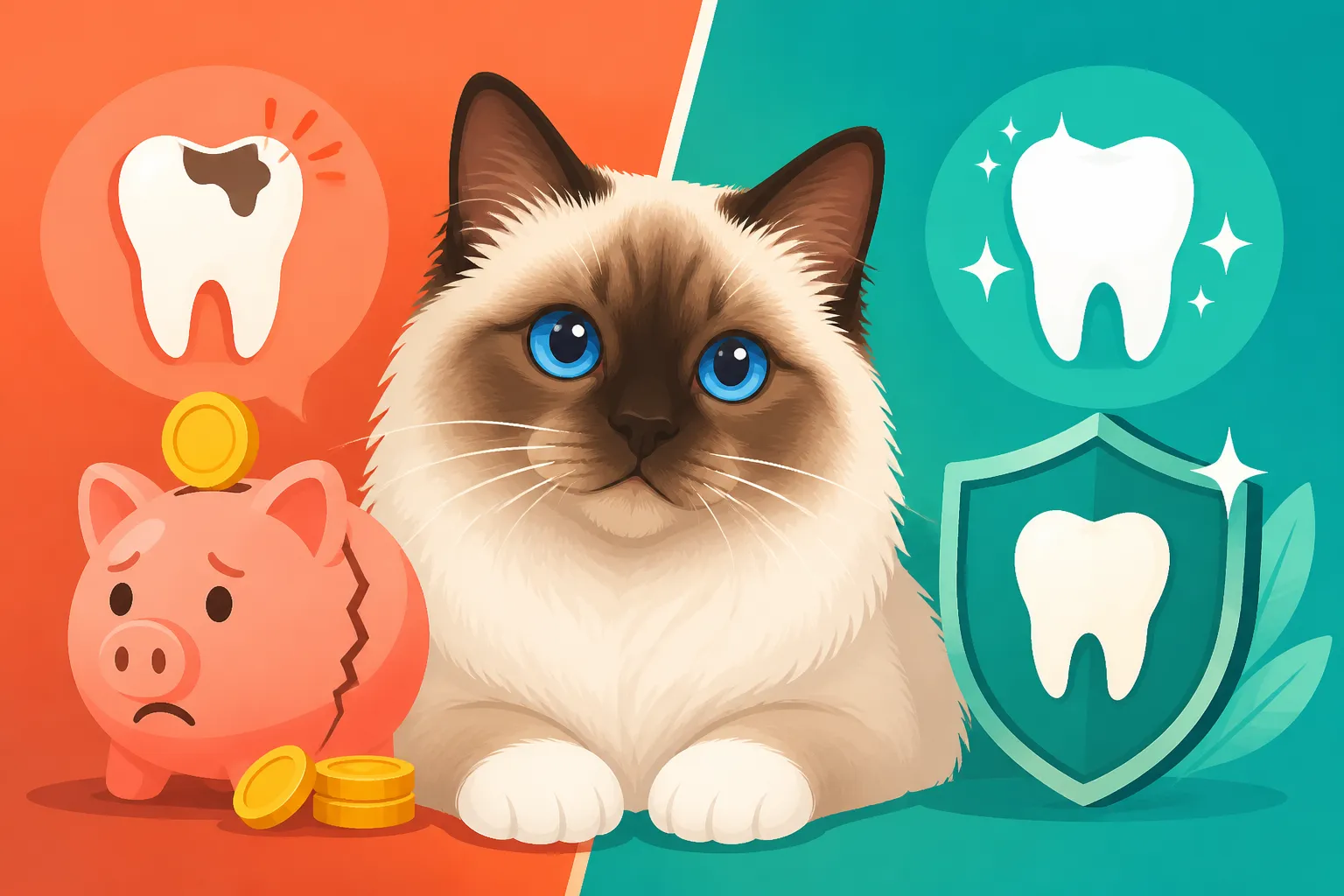
Whether a Dental Plan Pays for Itself on a Birman
As Birman cat parents, we all want to give our beloved companions the very best, and their health is always top of mind. But let's be honest, those vet bills can sting, especially when it comes to dental care. It's easy to wonder if investing in a specific dental plan is truly going to save you money in the long run, or if it's just another monthly expense. This guide will walk you through the nuances of Birman dental health and the economics of dental plans, helping you decide if one is right for your fluffy friend.
Understanding the Birman's Unique Dental Landscape
It’s easy to think all cats are created equal when it comes to their teeth, but Birmans actually have some characteristics that can make dental health a particular concern. Their serene nature often masks discomfort, and their unique facial structure plays a role too.
Why Birmans Face Specific Dental Challenges
Many Birman enthusiasts will tell you about their cat's beautiful, well-proportioned head, but that same elegant structure can sometimes lead to a slightly narrower jaw compared to some other breeds. This can mean that teeth might be a little more crowded, creating tighter spaces where plaque and tartar can easily build up. When food particles get trapped and aren't regularly cleaned away, it sets the stage for dental problems to flourish. It's not a guarantee your Birman will have issues, but it certainly increases the odds that you'll need to be vigilant.
Beyond the physical, there's also the element of temperament. Birmans are known for their incredibly docile and placid personalities. While this makes them wonderful companions, it also means they are often masters at hiding pain or discomfort. A Birman might be quietly suffering from gum inflammation or a painful tooth without showing any obvious signs, such as refusing food or becoming irritable. They might simply become a little more withdrawn, or perhaps less enthusiastic about their favorite wand toy, and you might miss these subtle cues until the problem is quite advanced. This placid nature can make it difficult to tell How to Tell a Quiet Birman From an Unwell One, which means regular professional check-ups are even more vital.
The Silent Progression of Feline Dental Disease
Dental disease in cats, including Birmans, often starts innocently enough with plaque buildup. This sticky film, a combination of food particles, saliva, and bacteria, forms on the surface of the teeth. If it's not removed through regular brushing or chewing, it hardens into tartar. Tartar is rough and abrasive, irritating the gums and creating an ideal environment for more bacteria to thrive. This leads to gingivitis, which is inflammation of the gums – often seen as redness along the gum line.
Left unchecked, gingivitis progresses to periodontitis, where the inflammation spreads beneath the gum line, affecting the supporting structures of the tooth. Pockets form, bone recedes, and eventually, teeth can become loose, painful, and even fall out. The frightening part is that your Birman might not show severe symptoms until the disease is quite advanced, possibly only exhibiting subtle changes like a slight hesitation to eat hard kibble or bad breath that you might initially dismiss. This silent progression is why regular veterinary dental check-ups are so crucial, even if your Birman seems perfectly fine on the surface. Understanding Why Gum Disease Creeps Up on a Birman is key to prevention.
The Link Between Dental Health and Overall Well-being
It’s not just about a pretty smile; a Birman's oral health is inextricably linked to its overall systemic health. The bacteria present in an infected mouth don't just stay there. They can enter the bloodstream and travel to major organs like the heart, kidneys, and liver, potentially causing serious secondary infections or exacerbating existing conditions. For a breed like the Birman, which can have its own genetic predispositions, adding the strain of systemic infection from dental disease is a significant concern.
For example, severe dental disease can contribute to heart problems or place an undue burden on the kidneys, organs that veterinarians already pay close attention to as Birmans age. Imagine your senior Birman, perhaps already on a special diet for kidney support, now battling a chronic oral infection. This added stress can dramatically impact their quality of life and longevity. Proper dental care isn't just about preventing toothaches; it's a fundamental part of maintaining your Birman’s long-term health and helping them live out their The Twelve to Sixteen Years a Birman Usually Gets happily and comfortably.
Deciphering What Dental Plans Typically Cover
When you start looking into dental plans for your Birman, you'll quickly discover that they aren't all created equal. There's a distinction to be made between dedicated dental insurance and wellness plans that include some dental benefits, and knowing the difference is crucial for making an informed decision.
Wellness Plans vs. Accident & Illness Policies
Most standard pet insurance policies, often called "accident and illness" policies, typically cover unexpected medical events – think broken bones, sudden illnesses, or emergencies. Dental trauma (like a chipped tooth from an accident) might be covered, but routine dental care, like cleanings, usually isn't. This is where dedicated dental plans or "wellness plans" come into play.
Wellness plans are designed to help with the costs of routine preventative care. These are the things you can typically anticipate and plan for: annual exams, vaccinations, parasite prevention, and, yes, often a dental cleaning. Some pet insurance providers, like Healthy Paws, might offer optional wellness add-ons to their accident and illness policies, or you might find standalone dental-focused plans. The key difference is that wellness plans are about budgeting for foreseen health maintenance, while accident & illness policies protect against unforeseen, often expensive, emergencies. For a Birman that needs consistent preventative care, a wellness plan is generally what you're looking for, rather than relying solely on a basic accident and illness policy to cover dental expenses.
Common Inclusions and Exclusions
So, what exactly can you expect a dental plan to cover? Typically, these plans will include a portion of the cost for routine professional dental cleanings under anesthesia. This is the cornerstone of preventative dental care for cats, as it allows the vet to thoroughly scale away plaque and tartar, both above and below the gum line. Many plans will also contribute to the cost of necessary extractions if a tooth is diseased and cannot be saved. X-rays, which are essential for evaluating the health of the tooth roots and jawbone, are often included too.
However, there are almost always exclusions. Cosmetic procedures are a definite no-go. Orthodontic work, if your Birman somehow needed braces (unlikely but possible for some conditions), would also typically not be covered. Pre-existing conditions are a big one – if your Birman already has a diagnosed dental issue before you enroll in the plan, that specific issue might be excluded. It’s vital to read the fine print. Does the plan cover periodontal disease treatment, or only simple cleanings? Does it have an annual limit on dental benefits? These details can significantly impact whether the plan truly pays for itself when a real dental problem arises.
The "Waiting Period" and Pre-existing Conditions
When you enroll in any pet insurance or dental plan, there's almost always a waiting period. This is the time between when you sign up and when your coverage actually begins. It could be anywhere from a few days to a few weeks for accidents, and often longer for illnesses or dental procedures – sometimes up to six months for dental issues. This waiting period is designed to prevent people from signing up only after their pet has already developed a problem, getting it covered, and then canceling.
The concept of pre-existing conditions goes hand-in-hand with waiting periods. If your Birman has, for instance, a documented history of severe gingivitis or a known broken tooth before your coverage starts (or during the waiting period), the plan will likely exclude any future treatment related to that specific condition. It’s incredibly important to be transparent about your Birman’s health history when applying, and even more important to enroll in a plan before any dental issues manifest. This proactive approach ensures you maximize the potential benefits of the plan, especially for a breed like the Birman where dental problems can slowly creep up.
Calculating the Out-of-Pocket Reality of Birman Dental Care
Let's talk about the cold, hard numbers. Without a dental plan, the cost of keeping your Birman's pearly whites healthy can really add up. Understanding these potential expenses is key to weighing whether a dental plan offers true value.
Routine Cleanings: More Than Just a Brush
A professional dental cleaning for a cat is far more involved than a quick brush at home – although regular brushing at home is incredibly beneficial and highly recommended for Birmans. When your Birman goes in for a cleaning, it's a full medical procedure requiring general anesthesia. This means a thorough pre-anesthetic blood panel to ensure their organs, particularly kidneys and heart, are healthy enough for the anesthetic. For a Birman, with its gentle temperament, they usually handle the vet visit well, but the anesthesia still requires careful monitoring. You might be interested in Whether a Birman Needs a Heart Scan Before Anesthetic as part of this pre-op work-up.
Once under, the vet performs a complete oral exam, takes X-rays to check below the gum line, scales away plaque and tartar, and polishes the teeth. The cost for a routine cleaning can vary widely based on your location and the veterinary clinic, but it's typically a significant three-figure expense. This is generally an annual recommendation for many adult cats, especially as they get older, meaning it's a recurring cost that you'll face year after year. For some Birmans, especially if How Often a Birman's Narrow Jaw Needs a Scale and Polish is required more frequently due to crowding, these costs can become even more regular.
Addressing Advanced Dental Issues
What happens when your Birman's dental health progresses beyond a routine cleaning? This is where costs can really skyrocket. If a vet discovers advanced periodontal disease, painful abscesses, or fractured teeth (perhaps from chewing on something they shouldn't have, even if Birmans are generally not destructive chewers), extractions become necessary. Removing a single tooth, especially a molar with multiple roots, is a complex surgical procedure. It involves more anesthesia time, more extensive dental X-rays, potential pain medication post-op, and follow-up visits.
Multiple extractions, which are not uncommon in older cats with advanced disease, can push the total bill well into four figures. Then there are the potential complications, though rare, such as infection or issues with healing. These aren't just one-off costs; if the underlying cause isn't addressed (e.g., poor oral hygiene at home), your Birman might face similar issues down the line. A good quality diet can support overall health, but even the best nutrition can't prevent all dental woes. The reality is that the older your Birman gets, the higher the likelihood of needing some form of advanced dental work.
The Cost Spectrum of Procedures
To give you a clearer picture, here's a general idea of how various dental procedures might stack up in terms of out-of-pocket costs without a plan. Keep in mind these are broad estimates and can fluctuate significantly by region, specific veterinary practice, and the complexity of the individual case.
| Procedure | Description | Estimated Cost Range (Without Plan) |
|---|---|---|
| Routine Dental Cleaning | Anesthesia, oral exam, scaling, polishing, dental X-rays. | Moderate to High Three Figures |
| Single Tooth Extraction (Simple) | Extraction of an easily removed tooth, additional anesthesia time. | Low Four Figures |
| Single Tooth Extraction (Complex/Molar) | Surgical extraction of a multi-rooted or fractured tooth, longer anesthesia. | Mid to High Four Figures |
| Periodontal Treatment | Deep cleaning, gum flap surgery, bone grafting for advanced disease. | High Four Figures and Up |
| Oral Mass Biopsy/Removal | Investigation and removal of growths in the mouth. | Low to High Four Figures |
| Pain Medication/Antibiotics | Post-operative care, dependent on the procedure. | Low Three Figures |
As you can see, even a single complex extraction can quickly become a substantial unexpected expense. Considering that How Dental Disease Progresses in a Birman usually means multiple issues by the time symptoms become obvious, these costs can accumulate rapidly.
Is a Dental Plan a Smart Investment for Your Birman?
Now that we’ve laid out the potential costs and what dental plans offer, it’s time to really dig into whether this investment makes sense for your Birman and your household budget.
Weighing the Annual Premiums Against Potential Savings
The core question is always: do the annual premiums you pay for a dental plan outweigh the potential out-of-pocket costs you might face? Let’s consider a hypothetical scenario. If your Birman is young and healthy, and you commit to daily brushing (even a routine started in kittenhood (How to Introduce a Toothbrush to a Birman Kitten) can make a difference!), they might only need a routine cleaning every year or two. The annual premium for a comprehensive dental plan could easily exceed the cost of one routine cleaning in that scenario. In those early, healthy years, you might feel like you're losing money.
However, as your Birman ages, the likelihood of needing more intensive dental work increases dramatically. How Many Years a Birman Keeps Its Teeth Into Its Teens often depends heavily on lifelong dental care. If your Birman develops severe periodontal disease at age eight, requiring multiple extractions and advanced treatment, a dental plan could potentially save you hundreds or even thousands of dollars. The plan would absorb a significant portion of those substantial costs, making the annual premiums feel like a very worthwhile investment.
It's a gamble, to some extent. You're essentially betting that your Birman will need enough dental care over their lifetime to make the plan's coverage more valuable than the sum of your premiums. The peace of mind, knowing that you won't have to make tough financial decisions about necessary dental surgery, is a significant factor for many pet parents.
Considering Your Birman's Age and Health History
The ideal time to get a dental plan is when your Birman is young and has a clean bill of oral health. This way, you avoid issues with pre-existing conditions and ensure maximum coverage throughout their life. If you wait until your Birman is older and already showing signs of dental problems, many plans will either exclude those specific conditions or have long waiting periods that delay coverage. It’s like buying car insurance after you’ve already had an accident – it just doesn’t work the same way.
If you have an older Birman that has never had a dental cleaning, or has known issues, a dental plan might not "pay for itself" in the immediate future, as the initial round of extensive treatment might not be fully covered due to those pre-existing exclusions. However, it could still be beneficial for preventing future issues or covering new dental problems that arise after the waiting period. Always discuss your Birman's specific dental history with prospective insurance providers to understand exactly what would and wouldn't be covered. This individual assessment is crucial for any decision involving What a Birman's Yearly Panel Should Include After Eight.
The Peace of Mind Factor and Unexpected Surprises
Beyond the purely financial calculations, there's the invaluable benefit of peace of mind. Knowing that you have a plan in place for your Birman's dental care can alleviate a tremendous amount of stress when faced with a vet's recommendation for extensive treatment. No one wants to be in a position where they have to choose between their cat's health and their financial stability.
Unexpected dental problems can arise even in the most well-cared-for Birmans. A hidden root abscess, a resorptive lesion that can be incredibly painful, or a fractured tooth that wasn't immediately apparent – these things happen. With a dental plan, you're better equipped to say "yes" to the recommended treatment without hesitation, ensuring your Birman gets the care they need promptly. Many pet parents find this peace of mind alone is worth the monthly premium, even if their Birman ends up having relatively few dental issues over their lifetime. It’s about being prepared for the unforeseen, especially for a cat like the Birman, whose quiet nature can mask problems until they are quite advanced. You can find many dental care products on sites like Chewy to help maintain daily oral hygiene, which can reduce the severity of problems, but professional care will eventually be needed.
Disclaimer
This article is for general informational purposes only and does not constitute professional advice. Laws, prices and regulations vary by location and change over time. Consult a qualified professional for guidance on your specific situation.