How a Birman’s Gloves Are Scored
If you've ever admired the stunning Birman cat, you've undoubtedly noticed their incredibly distinctive white "gloves" on their paws. But what makes some perfect and others less so? Many prospective owners and even seasoned Birman enthusiasts often wonder how these unique markings are actually judged, and this comprehensive guide is here to demystify the intricate scoring system used to evaluate a Birman's signature gloves and laces.
Understanding the Birman's Signature White Gloves
When we talk about a Birman's "gloves," we're diving deep into one of the most defining characteristics of the breed. These aren't just cute white paws; they are a hallmark, deeply ingrained in the breed's mystique and its standard of perfection. It's a specific pattern of pure white fur that covers their paws, creating a striking contrast against their otherwise colored "points"—the darker fur on their face, ears, legs, and tail.
What Exactly Are "Gloves" in the Birman Breed?
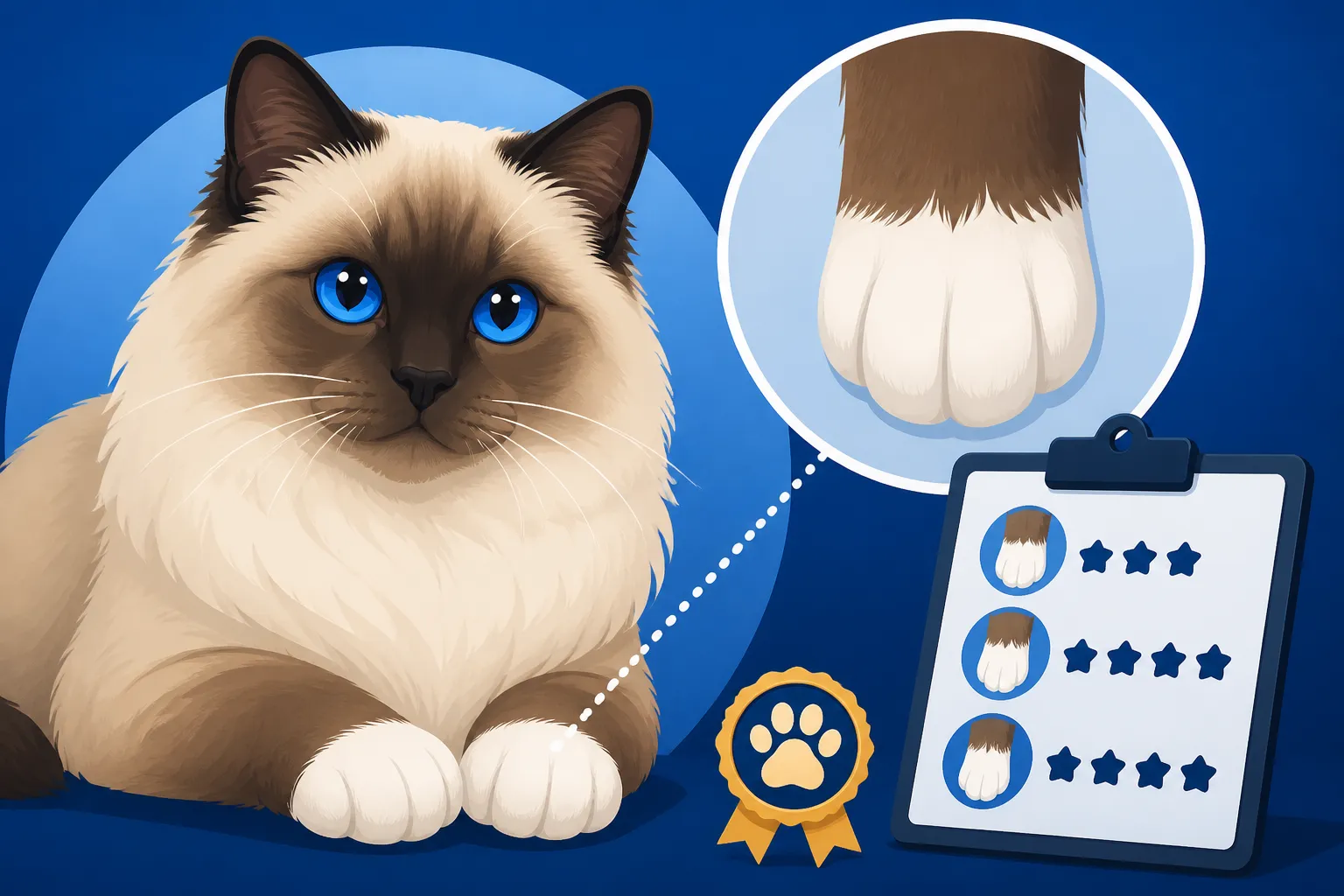
At its core, a Birman's "gloves" refer to the pristine white markings on the cat's front paws. Imagine your Birman gently dipping their little paws into a fresh, untouched pile of snow; that's the visual breeders and judges strive for. These gloves should be pure white, ideally symmetrical, and cover the entire paw, ending in a precise, even line right at the joint where the paw meets the leg. They are not merely flecks or splashes but a distinct, consistent covering.
The historical narratives surrounding the Birman often highlight these gloves as a divine gift, symbolic of their sacred origin. It's said that their paws remained unsullied when they stepped onto their revered master, a legend that underscores just how central these markings are to the breed's identity. This ancient story isn't just folklore; it frames the modern understanding of what makes a Birman truly special.
The "Laces" and "Gauntlets": Beyond the Paws
While the front paws boast the "gloves," the back paws have an additional, equally critical feature known as "laces." These are also pure white markings, but instead of stopping at the joint, they extend up the back of the cat's hind legs in a distinctive V-shape. The ideal lace should run to about one-third to one-half of the way up the hock (the cat's ankle joint), tapering to a clean point. It’s another delicate detail that adds to the overall elegance of the Birman’s appearance.
Now, here's where things can get a little tricky, and it introduces a significant fault: "gauntlets." A gauntlet occurs when the white marking on the hind leg extends too far up, beyond that ideal V-shape and height. Instead of a neat lace, it looks like a high white sock, sometimes even reaching the thigh. This is a considerable deviation from the breed standard and is often considered a disqualifying fault in the show ring. What Laces and Gauntlets Mean on a Birman's Price Tag helps explain why such markings significantly impact a cat's show potential and, consequently, its value.
The Holy Grail: Perfect Glove and Lace Markings
Achieving the perfect Birman glove is truly an art and a science, a testament to dedicated breeding and a stroke of luck from genetics. Breeders spend generations striving for these immaculate markings because they are so central to the breed's beauty and conformity to the standard. It’s not just about having white on the paws; it’s about the quality and placement of that white.
Symmetry and Evenness: The Breeder's Dream
The absolute pinnacle of glove perfection lies in symmetry and evenness. Ideally, all four paws should display gloves that are identically matched in height and shape. On the front paws, this means the white should end in a clean, straight line, ideally at the articulation of the toes. Imagine drawing a perfectly straight line around each front paw – that’s the goal. There should be no jagged edges, no higher points on one side, and certainly no splotches of color within the white.
This symmetrical precision is what truly catches a judge's eye and distinguishes a top-tier show cat. When a Birman steps out with four perfectly matched gloves, it truly embodies the elegance and sacred beauty the breed is known for. It’s a vision of pristine balance, a visual harmony that is hard to achieve, making such cats rare and highly prized.
The Ideal Lace: A Precise V-Shape
For the hind paws, the white markings – the laces – also demand extreme precision. They should form a distinct, inverted "V" shape on the back of the hocks. This V-shape needs to be symmetrical on both hind legs, with the white rising to a consistent height, usually about one-third to one-half way up the hock. The edges of this V should be clean and clearly defined, not fuzzy or uneven.
The challenge here, much like with the front gloves, is getting both laces to match each other perfectly in shape and height. A slight asymmetry, where one V is higher or wider than the other, can detract significantly from the overall score. This specific V-shape is a beautiful and unique characteristic of the Birman, adding a touch of refined grace to their hindquarters.
Why Perfect Birman Gloves Are Almost Impossible to Breed
It's a frustrating but well-known reality for breeders: Why Perfect Birman Gloves Are Almost Impossible to Breed. Despite all the careful planning and selective mating, achieving those truly flawless, show-stopping gloves is incredibly difficult. This isn't due to a lack of skill or effort, but rather the complex genetic interplay that dictates these markings. While every Birman carries the fundamental gloving gene – indeed, The Gloving Gene Every Birman Carries Two Copies Of is a core characteristic – there are numerous "modifier genes" that influence the exact expression of that white.
These modifier genes can determine the height of the gloves, the shape of the laces, and even the crispness of the lines. The unpredictable nature of how these genes combine in each kitten means that even a litter from two impeccably gloved parents can produce kittens with a range of glove qualities. It's truly a genetic lottery, which makes those perfectly marked individuals all the more special and coveted. It's why many breeders focus on consistent improvement rather than expecting absolute perfection every time.
Common Deviations and What They Mean for Scoring
While perfection is the ideal, deviations are far more common in the Birman world. These variations don't make a Birman any less lovable as a pet, but they do impact their standing in the show ring and, inevitably, their price tag. Understanding these common faults is key to appreciating the challenges of Birman breeding and the nuances of judging.
Uneven Gloves: A Frequent Occurrence
One of the most common glove deviations is unevenness. This happens when the white markings on the front paws, or even the back laces, don't match each other perfectly. Perhaps the white on the left front paw extends a little higher than on the right, or one hind lace is significantly longer or shorter than the other. This lack of symmetry, even if slight, is a fault in the breed standard.
For a Birman being evaluated for show, Why an Uneven Birman Glove Is a Show Fault clearly outlines the impact. Judges are looking for harmony and balance across all four paws, and any noticeable imbalance will lead to a deduction in points. While it might seem like a minor detail to a pet owner, in the highly competitive world of cat shows, these small imperfections can be the difference between a champion title and merely a participation ribbon.
The Dreaded "Gauntlets": When White Goes Too High
As mentioned earlier, gauntlets are a significant fault, specifically on the hind legs. Instead of the delicate, V-shaped lace, the white extends too high up the back of the hock, often resembling a full sock. This is not just a point deduction; in many breed standards, gauntlets are a disqualifying fault, meaning the cat cannot compete for championship titles. It fundamentally alters the distinct look of the Birman's hind paws.
The reason for this strict rule lies in preserving the unique Birman appearance. The specific length and shape of the lace are what differentiate it from other breeds with white markings. A Birman with gauntlets, while still a beautiful and loving companion, simply does not conform to the established ideal. If you're looking at a Birman kitten and notice the white on the hind legs going very high, you're likely looking at a "pet quality" cat, regardless of other excellent traits. What Laces and Gauntlets Mean on a Birman's Price Tag is a must-read if you're trying to understand the financial implications.
Missing or Mismatched Laces: Back Paw Peculiarities
Beyond gauntlets, the hind laces can present other issues. Sometimes, the V-shape is poorly defined, indistinct, or completely absent. Other times, the laces might be present but are mismatched in height or shape, with one being much longer or shorter than the other, or one having a different angle. These variations are also considered faults.
A Birman with absent or severely mismatched laces will face significant point deductions in the show ring. The breed standard is very clear about the expectation of defined, symmetrical white laces on the hind paws. While it’s not as severe a fault as gauntlets in some cases, it still indicates a deviation from the desired aesthetic. It’s a continuous challenge for breeders to maintain consistent quality across all four paws, given the inherent variability in the genetic expression of these markings.
The Judging Process: How Birmans Are Evaluated
When a Birman steps into the show ring, it's not just about cuteness; it's about a rigorous evaluation against a detailed breed standard. The judges are looking for a very specific set of characteristics, and the gloves and laces are a significant part of that assessment. It’s a fascinating process that combines aesthetic appreciation with a deep understanding of the breed's history and genetics.
Point System for Gloving: What Matters Most
Each Birman breed standard, established by various cat registries around the world, allocates a certain number of points to different physical attributes. The gloving, including both the front gloves and the hind laces, typically accounts for a significant portion of these points. How Many Points a Birman's Gloves Are Worth depends on the specific registry, but it's usually one of the highest-scoring sections related to markings. Judges scrutinize the gloves for:
- Purity of white: No colored hairs or spots within the white.
- Evenness and symmetry: All four gloves matching each other.
- Correct height: Ending at the appropriate joint on the front, and the correct V-shape and height on the back.
- Cleanliness and definition: Sharp, clear lines separating the white from the colored points.
A Birman with perfectly marked gloves and laces will earn maximum points in this category, contributing greatly to their overall score and potential for a championship title.
Breeder Assessment Versus Show Ring Judging
For breeders, the assessment of gloves begins almost from the moment a kitten is born, even though the full point color and glove definition won't be clear until several weeks later. How a Birman Kitten's Gloves Change as It Grows is a fascinating journey. Breeders watch as the kittens develop, making initial predictions about show quality versus pet quality. They are often evaluating the kitten's feet with a critical eye, looking for early signs of good symmetry and definition. How a Breeder Judges a Birman Kitten's Gloves involves a keen eye and years of experience to forecast how those tiny white paws will develop.
In the show ring, however, the judging is a much more formal and objective process. Judges are trained to interpret the breed standard precisely. They will carefully examine each paw, often lifting the cat gently to get a clear view of the entire glove and lace area. They're not just looking for "white paws" but for the precise conformation to the ideal described in the standard. This meticulous examination, combined with assessments of other features like coat, head shape, and eye color, leads to the final score. What Judges Look For on a Birman's Paws First often refers to these initial visual checks.
Genetic Considerations: The Underlying Science
Behind all the visual assessment lies the fascinating world of genetics. As mentioned, the fundamental gloving gene, often referred to as the KIT gloving variant, is present in every Birman. It's an autosomal recessive gene, meaning a Birman needs two copies of it to express the gloving pattern. But here’s the kicker: this primary gene is then influenced by a host of other modifier genes.
These modifier genes are what create the variability in glove expression. They dictate how far up the leg the white extends, how clean the lines are, and the overall symmetry. This is why Why Glove Genetics Are Unpredictable in a Birman is such a fundamental truth for breeders. You can breed two Birmans with excellent gloves, and still produce a kitten with a less-than-perfect lace or an uneven glove. It’s a complex polygenic trait, making consistent perfection a challenging, ongoing goal. It also means that Whether a Birman Glove Can Be Bred to Order is largely a pipe dream; while breeders can improve their lines, they can't guarantee specific markings in any given litter.
The Impact of Glove Scoring on a Birman's Life and Price Tag
The meticulous scoring of a Birman's gloves and laces isn't just for show ring bragging rights; it has tangible impacts on a Birman's life, from its potential price as a kitten to its role in a breeding program. Understanding these implications helps future owners make informed decisions and appreciate the depth of commitment from ethical breeders.
Show Quality vs. Pet Quality: Price Differences
This is perhaps where glove scoring most directly affects the average Birman enthusiast. A Birman kitten with near-perfect gloves and laces, displaying the ideal symmetry and crispness required by the breed standard, is considered "show quality" or "breeding quality." These kittens command the highest prices from breeders. This is because they represent years of careful breeding, and their flawless markings mean they have the potential to win titles or contribute to improving the breed line.
Conversely, a kitten with "mismarked" gloves – perhaps uneven, too high (gauntlets), or with less-defined laces – is typically sold as "pet quality." Why a Mismarked Birman Is a Pet Price Cat is a direct consequence of these deviations. These cats are just as healthy, loving, and beautiful as their show-quality siblings, but their markings mean they won't excel in the show ring. Their price will be considerably lower, making them a wonderful option for families seeking a Birman companion without the intention of showing. This practice helps ensure that all healthy Birman kittens find loving homes, regardless of their cosmetic perfection.
Breeding Programs: Maintaining the Standard
For dedicated Birman breeders, glove scoring is fundamental to their entire program. Their goal isn't just to produce pretty kittens, but to uphold and improve the breed standard over generations. This means carefully selecting breeding cats that consistently produce offspring with desirable traits, including excellent gloves and laces. Breeders will only use Birmans for breeding that conform closely to the standard, hoping to pass on those ideal modifier genes to their kittens.
However, the unpredictability of glove genetics, as discussed, means that even in the best breeding programs, some kittens will have markings that fall short of the ideal. Ethical breeders take this in stride, understanding it's part of working with a complex genetic trait. They focus on maintaining the overall health, temperament, and type of the Birman, with glove quality being a significant, but not the only, factor in their breeding decisions. It's a continuous dance between genetics, experience, and a deep love for the breed.
The Pet Owner's Perspective: Love Beyond Perfection
For most Birman owners, whether their cat has show-perfect gloves or charmingly mismatched ones truly doesn't matter. The unique personality, gentle temperament, and stunning blue eyes are what capture their hearts. A Birman with a "mismark" is still 100% Birman in every other respect – they'll still follow you quietly from room to room, offer soft trills, and enjoy being close without being demanding.
Many pet owners find the individual quirks of their cat's markings endearing. A slightly higher glove on one paw, or a lace that doesn't quite form a perfect V, becomes part of their cat's unique identity. The joy of owning a Birman comes from their companionship, their soft, silky fur, and their sweet nature, far more than from a perfect set of white paws. It's a testament to the breed's incredible temperament that a minor cosmetic detail rarely diminishes the love and bond shared with these wonderful felines.
Caring for Those Precious White Paws
Whether your Birman has perfectly scored gloves or unique personal touches, caring for those white paws is a little extra step in their grooming routine. Their pure white fur can be a magnet for dirt and discoloration, and a bit of vigilance goes a long way in keeping them pristine.
Keeping Gloves Clean: A Daily Endeavor
Those beautiful white gloves can easily pick up stains from litter boxes, outdoor adventures (if your Birman is an adventurous indoor cat in a catio), or even just daily indoor life. Litter is a prime culprit, especially if it's dusty or dark in color. Why a Birman Needs a Litter That Does Not Stain becomes a very real consideration for many Birman owners. Opting for low-dust, white, or very light-colored litter can make a huge difference in preventing unsightly yellowing or graying of the gloves.
Regular, gentle cleaning of the paws might be necessary, especially if your Birman enjoys digging or has slightly longer fur between its paw pads. A damp cloth, or even specialized pet paw wipes (you can find a great selection on Chewy), can help keep them sparkling. For tougher stains, a vet-approved whitening shampoo can be used sparingly. The key is to be consistent and to address any discoloration promptly before it sets in.
Understanding Color Changes and Maturation
It’s worth noting that a Birman kitten is born almost entirely white. Their "points" – the darker areas on their face, ears, legs, and tail – only start to develop and darken as they mature, influenced by temperature. This means that How a Birman Kitten's Gloves Change as It Grows is a gradual process. The white gloves are usually quite clear from an early age, but their final crispness and definition can take a few weeks or even months to settle.
As your Birman ages, you might notice subtle changes in the intensity of their point color, which can sometimes make the contrast with their white gloves even more striking. Environmental factors, such as living in a cooler climate, can cause their points to darken further. Rest assured, these natural color shifts won't alter the fundamental structure or "score" of their gloves, though they might enhance their visual appeal. Providing a well-balanced diet, rich in omega fatty acids, can also contribute to a healthy coat and vibrant point colors, and many premium cat foods with these benefits are available on Chewy.
| Glove Characteristic | Ideal Description | Common Faults | Impact on Scoring |
|---|---|---|---|
| Front Gloves | Pure white, symmetrical, even height at joint. | Uneven height, colored spots, too high/low. | Deductions for asymmetry or deviation from ideal height. |
| Hind Laces | Pure white, symmetrical V-shape, 1/3-1/2 up hock. | Absent, mismatched, irregular shape, too low. | Deductions for lack of definition, symmetry, or incorrect height. |
| Gauntlets (Hind) | Not present in ideal Birman | White extending too high, resembling a sock. | Severe fault, often disqualifying for show (not just point deduction). |
| Purity of White | Pristine, no colored hairs, free from yellowing. | Yellowing, smudges, stray colored hairs. | Deductions for lack of purity or cleanliness. |
| Definition | Sharp, clear line between white and colored point. | Blurred, fuzzy, or jagged edges. | Deductions for indistinct markings. |
Disclaimer
This article is for general informational purposes only and does not constitute professional advice. Laws, prices and regulations vary by location and change over time. Consult a qualified professional for guidance on your specific situation.