Why the Birman Legend Was Written Down in France
Oh, the Birman! They're such captivating creatures, aren't they? With their striking blue eyes and those pristine white 'gloves,' it's no wonder their origins are steeped in such an enchanting tale. Many of us, when we first hear about the Birman, are drawn in by the mystique of its "Sacred Cat of Burma" legend. We picture ancient temples and golden goddesses, a narrative that truly sets this breed apart. But have you ever stopped to wonder how that beautiful, almost cinematic story came to be so widely known, especially when the breed itself was truly established far from Burma? This guide is going to take you on a journey to uncover why the Birman's celebrated origin legend was, in fact, penned and popularized right there in France, giving this gentle breed an irresistible mystique that helped secure its place in our hearts.
The Sacred Cat of Burma: A Legend's Allure
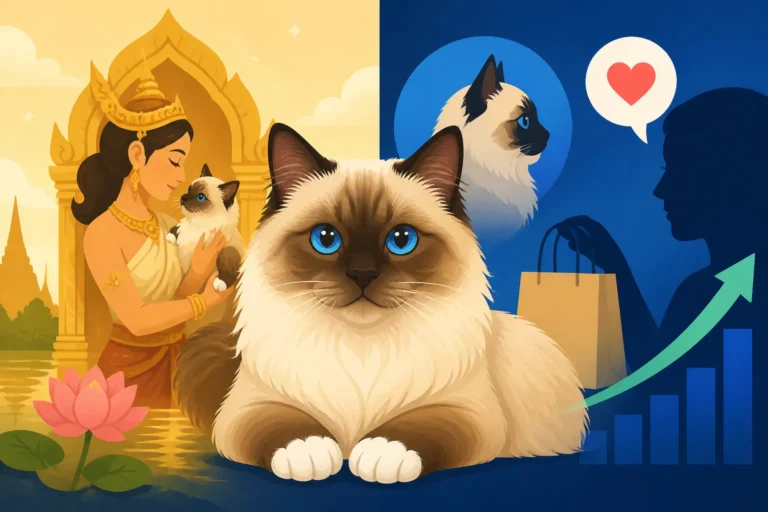
Let's be honest, few cat breeds come with an origin story as romantic and captivating as the Birman's. It's truly a tale that whisks you away to far-off lands, filled with ancient temples, golden goddesses, and the transformation of a loyal cat. The legend speaks of the Kittah priests of Burma, particularly one revered priest named Mun-Ha, and his faithful companion, Sinh, a stunning white cat with golden eyes. When invaders attacked the Temple of Lao-Tsun and struck down Mun-Ha, Sinh is said to have leapt onto his fallen master's body. In that moment of profound devotion, a miracle occurred. Sinh's golden eyes turned sapphire blue, matching the eyes of the goddess Tsim-Kyan-Kse, enshrined within the temple. His once white fur deepened to a rich golden hue, while his paws, touching his master, remained pure white, signifying his purity and loyalty. This transformation, they say, extended to all the temple cats, marking them forever as the sacred Birmans.
This story, vibrant and full of spiritual significance, explains many of the Birman's most distinctive traits: the deep blue eyes, the colourpoint pattern, and, of course, those iconic white "gloves" on their paws. The Birman Is the Sacred Cat of Burma, and the Story Is a Legend paints a vivid picture of this very narrative. It’s a powerful narrative, giving the breed a sense of ancient wisdom and divine protection. It frames the Birman not just as a pet, but as a living piece of history, a divine messenger. For anyone looking to connect with something more profound in their companion animal, this legend is incredibly appealing. It evokes a sense of heritage and sacredness that few other breeds can claim, immediately elevating the Birman in the eyes of potential admirers and owners. Why the Birman Legend Explains the White Gloves dives deeper into how specific traits are woven into this tapestry of myth.
The European Arrival: Birmans and Their French Patrons
Now, as enchanting as the legend is, the historical reality of the Birman's establishment is quite a bit different, and it firmly plants its roots in Europe, specifically France, rather than the misty mountains of Burma. The common historical account suggests that a pair of Birmans (or cats that were the direct ancestors of what we now know as Birmans) were smuggled out of Burma around 1919. This is where the story takes a turn from the purely mystical to the historically intriguing. Who Shipped the First Birmans to France delves into the alleged circumstances of their arrival. Sadly, the male of this original pair, a cat named Maldapour, did not survive the long sea voyage. The female, Sita, was pregnant and fortunately gave birth in France, laying the foundational genetics for the breed on European soil.
This pivotal moment meant that the burgeoning Birman breed, as we know it today, began its true development in France. It was here that dedicated fanciers took up the mantle of carefully breeding and establishing the distinct characteristics that define the Birman. Early French breeders faced significant challenges, including the incredibly narrow gene pool they started with. Why Only One of the First Two Birmans Survived highlights the precariousness of the breed's early days. They needed to work diligently to stabilize the breed's look, temperament, and health. This period saw careful outcrossing with other long-haired cats, likely Persians and Siamese, to introduce genetic diversity and refine the breed's appearance, moving towards the standard we recognize today. This selective breeding in France was essential, as it allowed the breed to recover from its very limited origins and grow into a viable, healthy population. Whether the Birman Was Bred in Europe From the Start explores this crucial point further, emphasizing the significant role Europe played in the breed's foundation.
Crafting a Narrative: Why France Penned the Birman's Tale
This is where the "why" of the legend being written down in France truly comes into focus. When you're trying to establish a new breed, especially one with such unique features like those perfect white 'gloves' and striking blue eyes, you need something to make it stand out. French breeders and cat enthusiasts, captivated by the beauty of these early Birman cats, understood the power of a compelling origin story. They needed to capture the public's imagination, to give their beloved breed a heritage that felt as unique and special as the cats themselves.
Consider the context: cat fancy was growing, and many breeds were vying for attention and recognition. A beautiful cat was one thing, but a beautiful cat with a mystical, ancient backstory? That was marketing gold. The legend provided a rich tapestry of history and spirituality that immediately gave the Birman an air of exoticism and noble lineage, even if its true breeding development was happening in French catteries. It wasn't about deception; it was about enchantment and creating an identity. The tale linked the cat directly to sacred traditions and a divine purpose, making it more than just another pretty face.
The formal registration of the breed in France as the "Sacre de Birmanie" (Sacred Birman) in 1925 by the Cat Club de France further solidified this connection to the legend. When France Registered the Sacre de Birmanie marks this official recognition. This name choice itself speaks volumes about the desire to imbue the breed with its mystical narrative. It helped to differentiate the Birman from other similar-looking pointed longhairs, giving it a unique selling point and a powerful brand identity. Imagine the conversations at early cat shows: "This isn't just a cat; this is a descendant of temple guardians, blessed by a goddess!" Such a story resonates deeply with people and fosters a profound sense of connection to the animal. It helps cement the idea that these cats are not just beautiful, but possess an inherent grace and dignity that speaks of their legendary past. You might even say this early narrative helped ensure Birman-related products, whether from a local pet store or a major online retailer like Chewy, were sought after by owners looking to honor their cat's "sacred" status.
The Role of Early Birman Enthusiasts and Registries
The early pioneers of the Birman breed in France were passionate individuals, dedicated to bringing this magnificent cat to prominence. They weren't just breeders; they were storytellers, shaping the narrative that would accompany the Birman for generations. These enthusiasts, understanding the allure of a captivating tale, likely contributed to refining and disseminating the legend. It became part of the breed's identity, passed down through breeders and new owners alike.
It's also worth noting that the French cultural context at the time was ripe for such romantic narratives. There was a fascination with the exotic East, and tales of ancient temples and mystical connections held significant appeal. The legend of the Birman perfectly tapped into this cultural zeitgeist, providing a bridge between the elegance of French cat fancy and the imagined spiritual depths of a faraway land. This combination of dedicated breeding, strategic naming, and a compelling backstory allowed the Birman to quickly gain traction and establish itself as a recognized and admired breed. You can see how a strong narrative, even if embellished, can play a huge part in a breed's success and recognition.
Beyond the Myth: The Birman's Legacy in the Cat Fancy
The French-written legend didn't just give the Birman a lovely story; it had tangible, lasting effects on the breed's journey through the cat fancy world. This powerful origin story undoubtedly contributed to the Birman's swift and widespread appeal. When new breeds emerge, especially those with similar physical characteristics to existing breeds, a strong, memorable narrative can be the distinguishing factor that catapults them into the spotlight. The "Sacred Cat of Burma" legend did exactly that for the Birman.
Building Recognition and Popularity
The mystique surrounding the Birman helped it gain quick recognition in various cat registries. While it was formally established in France, its popularity soon spread to other European countries and then across the Atlantic to North America. Why the Birman Was Recognized So Quickly in America shows how this strong, established identity aided its acceptance worldwide. People weren't just adopting a cat; they were bringing a piece of this ancient, sacred history into their homes. This emotional connection translated into demand, which in turn spurred more dedicated breeding efforts and helped solidify the breed's standards.
The legend wasn't just a whimsical tale; it was a foundational element of the Birman's identity that endured. Even today, when we speak of Birmans, the legend often comes up, illustrating its lasting impact. It became an integral part of the breed standard, influencing how breeders presented their cats and how judges evaluated them. The story encouraged a focus on the characteristic white gloves and intense blue eyes, features that are central to the legend and subsequently to the breed's overall appeal.
Separating Fact from Fancy: A Breed's True Origins
While the legend adds undeniable charm, it's important for Birman owners and enthusiasts to appreciate both the mythical and the historical truth. Understanding that the breed was truly developed and formalized in France doesn't diminish its allure; if anything, it adds another layer of appreciation for the dedication of those early breeders. It highlights the human ingenuity and passion involved in shaping and preserving such a beautiful animal.
For example, when you're looking for quality food or toys for your Birman, whether from a specialist store or a place like Chewy, knowing the breed's history helps you connect on a deeper level. You appreciate not only the gentle temperament and stunning looks, but also the journey it took for this cat to arrive in your home. The reality of careful breeding and thoughtful selection in France means that the Birman is a testament to human-animal partnership, where breeders worked tirelessly to bring the beauty of these cats to the world. And while the genetics of the specific gloving gene are understood today, and we know they're not a direct "divine miracle," the story still captures the spirit of what makes the Birman so special. What Genetics Say About the Birman's Origin provides a fascinating contrast to the mythical accounts, showing how science and legend can both exist within a breed's story.
Here's a quick look at the contrasting narratives:
| Aspect | Birman Legend (Written in France) | Historical Reality (Primarily French Development) |
|---|---|---|
| Origin Location | Temples of Lao-Tsun, Burma | France (from initial imports, likely via Indochina) |
| Core Event | Divine transformation of a loyal temple cat, Sinh | Systematic breeding and stabilization efforts by French fanciers |
| Explanation for Traits | Miraculous intervention by the goddess Tsim-Kyan-Kse | Selective breeding, careful outcrossing, and genetic stabilization |
| Initial Stock | All cats in the temple transformed by divine intervention | A very small number of foundation cats (possibly just one pregnant female, Sita) |
| Purpose of Narrative | To explain breed traits through spiritual, ancient heritage | To establish a unique identity, gain recognition, and captivate the public |
Ultimately, whether you're charmed by the legend or fascinated by the history of its development in France, the Birman cat remains an undeniably gorgeous and beloved breed. The fact that its enduring legend was carefully crafted and written down in France only adds to the rich tapestry of its story, proving that sometimes, a good tale is just as powerful as historical fact in shaping a legacy. And honestly, it makes me appreciate the thoughtfulness that went into every aspect of establishing this wonderful breed. Whether you're researching their history or just looking for the best premium food on Chewy, the Birman's story is one worth knowing.
Disclaimer
This article is for general informational purposes only and does not constitute professional advice. Laws, prices and regulations vary by location and change over time. Consult a qualified professional for guidance on your specific situation.